


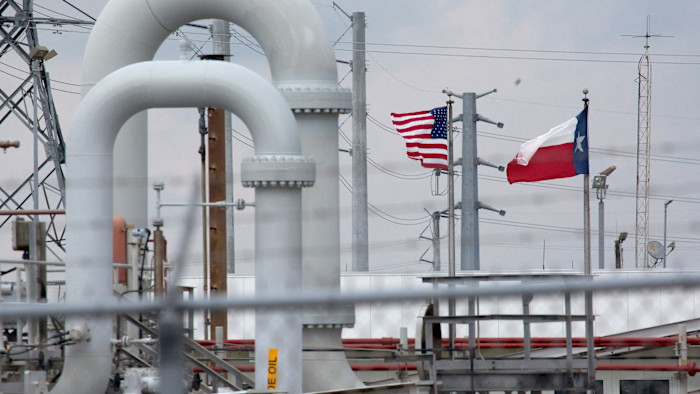
Depleted oil reserve leaves US exposed as Iran war pushes up prices
Unlock the White House Watch newsletter for free
Your guide to what Trump’s second term means for Washington, business and the world
Donald Trump’s decision not to refill the Strategic Petroleum Reserve drained by his predecessor Joe Biden has left consumers exposed to an oil price shock following US and Israeli attacks on Iran, analysts have warned.
The reserve, created in 1974 following the Arab oil embargo, was left well below its capacity after Biden opened the taps to contain crude prices following Russia’s full-scale invasion of Ukraine.
Trump has since failed to fulfil the vow he made in his inauguration speech last year to “refill our reserves right up to the top again”.
The outcome has left the US short of firepower to quell a new surge in petrol prices triggered by Trump’s war in Iran and Tehran’s retaliatory strikes on energy assets in the Gulf, which have hurt supplies.
“The problem now is that if we see a prolonged period of supply constrictions,” said Hugh Daigle, professor of petroleum engineering at the University of Texas at Austin.
The Trump administration had missed the opportunity to refill the reserve last year when oil was cheaper, he said. The closure of the Strait of Hormuz, a chokepoint for a fifth of global supply, would make it harder to replenish the SPR.
“That’ll lead to higher prices, which would make it financially more difficult to refill the reserve.”
The reserve currently contains 415mn barrels of oil, or about 20 days of total US consumption — well below its 714mn-barrel capacity. Drawing down too much of the oil too quickly could damage the salt caverns holding it, say experts. It would cost more than $20bn to refill, according to the US Department of Energy.
Funding shortages and maintenance delays at the underground facilities in Texas and Louisiana have also hindered replenishment. Biden released 180mn barrels starting in 2021 as petrol prices rose towards record highs in 2022.
Sean Casten, a Democratic Congress member from Illinois, slammed the Trump administration for not replenishing the stockpile.
“It is not at all surprising that someone who failed to consider the political dynamics in Iran, Iran’s ability to strike our allies and bases in the region or the regional destabilisation that follows the collapse of the Iranian government would also fail to refill our nation’s Strategic Petroleum Reserve prior to the price spikes which have predictably followed,” he told the FT.
Soaring US shale output in recent decades has insulated the US somewhat from the type of physical supply shortages seen in the 1970s oil shocks or Europe’s energy crisis.
But US oil prices have risen 16 per cent since Trump launched the attacks on Iran last weekend, pushing the cost of petrol prices — refined from crude — up 9 per cent to $3.25 a gallon on Thursday, the highest level since April.
The Trump administration told the FT this week it would not tap the SPR to contain any price jump. It is working on alternative price plans, including providing US Navy escorts and insurance to tankers threatened by Iran in the Gulf.
Bloomberg reported on Thursday that the administration could also consider the trading of oil futures to contain prices — although details were scant.

Experts have cast doubt on the escort and insurance plan for tankers and said Trump could yet tap the diminished SPR in desperation.
“If price spikes emerge, and particularly if events on the ground suggest they could endure, we would not rule out a drawdown,” said Kevin Book at advisory firm ClearView Energy Partners.
A White House spokeswoman said the Trump administration had bought 1mn barrels in November and blamed the Biden administration for weakening the stockpile.
“Their rapid withdrawals also resulted in nearly $280mn in damages and deferred maintenance. Additional funds will need to be appropriated by Congress to fully refill the SPR,” said the White House spokeswoman.
US energy secretary Chris Wright last year asked the Republican-controlled Congress for $20bn but received less than $171mn, said Book.
Amos Hochstein, a former Biden adviser, denied the 2022 drawdown damaged the reserve and criticised the Trump administration for failing to deliver on its own promises.
“The releases stopped two and a half years ago and we bought back 60mn barrels for the reserve. But what have they done to fix these things over the past year?”
Industry experts said successive governments had diminished the SPR.
“There’s bipartisan responsibility for the weakened state of the SPR. Congress has sold off a huge number of barrels to pay for non-oil-related priorities and they viewed it as a cash cow,” said Jason Bordoff, director of the Center on Global Energy Policy at Columbia University.
Bob McNally, founder of Rapidan Energy Group and a former adviser to President George W Bush, blamed Biden’s “grievous error” for drawing down the reserve despite the absence of a major supply disruption.
“This left the US and the world more vulnerable to the type of real supply emergency we see now,” he said.
First Appeared on
Source link






