


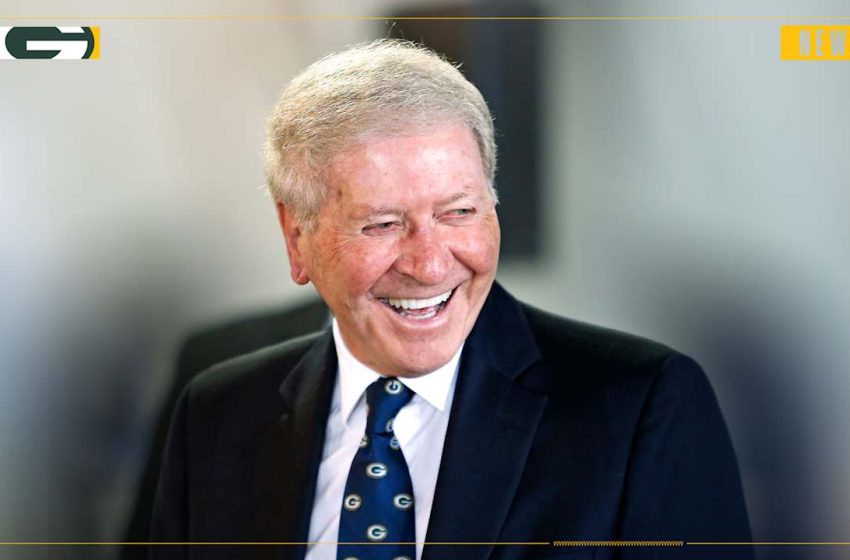
Bob Harlan leaves lasting legacy
Bob Harlan was enough of a realist to sense the urgency required of him if he was going to achieve his goal of restoring Green Bay Packers football to a pedestal befitting the NFL’s most storied and successful franchise.
He also was enough of a visionary to see the big picture and how business as usual would no longer allow the small-town Packers to stay the course on the path of sustainability.
Thus, Harlan’s 18½-year tenure as the chief executive officer of the Packers resulted in one of the most remarkable on-field turnabouts in NFL history and secured the long-term financial future of the organization through its first stock sale in 47 years and the redevelopment of Lambeau Field.
Those crowning accomplishments will be Harlan’s lasting legacy.
Harlan died Thursday, March 5, at age 89. He was still living in Green Bay at the time and had been recently hospitalized with pneumonia.
Harlan was elected CEO and the ninth president of the Packers on June 5, 1989, and served as head of the organization until Jan. 28, 2008. First hired by the Packers in 1971, Harlan worked for the organization for 37 years in all. He had been chairman emeritus since 2008.
“The Packers family was saddened to learn of the passing of Bob Harlan,” Packers President and CEO Ed Policy said today. “Bob was a visionary leader whose impact on the franchise was transformational. From his inspired hiring of Ron Wolf to turn around the club’s on-field fortunes to his tireless work to redevelop Lambeau Field, Bob restored the Packers to competitive excellence during his tenure and helped ensure our unique and treasured flagship NFL franchise was on sound footing for sustained generational success.”
On top of his tangible successes, Harlan also will be long remembered for his endearing and homespun leadership style.
“Bob’s personal touch as president was something that we all can learn from,” Mike McCarthy, Packers coach in Harlan’s final two seasons as president, said in a recent interview. “He just had a way. He trusted you. I loved his leadership style.
“I thought he was incredible in front of the media, in front of the fans. His people skills were a tremendous gift. Ted (Thompson) used to call him ‘the silver tongue’ because we’d always say, ‘No one can say it like Bob.’ He was great for Ted and me. Special man. I’ll always be so grateful to him.”
Thompson served as Packers general manager from 2005-17.
In late November 1991 with the Packers having just suffered their ninth loss in 11 games as a continuation of a free-fall that had started 24 years earlier, Harlan fired Tom Braatz as vice president of football operations. Within a week, Harlan hired Ron Wolf in a more expanded role as general manager.
At the time, in the NFL world, firing the head of player personnel in the midst of a season was rarely done. Even more unusual was hiring a replacement in-season and immediately restructuring the lines of authority in a team’s football operation.
But less than two years into his presidency, reality had hit home for Harlan. The Packers’ 10-6 finish in 1989, his first year as CEO, was merely an aberration. What’s more, the divided lines of authority at the time between Braatz and head coach Lindy Infante were doomed to fail.
In Wolf, Harlan hired someone who was groomed to succeed unlike the string of bad hires the Packers had made since 1968.
Wolf had 29 years of NFL experience in player personnel, mostly with the Oakland/Los Angeles Raiders over a period when they won three Super Bowls. Over his time there, Wolf had cut his teeth in the game and become a trusted advisor to Pro Football Hall of Fame executive Al Davis.
Harlan lured Wolf to Green Bay by giving him total authority over the football operation and then paved the way for his success by keeping his promise.
Over his first 75 days on the job, Wolf convinced the most coveted young coach on the market that year, Mike Holmgren, to come to work for the then woebegone Packers; and acquired Brett Favre, who in his first season solved the Packers’ quarterback woes that dated to the start of Bart Starr’s arm problems in 1968.
“He was a man of his word,” Wolf said of Harlan after both had retired. “He said he was going to hire me to run the football operation and he wouldn’t get in the way, and he never got in the way.”
First Appeared on
Source link






