


Israel After the Iran War
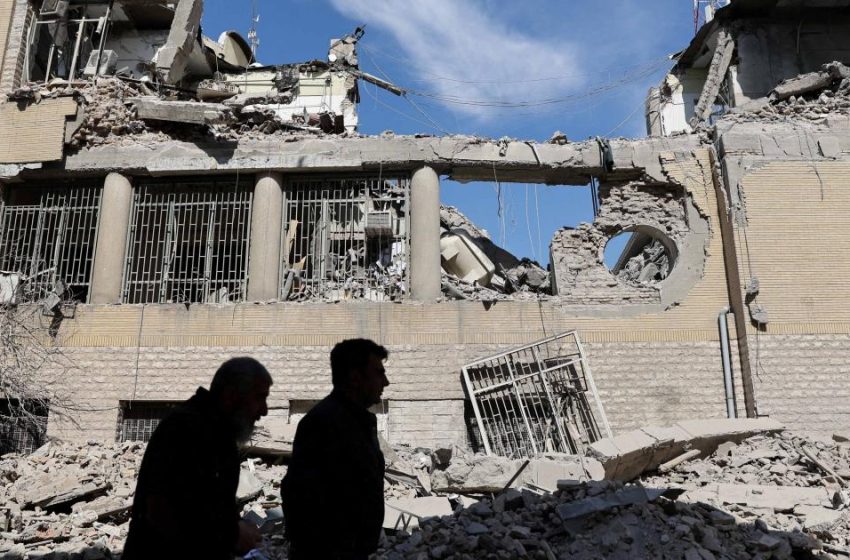
The military campaign that Israel and the United States launched last Saturday against Iran may be a joint operation. But the two countries’ experiences of the war—and its leaders’ strategic calculus—are very different. Half a world away, the U.S. public and its politicians are divided over basic questions of principle and policy: whether the strikes are legal, whether Congress needs to authorize the use of force, and whether the risks are commensurate with the potential gains.
In Israel, by contrast, the war has temporarily united a divided and fatigued public. While Americans debate the merits of eliminating the Islamic Republic, Israelis see regime change as the only outcome tantamount to victory. And they are confident that the military operation—which has removed or degraded large swaths of Iranian command nodes, missile infrastructure, and senior figures, including Supreme Leader Ali Khamenei—is already achieving tremendous success. They feel safer, their leaders are triumphant, and for the first time in years, many can imagine a region free of the malign influence of Tehran or the network of proxies it has cultivated and financed for decades. The Islamic Republic constituted an undeniable menace to Israelis, who have lived under the shadow of Iranian threats since 1979 and suffered rocket barrages and terror attacks by its many proxy militias. Watching their tormentor’s leadership be systematically eliminated feels like the ultimate vindication of the country’s security doctrine.
For Israeli Prime Minister Benjamin Netanyahu, the war constitutes a gift at a crucial moment. In January, he was facing down growing calls for a reckoning with his government’s security failures ahead of Hamas’s October 7, 2023, attack; a corruption trial; and polls suggesting that his coalition was likely to lose parliamentary seats in an election scheduled for later this year. The campaign against Iran may not only save Israel from an imminent threat but also salvage Netanyahu’s hold on power. Throughout his three-decade political career, Netanyahu has made Iran central to his messaging and cultivated an image as the only leader who could protect Israel from the regime. Now his efforts have come to fruition. Recently, his government has sought to reframe all of Israel’s military operations since October 7 as a triumphal “war of redemption” that culminates in the defeat of Iran, transfiguring Hamas’s assault into the opening chapter of a larger heroic tale—and eliding success in this campaign with the still elusive victory in Gaza. Netanyahu’s ability to claim he killed Khamenei and changed the Middle East forever could be his winning electoral card.
Yet the euphoria in Israel also feels hauntingly familiar. Just eight months ago, after the so-called 12-day war badly damaged Iranian nuclear facilities, decimated the country’s air defenses, and took out major rocket and missile capabilities, Netanyahu declared from the Knesset lectern: “We have removed the Iranian sword hanging over our heads.” On Saturday, after the initial successes of Operation Epic Fury, his language was nearly identical: “The Iranian regime’s ability to threaten Israel has been permanently degraded.”
War-weary Israelis long for a definitive victory against Iran. But it remains uncertain how the Israeli government will manage an unpredictable escalatory spiral—or that it can truly abandon a “mowing the grass” strategy that helps keep Israel mired in constant conflicts in its neighborhood. Whenever Israel addresses one security problem, it seems to only create another. The election is likely to come soon enough for Netanyahu to leverage the war to consolidate his position, regardless of long-term negative consequences. The domestic problems it is serving as a distraction from, however, will not go away—and Israelis who hope that this war will foreclose future conflict and lead to the normalization of ties with the wider Arab world could end up bitterly disappointed.
DUAL-USE ITEM
For Israelis, Iran has long represented the ultimate threat—a theocracy that has persistently called for their country’s destruction, attempted to construct nuclear weapons, and built thousands of short- and long-range ballistic missiles as well as a network of proxy militias surrounding Israel in a “ring of fire.” Since 2000, between the second intifada, the 2006 war in Lebanon, the October 7 massacre and ensuing war, and indirect conflict with Iran, Tehran and its proxies have killed at least 3,500 Israelis. According to a 2023 Wilson Center report, between 1990 and 2023, Hamas and Palestinian Islamic Jihad each received tens of millions of dollars annually from Iran to eliminate Jews; the U.S. Treasury announced that Tehran smuggled at least $1 billion to Hezbollah alone in the first ten months of 2025. In 2021, the Islamic Revolutionary Guard Corps commander Amir Ali Hajizadeh boasted that “all the missiles you might see in Gaza and Lebanon were created with Iran’s support.” That year, Yahya Sinwar—the Hamas leader who designed the October 7 attacks—acknowledged in intercepted communications that “Iran provides us with everything we need to continue the struggle.”
Back in the 1990s, Israeli Prime Minister Yitzhak Rabin understood the peril that Israel faced from Iran and began shifting the country’s national security focus toward combating the regime, including by directing resources toward the air force and the intelligence apparatus—investments that ultimately helped underwrite Israel’s successes in Operation Epic Fury. But for Netanyahu in particular, the Iranian regime has been both a genuine strategic threat and a political priority. His policies on issues related to the Palestinians have adjusted as his coalition’s stances have shifted, but his focus on Iran has remained constant across multiple governments—it is his defining foreign policy commitment. In a 2012 speech to the United Nations, he famously held up a cartoon image of a bomb, warning the body that Iran was 90 percent of the way to nuclear breakout. At successive UN General Assembly sessions, he has worked to rally both international and domestic support around the Iranian threat.
Netanyahu typically frames the danger posed by the Islamic Republic in apocalyptic terms and repeatedly invokes World War II analogies. He has argued that the 2015 Iran nuclear deal was equivalent to the 1938 Munich Agreement that appeased Adolf Hitler and frequently quotes Winston Churchill’s condemnation of British Prime Minister Neville Chamberlain: “You were given the choice between war and dishonor. You chose dishonor, and you will have war.” In July 2019, Netanyahu specifically likened Iran’s breach of agreed-on caps to its uranium enrichment to Hitler’s 1936 reoccupation of the Rhineland, arguing that a failure to impose immediate international sanctions on Iran would invite further aggression, just as appeasing the Nazis did.
Over the past year, this emphasis has acquired a second function. It is reshaping the public conversation away from the government’s failures on October 7. Every day that Israelis fret about proxy threats and existential peril from Iran is a day that they are not examining the security lapses that led to October 7, the controversies over their government’s response, Netanyahu’s corruption trial, or the country’s mounting domestic problems, including persistent violent crime and high road‑fatality rates. The Iranian threat’s role as a distraction became even more politically valuable after the Gaza cease-fire removed the urgency of that conflict—and the state of the Israeli hostages—from daily headlines in Israel.
MARCH SURPRISE
Israelis, however, are ready for the Iranian threat to be eliminated for good. In polls released this week by the Institute for National Security Studies (a Tel Aviv think tank) and the Israel Democracy Institute, a majority of Israel respondents indicated wanted the war to continue until the Iranian regime was overthrown. The INSS survey notably found that fewer Israelis feared an escalatory spiral than during last June’s 12-day war, reflecting a longing for true victory and the hope that this campaign will provide a final knockout blow.
Israelis are tired of being on a constant war footing. The economic costs of the country’s ongoing military campaigns since 2023 are mounting: the government’s 2026 defense budget is projected to consume 4.5 to 6.5 percent of GDP, down from highs of over 7.0 percent in 2024 and 2025 but significantly above the pre-war average of 4.1 percent. Tourism has collapsed by 60 percent since October 2023; the country’s budget deficit is rising to nearly four percent of GDP; and in January, the Bank of Israel warned of coming labor shortages, inflation, and a brain drain of tech workers. Even after last fall’s Gaza cease-fire, Israel has continued to be isolated internationally. Many Israelis express frustration at repeated reserve call-ups and feel trapped in a cycle in which a string of apparent military successes fail to produce lasting security; each victory demands another. Democratic institutions have weakened, social cohesion has eroded, and trust in government has fallen.
A successful military operation in Iran, then, could provide at least a temporary reprieve to both Israelis and their divisive leader. A mid-February poll by Channel 12, a leading Israeli news outlet, found that 59 percent of Israelis supported joining a potential U.S. strike on Iran. Both a majority of voters who oppose Netanyahu’s coalition and a majority of pro-Netanyahu Israelis backed an attack, a rare consensus. On Monday, two days after the operation began, support for strikes among Israelis surged to 81 percent in the INSS survey; the Israel Democracy Institute poll, released on Wednesday, found that an overwhelming 93 percent of Jewish Israelis backed the ongoing campaign. In both polls, most respondents indicated that they were prepared for a campaign of at least a month.
Israelis fear a regional escalatory spiral less than they did during the 12-day war.
The timing of the campaign was determined mostly by operational opportunities. In the wake of widespread protests in Iran—which Trump had promised to support—both the United States and Israel believed that the regime was at its weakest point and that there was a narrow window to impose decisive costs on Tehran. But it cannot be disconnected from Netanyahu’s precarious political position. For Netanyahu, success on the battlefield might substitute for the final victory he never obtained in Gaza, where despite his promises, he has not eliminated Hamas.
Netanyahu is also desperate to rewrite the narrative of October 7 that emphasizes Israeli failures: in mid-February, his government pushed to remove the word “massacre” from a bill commemorating October 7, and it has fought hard to spin the past two and a half years as a time of national rebirth or “resurrection.” The commemoration bill’s wording change failed after a public outcry. But a final triumph over Iran could adjust Netanyahu’s place in the history books from the leader under whose watch the worst massacre of Jewish people since the Holocaust occurred to the one who eliminated the Nazis’ modern-day equivalent.
This war could be the key that unlocks electoral victory in a deeply divided society. Surveys conducted before the war suggested that neither Netanyahu’s coalition nor the opposition Jewish bloc could reach a required 61-seat majority, although the latter typically fared better. A late-February poll by the Israeli newspaper Maariv showed the opposition gaining around 60 seats and Netanyahu’s coalition winning 50, leaving the seats held by Arab parties as the decisive factor. Yet most opposition parties—including those led by former Prime Minister Naftali Bennett and former Foreign Minister Yair Lapid—remain hesitant to partner with the Arab bloc. Out of any single party, Netanyahu’s Likud retains the most support, and Netanyahu consistently wins higher approval ratings than his competitors.
A story of total victory over Iran may not shift the political picture completely. But it could eke out a few more percentage points for Netanyahu’s coalition. That would lead to one of two electoral outcomes. It could lead to a protracted deadlock in which neither the pro- nor the anti-Netanyahu blocs can form a majority, potentially triggering consecutive elections that allow Netanyahu to remain prime minister of a caretaker government. Or it could increase his bargaining power with Israel’s opposition leaders, who fear leaving the country once again in the hands of the extreme right wing and could be compelled to form a more pragmatic grand coalition with Netanyahu. These leaders’ love for Israel trumps their loathing of its current prime minister—and they are rallying behind him now. “In moments like these, we stand together and we win together. There is no coalition and no opposition, only one people and one IDF, with all of us behind them,” Lapid declared on Saturday. “I’ve never been prouder to be an Israeli,” Bennett said the day after. “I give my full backing to the government and its leader. There is no left and no right.”
EXISTENTIAL THREAT ASSESSMENT
Despite its significant military achievements, this campaign may not be the final word in the decades-long battle with Iran. Israel will have to carefully avoid both known and unpredictable pitfalls as the war continues, including the expansion of a new front against Hezbollah, possible escalation involving the Houthis in Yemen, and the risk that Khamenei’s assassination will ignite widespread Shiite anger.
On Tuesday, Gila Gamliel, a member of Netanyahu’s cabinet, indicated that that the prime minister will likely seek to move Israel’s national elections earlier—to June or July—and Haaretz cited an anonymous Likud source’s claim that the prime minister’s goal is to leverage the war’s initial success. Netanyahu is in active election mode already, praying publicly that same day at a famous Jerusalem yeshiva even as the rest of the country was on lockdown.
The war could give Netanyahu an upper hand. But using the Iran threat to paper over other failures—both internal and external—carries heavy costs. In the long run, it is not at all clear that the current campaign can put a definitive end to the rinse-and-repeat strikes that Israelis no longer want. So many other fronts—in Gaza, in Lebanon, in Syria—remain open despite Israeli proclamations of victory; there is no obvious reason the same pattern will not apply with Iran. Washington may well seek to pull the plug on its involvement far short of accomplishing Israel’s desired full regime change in Tehran. Already, a fresh cycle in which a military victory opens a new front has begun, as Israel strikes Hezbollah and seizes Lebanese territory.
And the government’s triumphalism and existential-threat narrative are shutting down the kinds of questions and criticism that could hone the war’s strategy. Amid the rally of support for the campaign in Israel, there is little room to ask: If the goal is really to empower the Lebanese government once Hezbollah is crushed, do we really need to take more Lebanese territory? How will this end? Are there sensible off-ramps? What does victory look like? With no opposition leaders willing to demand that the government answer such questions, this war’s ultimate endpoint could remain ambiguous, despite Israelis’ confidence in polls that its purpose is clear. Even if the guns fall silent in a few weeks, the country could be at war again within a year—and conceivably without extensive backing from the United States. Despite unprecedented military cooperation between the U.S. military and the IDF, the populations of the two countries are drifting apart. A February Gallup poll showed declining U.S. support for Israel across the board, with more Americans expressing greater sympathy for the Palestinians than for Israel for the first time in decades. Plummeting sympathy for the Israeli cause will have dangerous consequences for Israel’s diplomatic freedom and for the patience and support of its strongest ally.
Meanwhile, problems that are equally existential for Israel—its growing international isolation, its brain drain and economic woes, its tremendous domestic polarization, its creeping annexation of the West Bank, Gaza’s instability, Hamas’s future—all sit on the back burner. Victory over Iran would no doubt transform the country’s security prospects and bolster its regional ambitions. But it will not be enough to mend the country’s deepest divisions.
Loading…
First Appeared on
Source link






