


A Laser Just Revealed What’s Been Hidden for 200 Years
Scientists have found a way to study some of Charles Darwin’s most historic specimens without ever opening the jars that hold them. By firing lasers through the glass, researchers identified the preservation liquids surrounding animals collected during the famous HMS Beagle voyage. The technique offers museums a safer way to study fragile collections that have remained sealed for nearly two centuries.
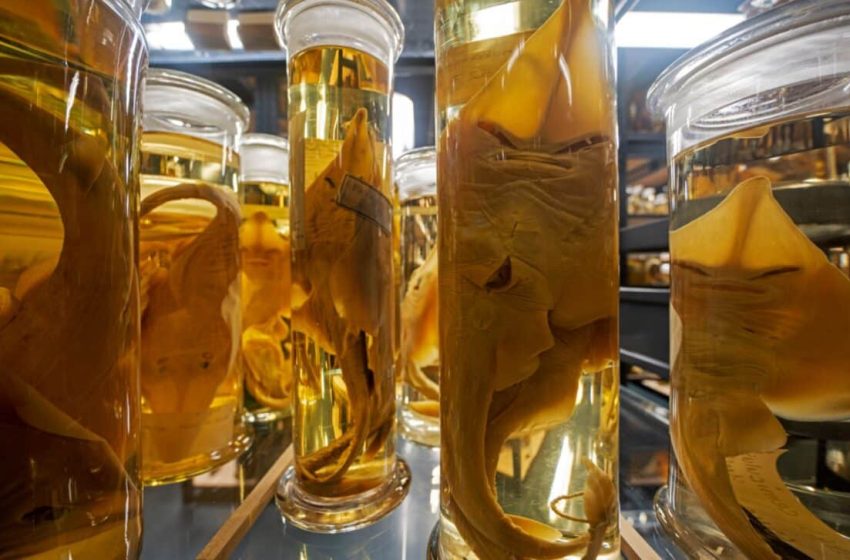
Darwin’s expedition aboard HMS Beagle between 1831 and 1836 helped lay the foundation for the theory of evolution. Many of the animals gathered during that voyage, including mammals, reptiles, fish, jellyfish, and shrimp, are still stored in liquid-filled jars at the Natural History Museum in London.
For decades, researchers faced a simple but risky dilemma: determining the chemical composition of the preservation fluids usually required opening the jars. Doing so could expose the specimens to evaporation, contamination, or environmental damage. A new laser-based method now offers a way to gather that information without disturbing the containers.
A Laser Method That Looks through Glass
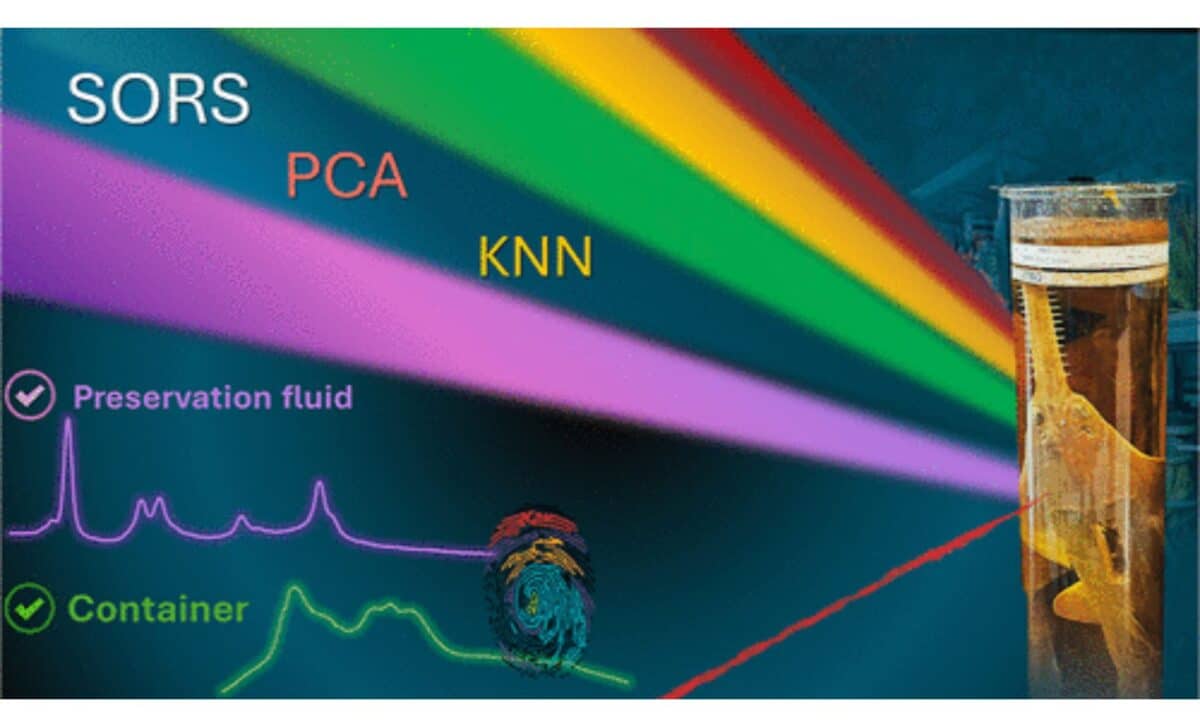
The research team used a portable technique called Spatially Offset Raman Spectroscopy (SORS) to analyze the sealed jars. According to the study published in ACS Omega, the system shines a laser through the container and measures subtle changes in the scattered light, revealing the chemical fingerprint of the liquid inside.
Traditional Raman spectroscopy often struggles with sealed containers because the signal from the glass surface overwhelms the measurement. SORS addresses that problem by taking multiple readings at slightly different positions and separating the surface signal from the deeper one.
According to researchers from the UK’s Science and Technology Facilities Council, the technology was originally developed at the Central Laser Facility and is also used in airport security scanners through Agilent Technologies. By adapting the system for museum collections, scientists were able to examine the contents of jars that had remained closed for generations.
Darwin’s Specimens Reveal Historic Preservation Methods
The study examined 46 specimens housed at the Natural History Museum in London. These included animals collected during Darwin’s Galápagos expedition as well as samples gathered by other naturalists during early scientific explorations.
The results showed that preservation techniques varied depending on both the species and the historical period. According to the Natural History Museum researchers, mammals and reptiles were typically treated with formalin before being stored in ethanol. Invertebrates, such as jellyfish and shrimp, were preserved in a wider variety of solutions including formaldehyde, buffered liquids, or mixtures containing additives like glycerol.
Historical preservation practices were often inconsistent, reflecting the evolving chemistry used by scientists across different eras. Recipes ranged from alcohol-based solutions to mixtures that included compounds such as formaldehyde or picric acid, as described in the ACS Omega study.
Accurate Identification without Opening the Jars
Using SORS, the researchers successfully identified the preservation fluids in about 78.5 percent of the samples, with partial agreement in another 15 percent. Only three specimens could not be confidently classified, according to the published analysis.
The laser scans also revealed the materials used to make the containers themselves, distinguishing between types of glass and even plastic polymers. This additional information offers insight into historical storage practices and how collections have been maintained over time.
Dr. Sara Mosca from the STFC Central Laser Facility explained the importance of avoiding direct contact with the specimens: “Until now, understanding what preservation fluid is in each jar meant opening them, which risks evaporation, contamination, and exposing specimens to environmental damage.”
Museums worldwide hold more than 100 million biological specimens preserved in liquid. For curators, knowing the exact chemical composition of these fluids is essential for monitoring degradation and maintaining long-term preservation. According to researchers involved in the project, non-invasive tools like SORS could allow institutions to monitor the condition of these collections while keeping historically sealed containers intact.
First Appeared on
Source link






