


US to send anti-drone system to the Mideast, officials say
LONDON (AP) — An American anti-drone system proven to work against Russian drones in Ukraine will soon be sent to the Middle East to bolster U.S. defenses against Iranian drones, two U.S. officials told The Associated Press on Friday.
While the U.S. has used Patriot and THAAD missile systems to take down Iranian missiles successfully, there are limited effective anti-drone defenses now in the Middle East, according to a U.S. defense official, one of two officials who spoke on condition of anonymity to discuss sensitive military matters.
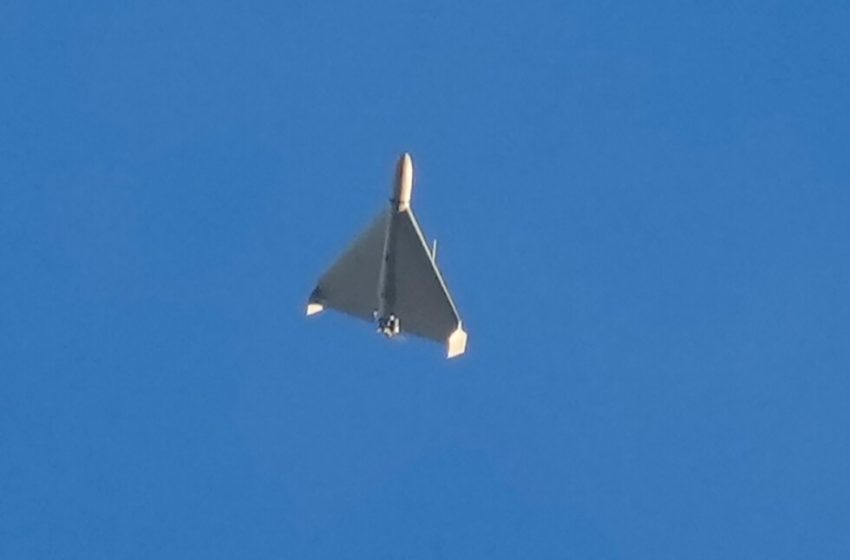
The U.S. response to countering Iran’s Shahed drones has been “disappointing,” the other U.S. official said, particularly because the drones fired by Iran are a much more basic version of the same drone that Russia is continuously refining and updating in its war in Ukraine.
The effort to bolster U.S. anti-drone capabilities in the Middle East underscores concerns about the planning for an Iranian retaliatory response across the region to the American and Israeli strikes. Persian Gulf countries have complained they were not given adequate time to prepare for the torrent of Iranian drones and missiles bombarding their territory.
The system that is being sent, known as Merops, flies drones against drones. It is small enough to fit in the back of a midsize pickup truck, can identify drones and close in on them, using artificial intelligence to navigate when satellite and electronic communications are jammed.
Drones are hard to pinpoint on radar systems calibrated for spotting high-speed missiles and can be mistaken for birds or planes. The Merops system is designed to spot them and take them down. Crucially, the system also is cheaper than firing a missile that costs hundreds of thousands of dollars at a drone that costs less than $50,000.
The top Democrat on the House Intelligence Committee, Rep. Jim Himes of Connecticut, said this week that “we’re pretty good at taking missiles down. What is much more problematic for us is the huge inventory of Iranian drones, which are hard to detect and hard to take down.”
Himes said the drone attacks present a “math problem” in that the U.S. cannot keep relying on expensive military interceptors, like Patriot systems, to down the quickly and cheaply made Iranian drones.
“It’s really, really expensive to take down a cheap drone,” he said. “A giant missile going after a tiny little crappy drone.”
Merops was deployed in NATO nations Poland and Romania in November after Russian attack drones repeatedly entered NATO airspace. The U.S. defense official says America has learned lessons from the deployment of the system and others like it in Ukraine.
Ukrainian President Volodymyr Zelenskyy said Thursday that the U.S. asked for his country’s help in combating Iran’s Shahed drones, which Russia has used in huge numbers in Ukraine. Zelenskyy did not specify the type of assistance Ukraine would provide, but the U.S. defense official said the Merops system is a part of it.
When asked about Zelenskyy’s comments, Trump told Reuters on Thursday: “Certainly, I’ll take, you know, any assistance from any country.”
In the Middle East, Merops will be deployed to various locations, including where U.S. forces are not present, the defense official said. Most of the systems will be sent directly by Perennial Autonomy — the manufacturer backed by former Google CEO Eric Schmidt — and will not affect defenses in Europe, the official said.
Perennial Autonomy did not immediately respond to questions about the use of Merops in the Middle East.
Pentagon officials conceded this week in closed-door briefings with lawmakers they are struggling to stop waves of drones launched by Iran, leaving some U.S. targets in the Gulf region vulnerable.
“This does not mean we can stop everything, but we ensured that the maximum possible defense and maximum possible force protection was set up before we went on offense,” Defense Secretary Pete Hegseth told reporters this week.
Michael Robbins, president and CEO of AUVSI, a drone industry group, said lessons from the Middle East and Ukraine show that the U.S. must accelerate deployment of sophisticated counter-drone technologies, so “our forces can defend bases and populations without spending a million dollars to stop a $50,000 threat.”
___
Associated Press writers Lisa Mascaro, Didi Tang, David Klepper, Michelle L. Price, Ben Finley and Seung Min Kim contributed to this report from Washington.
First Appeared on
Source link






