


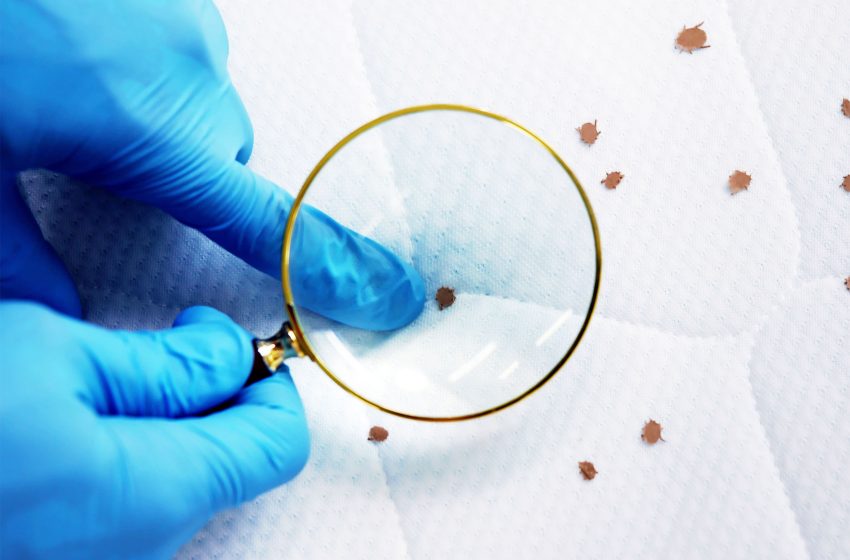
Bed bugs have a ‘kryptonite’ that makes them very easy to defeat
Have you ever wondered if bed bugs are afraid of anything? These tiny blood-sucking insects cause stress in homes around the world. Once bed bugs enter a room, getting rid of them can feel almost impossible.
But new research from the University of California Riverside has revealed something surprising. Bed bugs fear water.
A recent study shows that moisture and wet surfaces make bed bugs quickly turn away. This discovery could help scientists and pest control companies better understand how to deal with infestations.
Why bed bugs fear water
The shape of a bed bug’s body explains this fear. Bed bugs have very flat bodies. Small breathing holes called spiracles sit along the sides of the belly.
“If they physically contact a body of water, they’ll get stuck to its surface, blocking their respiratory openings,” said Professor Dong Hwan Choe, an entomologist at the UC Riverside.
“Due to its strong adhesive power, water could be very dangerous from a bed bug‘s perspective. So, it’s not surprising to learn that they’re extremely averse to moisture.”
Water can trap the insect and block breathing. Even a small droplet can become dangerous. This physical risk likely explains why bed bugs avoid wet areas.
Lab accident reveals water fear
The discovery happened by accident in Professor Choe’s lab. Researchers keep bed bugs in small containers called vials.
To feed the insects, scientists attach an artificial feeder filled with blood to the top of each vial. The insects crawl upward and push mouthparts through a thin membrane to drink.
One day, the membrane tore slightly. Blood began to leak and soak into paper inside the vial. The paper normally helps the insects cling to surfaces.
Wet paper makes bugs retreat
“The leaked blood was slowly soaking the paper from the top of the vial. I thought the bed bugs would be happy to drink the blood from the paper,” said Professor Choe.
“But what I saw was very different. They were actively avoiding the part of paper that became wet with blood. They wouldn’t even walk near the wet areas.”
Instead of gathering around the soaked paper, the insects stayed away. This reaction surprised the research team. The lab later repeated the test using plain water. The insects avoided that as well.
Tracking tiny movements
After this unexpected observation, postdoctoral researcher Jorge Bustamante designed careful experiments to study the behavior. Working with bed bugs is not easy. Young bed bugs measure only about 2 millimeters long.
Bustamante used a special infrared camera with a magnifying lens. Infrared light allowed clear recording of movement without disturbing the insects.
Video analysis software helped track color differences between each insect and the background. This method allowed accurate measurement of movement speed and distance.
The research team observed how quickly the insects approached wet areas and how fast the insects retreated. The team also compared males and females, as well as young and old insects.
Young bugs turn faster
The results showed a clear pattern. Every group avoided wet surfaces. Males, females, adults, and young insects all turned away from moisture. In most cases, movement away from water happened faster than movement toward it.
However, younger bed bugs reacted even more strongly. Smaller insects made quicker U turns when nearing wet areas. This finding suggests young bed bugs are more sensitive to water and dampness.
This behavior likely increases survival. A young insect may face greater danger from becoming trapped in water, so strong avoidance helps reduce risk.
Fear and pest control
This research marks the first published study to clearly show bed bugs actively avoid moisture. The findings may affect how pest control companies use water based insecticides.
Many sprays create wet surfaces when applied. If a spray does not kill the insects immediately, moisture may cause the insects to move away from treated areas. This movement could spread the infestation to new parts of a home.
“If the insecticides don’t kill the bed bugs right away, then they will leave the treated areas and disperse elsewhere,” said Professor Choe.
Understanding this behavior may help improve treatment methods. Pest control professionals may need to consider how moisture affects insect movement during treatment.
A closer look at bed bugs
The study also offers a small piece of practical advice. If a person suspects bed bugs on clothing or skin, water can help.
“Take a bath. It’ll solve the problem,” said Professor Choe. “Of course, the bed bugs in the room or on the bed will require different approaches.”
Bathing can remove insects from the body. However, treating a room or mattress requires more detailed methods.
Bed bugs remain difficult pests to eliminate. However, this research adds an important piece to the puzzle. Water, something simple and common, creates fear in these insects.
By understanding how bed bugs react to moisture, scientists and pest control experts can design better strategies. Even small discoveries like this can lead to smarter solutions.
The study is published in the Journal of Ethology.
—–
Like what you read? Subscribe to our newsletter for engaging articles, exclusive content, and the latest updates.
Check us out on EarthSnap, a free app brought to you by Eric Ralls and Earth.com.
—–
First Appeared on
Source link






