


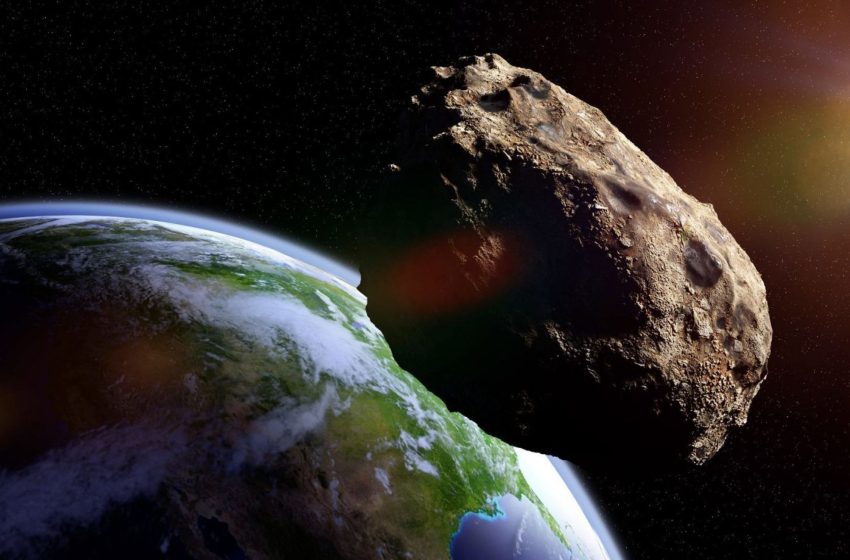
Over 15,000 ‘city-killing’ asteroids are orbiting Earth undetected
NASA estimates that over 15,000 asteroids, each large enough to destroy a city, remain undetected, leaving Earth virtually defenseless.
That gap means a single late discovery could force governments to confront a regional catastrophe with little time to respond.
Counting near-Earth asteroids
At a recent scientific meeting of the American Association for the Advancement of Science (AAAS) in Phoenix, Arizona, the scale of that blind spot came into sharp focus as officials outlined how many dangerous objects still elude detection.
Speaking there, Dr. Kelly Fast, NASA’s acting Planetary Defense Officer, detailed the tally of roughly 25,000 known, city-scale asteroids and confirmed that about 40 percent have been catalogued so far.
The remaining majority continue to orbit unnoticed, not because they are rare, but because many are dark or positioned in parts of the sky that telescopes struggle to monitor.
As long as those objects remain missing from the catalog, any strategy to deflect one depends first on finding it in time.
Why many asteroids stay hidden
Most telescopes scan for reflected sunlight, yet many mid-size asteroids spend years near the Sun’s glare from Earth.
Dark coatings cut albedo – the amount of sunlight that a surface reflects – so even large rocks can look like faint dots.
Earthlike orbits also keep some objects moving almost alongside us, which makes them harder to spot as movers.
Without early sightings from different angles, orbit forecasts stay fuzzy, and mission planners cannot act with confidence.
When rocks hit hard
On June 30, 1908, the Tunguska blast over Siberia in Russia flattened about 830 square miles (2,150 square kilometers) of forest.
A rocky body about 130 feet (40 meters) across exploded in the air, and the shock wave toppled trees far beyond ground zero.
Over a modern city, that kind of airburst would rip roofs, ignite fuel, and overwhelm hospitals within the first hour.
Impacts this size do not happen often, but they explain why a single missed object can become a national crisis.
Time is the weapon
Years of notice would allow scientists to tighten an orbit forecast, then let engineers pick a response that fits the threat.
Small errors add up quickly, because each pass near Earth lets gravity from planets bend a path a little more.
Designing and launching a spacecraft takes time, and long travel times mean the final approach cannot be rushed.
Lose that lead time, and officials may need evacuations and emergency shelters, since no space fix arrives overnight.
DART and asteroid orbits
In 2022, NASA’s Double Asteroid Redirection Test, or DART, struck Dimorphos and changed its orbit around a larger asteroid.
That impact worked as a kinetic impactor, a spacecraft that hits an asteroid to nudge it, using pure momentum.
Measurements after the collision showed a 32-minute change in Dimorphos’ orbit, which proved that rock can move.
Even with that proof, deflection still depends on early discovery, since planners must know where to aim years ahead.
Surveyor spots the dark asteroids
NASA plans the Near-Earth Object Surveyor, an infrared space telescope built to find dark asteroids by their heat.
Its detectors target near-Earth objects – space rocks and comets that pass close to Earth’s orbit – including those that are hard to see.
A 2023 mission analysis mapped how the telescope could reach the 90-percent catalog goal within a decade.
With launch planned no earlier than September 2027, Surveyor would boost warning time, yet some threats could remain unseen.
Ground surveys add speed
Large ground telescopes can sweep wide areas of sky each night, and they can spot new objects by motion.
Repeated images let software link a moving dot across frames, then compute a preliminary orbit within hours.
Weather, daylight, and bright moonlight still cut observing time, and ground surveys struggle to watch the space near the Sun.
Space-based searching fills that gap, since an infrared telescope can look closer to the Sun without atmospheric glare.
Turning asteroid alerts into action
Once a telescope finds a new asteroid, teams publish its path estimates and update them as fresh observations arrive.
Each update narrows an impact probability – the chance an orbit intersects Earth – and that number guides planning.
Public warnings also need clear timing, because early predictions can swing as uncertainty shrinks and new data arrives.
Reliable decision-making depends on steady communication, since a late change from safe to dangerous could trigger chaos.
Finding asteroids in Earth orbit
Finding and tracking every risky asteroid is slow work, and it competes with many other missions for money and attention.
Building better surveys means stable funding for telescopes, data pipelines, and the people who keep catalogs accurate.
International coordination matters too, because an asteroid does not respect borders and response choices affect many countries.
Without sustained investment, the world keeps gambling on luck, even though better detection is a problem humans can solve.
A clear next step
Better detection makes asteroid defense practical, because more warning time lets scientists track orbits and gives engineers time to act.
Until Surveyor and other searches fill the catalog, emergency planners still need realistic drills for impacts that may arrive with little notice.
Details reported in the New York Post.
—–
Like what you read? Subscribe to our newsletter for engaging articles, exclusive content, and the latest updates.
Check us out on EarthSnap, a free app brought to you by Eric Ralls and Earth.com.
—–
First Appeared on
Source link






