


Top doctor suffering agonizing bone disease osteopenia reveals how to REVERSE the condition
Dr Robin Berzin should have been the picture of longevity.
As an internal and functional medicine physician, Berzin was well versed in healthy aging for women. She lifted light weights, followed a healthy diet and regularly tested levels of her hormones, all of which strengthen muscles and lower the risk of bone decay.
But in spring 2025, at age 43, Berzin underwent a full-body X-ray called a DEXA (Dual-Energy X-ray Absorptiometry) scan that measures the amount of calcium and other vital minerals that keep the bones from breaking. To her surprise, it revealed osteopenia, a loss of bone density.
Left untreated, osteopenia can advance into osteoporosis, which causes the bones to become so weak and brittle that even minor bumps or stressors like coughing can lead to fractures.
Bone density naturally degrades with age, but faster weakening can decrease mobility and independence and increase the risk of severe injuries. Falling with weakened bones can also lead to hospitalizations, raising the risk of life-threatening complications such as blood clots that can travel from the legs to the lungs.
‘I was surprised that at 43 I had osteopenia already in my hips and on both sides – so bilateral osteopenia,’ Berzin, founder and CEO of Parsley Health, told the Daily Mail. ‘Bone health is something that’s so critical for women.’
For many of the three million Americans with osteopenia, the condition feels like an inevitable step toward osteoporosis, which affects another three million people. Women make up around 50 percent of the country’s osteopenia patients and 80 percent of osteoporosis patients.
The former is especially common in women who have gone through menopause due to the sharp decline of protective estrogen. Recent research also suggests early menopause, which occurs before age 45, is on the rise in the US due to lifestyle factors such as increasing rates of obesity, environmental toxins and physical inactivity.
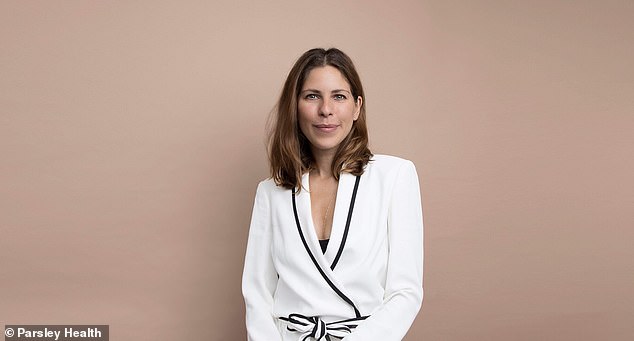
Dr Robin Berzin, an internal and functional medicine physician and the founder and CEO of Parsley Health, was diagnosed at 43 with osteopenia
Berzin has not been through menopause yet.
But, she noted that women who are obese and have higher levels of visceral fat, as well as those with autoimmune conditions that cause inflammation such as rheumatoid arthritis and lupus, are at a greater risk of osteopenia.
‘We basically have a population of women who are set up for higher rates of osteoporosis and osteopenia earlier and earlier,’ Berzin told the Daily Mail. ‘And the kicker is that we can actually be reversing osteopenia and osteoporosis if we start early.’
For Berzin, building lean muscle was key to reversing her osteopenia. Muscle contractions from regular weight training are thought to create tension on the bones, signaling them to increase their density and become thicker.
Stronger muscles also provide essential structural support for the skeleton, especially around the hips, spine and wrists.
A 2022 study published in the journal Sensors found that about six months of regular strength training was enough to increase bone density.
When it comes to long-term health, Berzin believes muscle mass may be a better indicator for women than body mass index (BMI) when considering the effect it has on bone density.
One 2022 study found that small decreases in bone density were associated with a 1.4-fold increased risk of death from any cause.
‘I’ve been really on a mission to help women learn to throw away their scale because weight is a really inadequate metric for health span and longevity and to instead look at total body DEXA,’ she said.
DEXA scans, like the one Berzin had last year, take around ten minutes and analyze levels of body fat, lean mass and bone density in each part of the body. The cost varies based on location and potential insurance coverage, but without insurance, the scan runs between $100 and $400.
Most doctors do not recommend DEXA scans until age 65 for women or 70 for men, but Berzin suggested opting for one much earlier – starting at age 35 – ‘to really get ahead of building bone, or in my case, rebuilding bone, which can be done with the right protocols.’
However, because these scans are expensive and often not recommended for younger women, Berzin said those who can’t partake can still aim to reverse osteopenia with simple lifestyle changes.
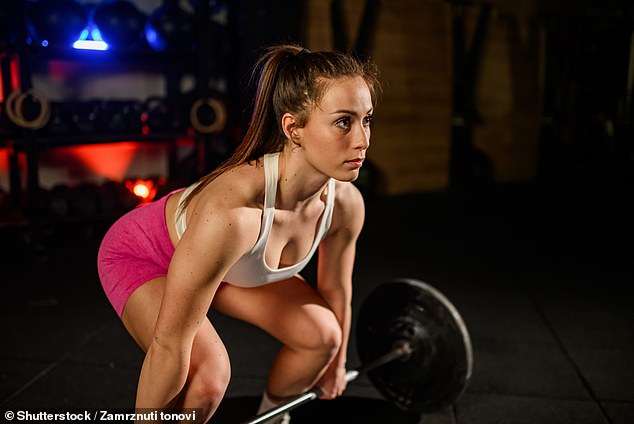
Weight training is essential for Berzin. She uses exercises such as barbell back squats, deadlifts, overhead presses and weighted carries
At the time of her diagnosis, Berzin mostly did yoga, light resistance training and pilates.
‘[Osteopenia] really kicked me into gear to start weight training three times a week,’ she said.
One of the main focuses of her resistance training is axial lode exercises, which apply vertical pressure along the spine and other long bones. These include barbell back squats, deadlifts, overhead presses and weighted carries (also called Farmer’s walks).
‘You really have to get sort of weights at the right angle to get into the hips,’ Berzin said.
She stressed that the exact amount of weight to choose depends on individual preference and history, but she opts for about 70lbs for moves like inner thigh presses and weighted hip thrusts.
She uses around 30lbs for goblet squats, which involve holding a single dumbbell or kettlebell vertically against your chest while squatting.
Berzin also takes multiple supplements, including vitamin D3, vitamin K2 and creatine. Experts believe vitamin D3 – which costs anywhere from $4 to $25 for a month’s supply depending on the brand and dosage – allows the intestines to better absorb calcium from foods to improve bone renewal and strength.
Vitamin K2 activates the protein osteocalcin, which binds calcium to the bones, while creatine, a natural compound stored in the muscles and brain, enhances the effects of strength training.
A bottle of vitamin K2 pills runs anywhere from $8 to $25 depending on the size, dosage and brand. Creatine is sold in either pill or powder form, with the cost per package ranging from $15 to $50.

Berzin aims for about 80g of protein per day, which comes from lean sources such as chicken, as well as fish, eggs, cottage cheese, lentils, tofu, nuts and black beans
‘You have to give your bones the message to build,’ Berzin told the Daily Mail.
She also started ‘really paying attention to [her] protein intake.’
Health authorities recommend that average, relatively sedentary adults get 0.36g of protein per 1lbs of body weight, but this varies based on activity level. For a sedentary person weighing 150lbs, they should consume about 55g of protein in a day.
Berzin, however, aims for 0.7g per 1lbs, which for her adds up to 80g per day. ‘Most women can build significant lean muscle and bone with 0.6 or 0.7 grams per pound,’ she said.
Foods rich in protein include animal products such as lean meats, fish, eggs, cottage cheese and plant-based options like lentils, tofu, nuts and black beans.
Along with asking for a DEXA scan yearly starting at age 35, Berzin urges women to ask for blood tests to measure hormone levels beginning around age 40. These, she said, are to see if hormone replacement therapy (HRT) could boost low amounts of estrogen and protect against bone weakening.
Osteopenia can be tracked with DEXA scans, which Berzin recommends yearly starting at age 35 for women
A 2023 study in the journal Menopause followed women for 20 years and found HRT helped increase bone mineral density in the lumbar spine, the lowest part of the spine, by two to eight percent.
‘I disagree vehemently with the folks out there who say that we shouldn’t bother to test our hormones and we should wait for symptoms,’ Berzin said. ‘Waiting for symptoms, it’s like waiting for the wheels to fall off the wagon.’
Regarding DEXA scans, she also suggested that women who are under 35 but are obese or highly sedentary may consider getting tested earlier. But, she added, regardless of when women get tested for the first time, getting follow-up scans is essential to preventing osteopenia in the long term.
Berzin is awaiting another DEXA scan later this year to track her progress.
‘Proactive testing is how we deliver preventive, personalized care,’ she said.
‘And if we want to move into a world where we have a population that generates health instead of rampant disease, we need to embrace proactive testing as part of the solution.’
First Appeared on
Source link






