


F1 Australian Grand Prix briefing: George Russell wins as Ferrari’s strategy backfires
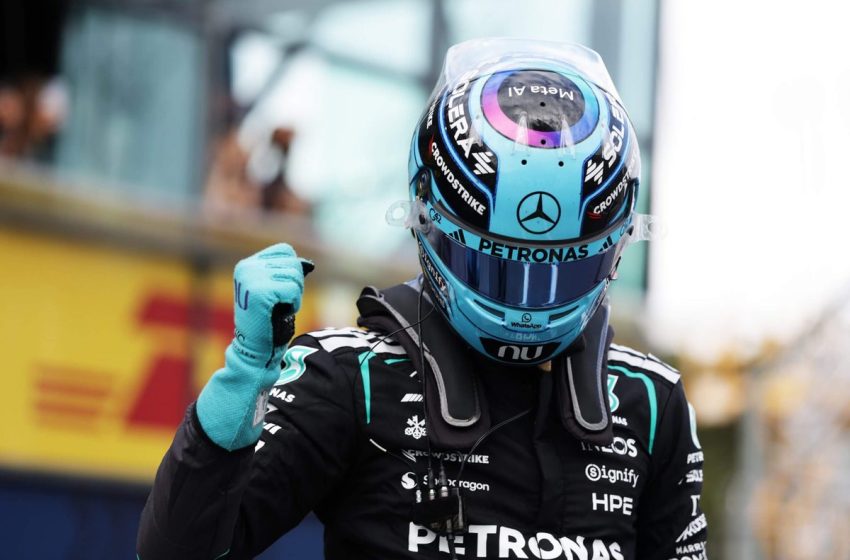
George Russell won the 2026 Australian Grand Prix for Mercedes ahead of his teammate Kimi Antonelli, after Ferrari fumbled a virtual safety car strategy call that capped an entertaining battle between Russell and early leader Charles Leclerc.
Pole-sitter Russell lost the lead immediately, as Ferrari’s preseason start prowess continued into real racing and Leclerc roared from fourth to lead into Turn 1. Russell and Leclerc then swapped the lead several times in the first stint, with Hamilton closing right up behind them as they scrapped.
When Red Bull’s Isack Hadjar retired with a smoky engine problem on Lap 11 of 58, the virtual safety car was activated and Mercedes brought its cars in. Ferrari did not, despite multiple chances, and Russell gained several seconds by stopping with the race neutralized. A second VSC for Valtteri Bottas’ Cadillac stopping at the pit entry a short while later also denied Ferrari a chance to come in, as the pit lane was swiftly closed to recover Bottas’ car.
Leclerc eventually took the hard tires on Lap 25, Hamilton likewise on Lap 28, putting Russell back into the lead and boosting Antonelli to second. Both teams then settled onto one-stop strategies, and Russell and Antonelli comfortably secured Mercedes’ first 1-2 since the 2024 Las Vegas GP. Russell’s winning margin was 2.9 seconds, with Leclerc 12.5 seconds further back.
Lando Norris beat Max Verstappen to fifth, while four cars stopped with reliability issues — common at the start of new F1 rules eras — including Nico Hülkenberg, who never took the start, and Fernando Alonso’s Honda-hobbled Aston Martin. Oscar Piastri crashed out on the reconnoitering laps 35 minutes before the start.
Mercedes’ commanding win confirms its 2026 favorite tag
After blowing the rest of the field away in qualifying, the feeling from teams in the paddock was that the main fight in Melbourne would be for third place, assuming Mercedes would ease to a 1-2 finish.
And although that did prove to be the case, as Russell crossed the line ahead of Antonelli to give Mercedes a perfect start to F1’s new era, the Silver Arrows squad was made to fight for it by Ferrari in the early part of the race.
Leclerc and Hamilton made lightning starts, which immediately put pressure on Russell, who could not then pull away from Leclerc each time he battled back ahead in the scrap that characterized the early part of the race. Russell was eventually able to cycle back into the lead after pitting along with Antonelli under the first VSC, with Leclerc dropping back when he changed tires 13 laps later.
That defused the potential for a battle between Mercedes and Ferrari through the race’s second half, even if Mercedes did have to keep an eye on its tire management over a such a long second stint. But Russell and Antonelli were ultimately able to ease to the finish without any real pressure from the red cars behind, as Leclerc’s pace was not high enough to cut the gap to Antonelli and Hamilton even closed in on him in the final laps.
Although Ferrari could have been a bit closer with a different strategy call, the comfort of the victory will do little to dispel the feeling in the paddock about Mercedes’ edge over the field to start this season.
Its customer McLaren team, which also runs a Mercedes engine, had nothing like the same level of performance, as Lando Norris, who finished fifth, was over 50 seconds behind Russell at the finish. That’s not just down to the chassis; it’s also down to how to get the most performance out of the Mercedes engine. McLaren feels it still has much to learn about the engine’s systems after only getting the latest specification after preseason testing had finished.
There may have been some fight through this race’s opening half, but make no mistake about it: Mercedes is firmly the team to beat in F1 to start this year, with Russell spearheading its charge.
Luke Smith
Mercedes and Ferrari put on a show in the opening laps (Joe Portlock / Getty Images)
Ferrari faces a ‘what if’ after strategy miscue
At first, there was hope.
Ferrari nailed the start of Sunday’s grand prix. Both Leclerc and Hamilton surged forward, with Leclerc passing Russell at Turn 1 after zipping up the middle and past Hadjar. Leclerc then engaged in a multi-lap battle for the lead with Russell, and Hamilton wasn’t far off from the pair, closing in from behind as the first stint wore on.
Five lead changes occurred in the first eight laps, and Ferrari and Mercedes looked evenly matched to an extent — though you were almost waiting for the other shoe to drop, knowing the power of the Silver Arrows’ engine. It wasn’t just pure pace, though, that ended Ferrari’s dreams of starting this new regulation era with a win. It was a strategy miscue.
Smoke came pouring out of the rear of Hadjar’s car as he pulled off to the side of the track on Lap 11, triggering the first virtual safety car. This is a cheap moment for teams to pit and swap tires, given the slower pace mandated for the cars still out on track during this period, and Ferrari opted against taking advantage.
That meant unless another virtual or full safety car period came, where the pack is closed up behind the real safety car leading the way, it was only a matter of time before Russell would catch Leclerc and Hamilton. There looked to be a glimmer of hope for the Prancing Horse squad when Bottas caused the second VSC activation, but he pulled off at the pit lane entry, which closed it and left Ferrari unable to pit until it reopened.
With a handful of laps to go, Russell commanded the race, building a 15-second gap to Leclerc in third. Having one driver on the podium and the other in fourth is a strong start for Ferrari, given how its poor 2025 season unfolded, and Hamilton finished 35-seconds ahead of reigning world champion Norris. But what if Ferrari went with a different strategy? Could it have challenged Mercedes to the end? The entertaining first stint suggests it could’ve at least been closer.
Madeline Coleman
A strong debut for the only 2026 rookie
Arvid Lindblad faced the steepest learning curves when he joined the grid, as the lone rookie this year, but the Racing Bulls driver starred in his debut, bringing home four points with an eighth-place finish.
It’s already a big jump to go from Formula 2 to F1, particularly given the amount of new media and marketing commitments the drivers have at the top level, but tackling this new generation of cars has proven to be tricky. And that lack of previous F1 experience may have just helped Lindblad, given he did not have much of a reference point, bar a handful of practice outings and test days in 2025.
“In the end, a race car is a race car, it’s got a throttle and a brake, but the energy is a bigger aspect,” Lindblad said on Thursday, when asked what skills the drivers needed to develop more to drive the new F1 cars. “It’s not always about just being flat out, it’s about being more energy-aware, about if you can be more efficient. That’s a bigger element than it has been in the past.”
In his first qualifying session, Lindblad managed to stick it in ninth of the 22 drivers, in part thanks to Racing Bulls getting its car into the right window from the get-go in Melbourne. According to the team’s chief technical officer, Tim Goss, Lindblad did suffer “a minor control issue, which cost significant performance” during Q3.
The big question was then whether Lindblad would be able to nail it on Sunday as well, when the pressure was cranked up for his maiden F1 race. He nailed the start, moving up to fifth on the first lap, and he eventually found himself in a battle with Verstappen. The four-time world champion managed to pass the rookie on lap 19, taking sixth, and Lindblad stayed within solid points contention for the remainder of the race.
There’s normally a grace period when it comes to rookies tackling their first race, let alone with a significant regulation overhaul like this added on top. But Lindblad showed his skill and potential — and a promising future.
Madeline Coleman
F1’s new style of racing offers an encouraging start
Given all the doom and gloom — much of it justified — about what these new-style F1 cars were like to drive in qualifying on Saturday, the action in Sunday’s race quickly made up for it.
Drivers feared that overtaking would be difficult, given the energy-starved nature of the new engine formula. Instead, F1 immediately got a series of back-and-forth moves for the lead here, which swapped hands five times in the opening eight laps between Leclerc and Russell, including twice in six corners at one stage.
The nature of the moves will naturally draw scrutiny. Given how much battery power the drivers must use to overtake, and the subsequent challenge of regaining it, which can leave them exposed to being passed back, such back-and-forth exchanges should be of little surprise.
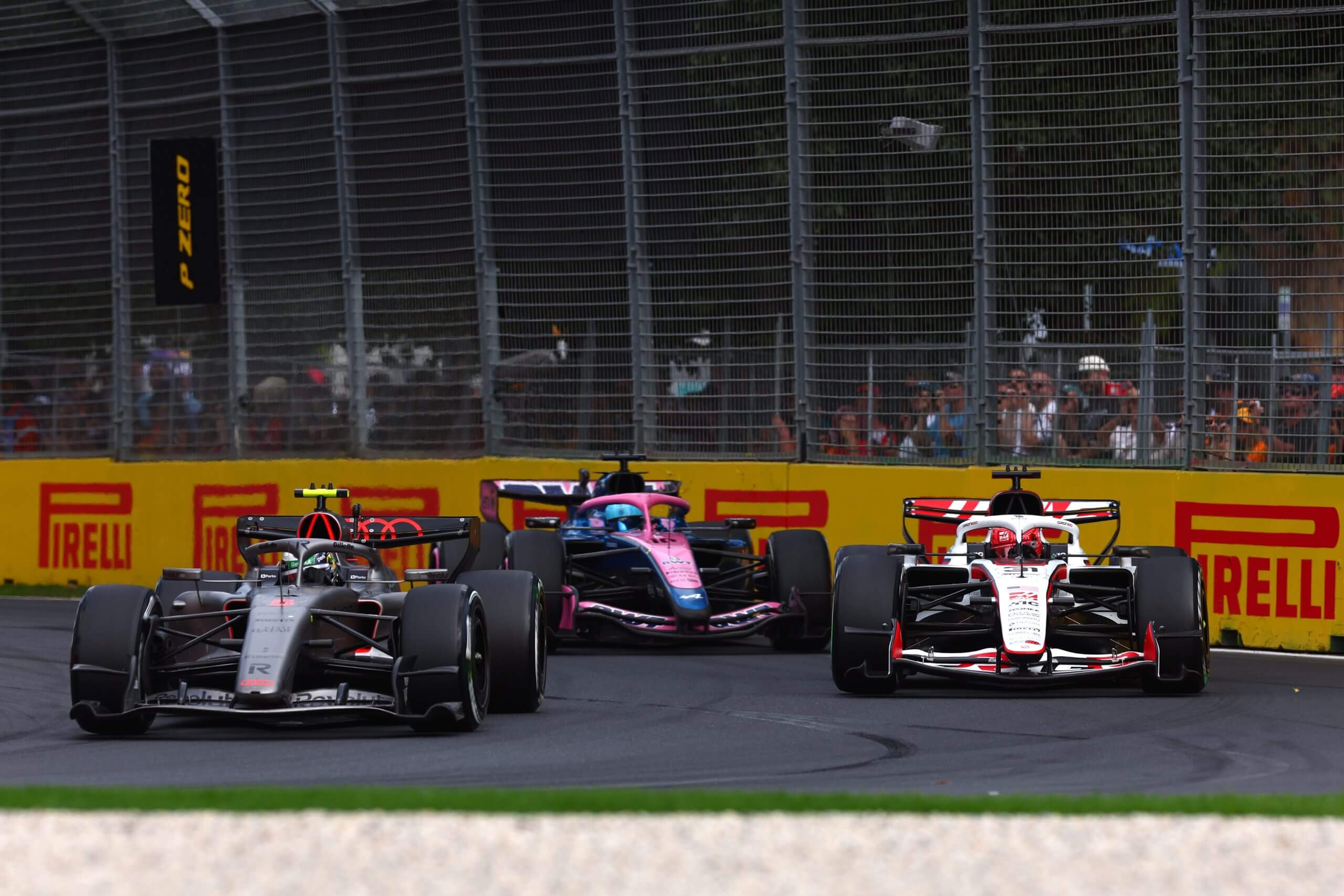
Overtakes looked different, but there were plenty of examples (Joe Portlock / Getty Images)
But their frequency certainly did. Leclerc and Russell’s battle in particular seemed to highlight how raceable these new cars are, aided by the slightly smaller dimensions and their improved agility, as did the dicing between Ollie Bearman and Lindblad later in the race, which Haas driver Bearman eventually won.
The idea put forward in preseason testing that F1 is now a game of ‘high-speed chess’ rang very true in this race.
There are still definite fixes needed to be made to these cars, given how energy-starved they were at fast corners during qualifying (acknowledging that this was always going to be one of the worst tracks, as there are so few braking zones in Melbourne to harvest energy back into the battery quickly), but as racing products go, F1 2026 made an encouraging start.
Luke Smith
A no-show for the hometown hero
On the ground in Melbourne, the build-up surrounded local hero Oscar Piastri. After his breakout year in 2025, hopes were high that he could finally end the home ‘curse’ and be the first Australian driver to finish on the podium at a home F1 race.
Piastri qualified fifth on Saturday, beating his McLaren teammate Norris, and he seemed in a good spot to go on the attack from the start — except he didn’t make it that far.
A crash while en route to the grid meant Piastri did not even start the race, after he lost control on a curb while exiting Turn 4 and went spinning into the barriers. He told reporters afterwards that his engine delivered a burst of electrical power that caught him out and contributed to the spin, as did his cold tires. But he also accepted there was “a big element of it that was me.”
All across the track, fans were decked out in green Piastri merchandise, leaving them to watch on disappointed as their favorite driver took no part in the race.
“It’s obviously very disappointing,” said Piastri. “I don’t really have many other words than that. I’m just very sorry, obviously, for everyone that came out and wanted to support me.”
The setback comes 12 months on from Piastri going off track when rain hit the track in the closing stages of the 2025 Melbourne race, costing him a podium finish and possibly the race win. This was far more disappointing.
And as for the home curse? “Clearly it still lives,” Piastri said.
Luke Smith
First Appeared on
Source link






