


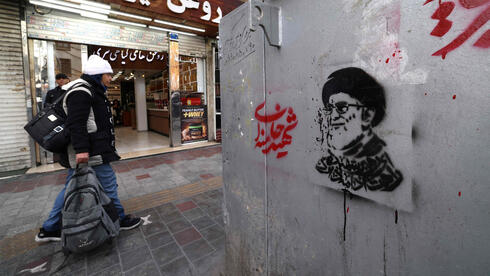
Iran regime shows signs of fractures as war pressure mounts
Sources close to Iran’s leadership told Reuters that strains are beginning to show among senior officials who remain after a wave of targeted killings during the strikes. The sources spoke on condition of anonymity because of the sensitivity of the situation.
The growing pressure has also accelerated efforts to appoint a new supreme leader. Members of Iran’s Assembly of Experts — the clerical body responsible for selecting the country’s top authority — could make a decision as early as Sunday.
Analysts say the Revolutionary Guards are increasingly shaping Iran’s strategy as the war continues.
“Wartime tends to clarify power structures, and in this case the decisive voice is not that of the civilian leadership but of the IRGC,” said Alex Vatanka, a senior fellow at the Middle East Institute, referring to the Islamic Revolutionary Guard Corps.
Tensions became public after Pezeshkian’s statement about Gulf states. Hardline cleric and lawmaker Hamid Rasai criticized the president on social media, calling his position “unprofessional, weak and unacceptable.”
When Pezeshkian later repeated his remarks online, he omitted the earlier apology — a move seen as a partial retreat under pressure from hardliners.
Despite the internal disagreements, senior figures across Iran’s leadership remain united in defending the Islamic Republic against U.S. and Israeli attacks. However, divisions are emerging over the strategy to pursue.
One hardliner close to Khamenei’s office said Pezeshkian’s comments had angered many senior commanders in the Revolutionary Guards.
Another Iranian source, a moderate former official, said Khamenei’s death has left a leadership vacuum that will be difficult to fill, describing the late leader as a strategist who had guided Iran through decades of crises.
Senior clerics have begun urging the Assembly of Experts to accelerate the process of selecting a new leader in order to maintain stability.
“It should expedite the process so that it leads to the disappointment of the enemy and the preservation of the unity and solidarity of the nation,” Ayatollah Nouri Hamedani said in a statement carried by the semi-official Fars News Agency.
Under Iran’s political system, the elected president, government and parliament operate under the authority of the supreme leader, a cleric who holds ultimate power and oversees the Revolutionary Guards and key state institutions.
During his 36 years in power, Khamenei often balanced rival factions within the ruling establishment while retaining final authority.
Following his death, leadership formally passed to an interim council consisting of Pezeshkian, the head of the judiciary and a cleric from the powerful Guardian Council.
Even within that small leadership group, differences are emerging. Judiciary chief Ayatollah Gholamhossein Mohseni-Ejei, a hardliner, warned that countries suspected of allowing their territory to be used for attacks on Iran could face retaliation.
“Heavy strikes on those targets will continue,” he said, in remarks that contrasted with Pezeshkian’s more conciliatory tone.
Still, analysts note that when Iran’s leadership perceives the system itself to be under threat, hardline positions have historically prevailed.
First Appeared on
Source link






