


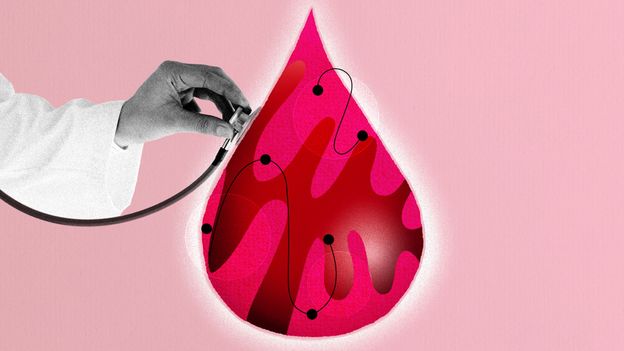
What menstrual blood can reveal about your health
What’s worse, it usually takes between five and 12 years to get a diagnosis, like it has Backlund. Confirmation requires a laparoscopy, a medical procedure in which a small camera is inserted in the pelvic cavity, says Ridhi Tariyal, NextGen Jane’s cofounder and chief executive.
That’s why Tariyal and a handful of other innovative startup leaders are working to build a better diagnostic test – one that promises to be quicker, cheaper, and less invasive than surgery, and could reveal much more than a woman’s endometriosis diagnosis.
The secret, they believe, lies in period blood.
A medical gold mine
Urine samples have been examined by physicians since Babylonian and Sumerian times, some 6,000 years ago. Stools and venous blood followed suit one and two centuries ago. But period blood hasn’t ever received much clinical attention. Yet, it is a complex fluid: half of it is regular blood, while the remainder comprises proteins, hormones, bacteria, endometrial tissue and cells sloughed off from the vaginal cavity, cervix, fallopian tubes, ovaries, and more.
“You get access to cell types and other molecular signatures that you just don’t get from whole blood, saliva, and other sample types,” says Tariyal. “It’s essentially a natural biopsy that’s providing you insight into the reproductive organs.” Her firm, NextGen Jane, sends out specially designed cotton tampons to volunteers like Backlund and has analysed more than 2,000 menstrual samples from more than 330 women since its founding in 2014.
First Appeared on
Source link






