


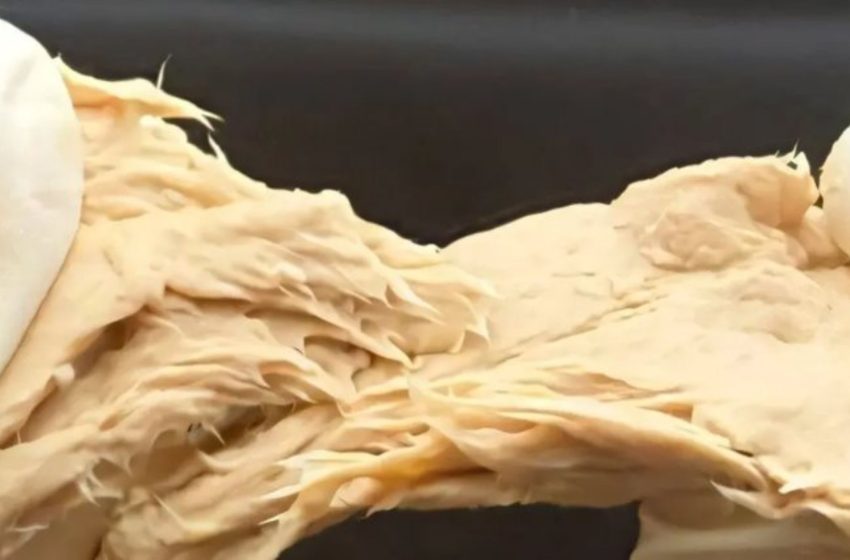
Gene-edited fungus from China is revolutionizing the food industry
A gene-edited fungus has produced meat-like protein that grows faster and requires far less sugar than the strain used today.
Those gains move one of the world’s oldest meat substitutes closer to competing with livestock for efficiency and scale.
Fermenting fungus protein
Inside stainless-steel fermenters, the fungus grows as dense strands that can be harvested as edible protein within days.
Working with this system, Dr. Xiao Liu at Jiangnan University in Wuxi demonstrated that a redesigned strain could convert sugar into protein far more efficiently.
Trials showed the new strain, called FCPD, produced protein nearly twice as fast while using substantially less sugar than its parent.
Those results push the ingredient beyond a niche meat substitute and open questions about how microbial proteins might compete with conventional farming.
Mycoprotein on the table
On ingredient lists, mycoprotein – protein grown from fungi in fermentation tanks – signals that the protein came from microbes.
Chewy texture and a meat-like taste come from the fungus itself, since its long fibers bind together during cooking.
Unlike a cap-and-stem mushroom, Fusarium venenatum, a filamentous fungus grown for edible protein, spends its life in tanks.
Thick cell walls once made the protein harder to digest, so better nutrition depended on changing the fungus itself.
Rather than inserting a new gene, the team deleted two existing genes to change how the fungus behaved.
Using CRISPR – a tool that snips DNA at chosen spots – they made those deletions with fine control.
No foreign DNA stayed behind, which can matter when regulators and shoppers judge what counts as genetic modification.
Two targeted cuts set up two payoffs, one aimed at digestibility and the other aimed at production efficiency.
Thinning the cell wall
Dense fungal cell walls can trap nutrients, leaving some protein locked away during digestion and food processing.
One wall material, chitin – a stiff fiber that helps build fungal walls – formed a clear target.
By shutting down a chitin-making gene, the researchers thinned the wall, so enzymes and stomach acids could reach more protein.
Too much thinning could weaken growth, so the design had to balance easier digestion with a fungus that still thrives.
Making sugar go further
During fermentation, microbes can waste part of their sugar on side products instead of building edible biomass.
Redirecting internal chemistry toward growth let the edited fungus convert more of each spoonful of sugar in the growth medium into protein.
Cutting a gene that diverts carbon into waste gases kept more material inside the cell for making protein.
Lower sugar demand also means fewer truckloads of feedstock, which is one reason the footprint numbers improved.
Numbers like faster growth matter most when they hold up across an entire supply chain, not just a lab flask.
To test that, the authors ran a life cycle assessment, a tally of impacts from inputs to factory gate.
Across six country scenarios, FCPD cut climate-warming emissions by between 4 and 61.3 percent when compared with the original strain.
Electricity sources and sugar production still drove much of the impact, so cleaner grids made the biggest difference.
Land and water savings
Compared with chicken, mycoprotein from the edited strain required 70 percent less land in a China-based scenario.
Less land use followed because the process skipped grazing and feed crops, relying instead on tanks and sugar.
In the same analysis, freshwater pollution risk fell by 78 percent, largely by avoiding manure and fertilizer runoff.
Those savings depend on what goes into the fermenter, so sourcing sugar and power responsibly stays part of the deal.
Protein quality from fungus improves
Beyond total protein, the edited fungus delivered amino acid patterns that better matched what people need from food. Its essential amino acid index, a score for how well protein meets needs, rose by 32.9 percent.
Tweaks that reduced carbon waste also freed more building blocks for amino acid production, raising quality without adding new ingredients.
Human digestion and allergy testing still need to confirm benefits in real diets, since fermentation changes can alter proteins.
Fungus protein from pilot to plate
Food makers keep hearing demand for protein that tastes good and can scale without huge environmental costs.
The author of the study explained that demand is rising for protein sources that are both nutritious and environmentally sustainable, yet earlier efforts with mycoprotein rarely addressed the environmental impact of the full production process.
Regulators and companies still need safety checks, large fermenters, and clear labels before this gene-edited fungus reaches most diners.
By editing a familiar food fungus, the team improved digestibility, protein quality, and production efficiency in one coordinated move.
Independent testing and careful policy work will decide whether FCPD becomes a common ingredient or stays a promising prototype.
The study is published in Trends in Biotechnology.
—–
Like what you read? Subscribe to our newsletter for engaging articles, exclusive content, and the latest updates.
Check us out on EarthSnap, a free app brought to you by Eric Ralls and Earth.com.
—–
First Appeared on
Source link






