


No detainees at Baltimore ICE facility during congressional visit
Maryland congressional Democrats reported there were no immigrants detained in Baltimore’s U.S. Immigration and Customs Enforcement field office on Monday, several days after a federal judge imposed a limit on the number of people that could be held there.
“It happens to be that there’s nobody in this facility,” Sen. Chris Van Hollen told reporters after his mid-morning visit.
On Friday, U.S. District Judge Julie R. Rubin ordered a limit on the detainee capacity levels, citing health and safety risks, including uncleanliness, limited medical access and overcrowding.
But lawmakers said on Monday that they weren’t given any information about what had happened to the people detained there as recently as last week.
“The short answer is: I don’t know,” Van Hollen said.
A DHS spokesperson said the field office is “not a detention facility” but a processing center where noncitizens are “quickly processed and transferred to permanent housing at a detention facility.” But they did not answer questions about where the detainees had been sent or when.
The Baltimore field office did not respond to a request for comment.
The lawmakers’ visit comes as Democratic members of Congress continue to ramp up their oversight of the federal government’s increased immigration enforcement, including plans to convert a Western Maryland warehouse into an immigration detention center.
In January, DHS purchased an 825,000-square-foot commercial warehouse in Washington County to convert into a detention facility — one sign that the agency plans to increase enforcement in Maryland.
Maryland has sued to block the Washington County detention center, and local governments have stepped in to stop other facilities.
Conditions in the Baltimore holding rooms have drawn public protests and scrutiny from attorneys and federal officials since The Banner first reported last March what it was like for dozens of detainees held inside for days.
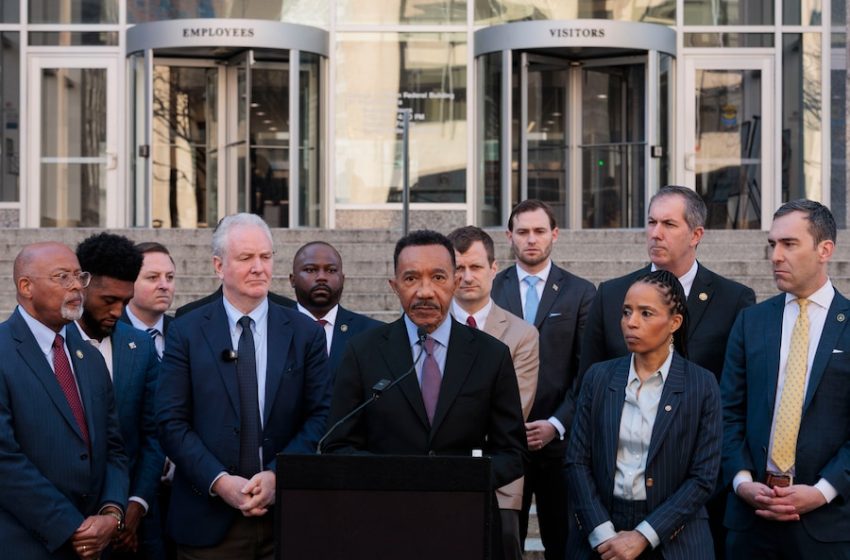
The visit included Van Hollen, Sen. Angela Alsobrooks and Reps. Johnny Olszewski Jr., Kweisi Mfume and Glenn Ivey. They entered the facility just after 9 a.m. and said they stayed inside for more than an hour.
Lawmakers described stark conditions, including a lack of beds and a single toilet and sink to share among dozens of people, they said. They said asked repeatedly but ICE officials did not allow them to take photographs.
“They obviously are continuing this pattern of wanting to hide, hide what’s happening there from the American people,” Van Hollen said.
Lawmakers shared strong reactions to seeing the set-up inside the empty holding rooms
“I am disgusted by what I just saw,“ Ivey said. The former prosecutor said he’s seen the inside of plenty of jails but has ”never seen anything like that.”
“This facility is unfit, even to house animals,” Alsobrooks said, adding she was grateful for Rubin’s decision to put limits on the facility’s capacity.
Outside the George H. Fallon Federal Building at 31 Hopkins Plaza, which houses the ICE field office, Maryland Senate President Bill Ferguson, Baltimore Mayor Brandon Scott, City Council President Zeke Cohen and other council members also spoke in opposition to ICE’s growing presence in the city and state.
Ferguson said state lawmakers will move to prohibit more detention centers from popping up in Maryland.
“What we know is that what’s happening in this building behind me, and what theoretically could happen in any future facility, will be cruelty, will be terror and will be unlawful,” the Baltimore Democrat said. Gov. Wes Moore in February signed into law a ban on cooperative agreements between local law enforcement and ICE.
Federal law grants members of Congress the authority to tour a federal facility where noncitizens are being detained.
Maryland lawmakers have also demanded answers from the Department of Homeland Security, which oversees ICE, about reports that Legionella bacteria were detected in the water. The bacteria can cause a serious form of pneumonia known as Legionnaires’ disease.
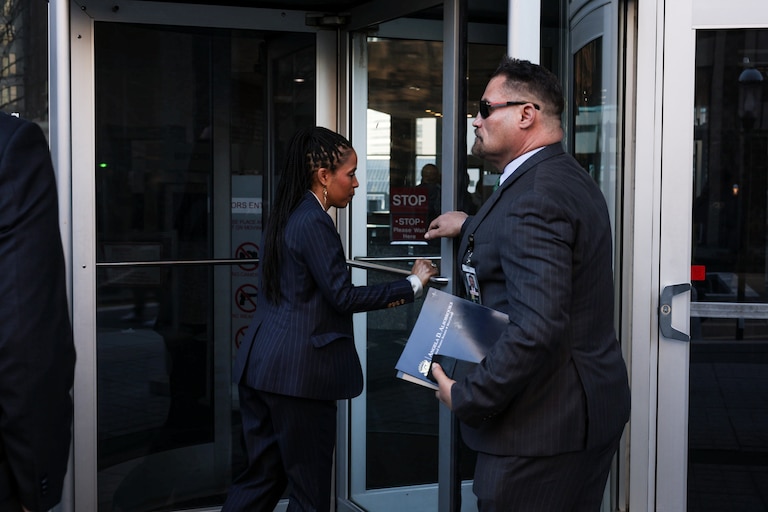
Van Hollen said ICE officials told them they were aware of the reports but “had not discovered any of the bacteria in that particular part of the Fallon building.”
In January, a leaked video showed detainees crammed into one room, sleeping on the floor and on hard benches. ICE officials said weather conditions prevented them from transporting detainees. Earlier reports documented long stays in the rooms designed for no more than a 12-hour stay.
This story has been updated.
First Appeared on
Source link






