


Microplastics are creating tiny microbial battlegrounds in farm soil
Microplastics are usually discussed as an ocean problem. But they are also building up in farmland soils, and a new scientific review argues that their impact goes beyond physical pollution.
A team of researchers led by Jiangsu University focuses on what happens at the microscopic level on the surface of plastic particles, where microbes meet, compete, and trade genes.
These interactions, they say, could influence soil fertility, ecosystem recovery, and the long-term sustainability of agriculture.
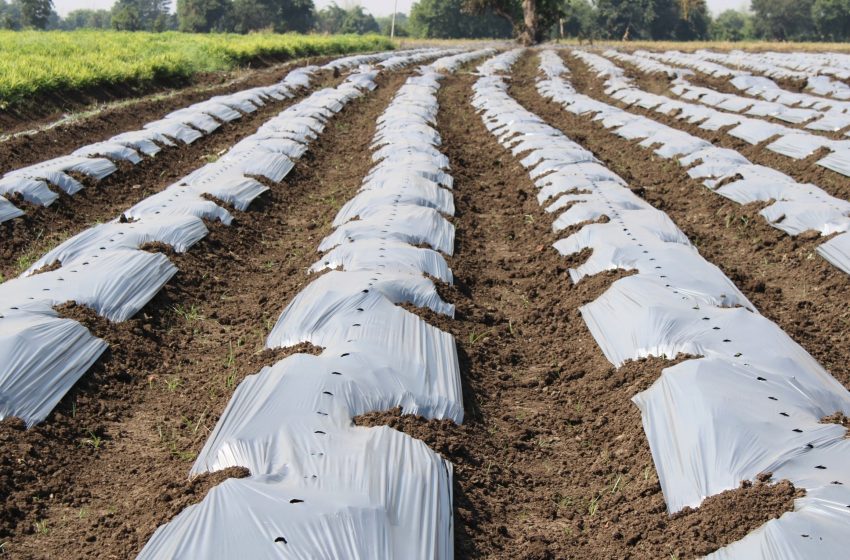
Microplastics are plastic fragments smaller than five millimeters. In agricultural settings, they can arrive through plastic mulch, sewage sludge, irrigation water, and the breakdown of larger plastic waste.
Once in the soil, they can change soil structure, interfere with nutrient cycling, and affect the organisms that keep soil ecosystems working.
The review highlights an overlooked detail: each microplastic particle can become its own tiny habitat.
A new micro-habitat in dirt
Researchers describe microplastics as creating unique micro-environments in soil called plastispheres. These are biofilm communities where microorganisms attach to plastic surfaces, forming dense, active networks.
Because microbes cluster on the plastic, interactions can become more intense than they are in the surrounding soil.
The review argues that these plastispheres don’t just collect microbes. They can change how microbial communities behave, how nutrients move through soil, and how resilient soil is after stress.
“Microplastics are not only physical pollutants in soil,” the researchers wrote.
“They also act as environmental stressors that reshape how microbes and viruses interact, which may ultimately affect soil fertility and agricultural sustainability.”
In other words, plastic fragments may function like tiny “meeting points” where new biological dynamics play out.
Viruses are key players
A central theme in the review is the role of bacteriophages, viruses that infect bacteria. In soil, these viruses can reshape bacterial populations by infecting cells and causing them to burst.
That process doesn’t just remove bacteria. It can alter which microbial groups dominate, and it can influence nutrient cycling by releasing cellular contents back into the environment.
The authors also emphasize a second viral role: gene transfer. When viruses move between microbes, they can carry genetic material with them. That can spread traits through a microbial community, potentially changing what the community can do.
On plastisphere surfaces, where microbes are packed together, the review suggests viral impacts may become even more consequential.
Gene swapping can help, or harm
The review presents viral gene exchange as a double-edged sword. In a best-case scenario, viruses could spread genes that help microbes break down plastic materials more effectively.
That could support natural biodegradation, even if it happens slowly. But the same process could also spread antibiotic resistance genes or other traits that are harmful in the long run.
If plastispheres become hotspots for gene exchange, they could accelerate changes in microbial communities in ways we don’t fully control.
“Viruses can act as both ecological regulators and genetic messengers in soil ecosystems,” the authors noted.
“Understanding this dual role is critical if we want to harness microbial processes for environmental restoration while minimizing potential risks.”
The message is cautious: the same mechanisms that make viruses interesting tools also make them potential risks.
Speeding up plastic breakdown
The review also explores emerging concepts for using virus-related systems to enhance plastic degradation in soil.
These ideas are still early and mostly theoretical, but the authors outline a few directions researchers are considering.
One is phage-assisted microbial augmentation, where phages might be used to steer microbial communities toward populations that degrade plastics more effectively.
Another involves virus-like particles loaded with catalytic nanoenzymes, designed to deliver enzymes directly to plastic surfaces and accelerate polymer breakdown.
These approaches are described as innovative but not ready for real-world deployment.
The authors caution that any attempt to use viruses as tools raises serious questions, including biosafety, unintended gene transfer, and the difficulty of predicting what will happen in complex natural soils.
Lack of long-term field evidence
A major limitation in current science is that most research comes from lab experiments or short-term observations.
The experts argue that soils evolve over seasons and years, and the relationships between viruses, microbes, and microplastics could shift in ways that short studies miss.
The lack of long-term field data is a serious obstacle. Without it, it is hard to know whether plastispheres become stable ecosystems, temporary hotspots, or something that changes with moisture, temperature, farming practices, and time.
Further research is needed
The review pushes for collaboration across disciplines: microbiology, virology, soil science, environmental engineering, and policy.
The scientists noted that understanding soil plastispheres requires combining ecological knowledge with new methods that can reveal hidden interactions.
They point to tools that could help expose these networks more clearly, including single-cell viromics, AI-driven host prediction, and advanced multi-omics approaches.
The goal is to map not only which microbes are present, but which viruses they interact with, and what genes are moving through the system.
Ultimately, the study suggests that the soil virome, the community of viruses in soil, deserves far more attention in discussions about plastic contamination.
“Recognizing the role of the soil virome gives us a new perspective on how ecosystems respond to pollution,” the researchers wrote.
“With careful research and collaboration, these microscopic interactions may become powerful tools for rebuilding resilient soils in a world increasingly challenged by plastic contamination.”
The review’s core idea is simple but unsettling: microplastics are not passive debris. In soil, they may become miniature biological arenas where microbes and viruses reshape each other – and in doing so, reshape the land we depend on for food.
The study is published in the journal Agricultural Ecology and Environment.
—–
Like what you read? Subscribe to our newsletter for engaging articles, exclusive content, and the latest updates.
Check us out on EarthSnap, a free app brought to you by Eric Ralls and Earth.com.
—–
First Appeared on
Source link






