


1,140 Canon 400mm f/2.8 Lenses Will Search Space for Dark Matter
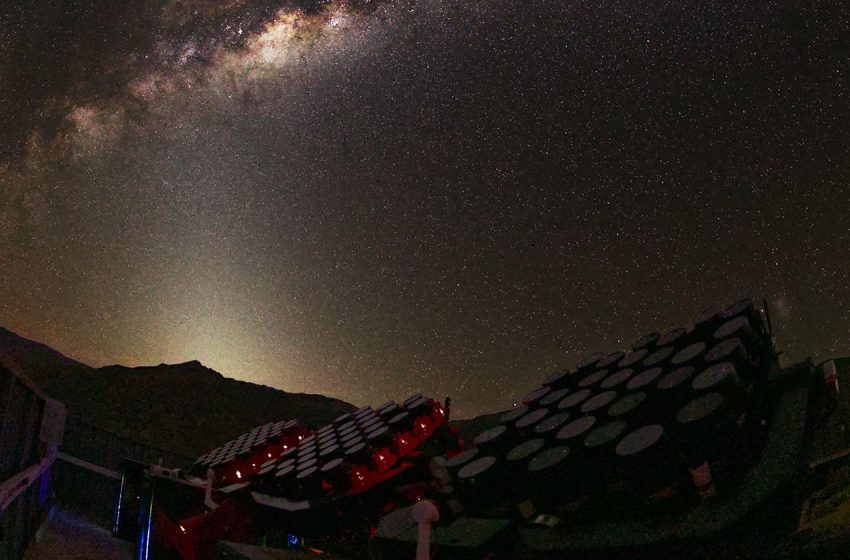
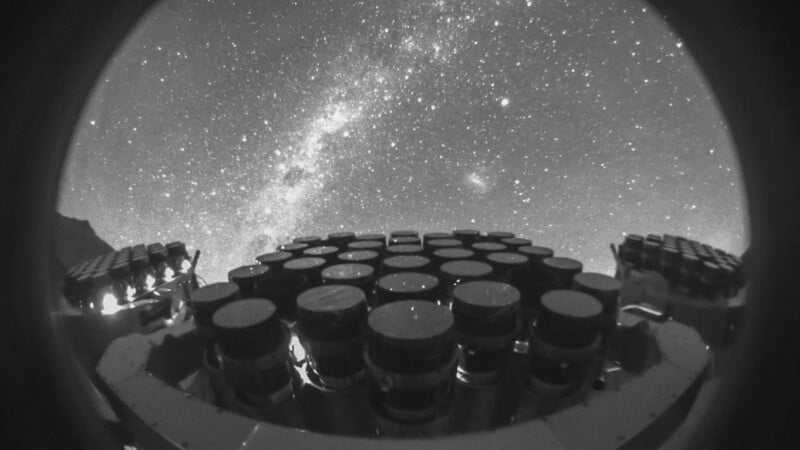
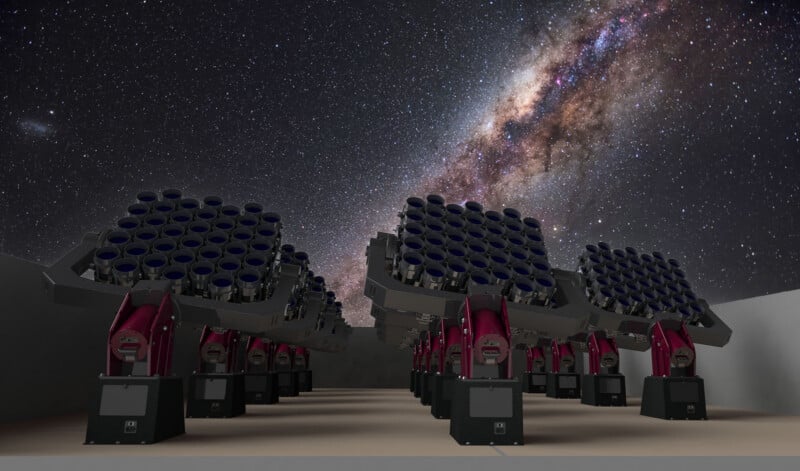
The world’s largest all-lens telescope, MOTHRA (Massive Optical Telephoto Hyperspectral Robotic Array), is under construction in Chile and features 1,140 Canon EF 400mm f/2.8L IS telephoto lenses arranged in groups of 38 lenses across 30 different mounts.
MOTHRA is the world’s largest all-lens telescope, and it is being built to detect some of the faintest light in the entire Universe.
MOTHRA is the brainchild of Yale astronomer Pieter van Dokkum and astronomer Roberto Abraham of the University of Toronto. These names may be familiar to PetaPixel readers with an affinity for space, as these same researchers worked together on the Dragonfly Telephoto Array, which utilized 24 Canon EF 400mm f/2.8 lenses in 2021, rather than the whopping 1,140 used by MOTHRA. What initially started in 2013 as a three-lens array eventually grew beyond 24 in 2021, reaching 48 total lenses.
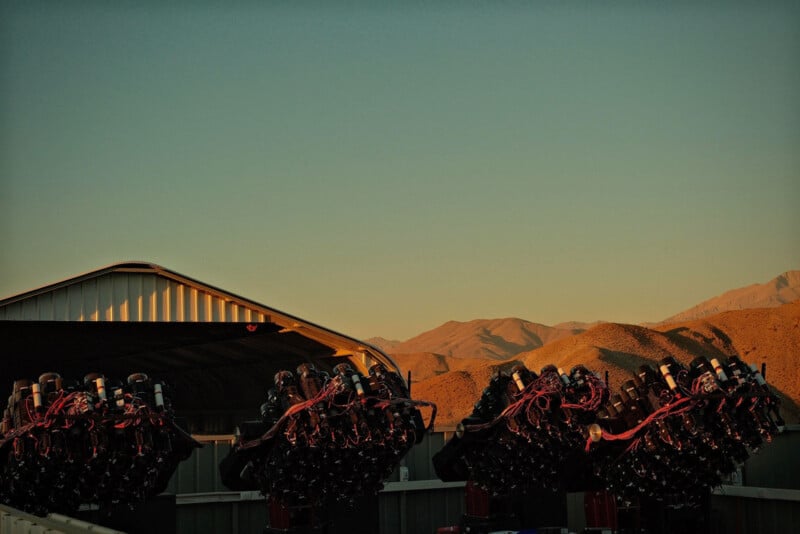
As expected, MOTHRA builds upon the researchers’ prior work on Dragonfly, which is positioned in New Mexico. While Dragonfly looked for very dim light from distant stars and galaxies, MOTHRA is using its 1,140 lenses, which together form the equivalent of a single 4.7-meter lens, to scour the cosmos for diffuse ionized gas in between galaxies.
Each lens works alongside an Apx26 or Apx60 camera, which utilize Sony IMX571 and IMX455 CMOS image sensors. The MOTHRA team says it selected these Canon lenses because of their “superb optical performance and excellent anti-reflection coatings.” They wanted the EF versions rather than the newer RF ones because of the EF mount’s back focus distance, which enables the use of accessories.
“We have over a decade of experience with this family of lenses and continue to be delighted with both the quality of the lenses and the quality of support we have received from both Canon Japan and Canon USA,” the team explains.
“All galaxies are connected by a giant web of unseen cosmic matter,” van Dokkum says. “We want to construct a telescope to take the first picture of it.”
Van Dokkum and Abraham determined they would need about 10 times more lenses to observe the ionized gas, which helps reveal the location of dark matter in the Universe. Dark matter has never been seen. Researchers think this still-theoretical material serves as a type of cosmic web, connecting galaxies and providing the materials they need to form and change over time.
“It’s our origin story, the engine by which galaxies in the Universe grow,” van Dokkum says of dark matter. “Yet it’s been so hard to study.”
Van Dokkum and Abraham secured funding for MOTHRA from Alex Gerko, the founder and CEO of trading firm XTX Markets. Gerko also worked with the researchers to select the telescope site and been an integral part of the project from the jump.
“This is an ambitious project to build something astronomers have wanted for a long time: a practical way to directly see the cosmic web in emission, and to get it done in a couple of years rather than decades,” Abraham explains. “MOTHRA harnesses advances in optics, detectors, and computing power to look at the universe in a new way.”
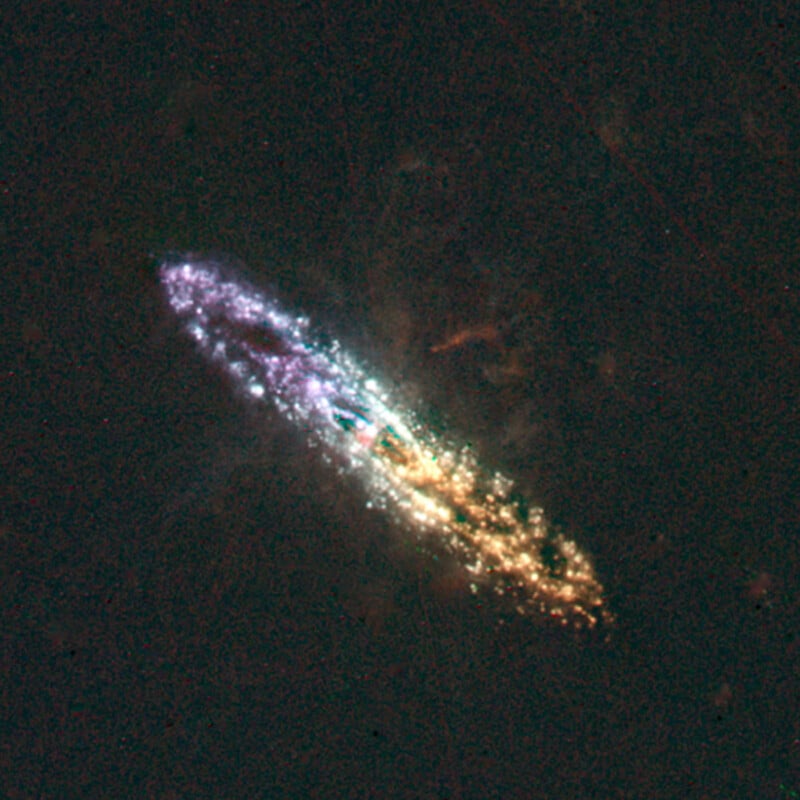
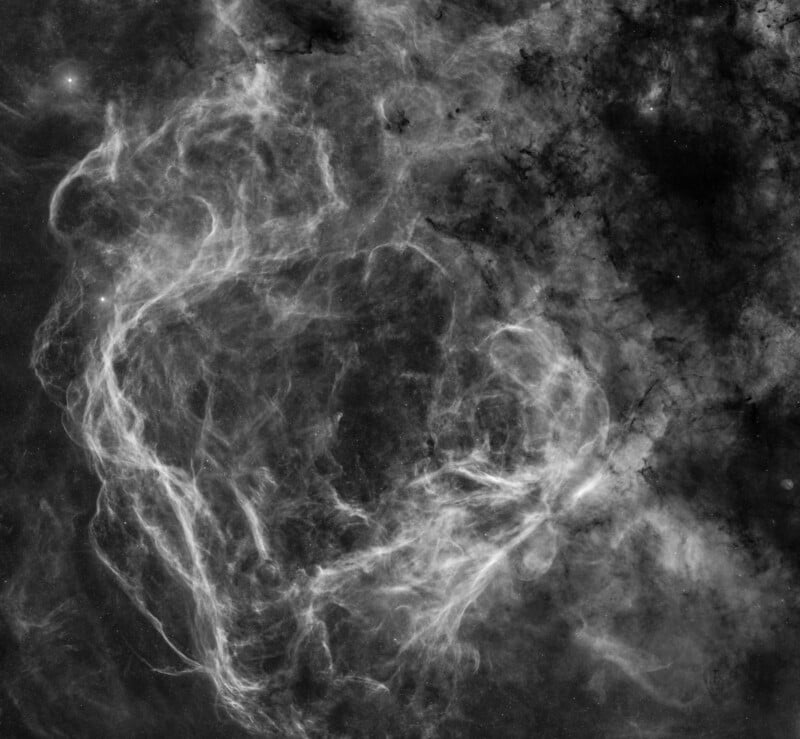
Although still under construction at the Obstech/El Sauce Observatory in Chile’s Rio Hurtado Valley, MOTHRA has already delivered beautiful observations. Construction began in January, and the team believes it will be fully complete and operational by the end of this year.
Image credits: Team MOTHRA
First Appeared on
Source link






