


New heart disease guidelines suggest statins as early as age 30
Leading medical organizations on Friday recommended major changes in cardiovascular disease prevention, saying people as young as 30 — down from age 40 — should consider statins or other measures to manage cholesterol.
Moving beyond just LDL, or “bad,” cholesterol, and just statins, the updated recommendations take a more sweeping approach for when and how to prevent and treat cardiovascular diseases caused by the hardening and narrowing of arteries.
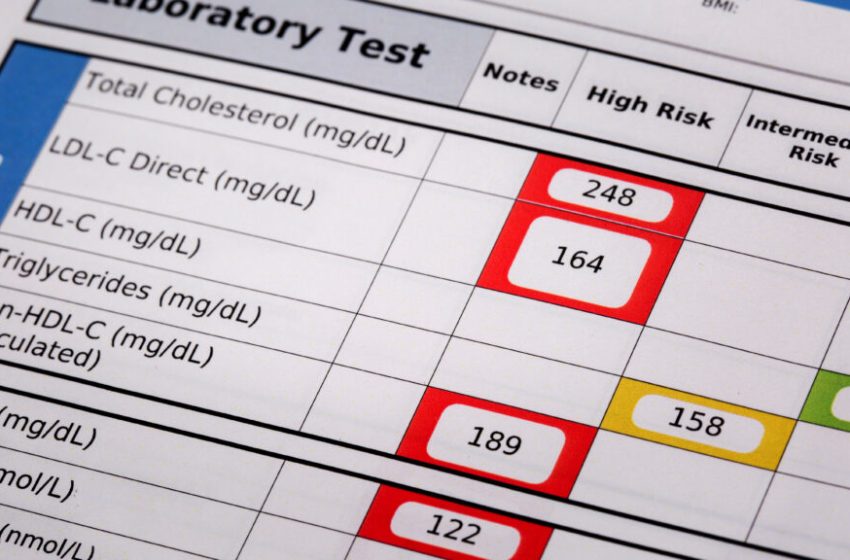
Changing behavior or adding medication is encouraged when LDL, or “bad,” cholesterol numbers hit 160 mg/dL or higher in people without heart disease, beginning in young adulthood at age 30. That approach can start with healthier lifestyle habits and move on to add statins or other drugs if there’s a strong family history of early heart disease or a risk assessment pointing to elevated 30-year odds of developing cardiovascular disease. When diet and exercise don’t lower lipids enough, imaging calcium in coronary arteries is an option to assess some people’s risk of heart attack or stroke before deciding on medication.
“These guidelines represent an important shift toward identifying higher‑risk individuals earlier and treating them more effectively,” Gregg Fonarow, a cardiologist and professor of cardiovascular medicine and science at UCLA, told STAT via email. He was not involved in drafting the guidelines. “It is deeply concerning that so many cardiovascular events occur each year that could have been prevented with earlier identification and treatment of risk. These new guidelines provide a clearer, more contemporary roadmap that can help reduce this burden.”
The new guidelines from the American College of Cardiology, the American Heart Association, and nine other medical organizations are based on a risk calculator released in November 2024 that was hailed as more reliable than previous equations drawn from less comprehensive evidence.
The new calculator had raised concern over the past 16 months. If used in tandem with existing thresholds for treatment, it turned out, far fewer people would qualify for a statin. Many people already don’t take their prescribed statins, so diminishing the number eligible by as much as 40% was feared as a failure of prevention.
The new 2026 guidelines embrace the new PREVENT equations (short for Predicting Risk of Cardiovascular Disease EVENTs), and they also adjust the threshold for taking action to clear arteries of fatty plaque. The optimal level of LDL is lower and the risk threshold for prescribing better diet and physical activity, drugs, or both has also been adjusted downward.
Timothy Anderson, a primary care physician and assistant professor of medicine at the University of Pittsburgh Medical Center, was one of the researchers raising concerns about matching PREVENT to risk thresholds. Also a member of the 2026 guidelines writing committee, he praised the PREVENT equations as a well validated risk estimation tool with updated accuracy.
“The full rationale is really this idea of trying to balance the potential benefit of lipid-lowering therapies like statins against the potential risks,” he told STAT. “A real focus of the guidelines is identifying and treating high cholesterol earlier on, out of the hypothesis that long-term exposure to high cholesterol may have greater risks than short-term exposure.”
Earlier recognition
Earlier intervention means looking at 10-year risk estimates as well as 30-year predictions.
The new PREVENT equations classify 10-year cardiovascular disease risk from plaque-lined arteries as low (under 3%), borderline (3% to 5%), intermediate (5% to 10%), and high (10% or higher). These risk categories form the foundation for treatment decisions, from starting statin therapy to determining intensity of lipid lowering. A composite of other factors, including family history, inflammatory disease, diabetes, kidney disease, cancer, HIV, and certain reproductive conditions, influence how risk is calculated.
Treatment is now recommended at much lower LDL levels for people, depending on their current health. To prevent a first heart attack or stroke, LDL should be under 100 mg/dL for those at borderline or intermediate risk and under 70 mg/dL in those at high risk. But in people who already have fatty buildup in their blood vessels deemed at very high risk of heart attack, stroke, or peripheral artery diseases, the LDL goal drops to under 55 mg/dL.
Roger Blumenthal, chair of the guideline writing committee and director of the Johns Hopkins Ciccarone Center for the Prevention of Heart Disease, compared lipid-lowering drugs to medications to reduce blood pressure. The longer both are in control, the better, yielding much stronger protection against future heart attack and stroke risk. That argues for looking at 10-year risk estimates as early as age 30.
“The PREVENT score gives us a good educated guess, but keep in mind these numbers are pretty low when we talk about intermediate risk being a 5% to 10% 10-year risk,” he told STAT. “Some patients have already said, ‘Well, Dr. Blumenthal, that’s a 1 in 20 chance that I’ll get a cardiovascular event.’ That’s very true. But I tell them that if you have other factors that support earlier treatment, that may sway us to being more aggressive and in your management.”
Other factors that influence risk
Beyond family history, those risk enhancers include being overweight or obese, diabetes, and chronic kidney disease, as well as chronic inflammatory conditions such as lupus or rheumatoid arthritis. Having South Asian or Filipino ancestry also means a higher risk for developing atherosclerosis.
Women tend to develop atherosclerotic disease about 10 years later than men, but that delay is erased if they experienced early premature menopause, preeclampsia, gestational diabetes, or hypertension during pregnancy. “If they have one of these reproductive risk markers of increased cardiovascular risk, then that, I think, will lead to more clinicians and patients thinking about being much more aggressive in their lifestyle habits and, if necessary, using a medicine to lower their cholesterol,” Blumenthal said.
Markers in the blood other than cholesterol have drawn more attention in recent years. Lipoprotein(a), apolipoprotein B (ApoB), and high-sensitivity C-reactive protein are considered important in establishing someone’s risk. Lp(a), shaped by genetics and shared by about 1 in 5 people worldwide, should be measured once over a lifetime, the guidelines say. Having levels 50 mg/dL or higher is associated with about a 40% increased long-term risk of heart attack or stroke. Lifestyle changes don’t alter Lp(a) levels, but high Lp(a) combined with high LDL should signal a conversation about lowering LDL. Blumenthal said Lp(a) could be a tiebreaker in someone on the cusp for treatment.
In people with cardiovascular-kidney-metabolic syndrome, type 2 diabetes, high triglycerides, or known cardiovascular disease who have reached their cholesterol goals, ApoB may be a more accurate risk marker for future cardiovascular disease than LDL cholesterol, the guidelines say.
The role of statins
Throughout the 123 pages of guidelines, the emphasis is not just on statins or LDL cholesterol. Recognizing that all who might benefit don’t take statins, the authors still accord them a place in early treatment.
The workhorses of cardiovascular disease prevention have long been sold at about $40 a year. Their introduction in the 1980s has been compared to today’s obesity drugs for the scale of their impact in preventing heart attacks, strokes, and peripheral artery disease. One downside has been the mismatch between who could benefit and who actually takes the medications.
There are side effects, and fear of them. Some people feel muscle pain and others see their blood sugar rise enough to develop type 2 diabetes, an absolute risk increase that studies estimate ranges from 0.1% to 0.5%. Blumenthal said 95% or more patients have no difficulties on the drug.
Jeremy Sussman, a primary care physician at the VA Ann Arbor Healthcare System who was not involved in drafting the guidelines, believes statins are very valuable medicines, but is concerned about patients who might think taking a statin would be too aggressive. While their chances of developing muscle pain or diabetes are small, their reduced odds of having a heart attack or stroke may also appear small at first, falling only gradually over time.
“For many of us, that’s worth it since a heart attack can be a terrible thing,” he said via email, “but it’s worth recognizing that we are encouraging a huge amount of statin use that will only benefit over a very long time period.”
Sussman also said it’s regrettable that primary care physicians were not represented in the medical societies that wrote the guidelines. He also called the guidelines insufficiently patient-centered, important when so many people at risk stop taking cholesterol-lowering medications within two years of starting them.
“The most difficult questions in dyslipidemia treatment are rarely if or when a patient has high enough risk or cholesterol level. It’s trying to understand the patient’s values and how doctors and patients together can decide if a patient should overcome their dislike of medicines to start a pill today for a goal of preventing a heart attack in 20 years,” he said, adding, “These issues are acknowledged, but the guideline does not give much guidance on these partnered issues.”
Not just statins
Statins aren’t the only drugs for cholesterol control. They can be taken with other, more powerful drugs if lipids stay high. In the mix are PCSK9 inhibitors, drugs that block a protein to shrink LDL cholesterol.
In an editorial published along with the guidelines in JACC and Circulation, Blumenthal described a trial of a PSCK9 inhibitor in detail. The data about using the drug in people before a first heart attack were presented at the AHA’s scientific session in November 2025, too late for the guidelines but a harbinger of research to come. The guidelines will be updated annually to provide resources for physicians.
“With PCSK9 inhibitors that had short-term follow-up of about two to three years, there was about a 15% to 20% relative risk reduction on top of statin therapy,” Blumenthal said, with a big but: “Statins are so much more economically feasible than a PCSK9 inhibitor and insurance companies would much rather pay for a generic statin than a medication that might cost the patient $5,000 a year.”
In addition to blood tests for high lp(a), Apo(b), and the more familiar fat-storing triglycerides, there is a test called a coronary artery calcium scan to help with decisions about taking a statin. When someone’s risk is uncertain, the scans can reveal calcium and plaque buildup in artery walls. The tests are recommended for men age 40 and up and women age 45 and up who are living with borderline or intermediate 10-year risk of heart attack or stroke. The 2018 guidelines had suggested them only for people at intermediate risk.
In Blumenthal’s view, there are now many ways to identify a person at higher risk. That’s not the challenge it once was.
“The hardest thing really is to motivate people to improve their lifestyle habits,” Blumenthal said. “But it’s also hard many times to get people to understand that we have such a multitude of great data about lower is better for longer. If we can motivate people to keep striving to improve their lifestyle habits earlier, then there’d be less of a need for medication and less of the need for dealing with all these acute cardiac events that unfortunately plague so many people in the United States and worldwide.”
STAT’s coverage of chronic health issues is supported by a grant from Bloomberg Philanthropies. Our financial supporters are not involved in any decisions about our journalism.
First Appeared on
Source link






