


Oscars introduces a brand new category for long overlooked profession
The casting profession has long been overlooked when the Academy hands out its statuettes. But come Sunday, that indignity will be a thing of the past when the inaugural Oscar for best achievement in casting is given to one of the following nominees: Gabriel Domingues (“The Secret Agent”), Nina Gold (“Hamnet”), Cassandra Kulukundis (“One Battle After Another”), Francine Maisler (“Sinners”) or Jennifer Venditti (“Marty Supreme”).
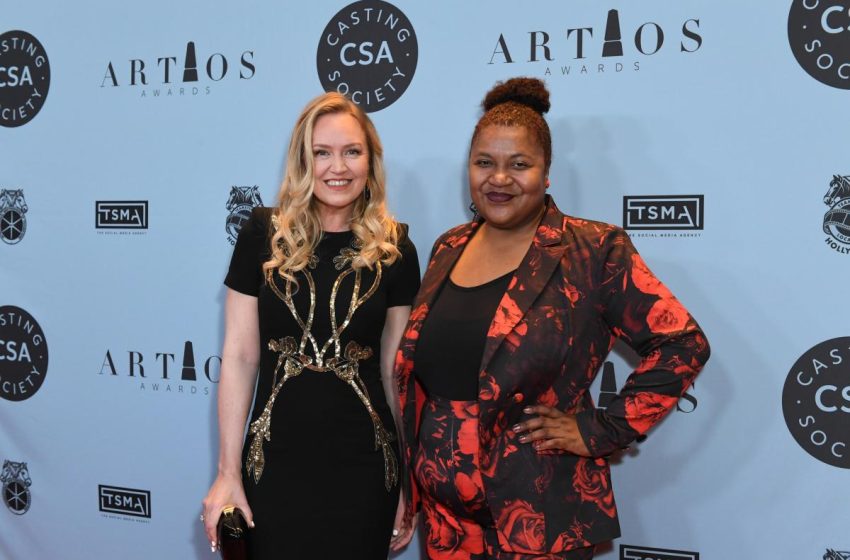
It will be a moment to savor for Destiny Lilly, president of Casting Society, a professional association of about 1,200 casting directors and associate casting directors for film, television, theatre, and commercials in Canada, Europe, Australia, Asia and Africa, and the United States.
“It’s been an important goal for CSA since the beginning [in 1982],” Lilly told Page Six Hollywood, noting that the real lobbying push came from casting directors who were also Academy members and had influence inside the organization.
The long fight underscores how invisible casting directors have been for decades despite architecting a killer ensemble. Lilly — whose credits include Hulu’s “Only Murders in the Building” — says casting is also misunderstood by the public.
“The biggest misconception is that casting directors are gatekeepers just saying ‘yes’ or ‘no,’” she adds. “We actually want actors to succeed. If someone comes in and does badly, it makes us look bad.”
Sometimes, even an unsuccessful audition can result in a major role. Lilly recalls a memorable moment from the first season of “Only Murders,” when the team was looking for its podcast host Cinda Canning — a role that ultimately went to Tina Fey. But theater actor Adina Verson, who didn’t get the part, left a lasting impression.
“They loved her audition so much that when Tina said yes, they still found a place for her,” Lilly says of Verson, who guested as Canning’s assistant Poppy White in Season 1 and enjoyed a pivotal arc in Season 2.
Like everyone else in Hollywood, Lilly says casting directors are also watching the rise of artificial intelligence nervously. But she’s skeptical that a machine can replace the human instincts behind choosing the perfect ensemble.
“AI doesn’t have an aesthetic,” she said. “It doesn’t understand culture or history. And judging talent is subjective.”
First Appeared on
Source link






