


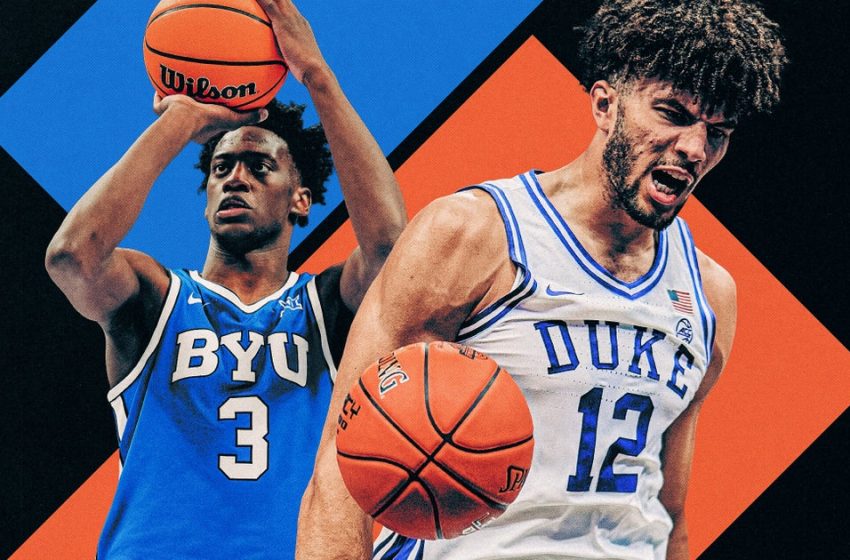
March Madness bracket prep 2026: Strengths, weaknesses, previews for all 68 teams
Welcome to The Athletic’s men’s NCAA Tournament big board, where you can find an in-depth breakdown of all 68 teams in the March Madness field. If you’re looking to research the teams in the field before filling out your bracket, you’re in the right place. These 68 capsules provide everything you need to know about every team in this year’s men’s tournament.
We teamed up with Brad Evans’ The Gaming Juice in a joining of writers, editors, experts and analysts to provide thorough info on every team, from the national title contenders to the potential Cinderellas.
A few quick notes on how to use the big board: You can choose “expand all” to open all the capsules at once for an easy read, or you can open them individually by clicking or tapping on the headers. We created three filters (seed, conference and region) to help you navigate to more specific areas you may want to read.
“Sweet 16 projected chance” is the percentage chance that Austin Mock’s model gives a team to make the Sweet 16. “Final Four projected chance” is the percentage chance that his model gives a team to make the Final Four.
Enjoy, good luck and may your brackets be clean.
You can buy tickets to all tournament games here. You can watch the women’s tournament and a lot of the men’s tournament on Fubo (try for free).
Loading
Try changing or resetting your filters to see more.
Strengths: The Blue Devils are as well-rounded and disciplined as any team in the field. Duke sports a top-six offense nationally to go alongside its top-ranked defense. Duke’s defensive superpower is its ability to overwhelm you without leaving itself vulnerable in any area. The Blue Devils pressure the ball, they are unscreenable and they protect the paint, all while keeping their opponents off the defensive glass. Offensively, they weaponize the passing ability of their frontcourt (Cameron Boozer, Patrick Ngongba II and Maliq Brown) to pull opposing big men away from the basket and open up all sorts of cutting lanes for high-percentage shots and skip passes. And, oh yeah, they have the best player in the country in Boozer.
Weaknesses: Outside of what their health could look like come tip-off time, the Blue Devils lack a true weakness. For the sake of nitpicking, however, it’s fair to question the type of creation Duke can get from the guard spot. With all the talk centering around Cameron Boozer, the all-world freshman, it’s his brother Cayden who is looking at an expanded role in the absence of Caleb Foster, who suffered a broken foot on March 7.
Outlook: Duke is two possessions away from us talking about an undefeated regular season. In the final seven games of ACC play, Duke was utter destruction, outscoring opponents by nearly 26 points per game. That said, a lot hinges on the health of Ngongba and Foster. Missing a back-line eraser and a point-of-attack-defending guard can be tough to overcome. That said, don’t put it past Cameron Boozer to backpack this thing all the way to the Circle City.
—Mike LaTulip
Strengths: The Blue Devils are as well-rounded and disciplined as any team in the field. Duke sports a top-six offense nationally to go alongside its top-ranked defense. Duke’s defensive superpower is its ability to overwhelm you without leaving itself vulnerable in any area. The Blue Devils pressure the ball, they are unscreenable and they protect the paint, all while keeping their opponents off the defensive glass. Offensively, they weaponize the passing ability of their frontcourt (Cameron Boozer, Patrick Ngongba II and Maliq Brown) to pull opposing big men away from the basket and open up all sorts of cutting lanes for high-percentage shots and skip passes. And, oh yeah, they have the best player in the country in Boozer.
Weaknesses: Outside of what their health could look like come tip-off time, the Blue Devils lack a true weakness. For the sake of nitpicking, however, it’s fair to question the type of creation Duke can get from the guard spot. With all the talk centering around Cameron Boozer, the all-world freshman, it’s his brother Cayden who is looking at an expanded role in the absence of Caleb Foster, who suffered a broken foot on March 7.
Outlook: Duke is two possessions away from us talking about an undefeated regular season. In the final seven games of ACC play, Duke was utter destruction, outscoring opponents by nearly 26 points per game. That said, a lot hinges on the health of Ngongba and Foster. Missing a back-line eraser and a point-of-attack-defending guard can be tough to overcome. That said, don’t put it past Cameron Boozer to backpack this thing all the way to the Circle City.
—Mike LaTulip
Strengths: The Blue Devils are as well-rounded and disciplined as any team in the field. Duke sports a top-six offense nationally to go alongside its top-ranked defense. Duke’s defensive superpower is its ability to overwhelm you without leaving itself vulnerable in any area. The Blue Devils pressure the ball, they are unscreenable and they protect the paint, all while keeping their opponents off the defensive glass. Offensively, they weaponize the passing ability of their frontcourt (Cameron Boozer, Patrick Ngongba II and Maliq Brown) to pull opposing big men away from the basket and open up all sorts of cutting lanes for high-percentage shots and skip passes. And, oh yeah, they have the best player in the country in Boozer.
Weaknesses: Outside of what their health could look like come tip-off time, the Blue Devils lack a true weakness. For the sake of nitpicking, however, it’s fair to question the type of creation Duke can get from the guard spot. With all the talk centering around Cameron Boozer, the all-world freshman, it’s his brother Cayden who is looking at an expanded role in the absence of Caleb Foster, who suffered a broken foot on March 7.
Outlook: Duke is two possessions away from us talking about an undefeated regular season. In the final seven games of ACC play, Duke was utter destruction, outscoring opponents by nearly 26 points per game. That said, a lot hinges on the health of Ngongba and Foster. Missing a back-line eraser and a point-of-attack-defending guard can be tough to overcome. That said, don’t put it past Cameron Boozer to backpack this thing all the way to the Circle City.
—Mike LaTulip
LaTulip’s Lowdown: Jon Scheyer’s group suppresses your strengths better than any team in America.
Record: 32-2 (17-1 ACC)
Coach: Jon Scheyer (8-3 in NCAA Tournament, one Final Four)
Player to watch: Cameron Boozer
Sweet 16 projected chance
84%
Final Four projected chance
46%

Strengths: Experienced and structurally sound across the board, the Wildcats consistently swipe with sharpened claws. One of the tallest teams in the game thanks to its sizable frontcourt featuring Motiejus Krivas (7-foot-2), Tobe Awaka (6-foot-8), Koa Peat (6-foot-8) and Ivan Kharchenkov (6-foot-7), Arizona is a mismatch for most rosters. Terrific at generating second chances and scoring the rock inside prolifically, the Wildcats are undoubtedly one of the most paint-dominant teams in Division I. Unsurprisingly, near-rim denials are a frequent occurrence. Over the regular season’s last month, they ranked top 10 in 2-point percentage defense. Overall, they surrendered only 0.893 points per possession during the regular season, the third-best mark in the college game. Additionally, guards Bradley, Brayden Burries and Anthony Dell’Orso make up an impressive backcourt.
Weaknesses: Given Arizona’s around-the-bucket nature, it’s largely an unreliable arc producer. In the regular season, it shot a robust 35.3 percent from downtown, but only 20.1 percent of its points came on equalizers. Outside of the top 250 in bench minutes, Arizona doesn’t possess noteworthy depth. It must avoid whistles to blaze a trail to Indianapolis.
Outlook: If you believe this Arizona team can’t end the school’s 25-year Final Four drought, put down the peyote. While its perimeter performance is largely lackluster, if matched against undersized opponents, it will bully and advance bracket lines. This team defeated Florida in Las Vegas and UConn in Storrs, Conn. over the nonconference slate. With few visible flaws, Arizona has champion characteristics.
—Brad Evans
Strengths: Experienced and structurally sound across the board, the Wildcats consistently swipe with sharpened claws. One of the tallest teams in the game thanks to its sizable frontcourt featuring Motiejus Krivas (7-foot-2), Tobe Awaka (6-foot-8), Koa Peat (6-foot-8) and Ivan Kharchenkov (6-foot-7), Arizona is a mismatch for most rosters. Terrific at generating second chances and scoring the rock inside prolifically, the Wildcats are undoubtedly one of the most paint-dominant teams in Division I. Unsurprisingly, near-rim denials are a frequent occurrence. Over the regular season’s last month, they ranked top 10 in 2-point percentage defense. Overall, they surrendered only 0.893 points per possession during the regular season, the third-best mark in the college game. Additionally, guards Bradley, Brayden Burries and Anthony Dell’Orso make up an impressive backcourt.
Weaknesses: Given Arizona’s around-the-bucket nature, it’s largely an unreliable arc producer. In the regular season, it shot a robust 35.3 percent from downtown, but only 20.1 percent of its points came on equalizers. Outside of the top 250 in bench minutes, Arizona doesn’t possess noteworthy depth. It must avoid whistles to blaze a trail to Indianapolis.
Outlook: If you believe this Arizona team can’t end the school’s 25-year Final Four drought, put down the peyote. While its perimeter performance is largely lackluster, if matched against undersized opponents, it will bully and advance bracket lines. This team defeated Florida in Las Vegas and UConn in Storrs, Conn. over the nonconference slate. With few visible flaws, Arizona has champion characteristics.
—Brad Evans
Strengths: Experienced and structurally sound across the board, the Wildcats consistently swipe with sharpened claws. One of the tallest teams in the game thanks to its sizable frontcourt featuring Motiejus Krivas (7-foot-2), Tobe Awaka (6-foot-8), Koa Peat (6-foot-8) and Ivan Kharchenkov (6-foot-7), Arizona is a mismatch for most rosters. Terrific at generating second chances and scoring the rock inside prolifically, the Wildcats are undoubtedly one of the most paint-dominant teams in Division I. Unsurprisingly, near-rim denials are a frequent occurrence. Over the regular season’s last month, they ranked top 10 in 2-point percentage defense. Overall, they surrendered only 0.893 points per possession during the regular season, the third-best mark in the college game. Additionally, guards Bradley, Brayden Burries and Anthony Dell’Orso make up an impressive backcourt.
Weaknesses: Given Arizona’s around-the-bucket nature, it’s largely an unreliable arc producer. In the regular season, it shot a robust 35.3 percent from downtown, but only 20.1 percent of its points came on equalizers. Outside of the top 250 in bench minutes, Arizona doesn’t possess noteworthy depth. It must avoid whistles to blaze a trail to Indianapolis.
Outlook: If you believe this Arizona team can’t end the school’s 25-year Final Four drought, put down the peyote. While its perimeter performance is largely lackluster, if matched against undersized opponents, it will bully and advance bracket lines. This team defeated Florida in Las Vegas and UConn in Storrs, Conn. over the nonconference slate. With few visible flaws, Arizona has champion characteristics.
—Brad Evans
LaTulip’s Lowdown: Playing with one of the top frontcourts in America, freshman Brayden Burries has all the makings of a potential March star.
Record: 32-2 (16-2 Big 12)
Coach: Tommy Lloyd (6-4 in NCAA Tournament)
Player to watch: Jaden Bradley
Sweet 16 projected chance
81%
Final Four projected chance
38%
Strengths: Equipped with size, speed and stupendous two-way skills, Michigan is a rolling boulder. Opponents who stand in its way are often flattened. Almost unbelievably, Dusty May’s men finished top 10 in the nation in effective field goal percentage on offense and defense. Steadfast in generating second chances due, in large part, to lane cloggers Aday Mara and Morez Johnson Jr., UM netted a downright ridiculous 61.6 2-point percentage prior to the postseason. It also locked down defensively, allowing a mere 0.892 points per possession. Well-oiled, unselfish and almost impenetrable, the Wolverines aggressively attack everyone everywhere. Folks, they’re a WAGON.
Weaknesses: Candidly, the outright Big Ten champs have few flaws. For the sake of nitpicking, self-inflicted mistakes occasionally bit them, evidenced by their No. 187 standing in offensive turnover rate — an issue that could be exacerbated in the NCAA Tournament without backup guard L.J. Cason (ACL). Michigan also scored infrequently at the free-throw line, from where only 19.8 percent of their offensive production came. Again, inadequacies are few and far between.
Outlook: It will take an otherworldly shooting night (see Wisconsin) or an elite defensive effort (see Duke) to derail Michigan. It possesses the characteristics to have Ann Arbor partying in the streets. Given their nearly impeccable across-the-board execution, anything short of a Final Four appearance would be surprising for the Wolverines.
—Brad Evans
Strengths: Equipped with size, speed and stupendous two-way skills, Michigan is a rolling boulder. Opponents who stand in its way are often flattened. Almost unbelievably, Dusty May’s men finished top 10 in the nation in effective field goal percentage on offense and defense. Steadfast in generating second chances due, in large part, to lane cloggers Aday Mara and Morez Johnson Jr., UM netted a downright ridiculous 61.6 2-point percentage prior to the postseason. It also locked down defensively, allowing a mere 0.892 points per possession. Well-oiled, unselfish and almost impenetrable, the Wolverines aggressively attack everyone everywhere. Folks, they’re a WAGON.
Weaknesses: Candidly, the outright Big Ten champs have few flaws. For the sake of nitpicking, self-inflicted mistakes occasionally bit them, evidenced by their No. 187 standing in offensive turnover rate — an issue that could be exacerbated in the NCAA Tournament without backup guard L.J. Cason (ACL). Michigan also scored infrequently at the free-throw line, from where only 19.8 percent of their offensive production came. Again, inadequacies are few and far between.
Outlook: It will take an otherworldly shooting night (see Wisconsin) or an elite defensive effort (see Duke) to derail Michigan. It possesses the characteristics to have Ann Arbor partying in the streets. Given their nearly impeccable across-the-board execution, anything short of a Final Four appearance would be surprising for the Wolverines.
—Brad Evans
Strengths: Equipped with size, speed and stupendous two-way skills, Michigan is a rolling boulder. Opponents who stand in its way are often flattened. Almost unbelievably, Dusty May’s men finished top 10 in the nation in effective field goal percentage on offense and defense. Steadfast in generating second chances due, in large part, to lane cloggers Aday Mara and Morez Johnson Jr., UM netted a downright ridiculous 61.6 2-point percentage prior to the postseason. It also locked down defensively, allowing a mere 0.892 points per possession. Well-oiled, unselfish and almost impenetrable, the Wolverines aggressively attack everyone everywhere. Folks, they’re a WAGON.
Weaknesses: Candidly, the outright Big Ten champs have few flaws. For the sake of nitpicking, self-inflicted mistakes occasionally bit them, evidenced by their No. 187 standing in offensive turnover rate — an issue that could be exacerbated in the NCAA Tournament without backup guard L.J. Cason (ACL). Michigan also scored infrequently at the free-throw line, from where only 19.8 percent of their offensive production came. Again, inadequacies are few and far between.
Outlook: It will take an otherworldly shooting night (see Wisconsin) or an elite defensive effort (see Duke) to derail Michigan. It possesses the characteristics to have Ann Arbor partying in the streets. Given their nearly impeccable across-the-board execution, anything short of a Final Four appearance would be surprising for the Wolverines.
—Brad Evans
LaTulip’s Lowdown: The most airtight unit in the entire field. Play your best basketball or risk getting sent to the Shadow Realm.
Record: 31-3 (19-1 Big Ten)
Coach: Dusty May (6-3 in NCAA Tournament, one Final Four)
Player to watch: Yaxel Lendeborg
Sweet 16 projected chance
78%
Final Four projected chance
34%
Strengths: The Gators clamp and roll opponents often in The Swamp’s dark waters. Thomas Haugh, Rueben Chinyelu and Alex Condon comprise the nation’s nastiest frontcourt. Their paint-controlling execution is why Florida ranks top 10 nationally in offensive and defensive rebounding percentage. Over the regular season’s final month, UF also converted 59.3 percent on 2-pointers. Sensational defensively, it steadily challenges shots with considerable success. In that same final-month span, the Gators checked in at No. 11 in effective field goal percentage defense. At 8-2 in true road games, the Gators are not intimidated by foreign environments. Cherry on top, guards Boogie Fland and Xaivian Lee were fairly reliable scorers down the stretch. Off the bench, Urban Klavzar and Isaiah Brown also elevated their games.
Weaknesses: Florida is somewhat unreliable from 3-point land. The Gators netted just over 30 percent from distance. Only 25.8 percent of their points came along the arc. Also of mild concern are their spoiled opportunities at the charity stripe. Prior to the postseason, the Gators ranked outside the top 240 in free-throw percentage. Candidly, we’re nitpicking Florida’s flaws. Few exist.
Outlook: This scribe is a buyer that Florida could match what Billy Donovan’s teams achieved earlier this century. In other words, a good shot at winning back-to-back titles. Golden’s beastly frontmen combined with improved play from his backcourt point to a deep run. The Gators are unquestionably a national-title contender.
—Brad Evans
Strengths: The Gators clamp and roll opponents often in The Swamp’s dark waters. Thomas Haugh, Rueben Chinyelu and Alex Condon comprise the nation’s nastiest frontcourt. Their paint-controlling execution is why Florida ranks top 10 nationally in offensive and defensive rebounding percentage. Over the regular season’s final month, UF also converted 59.3 percent on 2-pointers. Sensational defensively, it steadily challenges shots with considerable success. In that same final-month span, the Gators checked in at No. 11 in effective field goal percentage defense. At 8-2 in true road games, the Gators are not intimidated by foreign environments. Cherry on top, guards Boogie Fland and Xaivian Lee were fairly reliable scorers down the stretch. Off the bench, Urban Klavzar and Isaiah Brown also elevated their games.
Weaknesses: Florida is somewhat unreliable from 3-point land. The Gators netted just over 30 percent from distance. Only 25.8 percent of their points came along the arc. Also of mild concern are their spoiled opportunities at the charity stripe. Prior to the postseason, the Gators ranked outside the top 240 in free-throw percentage. Candidly, we’re nitpicking Florida’s flaws. Few exist.
Outlook: This scribe is a buyer that Florida could match what Billy Donovan’s teams achieved earlier this century. In other words, a good shot at winning back-to-back titles. Golden’s beastly frontmen combined with improved play from his backcourt point to a deep run. The Gators are unquestionably a national-title contender.
—Brad Evans
Strengths: The Gators clamp and roll opponents often in The Swamp’s dark waters. Thomas Haugh, Rueben Chinyelu and Alex Condon comprise the nation’s nastiest frontcourt. Their paint-controlling execution is why Florida ranks top 10 nationally in offensive and defensive rebounding percentage. Over the regular season’s final month, UF also converted 59.3 percent on 2-pointers. Sensational defensively, it steadily challenges shots with considerable success. In that same final-month span, the Gators checked in at No. 11 in effective field goal percentage defense. At 8-2 in true road games, the Gators are not intimidated by foreign environments. Cherry on top, guards Boogie Fland and Xaivian Lee were fairly reliable scorers down the stretch. Off the bench, Urban Klavzar and Isaiah Brown also elevated their games.
Weaknesses: Florida is somewhat unreliable from 3-point land. The Gators netted just over 30 percent from distance. Only 25.8 percent of their points came along the arc. Also of mild concern are their spoiled opportunities at the charity stripe. Prior to the postseason, the Gators ranked outside the top 240 in free-throw percentage. Candidly, we’re nitpicking Florida’s flaws. Few exist.
Outlook: This scribe is a buyer that Florida could match what Billy Donovan’s teams achieved earlier this century. In other words, a good shot at winning back-to-back titles. Golden’s beastly frontmen combined with improved play from his backcourt point to a deep run. The Gators are unquestionably a national-title contender.
—Brad Evans
LaTulip’s Lowdown: Timely role-definition from Boogie Fland and Xaivian Lee has taken the lid off the Gators’ ceiling.
Record: 26-7 (16-2 SEC)
Coach: Todd Golden (6-2 in NCAA Tournament, one national title)
Player to watch: Thomas Haugh
Sweet 16 projected chance
79%
Final Four projected chance
33%
Strengths: UConn does everything well. The Huskies had four All-Big East selections, including three first-teamers (Alex Karaban, Silas Demary Jr. and Tarris Reed Jr.). They had a first-team freshman All-Big East pick in Braylon Mullins. They have five players averaging in double figures. (The aforementioned four, plus leading scorer Solo Ball.) UConn is the best-shooting team in the Big East (48.4 percent) and, by most measures, the second-best defensive team in the league behind Seton Hall. The Huskies went 7-3 in Quad 1 games, the only losses coming to fellow title contender Arizona and to St. John’s, twice. UConn leads the Big East in rebounds per game differential (plus-5.5) and is second in blocks per game (5.4). There is little that this squad cannot do.
Weaknesses: UConn went just 7-4 down the stretch after starting 22-1, with bad losses to Creighton and at Marquette. Were these aberrations or signs of cracks in the armor? The Marquette game was a stinker: UConn shot just 36 percent from the field and 13 percent from deep, and turned the ball over 16 times. Against Creighton, UConn’s offense went ice cold in the second half (34 percent shooting). The Huskies aren’t helping themselves at the line either: UConn’s team free-throw percentage (71.1) ranked 233rd nationally during the regular season. With a mark like that, it might not matter how warm and fuzzy Hurley is with officials.
Outlook: UConn is on the short list of legitimate national title contenders. The Huskies have it all. We have seen Hurley’s teams at their best in tournament play before, which is how they blitzed all 12 opponents during their back-to-back national-title runs by double digits. Inconsistencies down the stretch against inferior opponents are enough to warrant a skeptical eye, but this isn’t the first time we’ve said that about a Hurley team: UConn lost seven Big East games and failed to reach the conference tournament final in 2023, before going on a tear to win the national title.
—Matt Fortuna
Strengths: UConn does everything well. The Huskies had four All-Big East selections, including three first-teamers (Alex Karaban, Silas Demary Jr. and Tarris Reed Jr.). They had a first-team freshman All-Big East pick in Braylon Mullins. They have five players averaging in double figures. (The aforementioned four, plus leading scorer Solo Ball.) UConn is the best-shooting team in the Big East (48.4 percent) and, by most measures, the second-best defensive team in the league behind Seton Hall. The Huskies went 7-3 in Quad 1 games, the only losses coming to fellow title contender Arizona and to St. John’s, twice. UConn leads the Big East in rebounds per game differential (plus-5.5) and is second in blocks per game (5.4). There is little that this squad cannot do.
Weaknesses: UConn went just 7-4 down the stretch after starting 22-1, with bad losses to Creighton and at Marquette. Were these aberrations or signs of cracks in the armor? The Marquette game was a stinker: UConn shot just 36 percent from the field and 13 percent from deep, and turned the ball over 16 times. Against Creighton, UConn’s offense went ice cold in the second half (34 percent shooting). The Huskies aren’t helping themselves at the line either: UConn’s team free-throw percentage (71.1) ranked 233rd nationally during the regular season. With a mark like that, it might not matter how warm and fuzzy Hurley is with officials.
Outlook: UConn is on the short list of legitimate national title contenders. The Huskies have it all. We have seen Hurley’s teams at their best in tournament play before, which is how they blitzed all 12 opponents during their back-to-back national-title runs by double digits. Inconsistencies down the stretch against inferior opponents are enough to warrant a skeptical eye, but this isn’t the first time we’ve said that about a Hurley team: UConn lost seven Big East games and failed to reach the conference tournament final in 2023, before going on a tear to win the national title.
—Matt Fortuna
Strengths: UConn does everything well. The Huskies had four All-Big East selections, including three first-teamers (Alex Karaban, Silas Demary Jr. and Tarris Reed Jr.). They had a first-team freshman All-Big East pick in Braylon Mullins. They have five players averaging in double figures. (The aforementioned four, plus leading scorer Solo Ball.) UConn is the best-shooting team in the Big East (48.4 percent) and, by most measures, the second-best defensive team in the league behind Seton Hall. The Huskies went 7-3 in Quad 1 games, the only losses coming to fellow title contender Arizona and to St. John’s, twice. UConn leads the Big East in rebounds per game differential (plus-5.5) and is second in blocks per game (5.4). There is little that this squad cannot do.
Weaknesses: UConn went just 7-4 down the stretch after starting 22-1, with bad losses to Creighton and at Marquette. Were these aberrations or signs of cracks in the armor? The Marquette game was a stinker: UConn shot just 36 percent from the field and 13 percent from deep, and turned the ball over 16 times. Against Creighton, UConn’s offense went ice cold in the second half (34 percent shooting). The Huskies aren’t helping themselves at the line either: UConn’s team free-throw percentage (71.1) ranked 233rd nationally during the regular season. With a mark like that, it might not matter how warm and fuzzy Hurley is with officials.
Outlook: UConn is on the short list of legitimate national title contenders. The Huskies have it all. We have seen Hurley’s teams at their best in tournament play before, which is how they blitzed all 12 opponents during their back-to-back national-title runs by double digits. Inconsistencies down the stretch against inferior opponents are enough to warrant a skeptical eye, but this isn’t the first time we’ve said that about a Hurley team: UConn lost seven Big East games and failed to reach the conference tournament final in 2023, before going on a tear to win the national title.
—Matt Fortuna
LaTulip’s Lowdown: Championship remnants remain, but there are doubts that the Huskies value the basketball enough to make it to Indianapolis.
Record: 29-5 (17-3 Big East)
Coach: Dan Hurley (15-5 in NCAA Tournament, two national titles)
Player to watch: Alex Karaban
Sweet 16 projected chance
75%
Final Four projected chance
21%
Strengths: When the Boilermakers are on, they are on. They were the nation’s No. 2 offensive team in adjusted efficiency in the regular season (131.6). They are, like most Painter teams, a veteran group. Four of their best players are seniors: Braden Smith and fellow guard Fletcher Loyer, plus bigs Trey Kaufman-Renn and Oscar Cluff. All but Cluff have spent their entire college careers in West Lafayette. Smith has a chance to break Bobby Hurley’s NCAA career assists record, and he is already the only player in NCAA history to have three seasons of 450 points, 250 assists and 100 rebounds. And yet …
Weaknesses: How has this team lost eight games? Good question. Consistency has eluded these Boilers, particularly on the defensive end, where they finished the regular season 226th nationally in defensive effective field goal percentage (52.3) and 228th nationally in forced turnover percentage (15.9). Loyer, in particular, has been a tough guy to get a read on: He was the team’s second-leading scorer (13.8), but he finished under that total in 12 of 20 regular-season Big Ten games, including a stretch of four straight single-digit scoring performances to close January. Purdue went 1-3 in those games.
Outlook: Talk about boom or bust. There have been times this season when the Boilers have looked like the best team in the country. Look no further than their early-season win at Alabama, their 30-point bludgeoning of Texas Tech in the Baha Mar Championship or their 28-point rout of Auburn in Indy. And yet, they just won the Big Ten tournament. Do these vets rely on muscle memory and make a deep run in the tourney? Or does Purdue’s inconsistency catch up to them?
—Matt Fortuna
Strengths: When the Boilermakers are on, they are on. They were the nation’s No. 2 offensive team in adjusted efficiency in the regular season (131.6). They are, like most Painter teams, a veteran group. Four of their best players are seniors: Braden Smith and fellow guard Fletcher Loyer, plus bigs Trey Kaufman-Renn and Oscar Cluff. All but Cluff have spent their entire college careers in West Lafayette. Smith has a chance to break Bobby Hurley’s NCAA career assists record, and he is already the only player in NCAA history to have three seasons of 450 points, 250 assists and 100 rebounds. And yet …
Weaknesses: How has this team lost eight games? Good question. Consistency has eluded these Boilers, particularly on the defensive end, where they finished the regular season 226th nationally in defensive effective field goal percentage (52.3) and 228th nationally in forced turnover percentage (15.9). Loyer, in particular, has been a tough guy to get a read on: He was the team’s second-leading scorer (13.8), but he finished under that total in 12 of 20 regular-season Big Ten games, including a stretch of four straight single-digit scoring performances to close January. Purdue went 1-3 in those games.
Outlook: Talk about boom or bust. There have been times this season when the Boilers have looked like the best team in the country. Look no further than their early-season win at Alabama, their 30-point bludgeoning of Texas Tech in the Baha Mar Championship or their 28-point rout of Auburn in Indy. And yet, they just won the Big Ten tournament. Do these vets rely on muscle memory and make a deep run in the tourney? Or does Purdue’s inconsistency catch up to them?
—Matt Fortuna
Strengths: When the Boilermakers are on, they are on. They were the nation’s No. 2 offensive team in adjusted efficiency in the regular season (131.6). They are, like most Painter teams, a veteran group. Four of their best players are seniors: Braden Smith and fellow guard Fletcher Loyer, plus bigs Trey Kaufman-Renn and Oscar Cluff. All but Cluff have spent their entire college careers in West Lafayette. Smith has a chance to break Bobby Hurley’s NCAA career assists record, and he is already the only player in NCAA history to have three seasons of 450 points, 250 assists and 100 rebounds. And yet …
Weaknesses: How has this team lost eight games? Good question. Consistency has eluded these Boilers, particularly on the defensive end, where they finished the regular season 226th nationally in defensive effective field goal percentage (52.3) and 228th nationally in forced turnover percentage (15.9). Loyer, in particular, has been a tough guy to get a read on: He was the team’s second-leading scorer (13.8), but he finished under that total in 12 of 20 regular-season Big Ten games, including a stretch of four straight single-digit scoring performances to close January. Purdue went 1-3 in those games.
Outlook: Talk about boom or bust. There have been times this season when the Boilers have looked like the best team in the country. Look no further than their early-season win at Alabama, their 30-point bludgeoning of Texas Tech in the Baha Mar Championship or their 28-point rout of Auburn in Indy. And yet, they just won the Big Ten tournament. Do these vets rely on muscle memory and make a deep run in the tourney? Or does Purdue’s inconsistency catch up to them?
—Matt Fortuna
LaTulip’s Lowdown: Can Braden Smith’s brilliance make up for a Boiler defense that has withered away since the new year?
Record: 27-8 (13-7 Big Ten)
Coach: Matt Painter (24-17 in NCAA Tournament, one Final Four)
Player to watch: Braden Smith
Sweet 16 projected chance
79%
Final Four projected chance
27%
Strengths: Where to begin? Start on the defensive side, where this was a top-12 unit in defensive efficiency (94) in the regular season, suffocating opponents and taking the ball away more than any other team in the Big 12. Senior Tamin Lipsey is a three-time Big 12 All-Defensive Team selection and the Ames, Iowa, native also earned second-team all-conference honors by averaging 13.3 points, 4 rebounds and 5 assists. Jefferson earned first-team honors after becoming the first Big 12 player to ever record multiple triple-doubles in league play and averaging 16.9 points, 7.6 rebounds, 4.9 assists and 1.7 steals per game. The Cyclones are the second-best 3-point shooting team in the Big 12 and can beat you from all angles.
Weaknesses: Iowa State is the worst free-throw shooting team in the Big 12 (and among the worst in the nation). The Cyclones are so-so on the glass, too. They have laid some eggs this season, losing by double-digits to Kansas, BYU and Arizona, and going through a 1-3 rut that spanned the end of February and start of March. Still, that seems bound to happen in a loaded Big 12, where ISU managed to put together an 8-7 record in Quad 1 games.
Outlook: The Cyclones are good. Really, really good. Yes, there have been some blowout losses, but Iowa State has also won 10 games by 30 or more points, including four against Big 12 teams. The fact this team went unblemished in nonconference play but lost six conference games should tell you how strong the Big 12 was, and this team looks primed to challenge for a Final Four run.
—Matt Fortuna
Strengths: Where to begin? Start on the defensive side, where this was a top-12 unit in defensive efficiency (94) in the regular season, suffocating opponents and taking the ball away more than any other team in the Big 12. Senior Tamin Lipsey is a three-time Big 12 All-Defensive Team selection and the Ames, Iowa, native also earned second-team all-conference honors by averaging 13.3 points, 4 rebounds and 5 assists. Jefferson earned first-team honors after becoming the first Big 12 player to ever record multiple triple-doubles in league play and averaging 16.9 points, 7.6 rebounds, 4.9 assists and 1.7 steals per game. The Cyclones are the second-best 3-point shooting team in the Big 12 and can beat you from all angles.
Weaknesses: Iowa State is the worst free-throw shooting team in the Big 12 (and among the worst in the nation). The Cyclones are so-so on the glass, too. They have laid some eggs this season, losing by double-digits to Kansas, BYU and Arizona, and going through a 1-3 rut that spanned the end of February and start of March. Still, that seems bound to happen in a loaded Big 12, where ISU managed to put together an 8-7 record in Quad 1 games.
Outlook: The Cyclones are good. Really, really good. Yes, there have been some blowout losses, but Iowa State has also won 10 games by 30 or more points, including four against Big 12 teams. The fact this team went unblemished in nonconference play but lost six conference games should tell you how strong the Big 12 was, and this team looks primed to challenge for a Final Four run.
—Matt Fortuna
Strengths: Where to begin? Start on the defensive side, where this was a top-12 unit in defensive efficiency (94) in the regular season, suffocating opponents and taking the ball away more than any other team in the Big 12. Senior Tamin Lipsey is a three-time Big 12 All-Defensive Team selection and the Ames, Iowa, native also earned second-team all-conference honors by averaging 13.3 points, 4 rebounds and 5 assists. Jefferson earned first-team honors after becoming the first Big 12 player to ever record multiple triple-doubles in league play and averaging 16.9 points, 7.6 rebounds, 4.9 assists and 1.7 steals per game. The Cyclones are the second-best 3-point shooting team in the Big 12 and can beat you from all angles.
Weaknesses: Iowa State is the worst free-throw shooting team in the Big 12 (and among the worst in the nation). The Cyclones are so-so on the glass, too. They have laid some eggs this season, losing by double-digits to Kansas, BYU and Arizona, and going through a 1-3 rut that spanned the end of February and start of March. Still, that seems bound to happen in a loaded Big 12, where ISU managed to put together an 8-7 record in Quad 1 games.
Outlook: The Cyclones are good. Really, really good. Yes, there have been some blowout losses, but Iowa State has also won 10 games by 30 or more points, including four against Big 12 teams. The fact this team went unblemished in nonconference play but lost six conference games should tell you how strong the Big 12 was, and this team looks primed to challenge for a Final Four run.
—Matt Fortuna
LaTulip’s Lowdown: For the second season in a row, T.J. Otzelberger has found a balance between offensive and defensive efficiency. It could propel the Cyclones to Indianapolis.
Record: 27-7 (12-6 Big 12)
Coach: T.J. Otzelberger (5-6 in NCAA Tournament)
Player to watch: Joshua Jefferson
Sweet 16 projected chance
78%
Final Four projected chance
30%
Strengths: The Cougars have a supercharged blend of talent and experience in their starting five. Emanuel Sharp, Milos Uzan and JoJo Tugler were all starters on last year’s squad that was a possession away from hoisting the trophy. Sharp and Uzan are stout perimeter defenders and proven under-pressure gunners from 3. Kingston Flemings joins them in the backcourt, and he’s one of the crown jewels of this generational freshman class. His devastating first step leaves opponents routinely in the dust like they’re Wile E. Coyote. Flemings’ 42-point eruption against Texas Tech on Jan. 24 showcased just how dangerous he can be. And of course, coach Kelvin Sampson has yet another squad that’s top five in the country defensively. No team at the high-major level is better at preventing points in the paint.
Weaknesses: The 3-ball has been the Achilles’ heel of past Sampson squads. That’s not the case here, but this team can be too jump-shot reliant. One of the most jarring stats out there for a title contender: Houston ranks dead last in college basketball in percentage of shots that come at the rim. The Cougars are also 355th in free-throw rate. To compensate, Houston needs its shot-makers to be on point in big spots. However, Sharp comes into the dance shooting a shade below 30 percent from the field since the middle of February. And if we’re picking nits, Houston’s defense doesn’t have quite the same bite that you traditionally see when it comes to turnover generation against good teams.
Outlook: This roster is good enough to cut down the nets — if the guards splash jumpers up to their capabilities. Sharp has to come out of his rut. Sampson, a current finalist for the Naismith Hall of Fame, is one of the three best coaches in the sport right now. This group is sure to give him his seventh straight second-weekend appearance and a good shot at a fourth Final Four. A title is the lone hole on his resume. It might not be now-or-never, but this could be the best chance remaining in the 70-year-old’s career.
—Derek Piper
Strengths: The Cougars have a supercharged blend of talent and experience in their starting five. Emanuel Sharp, Milos Uzan and JoJo Tugler were all starters on last year’s squad that was a possession away from hoisting the trophy. Sharp and Uzan are stout perimeter defenders and proven under-pressure gunners from 3. Kingston Flemings joins them in the backcourt, and he’s one of the crown jewels of this generational freshman class. His devastating first step leaves opponents routinely in the dust like they’re Wile E. Coyote. Flemings’ 42-point eruption against Texas Tech on Jan. 24 showcased just how dangerous he can be. And of course, coach Kelvin Sampson has yet another squad that’s top five in the country defensively. No team at the high-major level is better at preventing points in the paint.
Weaknesses: The 3-ball has been the Achilles’ heel of past Sampson squads. That’s not the case here, but this team can be too jump-shot reliant. One of the most jarring stats out there for a title contender: Houston ranks dead last in college basketball in percentage of shots that come at the rim. The Cougars are also 355th in free-throw rate. To compensate, Houston needs its shot-makers to be on point in big spots. However, Sharp comes into the dance shooting a shade below 30 percent from the field since the middle of February. And if we’re picking nits, Houston’s defense doesn’t have quite the same bite that you traditionally see when it comes to turnover generation against good teams.
Outlook: This roster is good enough to cut down the nets — if the guards splash jumpers up to their capabilities. Sharp has to come out of his rut. Sampson, a current finalist for the Naismith Hall of Fame, is one of the three best coaches in the sport right now. This group is sure to give him his seventh straight second-weekend appearance and a good shot at a fourth Final Four. A title is the lone hole on his resume. It might not be now-or-never, but this could be the best chance remaining in the 70-year-old’s career.
—Derek Piper
Strengths: The Cougars have a supercharged blend of talent and experience in their starting five. Emanuel Sharp, Milos Uzan and JoJo Tugler were all starters on last year’s squad that was a possession away from hoisting the trophy. Sharp and Uzan are stout perimeter defenders and proven under-pressure gunners from 3. Kingston Flemings joins them in the backcourt, and he’s one of the crown jewels of this generational freshman class. His devastating first step leaves opponents routinely in the dust like they’re Wile E. Coyote. Flemings’ 42-point eruption against Texas Tech on Jan. 24 showcased just how dangerous he can be. And of course, coach Kelvin Sampson has yet another squad that’s top five in the country defensively. No team at the high-major level is better at preventing points in the paint.
Weaknesses: The 3-ball has been the Achilles’ heel of past Sampson squads. That’s not the case here, but this team can be too jump-shot reliant. One of the most jarring stats out there for a title contender: Houston ranks dead last in college basketball in percentage of shots that come at the rim. The Cougars are also 355th in free-throw rate. To compensate, Houston needs its shot-makers to be on point in big spots. However, Sharp comes into the dance shooting a shade below 30 percent from the field since the middle of February. And if we’re picking nits, Houston’s defense doesn’t have quite the same bite that you traditionally see when it comes to turnover generation against good teams.
Outlook: This roster is good enough to cut down the nets — if the guards splash jumpers up to their capabilities. Sharp has to come out of his rut. Sampson, a current finalist for the Naismith Hall of Fame, is one of the three best coaches in the sport right now. This group is sure to give him his seventh straight second-weekend appearance and a good shot at a fourth Final Four. A title is the lone hole on his resume. It might not be now-or-never, but this could be the best chance remaining in the 70-year-old’s career.
—Derek Piper
LaTulip’s Lowdown: The Cougars possess all the core tenets of a Kelvin Sampson program and potential top-five pick Kingston Flemings is the ultimate ceiling-raiser.
Record: 28-6 (14-4 Big 12)
Coach: Kelvin Sampson (31-21 in NCAA Tournament, three Final Fours)
Player to watch: Kingston Flemings
Sweet 16 projected chance
83%
Final Four projected chance
37%
Strengths: As you expect with Tom Izzo teams, this is a tough and physical bunch that makes it a war around the basket. The Spartans excel on the glass, as they rank third in the country in rebounding margin. No team has been stingier when it comes to allowing second-chance opportunities, and the Spartans are top five nationally in limiting points in the paint. Offensively, Jeremy Fears Jr. has been one of the supreme conductors in the sport — averaging a nation-leading 9.2 assists per game. He’s a downhill dynamo, who has both veteran headiness and frustrating foul-baiting tendencies if you’re an opponent.
Weaknesses: Sparty has been hot-and-cold from beyond the arc this season. When Michigan State is on, the Spartans can fill it up. But they’re just as likely to shoot sub-30 percent from distance. That can really put them in a bind. Another limitation for MSU is that it doesn’t have another trusted creator outside of Fears after Divine Ugochukwu went down for the season in early February. At the other end, something that sticks out is Michigan State’s suspect 3-point defense. Opponents shot 38 percent from downtown against them at a high volume over the final month of the regular season. Teams with stretch bigs, especially, give them real problems.
Outlook: Despite an early bow-out in the Big Ten tournament, the Spartans have a cushy spot. They should be able to bully their way into the second weekend, which believe it or not, would be the first time in more than a decade that Izzo has gotten there in back-to-back years. But this hasn’t been a group in Final Four form down the stretch.
—Derek Piper
Strengths: As you expect with Tom Izzo teams, this is a tough and physical bunch that makes it a war around the basket. The Spartans excel on the glass, as they rank third in the country in rebounding margin. No team has been stingier when it comes to allowing second-chance opportunities, and the Spartans are top five nationally in limiting points in the paint. Offensively, Jeremy Fears Jr. has been one of the supreme conductors in the sport — averaging a nation-leading 9.2 assists per game. He’s a downhill dynamo, who has both veteran headiness and frustrating foul-baiting tendencies if you’re an opponent.
Weaknesses: Sparty has been hot-and-cold from beyond the arc this season. When Michigan State is on, the Spartans can fill it up. But they’re just as likely to shoot sub-30 percent from distance. That can really put them in a bind. Another limitation for MSU is that it doesn’t have another trusted creator outside of Fears after Divine Ugochukwu went down for the season in early February. At the other end, something that sticks out is Michigan State’s suspect 3-point defense. Opponents shot 38 percent from downtown against them at a high volume over the final month of the regular season. Teams with stretch bigs, especially, give them real problems.
Outlook: Despite an early bow-out in the Big Ten tournament, the Spartans have a cushy spot. They should be able to bully their way into the second weekend, which believe it or not, would be the first time in more than a decade that Izzo has gotten there in back-to-back years. But this hasn’t been a group in Final Four form down the stretch.
—Derek Piper
Strengths: As you expect with Tom Izzo teams, this is a tough and physical bunch that makes it a war around the basket. The Spartans excel on the glass, as they rank third in the country in rebounding margin. No team has been stingier when it comes to allowing second-chance opportunities, and the Spartans are top five nationally in limiting points in the paint. Offensively, Jeremy Fears Jr. has been one of the supreme conductors in the sport — averaging a nation-leading 9.2 assists per game. He’s a downhill dynamo, who has both veteran headiness and frustrating foul-baiting tendencies if you’re an opponent.
Weaknesses: Sparty has been hot-and-cold from beyond the arc this season. When Michigan State is on, the Spartans can fill it up. But they’re just as likely to shoot sub-30 percent from distance. That can really put them in a bind. Another limitation for MSU is that it doesn’t have another trusted creator outside of Fears after Divine Ugochukwu went down for the season in early February. At the other end, something that sticks out is Michigan State’s suspect 3-point defense. Opponents shot 38 percent from downtown against them at a high volume over the final month of the regular season. Teams with stretch bigs, especially, give them real problems.
Outlook: Despite an early bow-out in the Big Ten tournament, the Spartans have a cushy spot. They should be able to bully their way into the second weekend, which believe it or not, would be the first time in more than a decade that Izzo has gotten there in back-to-back years. But this hasn’t been a group in Final Four form down the stretch.
—Derek Piper
LaTulip’s Lowdown: The Spartans’ defense has slipped since the beginning of February. Leave it to Tom Izzo to get that rectified. It’s March, for goodness sake.
Record: 25-7 (15-5 Big Ten)
Coach: Tom Izzo (59-26 in NCAA Tournament, eight Final Fours, one national title)
Player to watch: Jeremy Fears Jr.
Sweet 16 projected chance
62%
Final Four projected chance
13%
Strengths: Mark Few led the Bulldogs to their ninth 30-win season under his guidance by playing suffocating defense. The Zags ranked in the top 20 in every major advanced defensive metric in the regular season, including No. 7 in adjusted defensive efficiency. Graham Ike became the 21st player in program history to win WCC Player of the Year honors, leading the conference in scoring (19.7 points), while finishing second in rebounding (8.2) and tops in field goal percentage (57.3 percent). The double-double machine is the nation’s leading active career scorer and second in active career rebounds. As old as these Zags are — their top three scorers have all played at least three seasons of college basketball (two of them at least four seasons) — freshmen Davis Fogle and Mario Saint-Supery have been major contributors as well, with Saint-Supery a threat every time he touches the ball beyond the arc (43.4 percent from deep).
Weaknesses: This may be nitpicking, but Gonzaga is a relatively poor shooting team from 3-point range and from the free-throw line, ranking near or at the bottom of the WCC in both categories. (Funny enough, the Zags led the league in overall field goal percentage.) The Bulldogs suffered one of the worst losses in Few’s tenure — a shocking 7-point loss at 22.5-point underdog Portland on Feb. 4 — and they had their doors blown off by Michigan (101-61) in Las Vegas. Both losses were out of character for this program. So, too, was the number of too-close-for-comfort wins in WCC play; a surprising six of their conference victories came by single digits, including an OT affair against Seattle.
Outlook: Never rule out the Zags, and never rule them out in March. They were 7-2 in Quad 1 games, highlighted by a 10-point win over Alabama and a 35-point win over Kentucky. This is a second-weekend team, at minimum. Can the Bulldogs be more than that? Though a cut below the four No. 1 seeds — as evidenced by that aforementioned Michigan game — Gonzaga doesn’t take a backseat to many in this sport. And they have a veteran team, to boot.
—Matt Fortuna
Strengths: Mark Few led the Bulldogs to their ninth 30-win season under his guidance by playing suffocating defense. The Zags ranked in the top 20 in every major advanced defensive metric in the regular season, including No. 7 in adjusted defensive efficiency. Graham Ike became the 21st player in program history to win WCC Player of the Year honors, leading the conference in scoring (19.7 points), while finishing second in rebounding (8.2) and tops in field goal percentage (57.3 percent). The double-double machine is the nation’s leading active career scorer and second in active career rebounds. As old as these Zags are — their top three scorers have all played at least three seasons of college basketball (two of them at least four seasons) — freshmen Davis Fogle and Mario Saint-Supery have been major contributors as well, with Saint-Supery a threat every time he touches the ball beyond the arc (43.4 percent from deep).
Weaknesses: This may be nitpicking, but Gonzaga is a relatively poor shooting team from 3-point range and from the free-throw line, ranking near or at the bottom of the WCC in both categories. (Funny enough, the Zags led the league in overall field goal percentage.) The Bulldogs suffered one of the worst losses in Few’s tenure — a shocking 7-point loss at 22.5-point underdog Portland on Feb. 4 — and they had their doors blown off by Michigan (101-61) in Las Vegas. Both losses were out of character for this program. So, too, was the number of too-close-for-comfort wins in WCC play; a surprising six of their conference victories came by single digits, including an OT affair against Seattle.
Outlook: Never rule out the Zags, and never rule them out in March. They were 7-2 in Quad 1 games, highlighted by a 10-point win over Alabama and a 35-point win over Kentucky. This is a second-weekend team, at minimum. Can the Bulldogs be more than that? Though a cut below the four No. 1 seeds — as evidenced by that aforementioned Michigan game — Gonzaga doesn’t take a backseat to many in this sport. And they have a veteran team, to boot.
—Matt Fortuna
Strengths: Mark Few led the Bulldogs to their ninth 30-win season under his guidance by playing suffocating defense. The Zags ranked in the top 20 in every major advanced defensive metric in the regular season, including No. 7 in adjusted defensive efficiency. Graham Ike became the 21st player in program history to win WCC Player of the Year honors, leading the conference in scoring (19.7 points), while finishing second in rebounding (8.2) and tops in field goal percentage (57.3 percent). The double-double machine is the nation’s leading active career scorer and second in active career rebounds. As old as these Zags are — their top three scorers have all played at least three seasons of college basketball (two of them at least four seasons) — freshmen Davis Fogle and Mario Saint-Supery have been major contributors as well, with Saint-Supery a threat every time he touches the ball beyond the arc (43.4 percent from deep).
Weaknesses: This may be nitpicking, but Gonzaga is a relatively poor shooting team from 3-point range and from the free-throw line, ranking near or at the bottom of the WCC in both categories. (Funny enough, the Zags led the league in overall field goal percentage.) The Bulldogs suffered one of the worst losses in Few’s tenure — a shocking 7-point loss at 22.5-point underdog Portland on Feb. 4 — and they had their doors blown off by Michigan (101-61) in Las Vegas. Both losses were out of character for this program. So, too, was the number of too-close-for-comfort wins in WCC play; a surprising six of their conference victories came by single digits, including an OT affair against Seattle.
Outlook: Never rule out the Zags, and never rule them out in March. They were 7-2 in Quad 1 games, highlighted by a 10-point win over Alabama and a 35-point win over Kentucky. This is a second-weekend team, at minimum. Can the Bulldogs be more than that? Though a cut below the four No. 1 seeds — as evidenced by that aforementioned Michigan game — Gonzaga doesn’t take a backseat to many in this sport. And they have a veteran team, to boot.
—Matt Fortuna
LaTulip’s Lowdown: The Zags are somehow flying under the radar despite only losing twice since Thanksgiving. The health of Braden Huff looms large for this group.
Record: 30-3 (16-2 WCC)
Coach: Mark Few (44-25 in NCAA Tournament, two Final Fours)
Player to watch: Graham Ike
Sweet 16 projected chance
61%
Final Four projected chance
14%
Strengths: Ryan Odom has engineered one of the best first-year head-coaching jobs in the country. In keeping with this program’s ethos, it has been accomplished through suffocating defense. Virginia ranks 16th nationally in adjusted defensive efficiency and is No. 7 in opponents’ effective field goal percentage. Ridder, a 6-foot-9 freshman from Belgium, was one of two players not named Cameron Boozer to receive ACC Player of the Year votes. He led the Cavaliers in scoring (15.8) and rebounds (6.2). Ugonna Onyenso, a 7-foot senior from Nigeria, has led the defensive efforts, averaging a league-best 2.8 blocks per game, good for second nationally. UVA led the nation during the regular season with 6.3 blocks per game. Another foreign big, 7-foot German freshman Johann Grunloh, contributed with 2.2 blocks per game, while 5-foot-10 rookie guard Chance Mallory paced the Hoos’ backcourt with 1.7 steals per tilt.
Weaknesses: Offensively, the Hoos are nothing to write home about. They are efficient, yes, with a 54.4 percent eFG percentage (58th nationally) and a 38.3 percent offensive rebounding rate (sixth), but they are middle of the pack in the ACC in most major offensive categories. They won’t quite lull you to sleep the way that some of those great Tony Bennett squads would, but they do lack the punch on that side of the ball that most contenders possess. For as spectacular as this run to the No. 2 seed and the final in the ACC tournament has been, the 26-point loss to Duke last month illustrates the levels Virginia has remaining to become a legitimate national contender.
Outlook: These guys probably won’t beat themselves, which means they are a serious threat to make it to the Sweet 16, if not the Elite Eight. Anything beyond that is asking too much, though. The nonconference slate was fairly weak, the Hoos struggled against Duke and couldn’t keep up with a full-strength North Carolina back in January.
—Matt Fortuna
Strengths: Ryan Odom has engineered one of the best first-year head-coaching jobs in the country. In keeping with this program’s ethos, it has been accomplished through suffocating defense. Virginia ranks 16th nationally in adjusted defensive efficiency and is No. 7 in opponents’ effective field goal percentage. Ridder, a 6-foot-9 freshman from Belgium, was one of two players not named Cameron Boozer to receive ACC Player of the Year votes. He led the Cavaliers in scoring (15.8) and rebounds (6.2). Ugonna Onyenso, a 7-foot senior from Nigeria, has led the defensive efforts, averaging a league-best 2.8 blocks per game, good for second nationally. UVA led the nation during the regular season with 6.3 blocks per game. Another foreign big, 7-foot German freshman Johann Grunloh, contributed with 2.2 blocks per game, while 5-foot-10 rookie guard Chance Mallory paced the Hoos’ backcourt with 1.7 steals per tilt.
Weaknesses: Offensively, the Hoos are nothing to write home about. They are efficient, yes, with a 54.4 percent eFG percentage (58th nationally) and a 38.3 percent offensive rebounding rate (sixth), but they are middle of the pack in the ACC in most major offensive categories. They won’t quite lull you to sleep the way that some of those great Tony Bennett squads would, but they do lack the punch on that side of the ball that most contenders possess. For as spectacular as this run to the No. 2 seed and the final in the ACC tournament has been, the 26-point loss to Duke last month illustrates the levels Virginia has remaining to become a legitimate national contender.
Outlook: These guys probably won’t beat themselves, which means they are a serious threat to make it to the Sweet 16, if not the Elite Eight. Anything beyond that is asking too much, though. The nonconference slate was fairly weak, the Hoos struggled against Duke and couldn’t keep up with a full-strength North Carolina back in January.
—Matt Fortuna
Strengths: Ryan Odom has engineered one of the best first-year head-coaching jobs in the country. In keeping with this program’s ethos, it has been accomplished through suffocating defense. Virginia ranks 16th nationally in adjusted defensive efficiency and is No. 7 in opponents’ effective field goal percentage. Ridder, a 6-foot-9 freshman from Belgium, was one of two players not named Cameron Boozer to receive ACC Player of the Year votes. He led the Cavaliers in scoring (15.8) and rebounds (6.2). Ugonna Onyenso, a 7-foot senior from Nigeria, has led the defensive efforts, averaging a league-best 2.8 blocks per game, good for second nationally. UVA led the nation during the regular season with 6.3 blocks per game. Another foreign big, 7-foot German freshman Johann Grunloh, contributed with 2.2 blocks per game, while 5-foot-10 rookie guard Chance Mallory paced the Hoos’ backcourt with 1.7 steals per tilt.
Weaknesses: Offensively, the Hoos are nothing to write home about. They are efficient, yes, with a 54.4 percent eFG percentage (58th nationally) and a 38.3 percent offensive rebounding rate (sixth), but they are middle of the pack in the ACC in most major offensive categories. They won’t quite lull you to sleep the way that some of those great Tony Bennett squads would, but they do lack the punch on that side of the ball that most contenders possess. For as spectacular as this run to the No. 2 seed and the final in the ACC tournament has been, the 26-point loss to Duke last month illustrates the levels Virginia has remaining to become a legitimate national contender.
Outlook: These guys probably won’t beat themselves, which means they are a serious threat to make it to the Sweet 16, if not the Elite Eight. Anything beyond that is asking too much, though. The nonconference slate was fairly weak, the Hoos struggled against Duke and couldn’t keep up with a full-strength North Carolina back in January.
—Matt Fortuna
LaTulip’s Lowdown: The Hoos’ bend-don’t-break defense has been one of the surprises of the season.
Record: 29-5 (15-3 ACC)
Coach: Ryan Odom (1-3 in NCAA Tournament)
Player to watch: Thijs De Ridder
Sweet 16 projected chance
53%
Final Four projected chance
8%
Strengths: Brad Underwood has assembled one of the most efficient offenses we’ve seen in the analytics era. The Illini stretch defenses thin with their bevy of scoring options spaced out around the perimeter. At their best, ball movement is like a sweet symphony. Keaton Wagler conducts as a cool-headed sniper, and the frontcourt rains down 3s. If that’s not enough to break opponents, Illinois is third in the country in offensive rebounding rate. Wagler and David Mirkovic comprise one of the very best freshman duos in college basketball. The baby-faced Wagler has deadly range and craftiness beyond his years. As for Mirkovic, a 6-foot-9 Nikola Jokić-mirroring Montenegrin, he’s put up 15 points, seven boards and three assists per game since the start of February.
Weaknesses: The Illini defense has gone from being serviceable to a punching bag against real competition. A group with good guards can have a field day against this group. Giving up 69 combined points to Wisconsin’s Nick Boyd and John Blackwell in the Big Ten tournament was the latest failure. Illinois has also struggled with stretch bigs with its slow-footed fleet. The lack of athleticism and grit has come to roost with its roster construction. We’ve also seen this team allow leads to melt away regularly, which leaves the amount of killer instinct and ability to execute in crunch time in question. When they’re splashing 3s, the twin towers of Tomislav and Zvonimir Ivisic are an incredibly tough task for opponents. But they’ve combined to shoot just 23 percent from deep over the last 12 games.
Outlook: Final Four hopes have fizzled in the City of Bubbly. This metrics darling hasn’t passed the eye test over the last month. The Illini are also just 4-5 in their last nine games (and 0-5 in Quad 1s). In those five losses, opponents scored an average of 1.31 points per possession. An offensive hot streak could still take this team on a ride, but the vets — Kylan Boswell, the Ivisics, Andrej Stojakovic — need to bring it.
—Derek Piper
Strengths: Brad Underwood has assembled one of the most efficient offenses we’ve seen in the analytics era. The Illini stretch defenses thin with their bevy of scoring options spaced out around the perimeter. At their best, ball movement is like a sweet symphony. Keaton Wagler conducts as a cool-headed sniper, and the frontcourt rains down 3s. If that’s not enough to break opponents, Illinois is third in the country in offensive rebounding rate. Wagler and David Mirkovic comprise one of the very best freshman duos in college basketball. The baby-faced Wagler has deadly range and craftiness beyond his years. As for Mirkovic, a 6-foot-9 Nikola Jokić-mirroring Montenegrin, he’s put up 15 points, seven boards and three assists per game since the start of February.
Weaknesses: The Illini defense has gone from being serviceable to a punching bag against real competition. A group with good guards can have a field day against this group. Giving up 69 combined points to Wisconsin’s Nick Boyd and John Blackwell in the Big Ten tournament was the latest failure. Illinois has also struggled with stretch bigs with its slow-footed fleet. The lack of athleticism and grit has come to roost with its roster construction. We’ve also seen this team allow leads to melt away regularly, which leaves the amount of killer instinct and ability to execute in crunch time in question. When they’re splashing 3s, the twin towers of Tomislav and Zvonimir Ivisic are an incredibly tough task for opponents. But they’ve combined to shoot just 23 percent from deep over the last 12 games.
Outlook: Final Four hopes have fizzled in the City of Bubbly. This metrics darling hasn’t passed the eye test over the last month. The Illini are also just 4-5 in their last nine games (and 0-5 in Quad 1s). In those five losses, opponents scored an average of 1.31 points per possession. An offensive hot streak could still take this team on a ride, but the vets — Kylan Boswell, the Ivisics, Andrej Stojakovic — need to bring it.
—Derek Piper
Strengths: Brad Underwood has assembled one of the most efficient offenses we’ve seen in the analytics era. The Illini stretch defenses thin with their bevy of scoring options spaced out around the perimeter. At their best, ball movement is like a sweet symphony. Keaton Wagler conducts as a cool-headed sniper, and the frontcourt rains down 3s. If that’s not enough to break opponents, Illinois is third in the country in offensive rebounding rate. Wagler and David Mirkovic comprise one of the very best freshman duos in college basketball. The baby-faced Wagler has deadly range and craftiness beyond his years. As for Mirkovic, a 6-foot-9 Nikola Jokić-mirroring Montenegrin, he’s put up 15 points, seven boards and three assists per game since the start of February.
Weaknesses: The Illini defense has gone from being serviceable to a punching bag against real competition. A group with good guards can have a field day against this group. Giving up 69 combined points to Wisconsin’s Nick Boyd and John Blackwell in the Big Ten tournament was the latest failure. Illinois has also struggled with stretch bigs with its slow-footed fleet. The lack of athleticism and grit has come to roost with its roster construction. We’ve also seen this team allow leads to melt away regularly, which leaves the amount of killer instinct and ability to execute in crunch time in question. When they’re splashing 3s, the twin towers of Tomislav and Zvonimir Ivisic are an incredibly tough task for opponents. But they’ve combined to shoot just 23 percent from deep over the last 12 games.
Outlook: Final Four hopes have fizzled in the City of Bubbly. This metrics darling hasn’t passed the eye test over the last month. The Illini are also just 4-5 in their last nine games (and 0-5 in Quad 1s). In those five losses, opponents scored an average of 1.31 points per possession. An offensive hot streak could still take this team on a ride, but the vets — Kylan Boswell, the Ivisics, Andrej Stojakovic — need to bring it.
—Derek Piper
LaTulip’s Lowdown: The Illini can’t exhale defensively when their historic offense is cooking. Tie the two ends together, and there could be a lot of Orange and Blue in Indianapolis.
Record: 24-8 (15-5 Big Ten)
Coach: Brad Underwood (8-9 in NCAA Tournament)
Player to watch: Keaton Wagler
Sweet 16 projected chance
74%
Final Four projected chance
15%
Strengths: The Jayhawks typically lock opponents in a sleeper hold. Over the regular season, they ranked top 15 nationally in six different defensive categories — including points per possession allowed (0.941), 2-point percentage defense (45.1), 3-point percentage defense (30.0) and block rate. Bigs Flory Bidunga and Bryson Tiller are quite disruptive around the tin. Though less than 30 percent of KU’s points come from 3s, Tre White and Peterson both net over 38 percent from distance. As a collective, the blueblood totaled the highest free-throw percentage of any Big 12 team in conference action (78.1). In tight affairs, Kansas’ performance at the line can push it over the top.
Weaknesses: Yes, Peterson is firmly in the No. 1 overall NBA Draft pick conversation, but looking past the outward sparkling facade, Kansas exhibits myriad flaws. Over the regular season’s final month, Self’s group came unraveled offensively. The Jayhawks ranked outside the top 300 in effective field goal percentage offense during that span, consistently failing in fundamentals. Their underwhelming efforts on near-proximity shots (45.1 percent) were most glaring. Equally worrisome, though Bidunga is occasionally effective in the post, KU was often blasted on the glass. In the regular season they slotted north of No. 165 in offensive rebound and defensive rebounding percentage. Depth is also a notable concern.
Outlook: Talking heads will continue to focus on Peterson and his various limitations, but Kansas has more cumbersome issues at play. As stated above, the Jayhawks struggled to steadily score the rock down the homestretch. Relatively thin and often owned on the glass, they’re a trendy Final Four pick merely because of the name emblazoned across the jersey. Unless it overcomes its striking shortcomings, Kansas has early-round flop written all over it.
—Brad Evans
Strengths: The Jayhawks typically lock opponents in a sleeper hold. Over the regular season, they ranked top 15 nationally in six different defensive categories — including points per possession allowed (0.941), 2-point percentage defense (45.1), 3-point percentage defense (30.0) and block rate. Bigs Flory Bidunga and Bryson Tiller are quite disruptive around the tin. Though less than 30 percent of KU’s points come from 3s, Tre White and Peterson both net over 38 percent from distance. As a collective, the blueblood totaled the highest free-throw percentage of any Big 12 team in conference action (78.1). In tight affairs, Kansas’ performance at the line can push it over the top.
Weaknesses: Yes, Peterson is firmly in the No. 1 overall NBA Draft pick conversation, but looking past the outward sparkling facade, Kansas exhibits myriad flaws. Over the regular season’s final month, Self’s group came unraveled offensively. The Jayhawks ranked outside the top 300 in effective field goal percentage offense during that span, consistently failing in fundamentals. Their underwhelming efforts on near-proximity shots (45.1 percent) were most glaring. Equally worrisome, though Bidunga is occasionally effective in the post, KU was often blasted on the glass. In the regular season they slotted north of No. 165 in offensive rebound and defensive rebounding percentage. Depth is also a notable concern.
Outlook: Talking heads will continue to focus on Peterson and his various limitations, but Kansas has more cumbersome issues at play. As stated above, the Jayhawks struggled to steadily score the rock down the homestretch. Relatively thin and often owned on the glass, they’re a trendy Final Four pick merely because of the name emblazoned across the jersey. Unless it overcomes its striking shortcomings, Kansas has early-round flop written all over it.
—Brad Evans
Strengths: The Jayhawks typically lock opponents in a sleeper hold. Over the regular season, they ranked top 15 nationally in six different defensive categories — including points per possession allowed (0.941), 2-point percentage defense (45.1), 3-point percentage defense (30.0) and block rate. Bigs Flory Bidunga and Bryson Tiller are quite disruptive around the tin. Though less than 30 percent of KU’s points come from 3s, Tre White and Peterson both net over 38 percent from distance. As a collective, the blueblood totaled the highest free-throw percentage of any Big 12 team in conference action (78.1). In tight affairs, Kansas’ performance at the line can push it over the top.
Weaknesses: Yes, Peterson is firmly in the No. 1 overall NBA Draft pick conversation, but looking past the outward sparkling facade, Kansas exhibits myriad flaws. Over the regular season’s final month, Self’s group came unraveled offensively. The Jayhawks ranked outside the top 300 in effective field goal percentage offense during that span, consistently failing in fundamentals. Their underwhelming efforts on near-proximity shots (45.1 percent) were most glaring. Equally worrisome, though Bidunga is occasionally effective in the post, KU was often blasted on the glass. In the regular season they slotted north of No. 165 in offensive rebound and defensive rebounding percentage. Depth is also a notable concern.
Outlook: Talking heads will continue to focus on Peterson and his various limitations, but Kansas has more cumbersome issues at play. As stated above, the Jayhawks struggled to steadily score the rock down the homestretch. Relatively thin and often owned on the glass, they’re a trendy Final Four pick merely because of the name emblazoned across the jersey. Unless it overcomes its striking shortcomings, Kansas has early-round flop written all over it.
—Brad Evans
LaTulip’s Lowdown: Can this Jayhawks group grab hold of a true identity before the clock strikes midnight?
Record: 23-10 (12-6 Big 12)
Coach: Bill Self (57-24 in NCAA Tournament, four Final Fours, two national titles)
Player to watch: Darryn Peterson
Sweet 16 projected chance
53%
Final Four projected chance
5%
Strengths: This Razorbacks group is absolutely electric in transition, but its greatest strength has been its ball security. Arkansas only coughs it up on 12.3 percent of its possessions, good for the top spot nationally. The Razorbacks have an offensive engine in Darius Acuff Jr., who can tilt the defense with his combination of downhill attacking, outside shooting and otherworldly vision. Acuff’s ability to create advantages also leads to clean catch-and-shoot looks for his teammates — Arkansas is top 20 nationally shooting 38.1 percent from distance.
Weaknesses: Arkansas, for all its offensive prowess, has been leaky defensively at times this season. It starts on the interior, where opponents are shooting just under 69 percent around the rim. Once the shot goes up, Arkansas has been average on the defensive glass — ranking 237th nationally in defensive rebounding percentage. Those second-chance opportunities surrendered could prove costly in a single-elimination setting.
Outlook: The last couple of seasons have signaled a changing of the guard where freshmen can be heavily depended on to power their teams. That is the exact position this Arkansas group is in. Acuff and Meleek Thomas make up over 40 percent of this team’s scoring output. Arkansas’ profile could make for a wide range of NCAA Tournament outcomes, but if these two freshmen are right, the Razorbacks could find themselves deep into the second weekend or beyond.
—Mike LaTulip
Strengths: This Razorbacks group is absolutely electric in transition, but its greatest strength has been its ball security. Arkansas only coughs it up on 12.3 percent of its possessions, good for the top spot nationally. The Razorbacks have an offensive engine in Darius Acuff Jr., who can tilt the defense with his combination of downhill attacking, outside shooting and otherworldly vision. Acuff’s ability to create advantages also leads to clean catch-and-shoot looks for his teammates — Arkansas is top 20 nationally shooting 38.1 percent from distance.
Weaknesses: Arkansas, for all its offensive prowess, has been leaky defensively at times this season. It starts on the interior, where opponents are shooting just under 69 percent around the rim. Once the shot goes up, Arkansas has been average on the defensive glass — ranking 237th nationally in defensive rebounding percentage. Those second-chance opportunities surrendered could prove costly in a single-elimination setting.
Outlook: The last couple of seasons have signaled a changing of the guard where freshmen can be heavily depended on to power their teams. That is the exact position this Arkansas group is in. Acuff and Meleek Thomas make up over 40 percent of this team’s scoring output. Arkansas’ profile could make for a wide range of NCAA Tournament outcomes, but if these two freshmen are right, the Razorbacks could find themselves deep into the second weekend or beyond.
—Mike LaTulip
Strengths: This Razorbacks group is absolutely electric in transition, but its greatest strength has been its ball security. Arkansas only coughs it up on 12.3 percent of its possessions, good for the top spot nationally. The Razorbacks have an offensive engine in Darius Acuff Jr., who can tilt the defense with his combination of downhill attacking, outside shooting and otherworldly vision. Acuff’s ability to create advantages also leads to clean catch-and-shoot looks for his teammates — Arkansas is top 20 nationally shooting 38.1 percent from distance.
Weaknesses: Arkansas, for all its offensive prowess, has been leaky defensively at times this season. It starts on the interior, where opponents are shooting just under 69 percent around the rim. Once the shot goes up, Arkansas has been average on the defensive glass — ranking 237th nationally in defensive rebounding percentage. Those second-chance opportunities surrendered could prove costly in a single-elimination setting.
Outlook: The last couple of seasons have signaled a changing of the guard where freshmen can be heavily depended on to power their teams. That is the exact position this Arkansas group is in. Acuff and Meleek Thomas make up over 40 percent of this team’s scoring output. Arkansas’ profile could make for a wide range of NCAA Tournament outcomes, but if these two freshmen are right, the Razorbacks could find themselves deep into the second weekend or beyond.
—Mike LaTulip
LaTulip’s Lowdown: Darius Acuff Jr. is the ultimate easy button offensively.
Record: 26-8 (13-5 in SEC)
Coach: John Calipari (59-23 in NCAA Tournament)
Player to watch: Darius Acuff Jr.
Sweet 16 projected chance
59%
Final Four projected chance
9%
Strengths: Alabama’s biggest strength will always be its frenetic pace, which ranks fourth nationally, per BartTorvik. It creates immediate advantages because of the oppositions’ inability to capture ideal matchups. Its nation-leading 3-point rate is not a product of simply chucking — it’s due to opponents’ inability to prevent dribble penetration. Those straight-line drives lead to clean inside-out looks. Amazingly, despite the track meet they put on nightly, the Crimson Tide rank inside the top 10 in ball security, only turning it over on 13 percent of their possessions.
Weaknesses: This Alabama program hasn’t exactly put on a defensive clinic, outside of 2022. Those warts still remain with this season’s group. Despite a 9-1 finish to SEC play, the Crimson Tide defense ranked outside the top 70 nationally in that span. The biggest culprits have been the interior defense and an inability at times to limit opponents to one shot.
Outlook: The Crimson Tide’s unique style can be a shock to the system for non-SEC teams, which plays to their advantage in March. They have an absolute star point guard in Labaron Philon, and Aden Holloway has continued to develop as a distributor. That said, it all comes down to this group’s ability to get stops. That’s what truly separates them from an Elite Eight run and an exit in the second round.
—Mike LaTulip
Strengths: Alabama’s biggest strength will always be its frenetic pace, which ranks fourth nationally, per BartTorvik. It creates immediate advantages because of the oppositions’ inability to capture ideal matchups. Its nation-leading 3-point rate is not a product of simply chucking — it’s due to opponents’ inability to prevent dribble penetration. Those straight-line drives lead to clean inside-out looks. Amazingly, despite the track meet they put on nightly, the Crimson Tide rank inside the top 10 in ball security, only turning it over on 13 percent of their possessions.
Weaknesses: This Alabama program hasn’t exactly put on a defensive clinic, outside of 2022. Those warts still remain with this season’s group. Despite a 9-1 finish to SEC play, the Crimson Tide defense ranked outside the top 70 nationally in that span. The biggest culprits have been the interior defense and an inability at times to limit opponents to one shot.
Outlook: The Crimson Tide’s unique style can be a shock to the system for non-SEC teams, which plays to their advantage in March. They have an absolute star point guard in Labaron Philon, and Aden Holloway has continued to develop as a distributor. That said, it all comes down to this group’s ability to get stops. That’s what truly separates them from an Elite Eight run and an exit in the second round.
—Mike LaTulip
Strengths: Alabama’s biggest strength will always be its frenetic pace, which ranks fourth nationally, per BartTorvik. It creates immediate advantages because of the oppositions’ inability to capture ideal matchups. Its nation-leading 3-point rate is not a product of simply chucking — it’s due to opponents’ inability to prevent dribble penetration. Those straight-line drives lead to clean inside-out looks. Amazingly, despite the track meet they put on nightly, the Crimson Tide rank inside the top 10 in ball security, only turning it over on 13 percent of their possessions.
Weaknesses: This Alabama program hasn’t exactly put on a defensive clinic, outside of 2022. Those warts still remain with this season’s group. Despite a 9-1 finish to SEC play, the Crimson Tide defense ranked outside the top 70 nationally in that span. The biggest culprits have been the interior defense and an inability at times to limit opponents to one shot.
Outlook: The Crimson Tide’s unique style can be a shock to the system for non-SEC teams, which plays to their advantage in March. They have an absolute star point guard in Labaron Philon, and Aden Holloway has continued to develop as a distributor. That said, it all comes down to this group’s ability to get stops. That’s what truly separates them from an Elite Eight run and an exit in the second round.
—Mike LaTulip
LaTulip’s Lowdown: The Tide have gotten healthy at the right time … and, oh yeah, they’re still bombs-away from deep.
Record: 23-9 (13-5 SEC)
Coach: Nate Oats (13-8 in NCAA Tournament, one Final Four)
Player to watch: Labaron Philon
Sweet 16 projected chance
53%
Final Four projected chance
9%
Strengths: The overall population west of Lincoln may be sparse, but points are plentiful in Husker country. Nebraska’s floor spacing, precision passing and all-points execution are nothing short of spectacular. This team moves the ball fluidly, often finds the uncontested man and drains ample perimeter shots. During the regular season, over 50 percent of its shots came from distance, where the ‘Huskers drained an outstanding 35.4 percent. Additionally, Rienk Mast’s post presence is unignorable. The Dutch import is a major reason Nebraska ranks in the top 20 nationally in 2-point percentage offense. Even more attention-grabbing on the opposite end, Big Red slots inside the top 10 in points per possession allowed over the regular season’s final month, per BartTorvik. Suffice it to say, the Cornhuskers are a balanced bunch.
Weaknesses: Mast and big-man Berke Buyuktuncel are a plus 1-2 punch in the interior, but Nebraska doesn’t possess the greatest frontcourt depth. It’s a shortcoming that also explains why the Cornhuskers finished outside the top 120 in offensive and defensive rebounding rate over their final eight regular-season games. Glass-waxing teams are sure to shuck the cob. Additionally, though an excellent free-throw shooting team (75.5 percent), only a fraction of Nebraska’s points came at the charity stripe (15.7 percent) during the regular season.
Outlook: Trivia time! What current NCAA Tournament team from a power conference has never won a single Big Dance game? Yep, you guessed it — Nebraska. Poised to make school history, the Huskers could channel the Football Hoosiers. No, they won’t win a national title, but they possess the guard play, offensive chops and defensive stiffness to overcome what was previously thought unthinkable. Reaching the Sweet 16 isn’t some pipe dream.
—Brad Evans
Strengths: The overall population west of Lincoln may be sparse, but points are plentiful in Husker country. Nebraska’s floor spacing, precision passing and all-points execution are nothing short of spectacular. This team moves the ball fluidly, often finds the uncontested man and drains ample perimeter shots. During the regular season, over 50 percent of its shots came from distance, where the ‘Huskers drained an outstanding 35.4 percent. Additionally, Rienk Mast’s post presence is unignorable. The Dutch import is a major reason Nebraska ranks in the top 20 nationally in 2-point percentage offense. Even more attention-grabbing on the opposite end, Big Red slots inside the top 10 in points per possession allowed over the regular season’s final month, per BartTorvik. Suffice it to say, the Cornhuskers are a balanced bunch.
Weaknesses: Mast and big-man Berke Buyuktuncel are a plus 1-2 punch in the interior, but Nebraska doesn’t possess the greatest frontcourt depth. It’s a shortcoming that also explains why the Cornhuskers finished outside the top 120 in offensive and defensive rebounding rate over their final eight regular-season games. Glass-waxing teams are sure to shuck the cob. Additionally, though an excellent free-throw shooting team (75.5 percent), only a fraction of Nebraska’s points came at the charity stripe (15.7 percent) during the regular season.
Outlook: Trivia time! What current NCAA Tournament team from a power conference has never won a single Big Dance game? Yep, you guessed it — Nebraska. Poised to make school history, the Huskers could channel the Football Hoosiers. No, they won’t win a national title, but they possess the guard play, offensive chops and defensive stiffness to overcome what was previously thought unthinkable. Reaching the Sweet 16 isn’t some pipe dream.
—Brad Evans
Strengths: The overall population west of Lincoln may be sparse, but points are plentiful in Husker country. Nebraska’s floor spacing, precision passing and all-points execution are nothing short of spectacular. This team moves the ball fluidly, often finds the uncontested man and drains ample perimeter shots. During the regular season, over 50 percent of its shots came from distance, where the ‘Huskers drained an outstanding 35.4 percent. Additionally, Rienk Mast’s post presence is unignorable. The Dutch import is a major reason Nebraska ranks in the top 20 nationally in 2-point percentage offense. Even more attention-grabbing on the opposite end, Big Red slots inside the top 10 in points per possession allowed over the regular season’s final month, per BartTorvik. Suffice it to say, the Cornhuskers are a balanced bunch.
Weaknesses: Mast and big-man Berke Buyuktuncel are a plus 1-2 punch in the interior, but Nebraska doesn’t possess the greatest frontcourt depth. It’s a shortcoming that also explains why the Cornhuskers finished outside the top 120 in offensive and defensive rebounding rate over their final eight regular-season games. Glass-waxing teams are sure to shuck the cob. Additionally, though an excellent free-throw shooting team (75.5 percent), only a fraction of Nebraska’s points came at the charity stripe (15.7 percent) during the regular season.
Outlook: Trivia time! What current NCAA Tournament team from a power conference has never won a single Big Dance game? Yep, you guessed it — Nebraska. Poised to make school history, the Huskers could channel the Football Hoosiers. No, they won’t win a national title, but they possess the guard play, offensive chops and defensive stiffness to overcome what was previously thought unthinkable. Reaching the Sweet 16 isn’t some pipe dream.
—Brad Evans
LaTulip’s Lowdown: The Huskers blend experience and discipline, but connectivity is their real superpower.
Record: 26-6 (15-5 Big Ten)
Coach: Fred Hoiberg (4-5 in NCAA Tournament)
Player to watch: Pryce Sandfort
Sweet 16 projected chance
52%
Final Four projected chance
4%
Strengths: The St. John’s defense is like the pastrami sandwich at MSG — very, very good. Over the final month of the regular season, the Red Storm ranked third nationally in adjusted defensive efficiency. That continues to be Pitino’s calling card in The Big Apple. The physicality of this group is real — evidenced by the frontcourt trio of Zuby Ejiofor, Bryce Hopkins and Dillon Mitchell. The Johnnies have successfully limited teams on the offensive glass and they run you off the 3-point line. Ejiofor is the engine at both ends: Big East Defensive Player of the Year on one side and a do-it-all threat on the other. The 6-foot-9 senior is a menace around the basket while also having the skill and mobility to be a major matchup problem.
Weaknesses: Different season, same Kryptonite. The No. 2 Johnnies bowed out of the Big Dance in the second round last year after building a tower of bricks (2-for-22 on 3-pointers). This group also struggles to shoot the rock. The Red Storm were an unsightly 342nd in effective field goal percentage over the final month of the regular season. It also doesn’t help that this team lacks a guard who can consistently make life easier for his squad at the offensive end. The return on investment with prized portal pickup Ian Jackson has been disappointing. Defensively, the Johnnies are pretty stout but they are gettable at the rim — especially against teams with legit size. UConn’s Tarris Reed Jr. exploited that in Storrs late last month.
Outlook: Pitino is one of the best to ever do it, while boasting two titles and seven Final Four appearances. That type of pedigree should be feared. While putting the smackdown on UConn in the Big East tournament final was impressive, keep in mind that even Pitino’s coolest all-white mobster suit wouldn’t make this offense pass the eye test on most nights. Going beyond the Sweet 16 will be tough for that reason.
—Derek Piper
Strengths: The St. John’s defense is like the pastrami sandwich at MSG — very, very good. Over the final month of the regular season, the Red Storm ranked third nationally in adjusted defensive efficiency. That continues to be Pitino’s calling card in The Big Apple. The physicality of this group is real — evidenced by the frontcourt trio of Zuby Ejiofor, Bryce Hopkins and Dillon Mitchell. The Johnnies have successfully limited teams on the offensive glass and they run you off the 3-point line. Ejiofor is the engine at both ends: Big East Defensive Player of the Year on one side and a do-it-all threat on the other. The 6-foot-9 senior is a menace around the basket while also having the skill and mobility to be a major matchup problem.
Weaknesses: Different season, same Kryptonite. The No. 2 Johnnies bowed out of the Big Dance in the second round last year after building a tower of bricks (2-for-22 on 3-pointers). This group also struggles to shoot the rock. The Red Storm were an unsightly 342nd in effective field goal percentage over the final month of the regular season. It also doesn’t help that this team lacks a guard who can consistently make life easier for his squad at the offensive end. The return on investment with prized portal pickup Ian Jackson has been disappointing. Defensively, the Johnnies are pretty stout but they are gettable at the rim — especially against teams with legit size. UConn’s Tarris Reed Jr. exploited that in Storrs late last month.
Outlook: Pitino is one of the best to ever do it, while boasting two titles and seven Final Four appearances. That type of pedigree should be feared. While putting the smackdown on UConn in the Big East tournament final was impressive, keep in mind that even Pitino’s coolest all-white mobster suit wouldn’t make this offense pass the eye test on most nights. Going beyond the Sweet 16 will be tough for that reason.
—Derek Piper
Strengths: The St. John’s defense is like the pastrami sandwich at MSG — very, very good. Over the final month of the regular season, the Red Storm ranked third nationally in adjusted defensive efficiency. That continues to be Pitino’s calling card in The Big Apple. The physicality of this group is real — evidenced by the frontcourt trio of Zuby Ejiofor, Bryce Hopkins and Dillon Mitchell. The Johnnies have successfully limited teams on the offensive glass and they run you off the 3-point line. Ejiofor is the engine at both ends: Big East Defensive Player of the Year on one side and a do-it-all threat on the other. The 6-foot-9 senior is a menace around the basket while also having the skill and mobility to be a major matchup problem.
Weaknesses: Different season, same Kryptonite. The No. 2 Johnnies bowed out of the Big Dance in the second round last year after building a tower of bricks (2-for-22 on 3-pointers). This group also struggles to shoot the rock. The Red Storm were an unsightly 342nd in effective field goal percentage over the final month of the regular season. It also doesn’t help that this team lacks a guard who can consistently make life easier for his squad at the offensive end. The return on investment with prized portal pickup Ian Jackson has been disappointing. Defensively, the Johnnies are pretty stout but they are gettable at the rim — especially against teams with legit size. UConn’s Tarris Reed Jr. exploited that in Storrs late last month.
Outlook: Pitino is one of the best to ever do it, while boasting two titles and seven Final Four appearances. That type of pedigree should be feared. While putting the smackdown on UConn in the Big East tournament final was impressive, keep in mind that even Pitino’s coolest all-white mobster suit wouldn’t make this offense pass the eye test on most nights. Going beyond the Sweet 16 will be tough for that reason.
—Derek Piper
LaTulip’s Lowdown: Equipped for a trip to the second weekend, this dynamic frontcourt needs its guards to show up to the party.
Record: 28-6 (18-2 Big East)
Coach: Rick Pitino (55-22 in NCAA Tournament, seven Final Fours, two national titles)
Player to watch: Zuby Ejiofor
Sweet 16 projected chance
43%
Final Four projected chance
5%
Strengths: Guard play is prioritized in the NCAA Tournament, and Wisconsin has a premium pair. John Blackwell and Nick Boyd are sensational all-around guards who are terrific at scoring off-the-bounce, draining 3-pointers and operating as distributors. Combined, they shoot over 36 percent from downtown and 80-plus percent on free throws, net 6.3 assists and 8.5 rebounds per contest. Also a byproduct of Blackwell and Boyd’s dynamite execution, the Badgers own one of the lowest turnover rates in the country. On top of that, they bear sharp claws along the perimeter. Over 41 percent of their points are scored on equalizers. Heck, 51.8 percent of their hoists come from outside. They live and die by the 3-pointer.
Weaknesses: Defense is often optional for Wisconsin. During the regular season’s final month, the Badgers ranked north of No. 250 in effective field goal percentage defense, yielding 1.021 points per possession. They’re only average on the glass, as well. Teams with formidable frontcourts can shove them around. Though reliable at the line, the Badgers’ offensive style doesn’t draw many whistles. According to BartTorvik, they were an undesirable No. 328 in free-throw rate in their final eight regular-season affairs.
Outlook: Bucky Badger has better-than-you-think odds of earning all the Spotted Cow. They’re a buzzy mid-seed with substantial second-weekend appeal. Their stellar guard play cannot be overstated. If the skies open and triples pour down, they can oust almost anyone. Keep in mind, they beat Illinois and Michigan on the road this season. Sleeping on Frank Kaminsky U isn’t recommended.
—Brad Evans
Strengths: Guard play is prioritized in the NCAA Tournament, and Wisconsin has a premium pair. John Blackwell and Nick Boyd are sensational all-around guards who are terrific at scoring off-the-bounce, draining 3-pointers and operating as distributors. Combined, they shoot over 36 percent from downtown and 80-plus percent on free throws, net 6.3 assists and 8.5 rebounds per contest. Also a byproduct of Blackwell and Boyd’s dynamite execution, the Badgers own one of the lowest turnover rates in the country. On top of that, they bear sharp claws along the perimeter. Over 41 percent of their points are scored on equalizers. Heck, 51.8 percent of their hoists come from outside. They live and die by the 3-pointer.
Weaknesses: Defense is often optional for Wisconsin. During the regular season’s final month, the Badgers ranked north of No. 250 in effective field goal percentage defense, yielding 1.021 points per possession. They’re only average on the glass, as well. Teams with formidable frontcourts can shove them around. Though reliable at the line, the Badgers’ offensive style doesn’t draw many whistles. According to BartTorvik, they were an undesirable No. 328 in free-throw rate in their final eight regular-season affairs.
Outlook: Bucky Badger has better-than-you-think odds of earning all the Spotted Cow. They’re a buzzy mid-seed with substantial second-weekend appeal. Their stellar guard play cannot be overstated. If the skies open and triples pour down, they can oust almost anyone. Keep in mind, they beat Illinois and Michigan on the road this season. Sleeping on Frank Kaminsky U isn’t recommended.
—Brad Evans
Strengths: Guard play is prioritized in the NCAA Tournament, and Wisconsin has a premium pair. John Blackwell and Nick Boyd are sensational all-around guards who are terrific at scoring off-the-bounce, draining 3-pointers and operating as distributors. Combined, they shoot over 36 percent from downtown and 80-plus percent on free throws, net 6.3 assists and 8.5 rebounds per contest. Also a byproduct of Blackwell and Boyd’s dynamite execution, the Badgers own one of the lowest turnover rates in the country. On top of that, they bear sharp claws along the perimeter. Over 41 percent of their points are scored on equalizers. Heck, 51.8 percent of their hoists come from outside. They live and die by the 3-pointer.
Weaknesses: Defense is often optional for Wisconsin. During the regular season’s final month, the Badgers ranked north of No. 250 in effective field goal percentage defense, yielding 1.021 points per possession. They’re only average on the glass, as well. Teams with formidable frontcourts can shove them around. Though reliable at the line, the Badgers’ offensive style doesn’t draw many whistles. According to BartTorvik, they were an undesirable No. 328 in free-throw rate in their final eight regular-season affairs.
Outlook: Bucky Badger has better-than-you-think odds of earning all the Spotted Cow. They’re a buzzy mid-seed with substantial second-weekend appeal. Their stellar guard play cannot be overstated. If the skies open and triples pour down, they can oust almost anyone. Keep in mind, they beat Illinois and Michigan on the road this season. Sleeping on Frank Kaminsky U isn’t recommended.
—Brad Evans
LaTulip’s Lowdown: The Badgers were road warriors in Big Ten play and have proven they can be giant killers behind their fearless backcourt.
Record: 24-10 (14-6 Big Ten)
Coach: Greg Gard (7-7 in NCAA Tournament)
Player to watch: John Blackwell
Sweet 16 projected chance
35%
Final Four projected chance
4%
Strengths: When it comes to hitting bull’s-eyes from outside, guns point WAY up for the Red Raiders. During the regular season, nearly 48 percent of their shots came from distance, where they drained an outstanding 39.6 percent. Anderson and Donovan Atwell, who both shoot above 42 percent from deep, are downright deadly along the perimeter. Texas Tech is also a terrific second-chance team. TTU’s inside-outside action can be devastating at times. No surprise, it sports one of the best assist-to-field-goal marks among the field.
Weaknesses: Down JT Toppin, frontcourt depth is a severe shortcoming. Elevated backup Luke Bamgboye is the only Red Raider of note above 6-foot-8. If fouls mount, brawny interior teams will outmuscle them. Their minimal contributions at the charity stripe are equally concerning. Nearly dead last in all of Division I in points generated on freebies (14.8 percent), Tech slots outside the top 200 nationally in free-throw percentage. Shooting themselves in the foot over the regular season’s final month, McCasland’s men coughed up the rock on an undesirable 18.3 percent of their possessions. Solid on-ball pressure defenses could tie them in knots. Sans Toppin, the Red Raiders defense also waned, landing No. 114 in adjusted defensive efficiency in their final six regular-season games.
Outlook: When Toppin’s ACL shredded at Arizona in mid-February, guns understandably pointed down. However, the collective banded, raised its game and greatly exceeded revised expectations over the regular season’s final three weeks. If it can play consistently clean over 40 minutes, Tech has the arc marksmanship and rebounding to achieve pre-Toppin injury expectations.
—Brad Evans
Strengths: When it comes to hitting bull’s-eyes from outside, guns point WAY up for the Red Raiders. During the regular season, nearly 48 percent of their shots came from distance, where they drained an outstanding 39.6 percent. Anderson and Donovan Atwell, who both shoot above 42 percent from deep, are downright deadly along the perimeter. Texas Tech is also a terrific second-chance team. TTU’s inside-outside action can be devastating at times. No surprise, it sports one of the best assist-to-field-goal marks among the field.
Weaknesses: Down JT Toppin, frontcourt depth is a severe shortcoming. Elevated backup Luke Bamgboye is the only Red Raider of note above 6-foot-8. If fouls mount, brawny interior teams will outmuscle them. Their minimal contributions at the charity stripe are equally concerning. Nearly dead last in all of Division I in points generated on freebies (14.8 percent), Tech slots outside the top 200 nationally in free-throw percentage. Shooting themselves in the foot over the regular season’s final month, McCasland’s men coughed up the rock on an undesirable 18.3 percent of their possessions. Solid on-ball pressure defenses could tie them in knots. Sans Toppin, the Red Raiders defense also waned, landing No. 114 in adjusted defensive efficiency in their final six regular-season games.
Outlook: When Toppin’s ACL shredded at Arizona in mid-February, guns understandably pointed down. However, the collective banded, raised its game and greatly exceeded revised expectations over the regular season’s final three weeks. If it can play consistently clean over 40 minutes, Tech has the arc marksmanship and rebounding to achieve pre-Toppin injury expectations.
—Brad Evans
Strengths: When it comes to hitting bull’s-eyes from outside, guns point WAY up for the Red Raiders. During the regular season, nearly 48 percent of their shots came from distance, where they drained an outstanding 39.6 percent. Anderson and Donovan Atwell, who both shoot above 42 percent from deep, are downright deadly along the perimeter. Texas Tech is also a terrific second-chance team. TTU’s inside-outside action can be devastating at times. No surprise, it sports one of the best assist-to-field-goal marks among the field.
Weaknesses: Down JT Toppin, frontcourt depth is a severe shortcoming. Elevated backup Luke Bamgboye is the only Red Raider of note above 6-foot-8. If fouls mount, brawny interior teams will outmuscle them. Their minimal contributions at the charity stripe are equally concerning. Nearly dead last in all of Division I in points generated on freebies (14.8 percent), Tech slots outside the top 200 nationally in free-throw percentage. Shooting themselves in the foot over the regular season’s final month, McCasland’s men coughed up the rock on an undesirable 18.3 percent of their possessions. Solid on-ball pressure defenses could tie them in knots. Sans Toppin, the Red Raiders defense also waned, landing No. 114 in adjusted defensive efficiency in their final six regular-season games.
Outlook: When Toppin’s ACL shredded at Arizona in mid-February, guns understandably pointed down. However, the collective banded, raised its game and greatly exceeded revised expectations over the regular season’s final three weeks. If it can play consistently clean over 40 minutes, Tech has the arc marksmanship and rebounding to achieve pre-Toppin injury expectations.
—Brad Evans
LaTulip’s Lowdown: The Red Raiders are wired to fight and have punched above their weight in the absence of JT Toppin.
Record: 22-10 (12-6 Big 12)
Coach: Grant McCasland (4-3 in NCAA Tournament)
Player to watch: Christian Anderson
Sweet 16 projected chance
41%
Final Four projected chance
6%
Strengths: Vanderbilt’s experience has allowed the Commodores to steady the ship despite key injuries to both Duke Miles and Frankie Collins at points this season. The Dores are difficult to prepare for because they don’t need set plays to carve their opponents up. Tyler Tanner is slight in build but a confrontational driver who unlocks quality looks for himself and his teammates. Vanderbilt takes care of the rock (13th nationally in offensive turnover percentage), which is crucial to give itself a shot to win the margins. On the other end, Miles and Tanner are ultimate disruptors as a point-of-attack defenders — ranking 1-2 in the SEC in steals per game.
Weaknesses: The Commodores lack size and have been bested on the boards in the majority of their key losses this season. Additionally, Vanderbilt can be a bit handsy, fouling at one of the highest rates in the SEC. The Commodores have the offensive prowess to make up for their shortcomings on the glass, but Byington’s bunch will have to continue to limit turnovers to not allow their opponent to win the possession battle.
Outlook: Vanderbilt was one of the best stories of the first half of the season. After an up-and-down SEC slate, the Commodores come into the NCAA Tournament underrated. Tanner has all the makings of a March hero and Byington continues to maximize the talent on this Commodores roster.
—Mike LaTulip
Strengths: Vanderbilt’s experience has allowed the Commodores to steady the ship despite key injuries to both Duke Miles and Frankie Collins at points this season. The Dores are difficult to prepare for because they don’t need set plays to carve their opponents up. Tyler Tanner is slight in build but a confrontational driver who unlocks quality looks for himself and his teammates. Vanderbilt takes care of the rock (13th nationally in offensive turnover percentage), which is crucial to give itself a shot to win the margins. On the other end, Miles and Tanner are ultimate disruptors as a point-of-attack defenders — ranking 1-2 in the SEC in steals per game.
Weaknesses: The Commodores lack size and have been bested on the boards in the majority of their key losses this season. Additionally, Vanderbilt can be a bit handsy, fouling at one of the highest rates in the SEC. The Commodores have the offensive prowess to make up for their shortcomings on the glass, but Byington’s bunch will have to continue to limit turnovers to not allow their opponent to win the possession battle.
Outlook: Vanderbilt was one of the best stories of the first half of the season. After an up-and-down SEC slate, the Commodores come into the NCAA Tournament underrated. Tanner has all the makings of a March hero and Byington continues to maximize the talent on this Commodores roster.
—Mike LaTulip
Strengths: Vanderbilt’s experience has allowed the Commodores to steady the ship despite key injuries to both Duke Miles and Frankie Collins at points this season. The Dores are difficult to prepare for because they don’t need set plays to carve their opponents up. Tyler Tanner is slight in build but a confrontational driver who unlocks quality looks for himself and his teammates. Vanderbilt takes care of the rock (13th nationally in offensive turnover percentage), which is crucial to give itself a shot to win the margins. On the other end, Miles and Tanner are ultimate disruptors as a point-of-attack defenders — ranking 1-2 in the SEC in steals per game.
Weaknesses: The Commodores lack size and have been bested on the boards in the majority of their key losses this season. Additionally, Vanderbilt can be a bit handsy, fouling at one of the highest rates in the SEC. The Commodores have the offensive prowess to make up for their shortcomings on the glass, but Byington’s bunch will have to continue to limit turnovers to not allow their opponent to win the possession battle.
Outlook: Vanderbilt was one of the best stories of the first half of the season. After an up-and-down SEC slate, the Commodores come into the NCAA Tournament underrated. Tanner has all the makings of a March hero and Byington continues to maximize the talent on this Commodores roster.
—Mike LaTulip
LaTulip’s Lowdown: If Mark Byington is the bartender of elite offense, Tyler Tanner is the straw that stirs the drink.
Record: 26-8 (11-7 in SEC)
Coach: Mark Byington (1-2 in NCAA Tournament)
Player to watch: Tyler Tanner
Sweet 16 projected chance
44%
Final Four projected chance
5%
Strengths: They say guard play wins in March. Like Churchill Downs right down the road, Louisville definitely has the horses there — when healthy, that is. Brown is a dynamic offensive engine with premier shot-making ability. He had a five-game stretch in mid-February where he averaged 29.2 points per game and shot 54 percent from deep on ridiculous volume. Unfortunately, a nagging lower-back issue resurfaced right after that. Still, the Cardinals boast another prolific backcourt scorer in Ryan Conwell, who has caught fire at the right time. Conwell and fellow sniper Isaac McKneely have more than 300 career triples each. And as a whole, this team had the highest effective field goal percentage offense among high-majors over the final month of the regular season while averaging 13 long-distance makes per game.
Weaknesses: At a quick glance, Louisville’s defense (top 30 in adjusted efficiency) looks pretty good on paper. But this unit has faltered against the better teams on its schedule. Talented guards have sliced and diced the Cardinals off the bounce. This is a team that doesn’t have much rim protection on the back end. Over the final month of the regular season, the Cardinals ranked worse than 150th in effective field goal percentage defense, and opponents shot nearly 58 percent from 2-point range. Big picture, this is a team that has struggled in big games. Louisville was 0-8 in Quad 1A opportunities before pulling one out in Coral Gables in the regular-season finale. Brown is fully expected to be back for the NCAA Tournament, but reinserting a star player at this point is far from ideal.
Outlook: If Brown comes back looking fresh and the Cardinals flick 3s the way they’re capable, they could make some noise. The talented point guard is a projected top-10 pick, but it wasn’t smooth sailing when he came back for a few games after his first time on the shelf. I’d be flying the red flag here — and not the one with the big bird on it.
—Derek Piper
Strengths: They say guard play wins in March. Like Churchill Downs right down the road, Louisville definitely has the horses there — when healthy, that is. Brown is a dynamic offensive engine with premier shot-making ability. He had a five-game stretch in mid-February where he averaged 29.2 points per game and shot 54 percent from deep on ridiculous volume. Unfortunately, a nagging lower-back issue resurfaced right after that. Still, the Cardinals boast another prolific backcourt scorer in Ryan Conwell, who has caught fire at the right time. Conwell and fellow sniper Isaac McKneely have more than 300 career triples each. And as a whole, this team had the highest effective field goal percentage offense among high-majors over the final month of the regular season while averaging 13 long-distance makes per game.
Weaknesses: At a quick glance, Louisville’s defense (top 30 in adjusted efficiency) looks pretty good on paper. But this unit has faltered against the better teams on its schedule. Talented guards have sliced and diced the Cardinals off the bounce. This is a team that doesn’t have much rim protection on the back end. Over the final month of the regular season, the Cardinals ranked worse than 150th in effective field goal percentage defense, and opponents shot nearly 58 percent from 2-point range. Big picture, this is a team that has struggled in big games. Louisville was 0-8 in Quad 1A opportunities before pulling one out in Coral Gables in the regular-season finale. Brown is fully expected to be back for the NCAA Tournament, but reinserting a star player at this point is far from ideal.
Outlook: If Brown comes back looking fresh and the Cardinals flick 3s the way they’re capable, they could make some noise. The talented point guard is a projected top-10 pick, but it wasn’t smooth sailing when he came back for a few games after his first time on the shelf. I’d be flying the red flag here — and not the one with the big bird on it.
—Derek Piper
Strengths: They say guard play wins in March. Like Churchill Downs right down the road, Louisville definitely has the horses there — when healthy, that is. Brown is a dynamic offensive engine with premier shot-making ability. He had a five-game stretch in mid-February where he averaged 29.2 points per game and shot 54 percent from deep on ridiculous volume. Unfortunately, a nagging lower-back issue resurfaced right after that. Still, the Cardinals boast another prolific backcourt scorer in Ryan Conwell, who has caught fire at the right time. Conwell and fellow sniper Isaac McKneely have more than 300 career triples each. And as a whole, this team had the highest effective field goal percentage offense among high-majors over the final month of the regular season while averaging 13 long-distance makes per game.
Weaknesses: At a quick glance, Louisville’s defense (top 30 in adjusted efficiency) looks pretty good on paper. But this unit has faltered against the better teams on its schedule. Talented guards have sliced and diced the Cardinals off the bounce. This is a team that doesn’t have much rim protection on the back end. Over the final month of the regular season, the Cardinals ranked worse than 150th in effective field goal percentage defense, and opponents shot nearly 58 percent from 2-point range. Big picture, this is a team that has struggled in big games. Louisville was 0-8 in Quad 1A opportunities before pulling one out in Coral Gables in the regular-season finale. Brown is fully expected to be back for the NCAA Tournament, but reinserting a star player at this point is far from ideal.
Outlook: If Brown comes back looking fresh and the Cardinals flick 3s the way they’re capable, they could make some noise. The talented point guard is a projected top-10 pick, but it wasn’t smooth sailing when he came back for a few games after his first time on the shelf. I’d be flying the red flag here — and not the one with the big bird on it.
—Derek Piper
LaTulip’s Lowdown: Pace and space is the name of the game for the Cards. Mikel Brown Jr. is the ultimate force multiplier.
Record: 23-10 (11-7 ACC)
Coach: Pat Kelsey (0-5 in NCAA Tournament)
Player to watch: Mikel Brown Jr.
Sweet 16 projected chance
31%
Final Four projected chance
5%
Strengths: Dybantsa is a legitimate No. 1 overall NBA Draft pick candidate. His ability to attack downhill, drill perimeter jumpers, facilitate and defend denote why he’s arguably the college game’s sharpest all-around contributor. He and teammate Robert Wright are big reasons why BYU averaged 1.239 points per possession over the regular season’s final month — the 29th-highest output in Division I. Fast-paced in their collective game, the Cougars are capable of blitzing opponents with scoring bombardments. Terrific on the offensive glass thanks to jumping jack Keba Keita, they can also ratchet opponent frustration with second-chance opportunities.
Weaknesses: Equipped with a flushable defense, BYU typically rolls out the red carpet. Over its final eight regular-season contests, the Cougars ranked an appalling No. 310 in effective field goal percentage defense, allowing 52 percent from 2 and 41 percent from 3. Forgiving. Without sharpshooter Richie Saunders down the homestretch, the Cougars also struggled scoring equalizers, netting a mere 30.8 percent over the last month. Additionally, they’re not particularly deep, checking at No. 308 in bench minutes.
Outlook: Oh, what could’ve been. That’s a phrase Cougar fans will surely reflect on throughout the offseason. Saunders’ torn ACL suffered in mid-February instantly changed the calculus for the pride of Provo. His outside marksmanship has been — and will continue to be — irreplaceable. Couple that with BYU’s open-door defense and it will be fortunate to escape the first weekend unscathed.
—Brad Evans
Strengths: Dybantsa is a legitimate No. 1 overall NBA Draft pick candidate. His ability to attack downhill, drill perimeter jumpers, facilitate and defend denote why he’s arguably the college game’s sharpest all-around contributor. He and teammate Robert Wright are big reasons why BYU averaged 1.239 points per possession over the regular season’s final month — the 29th-highest output in Division I. Fast-paced in their collective game, the Cougars are capable of blitzing opponents with scoring bombardments. Terrific on the offensive glass thanks to jumping jack Keba Keita, they can also ratchet opponent frustration with second-chance opportunities.
Weaknesses: Equipped with a flushable defense, BYU typically rolls out the red carpet. Over its final eight regular-season contests, the Cougars ranked an appalling No. 310 in effective field goal percentage defense, allowing 52 percent from 2 and 41 percent from 3. Forgiving. Without sharpshooter Richie Saunders down the homestretch, the Cougars also struggled scoring equalizers, netting a mere 30.8 percent over the last month. Additionally, they’re not particularly deep, checking at No. 308 in bench minutes.
Outlook: Oh, what could’ve been. That’s a phrase Cougar fans will surely reflect on throughout the offseason. Saunders’ torn ACL suffered in mid-February instantly changed the calculus for the pride of Provo. His outside marksmanship has been — and will continue to be — irreplaceable. Couple that with BYU’s open-door defense and it will be fortunate to escape the first weekend unscathed.
—Brad Evans
Strengths: Dybantsa is a legitimate No. 1 overall NBA Draft pick candidate. His ability to attack downhill, drill perimeter jumpers, facilitate and defend denote why he’s arguably the college game’s sharpest all-around contributor. He and teammate Robert Wright are big reasons why BYU averaged 1.239 points per possession over the regular season’s final month — the 29th-highest output in Division I. Fast-paced in their collective game, the Cougars are capable of blitzing opponents with scoring bombardments. Terrific on the offensive glass thanks to jumping jack Keba Keita, they can also ratchet opponent frustration with second-chance opportunities.
Weaknesses: Equipped with a flushable defense, BYU typically rolls out the red carpet. Over its final eight regular-season contests, the Cougars ranked an appalling No. 310 in effective field goal percentage defense, allowing 52 percent from 2 and 41 percent from 3. Forgiving. Without sharpshooter Richie Saunders down the homestretch, the Cougars also struggled scoring equalizers, netting a mere 30.8 percent over the last month. Additionally, they’re not particularly deep, checking at No. 308 in bench minutes.
Outlook: Oh, what could’ve been. That’s a phrase Cougar fans will surely reflect on throughout the offseason. Saunders’ torn ACL suffered in mid-February instantly changed the calculus for the pride of Provo. His outside marksmanship has been — and will continue to be — irreplaceable. Couple that with BYU’s open-door defense and it will be fortunate to escape the first weekend unscathed.
—Brad Evans
LaTulip’s Lowdown: Despite the Cougars’ all-world freshman, the cracks defensively have put this BYU team in freefall-mode heading into the Big Dance.
Record: 23-11 (9-9 Big 12)
Coach: Kevin Young (2-1 in NCAA Tournament)
Player to watch: AJ Dybantsa
Sweet 16 projected chance
24%
Final Four projected chance
4%
Strengths: This is one of the best defensive teams in the country. Tennessee led the SEC in scoring defense (69.2 points per game) and was second in opponents’ field goal percentage (40.9). The Vols ranked 13th in adjusted efficiency defense in the regular season (96.4). They were the SEC’s second-best offensive rebounding team (15.8 per game), and No. 1 nationally in O-rebound percentage (45.3). They are led by Ja’Kobi Gillespie, a senior guard transfer from Maryland, who led the team in scoring (17.9 per game) and was second in the SEC in assists (5.5) and steals (2.1). Nate Ament, a 6-foot-10 freshman forward, has been one of the SEC’s top rookies, posting 17.7 points and 6.5 rebounds per game.
Weaknesses: Injuries threatened to take a toll on the Vols late in the season. Junior forward Cade Phillips was ruled out for the season in December with a shoulder injury, Ament missed time late in the season, starting sophomore guard Bishop Boswell and reserve freshman guard Troy Henderson were playing through various illnesses and injuries down the stretch. Tennessee lost three of its final four regular-season games, falling from a potential No. 2 seed in the SEC tournament to a No. 5. The Vols don’t shoot the ball particularly well, and that includes from the charity stripe, too, where their 69.4 percent free-throw percentage ranks 279th nationally.
Outlook: At full strength, this is a really good basketball team. Defense travels, and so do the Vols, who are .500 away from home this season and have a neutral-site win over Houston and a win at Vanderbilt. Barnes gets a bad rap for his tourney struggles, but that’s been nonsense lately: He’s led the Vols to the second weekend in each of the last three seasons, including consecutive Elite Eight appearances. It all comes down to health with this group. A strong Ament coupled with Gillespie is enough to make Tennessee a threat in every game. Those cold spells offensively, however, could doom UT on the first weekend.
—Matt Fortuna
Strengths: This is one of the best defensive teams in the country. Tennessee led the SEC in scoring defense (69.2 points per game) and was second in opponents’ field goal percentage (40.9). The Vols ranked 13th in adjusted efficiency defense in the regular season (96.4). They were the SEC’s second-best offensive rebounding team (15.8 per game), and No. 1 nationally in O-rebound percentage (45.3). They are led by Ja’Kobi Gillespie, a senior guard transfer from Maryland, who led the team in scoring (17.9 per game) and was second in the SEC in assists (5.5) and steals (2.1). Nate Ament, a 6-foot-10 freshman forward, has been one of the SEC’s top rookies, posting 17.7 points and 6.5 rebounds per game.
Weaknesses: Injuries threatened to take a toll on the Vols late in the season. Junior forward Cade Phillips was ruled out for the season in December with a shoulder injury, Ament missed time late in the season, starting sophomore guard Bishop Boswell and reserve freshman guard Troy Henderson were playing through various illnesses and injuries down the stretch. Tennessee lost three of its final four regular-season games, falling from a potential No. 2 seed in the SEC tournament to a No. 5. The Vols don’t shoot the ball particularly well, and that includes from the charity stripe, too, where their 69.4 percent free-throw percentage ranks 279th nationally.
Outlook: At full strength, this is a really good basketball team. Defense travels, and so do the Vols, who are .500 away from home this season and have a neutral-site win over Houston and a win at Vanderbilt. Barnes gets a bad rap for his tourney struggles, but that’s been nonsense lately: He’s led the Vols to the second weekend in each of the last three seasons, including consecutive Elite Eight appearances. It all comes down to health with this group. A strong Ament coupled with Gillespie is enough to make Tennessee a threat in every game. Those cold spells offensively, however, could doom UT on the first weekend.
—Matt Fortuna
Strengths: This is one of the best defensive teams in the country. Tennessee led the SEC in scoring defense (69.2 points per game) and was second in opponents’ field goal percentage (40.9). The Vols ranked 13th in adjusted efficiency defense in the regular season (96.4). They were the SEC’s second-best offensive rebounding team (15.8 per game), and No. 1 nationally in O-rebound percentage (45.3). They are led by Ja’Kobi Gillespie, a senior guard transfer from Maryland, who led the team in scoring (17.9 per game) and was second in the SEC in assists (5.5) and steals (2.1). Nate Ament, a 6-foot-10 freshman forward, has been one of the SEC’s top rookies, posting 17.7 points and 6.5 rebounds per game.
Weaknesses: Injuries threatened to take a toll on the Vols late in the season. Junior forward Cade Phillips was ruled out for the season in December with a shoulder injury, Ament missed time late in the season, starting sophomore guard Bishop Boswell and reserve freshman guard Troy Henderson were playing through various illnesses and injuries down the stretch. Tennessee lost three of its final four regular-season games, falling from a potential No. 2 seed in the SEC tournament to a No. 5. The Vols don’t shoot the ball particularly well, and that includes from the charity stripe, too, where their 69.4 percent free-throw percentage ranks 279th nationally.
Outlook: At full strength, this is a really good basketball team. Defense travels, and so do the Vols, who are .500 away from home this season and have a neutral-site win over Houston and a win at Vanderbilt. Barnes gets a bad rap for his tourney struggles, but that’s been nonsense lately: He’s led the Vols to the second weekend in each of the last three seasons, including consecutive Elite Eight appearances. It all comes down to health with this group. A strong Ament coupled with Gillespie is enough to make Tennessee a threat in every game. Those cold spells offensively, however, could doom UT on the first weekend.
—Matt Fortuna
LaTulip’s Lowdown: The Vols play volleyball on the backboard, but lack a true easy-button offensively.
Record: 22-11 (11-7 SEC)
Coach: Rick Barnes (33-29 in NCAA Tournament, one Final Four)
Player to watch: Ja’Kobi Gillespie
Sweet 16 projected chance
33%
Final Four projected chance
6%
Strengths: With Caleb Wilson on the floor, the Heels featured one of the best downhill interior offenses in the college game. The problem: The star freshman is done for the season due to a fractured thumb. Still, Seth Trimble and Henri Veesaar drive, absorb contact and often convert. In its 31 regular-season games, Carolina netted an impressive 56.6 percent on 2-point shots, where nearly half of its points were acquired. Bullish on the glass, dogged defensively and owning decent depth, Hubert Davis’ roster remains somewhat formidable, though Jarin Stevenson and Zayden High will need to elevate their games.
Weaknesses: UNC’s long-distance dialups don’t routinely connect. Only 32.1 percent of their points came along the arc in the regular season. Veesaar’s outside execution is impressive and Jonathan Powell is a 3-point specialist, but as a group the Heels’ perimeter performance is mostly unreliable. Most concerning, they tend to lay bricks at the line. In the regular season, they finished north of No. 300 nationally in free-throw percentage. If the missed freebies continue, that could lead to their undoing in a close contest.
Outlook: Cinderella’s wrath could soon come down on North Carolina. It registered regular season wins against Kansas, Kentucky, Virginia and archrival Duke. However, sans Wilson, the calculus has changed. The hot seat under Davis may have cooled, but if the Heels don’t advance to at least the second weekend, critics are bound to grab a bullhorn. At No. 49 overall on BartTorvik in the month before the postseason, the Heels need to raise their perimeter performance to satisfy the masses. Don’t bank on it.
—Brad Evans
Strengths: With Caleb Wilson on the floor, the Heels featured one of the best downhill interior offenses in the college game. The problem: The star freshman is done for the season due to a fractured thumb. Still, Seth Trimble and Henri Veesaar drive, absorb contact and often convert. In its 31 regular-season games, Carolina netted an impressive 56.6 percent on 2-point shots, where nearly half of its points were acquired. Bullish on the glass, dogged defensively and owning decent depth, Hubert Davis’ roster remains somewhat formidable, though Jarin Stevenson and Zayden High will need to elevate their games.
Weaknesses: UNC’s long-distance dialups don’t routinely connect. Only 32.1 percent of their points came along the arc in the regular season. Veesaar’s outside execution is impressive and Jonathan Powell is a 3-point specialist, but as a group the Heels’ perimeter performance is mostly unreliable. Most concerning, they tend to lay bricks at the line. In the regular season, they finished north of No. 300 nationally in free-throw percentage. If the missed freebies continue, that could lead to their undoing in a close contest.
Outlook: Cinderella’s wrath could soon come down on North Carolina. It registered regular season wins against Kansas, Kentucky, Virginia and archrival Duke. However, sans Wilson, the calculus has changed. The hot seat under Davis may have cooled, but if the Heels don’t advance to at least the second weekend, critics are bound to grab a bullhorn. At No. 49 overall on BartTorvik in the month before the postseason, the Heels need to raise their perimeter performance to satisfy the masses. Don’t bank on it.
—Brad Evans
Strengths: With Caleb Wilson on the floor, the Heels featured one of the best downhill interior offenses in the college game. The problem: The star freshman is done for the season due to a fractured thumb. Still, Seth Trimble and Henri Veesaar drive, absorb contact and often convert. In its 31 regular-season games, Carolina netted an impressive 56.6 percent on 2-point shots, where nearly half of its points were acquired. Bullish on the glass, dogged defensively and owning decent depth, Hubert Davis’ roster remains somewhat formidable, though Jarin Stevenson and Zayden High will need to elevate their games.
Weaknesses: UNC’s long-distance dialups don’t routinely connect. Only 32.1 percent of their points came along the arc in the regular season. Veesaar’s outside execution is impressive and Jonathan Powell is a 3-point specialist, but as a group the Heels’ perimeter performance is mostly unreliable. Most concerning, they tend to lay bricks at the line. In the regular season, they finished north of No. 300 nationally in free-throw percentage. If the missed freebies continue, that could lead to their undoing in a close contest.
Outlook: Cinderella’s wrath could soon come down on North Carolina. It registered regular season wins against Kansas, Kentucky, Virginia and archrival Duke. However, sans Wilson, the calculus has changed. The hot seat under Davis may have cooled, but if the Heels don’t advance to at least the second weekend, critics are bound to grab a bullhorn. At No. 49 overall on BartTorvik in the month before the postseason, the Heels need to raise their perimeter performance to satisfy the masses. Don’t bank on it.
—Brad Evans
LaTulip’s Lowdown: The Heels’ supporting cast has taken a step forward in the absence of game-wrecker Caleb Wilson.
Record: 24-8 (12-6 ACC)
Coach: Hubert Davis (8-3 in NCAA Tournament, one Final Four)
Player to watch: Seth Trimble
Sweet 16 projected chance
19%
Final Four projected chance
1%
Strengths: For all of the Mick Cronin-induced drama, this is a solid team. The Bruins have five players averaging in double figures, led by senior forward Tyler Bilodeau (18 points per game). Senior guard Donovan Dent, a New Mexico transfer, finished third in the Big Ten in assists (7.8 per game) and has shown a flair for the dramatic, doing his best Tyus Edney impression in going coast-to-coast to beat Illinois in OT on Feb. 21. UCLA ranks 20th nationally in adjusted offensive efficiency (124.5) and 13th in offensive turnover percentage (13.5). This is a smart, balanced team that took a while to find its way but is now beating all the teams it should … which has to make its coach at least a little happy, right?
Weaknesses: This is a rather ordinary team, defensively. The Bruins ranked just 13th in the Big Ten in rebounds (32.5), and they surrendered a 50.4 effective field goal percentage. They don’t force many turnovers — their 18.1 TO rate ranked 96th nationally in the regular season — and they are one-and-done far too often offensively, failing to grab their own misses. They’re just 5-8 in Quad 1 games, missing some early-season opportunities against the likes of Arizona and Gonzaga.
Outlook: Could Dent’s game-winner last month be a sign of things to come this March? UCLA won four of its final five regular-season games, starting with that upset of the Illini, which came on the heels of consecutive losses in the state of Michigan by a total of 53 points, which also led to a public meltdown by Cronin. UCLA has played stress-free ball since then and figures to be a hard out on opening weekend (though the Bruins making it to the Sweet 16 will likely take something extreme).
—Matt Fortuna
Strengths: For all of the Mick Cronin-induced drama, this is a solid team. The Bruins have five players averaging in double figures, led by senior forward Tyler Bilodeau (18 points per game). Senior guard Donovan Dent, a New Mexico transfer, finished third in the Big Ten in assists (7.8 per game) and has shown a flair for the dramatic, doing his best Tyus Edney impression in going coast-to-coast to beat Illinois in OT on Feb. 21. UCLA ranks 20th nationally in adjusted offensive efficiency (124.5) and 13th in offensive turnover percentage (13.5). This is a smart, balanced team that took a while to find its way but is now beating all the teams it should … which has to make its coach at least a little happy, right?
Weaknesses: This is a rather ordinary team, defensively. The Bruins ranked just 13th in the Big Ten in rebounds (32.5), and they surrendered a 50.4 effective field goal percentage. They don’t force many turnovers — their 18.1 TO rate ranked 96th nationally in the regular season — and they are one-and-done far too often offensively, failing to grab their own misses. They’re just 5-8 in Quad 1 games, missing some early-season opportunities against the likes of Arizona and Gonzaga.
Outlook: Could Dent’s game-winner last month be a sign of things to come this March? UCLA won four of its final five regular-season games, starting with that upset of the Illini, which came on the heels of consecutive losses in the state of Michigan by a total of 53 points, which also led to a public meltdown by Cronin. UCLA has played stress-free ball since then and figures to be a hard out on opening weekend (though the Bruins making it to the Sweet 16 will likely take something extreme).
—Matt Fortuna
Strengths: For all of the Mick Cronin-induced drama, this is a solid team. The Bruins have five players averaging in double figures, led by senior forward Tyler Bilodeau (18 points per game). Senior guard Donovan Dent, a New Mexico transfer, finished third in the Big Ten in assists (7.8 per game) and has shown a flair for the dramatic, doing his best Tyus Edney impression in going coast-to-coast to beat Illinois in OT on Feb. 21. UCLA ranks 20th nationally in adjusted offensive efficiency (124.5) and 13th in offensive turnover percentage (13.5). This is a smart, balanced team that took a while to find its way but is now beating all the teams it should … which has to make its coach at least a little happy, right?
Weaknesses: This is a rather ordinary team, defensively. The Bruins ranked just 13th in the Big Ten in rebounds (32.5), and they surrendered a 50.4 effective field goal percentage. They don’t force many turnovers — their 18.1 TO rate ranked 96th nationally in the regular season — and they are one-and-done far too often offensively, failing to grab their own misses. They’re just 5-8 in Quad 1 games, missing some early-season opportunities against the likes of Arizona and Gonzaga.
Outlook: Could Dent’s game-winner last month be a sign of things to come this March? UCLA won four of its final five regular-season games, starting with that upset of the Illini, which came on the heels of consecutive losses in the state of Michigan by a total of 53 points, which also led to a public meltdown by Cronin. UCLA has played stress-free ball since then and figures to be a hard out on opening weekend (though the Bruins making it to the Sweet 16 will likely take something extreme).
—Matt Fortuna
LaTulip’s Lowdown: Mick Cronin’s slight lineup tweak of shifting Tyler Bilodeau to the 5-spot has resulted in newfound momentum for the Bruins.
Record: 23-11 (13-7 Big Ten)
Coach: Mick Cronin (16-15 in NCAA Tournament, one Final Four)
Player to watch: Tyler Bilodeau
Sweet 16 projected chance
18%
Final Four projected chance
2%
Strengths: The Hurricanes have an old-school profile with their physicality and emphasis on beating you up in the paint. It’s not what you’d call “South Beach sexy,” but it’s worked to the tune of 25 wins and the program’s second-best finish in the ACC over the past decade. Miami boasts a top-25 rebounding rate at both ends of the court while also ranking third nationally when it comes to points in the paint. Malik Reneau, the 6-foot-9 senior, has been a workhorse during a first-team All-ACC campaign. He can wear opponents out inside when given the chance. Point guard Tre Donaldson has also had a great year. He averaged 19 points and five assists per game during the final month of the regular season.
Weaknesses: It’s hard to beat top teams when you’re largely counting by 2s. The Hurricanes ranked dead-last in the ACC in 3-pointers made per game. To their credit, they’ve had the self-awareness to not take a lot of them. But that clogs things up inside the arc, making life tougher on Reneau. Meanwhile, this is a team that’s had some issues guarding the 3-pointer. Over the final month of the regular season, the Hurricanes ranked a tick above 300th in effective field goal percentage defense. This is also a squad that doesn’t have much of a bench to fall back on.
Outlook: It’s been one heck of a Year 1 for Jai Lucas. Whoever draws Miami better be ready to put the boxing gloves on. That said, the lack of perimeter shooting is much more likely to put the Hurricanes in danger in the first weekend instead of seeing them advance further in the bracket.
—Derek Piper
Strengths: The Hurricanes have an old-school profile with their physicality and emphasis on beating you up in the paint. It’s not what you’d call “South Beach sexy,” but it’s worked to the tune of 25 wins and the program’s second-best finish in the ACC over the past decade. Miami boasts a top-25 rebounding rate at both ends of the court while also ranking third nationally when it comes to points in the paint. Malik Reneau, the 6-foot-9 senior, has been a workhorse during a first-team All-ACC campaign. He can wear opponents out inside when given the chance. Point guard Tre Donaldson has also had a great year. He averaged 19 points and five assists per game during the final month of the regular season.
Weaknesses: It’s hard to beat top teams when you’re largely counting by 2s. The Hurricanes ranked dead-last in the ACC in 3-pointers made per game. To their credit, they’ve had the self-awareness to not take a lot of them. But that clogs things up inside the arc, making life tougher on Reneau. Meanwhile, this is a team that’s had some issues guarding the 3-pointer. Over the final month of the regular season, the Hurricanes ranked a tick above 300th in effective field goal percentage defense. This is also a squad that doesn’t have much of a bench to fall back on.
Outlook: It’s been one heck of a Year 1 for Jai Lucas. Whoever draws Miami better be ready to put the boxing gloves on. That said, the lack of perimeter shooting is much more likely to put the Hurricanes in danger in the first weekend instead of seeing them advance further in the bracket.
—Derek Piper
Strengths: The Hurricanes have an old-school profile with their physicality and emphasis on beating you up in the paint. It’s not what you’d call “South Beach sexy,” but it’s worked to the tune of 25 wins and the program’s second-best finish in the ACC over the past decade. Miami boasts a top-25 rebounding rate at both ends of the court while also ranking third nationally when it comes to points in the paint. Malik Reneau, the 6-foot-9 senior, has been a workhorse during a first-team All-ACC campaign. He can wear opponents out inside when given the chance. Point guard Tre Donaldson has also had a great year. He averaged 19 points and five assists per game during the final month of the regular season.
Weaknesses: It’s hard to beat top teams when you’re largely counting by 2s. The Hurricanes ranked dead-last in the ACC in 3-pointers made per game. To their credit, they’ve had the self-awareness to not take a lot of them. But that clogs things up inside the arc, making life tougher on Reneau. Meanwhile, this is a team that’s had some issues guarding the 3-pointer. Over the final month of the regular season, the Hurricanes ranked a tick above 300th in effective field goal percentage defense. This is also a squad that doesn’t have much of a bench to fall back on.
Outlook: It’s been one heck of a Year 1 for Jai Lucas. Whoever draws Miami better be ready to put the boxing gloves on. That said, the lack of perimeter shooting is much more likely to put the Hurricanes in danger in the first weekend instead of seeing them advance further in the bracket.
—Derek Piper
LaTulip’s Lowdown: Jai Lucas has successfully navigated a complete and total roster overhaul.
Record: 25-8 (13-5 ACC)
Coach: Jai Lucas (First NCAA Tournament)
Player to watch: Malik Reneau
Sweet 16 projected chance
16%
Final Four projected chance
2%
Strengths: Big Blue Nation showcases bounce on the offensive glass, generating a second chance on nearly 35 percent of its possessions in the regular season. Excellent in paint execution thanks to the efforts of bigs Malachi Moreno and Mouhamed Dioubate, UK tallies 49 percent of its points inside the arc. Somewhat deadly along the arc due to Collin Chandler’s shotmaking, the Wildcats netted a rock-solid 36.1 percent from 3 over the regular season’s last month. A byproduct of season-ending injuries to Jaland Lowe, Jayden Quaintance and Kam Williams, Kentucky’s depth has also grown. Just outside the top 100 in total bench minutes played, Mark Pope’s bunch rotates in a number of useful fresh bodies. As a collective, they’re above average defensively, allowing just below 1.00 points per possession.
Weaknesses: Careless handles have often plagued Kentucky in SEC play. The Wildcats turned the rock over on 15.9 percent of their possessions. Inconsistent at the charity stripe was another issue, as Kentucky converted only 72.3 percent at the free-throw line in the regular season, ranking No. 192 nationally. If the Wildcats leave points on the court in hotly contested matchups, it could lead to their demise. Equally alarming, they surrendered 35.9 percent on 3-pointers over the regular season’s final month, checking in at No. 238 in the category. Confident outside gunners are capable of sinking them.
Outlook: Kentucky played below .500 ball over the last month — a sign of its relative unpredictability. The Wildcats have the size and rebounding to compete against smallish frontcourts, but its paltry perimeter D and porous free-throw shooting act as deterrents. On the losing end of six of their last 10 games, the Wildcats limp into the NCAA Tournament. They’ll be fortunate to still be standing after the first weekend. Don’t get swayed by the name.
—Brad Evans
Strengths: Big Blue Nation showcases bounce on the offensive glass, generating a second chance on nearly 35 percent of its possessions in the regular season. Excellent in paint execution thanks to the efforts of bigs Malachi Moreno and Mouhamed Dioubate, UK tallies 49 percent of its points inside the arc. Somewhat deadly along the arc due to Collin Chandler’s shotmaking, the Wildcats netted a rock-solid 36.1 percent from 3 over the regular season’s last month. A byproduct of season-ending injuries to Jaland Lowe, Jayden Quaintance and Kam Williams, Kentucky’s depth has also grown. Just outside the top 100 in total bench minutes played, Mark Pope’s bunch rotates in a number of useful fresh bodies. As a collective, they’re above average defensively, allowing just below 1.00 points per possession.
Weaknesses: Careless handles have often plagued Kentucky in SEC play. The Wildcats turned the rock over on 15.9 percent of their possessions. Inconsistent at the charity stripe was another issue, as Kentucky converted only 72.3 percent at the free-throw line in the regular season, ranking No. 192 nationally. If the Wildcats leave points on the court in hotly contested matchups, it could lead to their demise. Equally alarming, they surrendered 35.9 percent on 3-pointers over the regular season’s final month, checking in at No. 238 in the category. Confident outside gunners are capable of sinking them.
Outlook: Kentucky played below .500 ball over the last month — a sign of its relative unpredictability. The Wildcats have the size and rebounding to compete against smallish frontcourts, but its paltry perimeter D and porous free-throw shooting act as deterrents. On the losing end of six of their last 10 games, the Wildcats limp into the NCAA Tournament. They’ll be fortunate to still be standing after the first weekend. Don’t get swayed by the name.
—Brad Evans
Strengths: Big Blue Nation showcases bounce on the offensive glass, generating a second chance on nearly 35 percent of its possessions in the regular season. Excellent in paint execution thanks to the efforts of bigs Malachi Moreno and Mouhamed Dioubate, UK tallies 49 percent of its points inside the arc. Somewhat deadly along the arc due to Collin Chandler’s shotmaking, the Wildcats netted a rock-solid 36.1 percent from 3 over the regular season’s last month. A byproduct of season-ending injuries to Jaland Lowe, Jayden Quaintance and Kam Williams, Kentucky’s depth has also grown. Just outside the top 100 in total bench minutes played, Mark Pope’s bunch rotates in a number of useful fresh bodies. As a collective, they’re above average defensively, allowing just below 1.00 points per possession.
Weaknesses: Careless handles have often plagued Kentucky in SEC play. The Wildcats turned the rock over on 15.9 percent of their possessions. Inconsistent at the charity stripe was another issue, as Kentucky converted only 72.3 percent at the free-throw line in the regular season, ranking No. 192 nationally. If the Wildcats leave points on the court in hotly contested matchups, it could lead to their demise. Equally alarming, they surrendered 35.9 percent on 3-pointers over the regular season’s final month, checking in at No. 238 in the category. Confident outside gunners are capable of sinking them.
Outlook: Kentucky played below .500 ball over the last month — a sign of its relative unpredictability. The Wildcats have the size and rebounding to compete against smallish frontcourts, but its paltry perimeter D and porous free-throw shooting act as deterrents. On the losing end of six of their last 10 games, the Wildcats limp into the NCAA Tournament. They’ll be fortunate to still be standing after the first weekend. Don’t get swayed by the name.
—Brad Evans
LaTulip’s Lowdown: Kentucky’s lack of a true floor general could make for a short stay on the dance floor.
Record: 21-13 (10-8 SEC)
Coach: Mark Pope (2-3 in NCAA Tournament)
Player to watch: Otega Oweh
Sweet 16 projected chance
13%
Final Four projected chance
2%
Strengths: The men from Moraga dropped only five total games primarily due to their unforgiving defense. Over 31 regular-season affairs, they surrendered only 0.947 points per possession and finished top 15 in effective field goal percentage defense. Due in large part — emphasis on LARGE — to the contributions from 7-footers Andrew McKeever and Harry Wessels, the Gaels are undeniably one of the best glass teams in the Dance. Over the regular season’s final month, they ranked top-15 in offensive rebounding and defensive rebounding percentage. Tops in the nation in free-throw shooting percentage (80.5) and remarkably accurate from 3 (38.9 percent), Saint Mary’s boasts considerable balance.
Weaknesses: Outside of WCC matchups with Gonzaga and Santa Clara, Randy Bennett’s boys faced only one other NCAA Tournament squad — Vanderbilt. In a late November matchup on a neutral court in the Bahamas, they were blitzed, dropping the contest 96-71. That downfall and their relatively unchallenging schedule certainly raise questions. Also worrisome, the Gaels oddly landed outside the top 250 in 2-point percentage offense in the regular season, often missing point-blank bunnies.
Outlook: Predictably, Bennett’s Gales are big, methodical and reliable from 3. Though they’ve participated in the Madness 11 times in the head coach’s tenure, they’ve reached the Sweet 16 only once. Up-tempo clubs with solid guards and a penchant for clamping down along the arc pose problems. Draw is indeed everything. Mikey Lewis, Dillan Shaw and Joshua Dent are certifiable arc assassins capable of carrying the team. However, the Gaels’ generally soft schedule suggests a second weekend appearance is unlikely.
—Brad Evans
Strengths: The men from Moraga dropped only five total games primarily due to their unforgiving defense. Over 31 regular-season affairs, they surrendered only 0.947 points per possession and finished top 15 in effective field goal percentage defense. Due in large part — emphasis on LARGE — to the contributions from 7-footers Andrew McKeever and Harry Wessels, the Gaels are undeniably one of the best glass teams in the Dance. Over the regular season’s final month, they ranked top-15 in offensive rebounding and defensive rebounding percentage. Tops in the nation in free-throw shooting percentage (80.5) and remarkably accurate from 3 (38.9 percent), Saint Mary’s boasts considerable balance.
Weaknesses: Outside of WCC matchups with Gonzaga and Santa Clara, Randy Bennett’s boys faced only one other NCAA Tournament squad — Vanderbilt. In a late November matchup on a neutral court in the Bahamas, they were blitzed, dropping the contest 96-71. That downfall and their relatively unchallenging schedule certainly raise questions. Also worrisome, the Gaels oddly landed outside the top 250 in 2-point percentage offense in the regular season, often missing point-blank bunnies.
Outlook: Predictably, Bennett’s Gales are big, methodical and reliable from 3. Though they’ve participated in the Madness 11 times in the head coach’s tenure, they’ve reached the Sweet 16 only once. Up-tempo clubs with solid guards and a penchant for clamping down along the arc pose problems. Draw is indeed everything. Mikey Lewis, Dillan Shaw and Joshua Dent are certifiable arc assassins capable of carrying the team. However, the Gaels’ generally soft schedule suggests a second weekend appearance is unlikely.
—Brad Evans
Strengths: The men from Moraga dropped only five total games primarily due to their unforgiving defense. Over 31 regular-season affairs, they surrendered only 0.947 points per possession and finished top 15 in effective field goal percentage defense. Due in large part — emphasis on LARGE — to the contributions from 7-footers Andrew McKeever and Harry Wessels, the Gaels are undeniably one of the best glass teams in the Dance. Over the regular season’s final month, they ranked top-15 in offensive rebounding and defensive rebounding percentage. Tops in the nation in free-throw shooting percentage (80.5) and remarkably accurate from 3 (38.9 percent), Saint Mary’s boasts considerable balance.
Weaknesses: Outside of WCC matchups with Gonzaga and Santa Clara, Randy Bennett’s boys faced only one other NCAA Tournament squad — Vanderbilt. In a late November matchup on a neutral court in the Bahamas, they were blitzed, dropping the contest 96-71. That downfall and their relatively unchallenging schedule certainly raise questions. Also worrisome, the Gaels oddly landed outside the top 250 in 2-point percentage offense in the regular season, often missing point-blank bunnies.
Outlook: Predictably, Bennett’s Gales are big, methodical and reliable from 3. Though they’ve participated in the Madness 11 times in the head coach’s tenure, they’ve reached the Sweet 16 only once. Up-tempo clubs with solid guards and a penchant for clamping down along the arc pose problems. Draw is indeed everything. Mikey Lewis, Dillan Shaw and Joshua Dent are certifiable arc assassins capable of carrying the team. However, the Gaels’ generally soft schedule suggests a second weekend appearance is unlikely.
—Brad Evans
LaTulip’s Lowdown: The Gaels play smashmouth basketball and win the margins at an elite level.
Record: 27-5 (16-2 WCC)
Coach: Randy Bennett (7-11 in NCAA Tournament)
Player to watch: Mikey Lewis
Sweet 16 projected chance
10%
Final Four projected chance
2%
Strengths: The Buckeyes are one of the best shooting teams in the Big Ten, ranking third in the conference in field goal percentage (49.7) and tied for fourth in 3-point field goal percentage (36.1). Thank John Mobley Jr. for those deep-ball numbers, as the sophomore guard leads the team in 3-pointers made (92) while shooting 42.2 percent from deep, the second-highest percentage among Big Ten players who attempt at least five 3-pointers per game. Senior guard Bruce Thornton is a jack of all trades for OSU, which explains how he became the program’s all-time leading scorer in a Senior Day rout of Indiana. He is tied for third in the conference in scoring (20.2 points per game) among players who have played in at least 10 games, and he’s first on the team in assists (3.9 per game) and second in rebounds (5.2).
Weaknesses: These Buckeyes have struggled away from home and when the competition has leveled up. They went just 5-6 in true road games and 1-2 in neutral site games in the regular season. Their 3-10 regular-season record in Quad 1 games leaves a lot to be desired, especially when the only one of those Q1 road wins came at Northwestern (86-82 on Dec. 6). Defensively, OSU has struggled. The Bucks’ defense surrendered a 50.1-percent effective field goal percentage (103rd) in the regular season, and their turnover percentage was just 15.8 (232nd). OSU’s 2.3 blocks in regular-season games ranked 16th out of 18 Big Ten teams.
Outlook: Remember that 3-10 Quad 1 record? Well, the Buckeyes went 17-1 in Q2, Q3 and Q4 games, meaning they probably won’t beat themselves. They seem like a good bet to win their first game, but anything after that is playing with fire. Also, crazy enough, this will be Thornton’s first taste of March Madness. He’s a guy worth rooting for.
—Matt Fortuna
Strengths: The Buckeyes are one of the best shooting teams in the Big Ten, ranking third in the conference in field goal percentage (49.7) and tied for fourth in 3-point field goal percentage (36.1). Thank John Mobley Jr. for those deep-ball numbers, as the sophomore guard leads the team in 3-pointers made (92) while shooting 42.2 percent from deep, the second-highest percentage among Big Ten players who attempt at least five 3-pointers per game. Senior guard Bruce Thornton is a jack of all trades for OSU, which explains how he became the program’s all-time leading scorer in a Senior Day rout of Indiana. He is tied for third in the conference in scoring (20.2 points per game) among players who have played in at least 10 games, and he’s first on the team in assists (3.9 per game) and second in rebounds (5.2).
Weaknesses: These Buckeyes have struggled away from home and when the competition has leveled up. They went just 5-6 in true road games and 1-2 in neutral site games in the regular season. Their 3-10 regular-season record in Quad 1 games leaves a lot to be desired, especially when the only one of those Q1 road wins came at Northwestern (86-82 on Dec. 6). Defensively, OSU has struggled. The Bucks’ defense surrendered a 50.1-percent effective field goal percentage (103rd) in the regular season, and their turnover percentage was just 15.8 (232nd). OSU’s 2.3 blocks in regular-season games ranked 16th out of 18 Big Ten teams.
Outlook: Remember that 3-10 Quad 1 record? Well, the Buckeyes went 17-1 in Q2, Q3 and Q4 games, meaning they probably won’t beat themselves. They seem like a good bet to win their first game, but anything after that is playing with fire. Also, crazy enough, this will be Thornton’s first taste of March Madness. He’s a guy worth rooting for.
—Matt Fortuna
Strengths: The Buckeyes are one of the best shooting teams in the Big Ten, ranking third in the conference in field goal percentage (49.7) and tied for fourth in 3-point field goal percentage (36.1). Thank John Mobley Jr. for those deep-ball numbers, as the sophomore guard leads the team in 3-pointers made (92) while shooting 42.2 percent from deep, the second-highest percentage among Big Ten players who attempt at least five 3-pointers per game. Senior guard Bruce Thornton is a jack of all trades for OSU, which explains how he became the program’s all-time leading scorer in a Senior Day rout of Indiana. He is tied for third in the conference in scoring (20.2 points per game) among players who have played in at least 10 games, and he’s first on the team in assists (3.9 per game) and second in rebounds (5.2).
Weaknesses: These Buckeyes have struggled away from home and when the competition has leveled up. They went just 5-6 in true road games and 1-2 in neutral site games in the regular season. Their 3-10 regular-season record in Quad 1 games leaves a lot to be desired, especially when the only one of those Q1 road wins came at Northwestern (86-82 on Dec. 6). Defensively, OSU has struggled. The Bucks’ defense surrendered a 50.1-percent effective field goal percentage (103rd) in the regular season, and their turnover percentage was just 15.8 (232nd). OSU’s 2.3 blocks in regular-season games ranked 16th out of 18 Big Ten teams.
Outlook: Remember that 3-10 Quad 1 record? Well, the Buckeyes went 17-1 in Q2, Q3 and Q4 games, meaning they probably won’t beat themselves. They seem like a good bet to win their first game, but anything after that is playing with fire. Also, crazy enough, this will be Thornton’s first taste of March Madness. He’s a guy worth rooting for.
—Matt Fortuna
LaTulip’s Lowdown: Bruce Thornton, one of the nation’s most efficient guards, finally hears his name get called to the dance floor.
Record: 21-12 (12-8 Big Ten)
Coach: Jake Diebler (First NCAA Tournament)
Player to watch: Bruce Thornton
Sweet 16 projected chance
10%
Final Four projected chance
1%
Strengths: ’Nova has done a little bit of everything well in Willard’s first season, winning its most games since Jay Wright’s final season (2021-22). Acaden Lewis, a Big East all-freshman pick, headlines a group that has three all-league players, with third-teamers Duke Brennan and Tyler Perkins joining second-teamer Lewis. The Wildcats rank in the top 50 nationally in both adjusted offensive and defensive efficiency. Save for one home game against Creighton, they have beaten all of the Big East teams they are supposed to have beaten and lost to the ones they were expected to (UConn and St. John’s twice apiece). Brennan’s 10.3 boards per game ranked second in the Big East. Lewis’ 5.3 assists ranked second as well, and when he is in rhythm — such as when he dropped 12 dimes in a Senior Day rout of Xavier — this offense is a sight to behold.
Weaknesses: For all that this team does well, it does little exceptionally well. The Cats are a good 3-point shooting team (35.3 percent), but not a great one (100th nationally). Their 18.7 percent defensive turnover rate likewise is just 57st nationally. The line between good and elite was drawn distinctly clear for Villanova in the regular season. Its early-season win over Wisconsin in Milwaukee was nice, but this otherwise proved to be a team that very much has a low ceiling.
Outlook: Willard has probably gotten as much as he can out of this squad. That’s admirable, but it will probably get you no more than an opening-round win in March. Anything beyond that would cut against the grain of this team’s season and its profile, especially coming from a top-heavy Big East this season.
—Matt Fortuna
Strengths: ’Nova has done a little bit of everything well in Willard’s first season, winning its most games since Jay Wright’s final season (2021-22). Acaden Lewis, a Big East all-freshman pick, headlines a group that has three all-league players, with third-teamers Duke Brennan and Tyler Perkins joining second-teamer Lewis. The Wildcats rank in the top 50 nationally in both adjusted offensive and defensive efficiency. Save for one home game against Creighton, they have beaten all of the Big East teams they are supposed to have beaten and lost to the ones they were expected to (UConn and St. John’s twice apiece). Brennan’s 10.3 boards per game ranked second in the Big East. Lewis’ 5.3 assists ranked second as well, and when he is in rhythm — such as when he dropped 12 dimes in a Senior Day rout of Xavier — this offense is a sight to behold.
Weaknesses: For all that this team does well, it does little exceptionally well. The Cats are a good 3-point shooting team (35.3 percent), but not a great one (100th nationally). Their 18.7 percent defensive turnover rate likewise is just 57st nationally. The line between good and elite was drawn distinctly clear for Villanova in the regular season. Its early-season win over Wisconsin in Milwaukee was nice, but this otherwise proved to be a team that very much has a low ceiling.
Outlook: Willard has probably gotten as much as he can out of this squad. That’s admirable, but it will probably get you no more than an opening-round win in March. Anything beyond that would cut against the grain of this team’s season and its profile, especially coming from a top-heavy Big East this season.
—Matt Fortuna
Strengths: ’Nova has done a little bit of everything well in Willard’s first season, winning its most games since Jay Wright’s final season (2021-22). Acaden Lewis, a Big East all-freshman pick, headlines a group that has three all-league players, with third-teamers Duke Brennan and Tyler Perkins joining second-teamer Lewis. The Wildcats rank in the top 50 nationally in both adjusted offensive and defensive efficiency. Save for one home game against Creighton, they have beaten all of the Big East teams they are supposed to have beaten and lost to the ones they were expected to (UConn and St. John’s twice apiece). Brennan’s 10.3 boards per game ranked second in the Big East. Lewis’ 5.3 assists ranked second as well, and when he is in rhythm — such as when he dropped 12 dimes in a Senior Day rout of Xavier — this offense is a sight to behold.
Weaknesses: For all that this team does well, it does little exceptionally well. The Cats are a good 3-point shooting team (35.3 percent), but not a great one (100th nationally). Their 18.7 percent defensive turnover rate likewise is just 57st nationally. The line between good and elite was drawn distinctly clear for Villanova in the regular season. Its early-season win over Wisconsin in Milwaukee was nice, but this otherwise proved to be a team that very much has a low ceiling.
Outlook: Willard has probably gotten as much as he can out of this squad. That’s admirable, but it will probably get you no more than an opening-round win in March. Anything beyond that would cut against the grain of this team’s season and its profile, especially coming from a top-heavy Big East this season.
—Matt Fortuna
LaTulip’s Lowdown: Unlike the mid- and late-2010s, these Wildcats are flying under the radar heading into the Big Dance.
Record: 24-8 (15-5 Big East)
Coach: Kevin Willard (4-7 in NCAA Tournament)
Player to watch: Acaden Lewis
Sweet 16 projected chance
8%
Final Four projected chance
<1%
Strengths: Georgia’s offense is as hot as any in college basketball. The Bulldogs ranked No. 2 overall in adjusted offensive efficiency over the final three weeks of the regular season, while shooting a blistering 47 percent on 3-pointers at a high volume (more than 27 attempts per game). The full body of work shows this to be a free-wheeling, fast-and-furious attack with plenty of perimeter firepower. Sophomore guard Jeremiah Wilkinson (17 points per game) is a flat-out bucket machine. Marcus Millender can really push the rock and also score in his own right. Kanon Catchings’ ascension down the stretch has taken things to another level. The 6-foot-9 wing put 32 points on Alabama with seven triples in the Bulldogs’ home finale. And don’t sleep on 6-foot-11 big man Somto Cyril. Supreme athlete and energy-giver.
Weaknesses: Stopping people. Cyril is an All-SEC defender and an elite shot-blocker, but he can only do so much. Since the start of February, the Bulldogs rank in the 300s in effective field goal percentage defense, defensive rebounding rate and 2-point field goal defense. They can be exploited in a variety of ways, and it’s even bleaker if Cyril gets into foul trouble. Beyond that, the offense can be a thrill ride but the 3-ball has been streaky over the course of the season. The Bulldogs went 2-6 in SEC play (1-5 in Quad 1s) when they didn’t make double-digit 3-pointers.
Outlook: This gridiron-loving school hasn’t tasted an NCAA Tournament win in almost 25 years. They’re certainly capable of changing that, but can the Bulldogs bite off more? Their capacity for high-end offensive outcomes makes them one of the more dangerous potential second-round matchups for a Final Four hopeful. If we call Mike White the Dom Toretto of this fleet, Catchings is his NOS. That super juice has to be there to take down a top contender.
—Derek Piper
Strengths: Georgia’s offense is as hot as any in college basketball. The Bulldogs ranked No. 2 overall in adjusted offensive efficiency over the final three weeks of the regular season, while shooting a blistering 47 percent on 3-pointers at a high volume (more than 27 attempts per game). The full body of work shows this to be a free-wheeling, fast-and-furious attack with plenty of perimeter firepower. Sophomore guard Jeremiah Wilkinson (17 points per game) is a flat-out bucket machine. Marcus Millender can really push the rock and also score in his own right. Kanon Catchings’ ascension down the stretch has taken things to another level. The 6-foot-9 wing put 32 points on Alabama with seven triples in the Bulldogs’ home finale. And don’t sleep on 6-foot-11 big man Somto Cyril. Supreme athlete and energy-giver.
Weaknesses: Stopping people. Cyril is an All-SEC defender and an elite shot-blocker, but he can only do so much. Since the start of February, the Bulldogs rank in the 300s in effective field goal percentage defense, defensive rebounding rate and 2-point field goal defense. They can be exploited in a variety of ways, and it’s even bleaker if Cyril gets into foul trouble. Beyond that, the offense can be a thrill ride but the 3-ball has been streaky over the course of the season. The Bulldogs went 2-6 in SEC play (1-5 in Quad 1s) when they didn’t make double-digit 3-pointers.
Outlook: This gridiron-loving school hasn’t tasted an NCAA Tournament win in almost 25 years. They’re certainly capable of changing that, but can the Bulldogs bite off more? Their capacity for high-end offensive outcomes makes them one of the more dangerous potential second-round matchups for a Final Four hopeful. If we call Mike White the Dom Toretto of this fleet, Catchings is his NOS. That super juice has to be there to take down a top contender.
—Derek Piper
Strengths: Georgia’s offense is as hot as any in college basketball. The Bulldogs ranked No. 2 overall in adjusted offensive efficiency over the final three weeks of the regular season, while shooting a blistering 47 percent on 3-pointers at a high volume (more than 27 attempts per game). The full body of work shows this to be a free-wheeling, fast-and-furious attack with plenty of perimeter firepower. Sophomore guard Jeremiah Wilkinson (17 points per game) is a flat-out bucket machine. Marcus Millender can really push the rock and also score in his own right. Kanon Catchings’ ascension down the stretch has taken things to another level. The 6-foot-9 wing put 32 points on Alabama with seven triples in the Bulldogs’ home finale. And don’t sleep on 6-foot-11 big man Somto Cyril. Supreme athlete and energy-giver.
Weaknesses: Stopping people. Cyril is an All-SEC defender and an elite shot-blocker, but he can only do so much. Since the start of February, the Bulldogs rank in the 300s in effective field goal percentage defense, defensive rebounding rate and 2-point field goal defense. They can be exploited in a variety of ways, and it’s even bleaker if Cyril gets into foul trouble. Beyond that, the offense can be a thrill ride but the 3-ball has been streaky over the course of the season. The Bulldogs went 2-6 in SEC play (1-5 in Quad 1s) when they didn’t make double-digit 3-pointers.
Outlook: This gridiron-loving school hasn’t tasted an NCAA Tournament win in almost 25 years. They’re certainly capable of changing that, but can the Bulldogs bite off more? Their capacity for high-end offensive outcomes makes them one of the more dangerous potential second-round matchups for a Final Four hopeful. If we call Mike White the Dom Toretto of this fleet, Catchings is his NOS. That super juice has to be there to take down a top contender.
—Derek Piper
LaTulip’s Lowdown: The high-flying Bulldogs have found a rhythm on the offensive end. Better bring your track shoes.
Record: 22-10 (10-8 SEC)
Coach: Mike White (6-5 in NCAA Tournament)
Player to watch: Kanon Catchings
Sweet 16 projected chance
15%
Final Four projected chance
2%
Strengths: This is a team that has taken on the identity of its coach, as Brad Brownell is in his 16th season in charge, making him the longest-tenured head man in the conference. Clemson is one of the better defensive teams in the country, as the Tigers rank 20th nationally in adjusted defensive efficiency. They are second in the ACC in scoring defense, giving up just 66.5 points per game. RJ Godfrey, a senior forward from Georgia, is Clemson’s best player, having earned honorable mention All-ACC honors. He connected on 61.5 of his field goal attempts, which would have been second in the league had he qualified. (Godfrey made 4.5 field goals per game, short of the qualifying minimum of 5.0.)
Weaknesses: Points can be hard to come by for this group. Godfrey is the leading scorer, but he averaged only 11.8 points per game, and Clemson had just one other player who averaged in double-figures (Carter Welling). The Tigers finished 14th in the 18-team ACC in scoring — and three of the teams behind them did not even qualify for the ACC tournament. They were 14th in the league in 3-point shooting, too. Clemson reached as high as No. 18 in the AP poll and looked like the only potential threat to Duke after a 10-1 start in ACC play, but dropped five of its final seven regular-season games, a stretch that included a four-game losing streak during which the Tigers were favored in three.
Outlook: This is the third straight year Clemson is dancing under Brownell, impressive given that he made the tournament in just three of his first 13 seasons. Unfortunately for the Tigers, the idea of them making it past the first weekend seems far-fetched. Their lack of offense caught up to them down the stretch, and it figures to do them in again in the first weekend.
—Matt Fortuna
Strengths: This is a team that has taken on the identity of its coach, as Brad Brownell is in his 16th season in charge, making him the longest-tenured head man in the conference. Clemson is one of the better defensive teams in the country, as the Tigers rank 20th nationally in adjusted defensive efficiency. They are second in the ACC in scoring defense, giving up just 66.5 points per game. RJ Godfrey, a senior forward from Georgia, is Clemson’s best player, having earned honorable mention All-ACC honors. He connected on 61.5 of his field goal attempts, which would have been second in the league had he qualified. (Godfrey made 4.5 field goals per game, short of the qualifying minimum of 5.0.)
Weaknesses: Points can be hard to come by for this group. Godfrey is the leading scorer, but he averaged only 11.8 points per game, and Clemson had just one other player who averaged in double-figures (Carter Welling). The Tigers finished 14th in the 18-team ACC in scoring — and three of the teams behind them did not even qualify for the ACC tournament. They were 14th in the league in 3-point shooting, too. Clemson reached as high as No. 18 in the AP poll and looked like the only potential threat to Duke after a 10-1 start in ACC play, but dropped five of its final seven regular-season games, a stretch that included a four-game losing streak during which the Tigers were favored in three.
Outlook: This is the third straight year Clemson is dancing under Brownell, impressive given that he made the tournament in just three of his first 13 seasons. Unfortunately for the Tigers, the idea of them making it past the first weekend seems far-fetched. Their lack of offense caught up to them down the stretch, and it figures to do them in again in the first weekend.
—Matt Fortuna
Strengths: This is a team that has taken on the identity of its coach, as Brad Brownell is in his 16th season in charge, making him the longest-tenured head man in the conference. Clemson is one of the better defensive teams in the country, as the Tigers rank 20th nationally in adjusted defensive efficiency. They are second in the ACC in scoring defense, giving up just 66.5 points per game. RJ Godfrey, a senior forward from Georgia, is Clemson’s best player, having earned honorable mention All-ACC honors. He connected on 61.5 of his field goal attempts, which would have been second in the league had he qualified. (Godfrey made 4.5 field goals per game, short of the qualifying minimum of 5.0.)
Weaknesses: Points can be hard to come by for this group. Godfrey is the leading scorer, but he averaged only 11.8 points per game, and Clemson had just one other player who averaged in double-figures (Carter Welling). The Tigers finished 14th in the 18-team ACC in scoring — and three of the teams behind them did not even qualify for the ACC tournament. They were 14th in the league in 3-point shooting, too. Clemson reached as high as No. 18 in the AP poll and looked like the only potential threat to Duke after a 10-1 start in ACC play, but dropped five of its final seven regular-season games, a stretch that included a four-game losing streak during which the Tigers were favored in three.
Outlook: This is the third straight year Clemson is dancing under Brownell, impressive given that he made the tournament in just three of his first 13 seasons. Unfortunately for the Tigers, the idea of them making it past the first weekend seems far-fetched. Their lack of offense caught up to them down the stretch, and it figures to do them in again in the first weekend.
—Matt Fortuna
LaTulip’s Lowdown: The Tigers stuff teams into the grinder defensively, but quality offense will need to be manufactured for a win (or two).
Record: 24-10 (12-6 ACC)
Coach: Brad Brownell (6-8 in NCAA Tournament)
Player to watch: RJ Godfrey
Sweet 16 projected chance
6%
Final Four projected chance
<1%
Strengths: On defense, TCU traps and slaps the ball away often from adversaries. Over the regular season’s final month, TCU coaxed a turnover on 21.6 percent of opponent possessions, slotting in the top 15 among all Division I teams in the category. Assertive in their interior play, the Horned Frogs are an exceptional rebounding team. Over their final 10 Big 12 games, they ranked top 80 in offensive rebounding and defensive rebounding percentage nationally. Due to their physical downhill style, they also draw frequent whistles. Though they shot only 71 percent at the charity stripe in 31 pre-postseason contests, over 22 percent of their points came on free throws. Xavier Edmonds, David Punch and Micah Robinson toe the line often.
Weaknesses: TCU finished its Big 12 regular-season action dead last in effective field goal percentage offense in the conference. If the Frogs don’t generate numerous second chances, they can build skyscrapers with bricks laid. During the final month of the regular season, Desmond Bane U converted a laughable 48 percent from 2 and 32 percent from 3. Its terrific turnover rate also masks per-possession inefficiencies on defense, as its overall No. 171 standing in effective field goal percentage D suggests.
Outlook: GREAT HORNY TOADS! When the calendar flipped to February, TCU was on the outside of the NCAA Tournament at-large field looking in. However, winning nine of its last 11 contests, TCU stormed down the homestretch, logging resume-boosting wins versus Iowa State and at Texas Tech. No doubt, it’s driven to taste sweetness for the first time since 1968. Horned Frogs fans, however, are likely to go unsatisfied.
—Brad Evans
Strengths: On defense, TCU traps and slaps the ball away often from adversaries. Over the regular season’s final month, TCU coaxed a turnover on 21.6 percent of opponent possessions, slotting in the top 15 among all Division I teams in the category. Assertive in their interior play, the Horned Frogs are an exceptional rebounding team. Over their final 10 Big 12 games, they ranked top 80 in offensive rebounding and defensive rebounding percentage nationally. Due to their physical downhill style, they also draw frequent whistles. Though they shot only 71 percent at the charity stripe in 31 pre-postseason contests, over 22 percent of their points came on free throws. Xavier Edmonds, David Punch and Micah Robinson toe the line often.
Weaknesses: TCU finished its Big 12 regular-season action dead last in effective field goal percentage offense in the conference. If the Frogs don’t generate numerous second chances, they can build skyscrapers with bricks laid. During the final month of the regular season, Desmond Bane U converted a laughable 48 percent from 2 and 32 percent from 3. Its terrific turnover rate also masks per-possession inefficiencies on defense, as its overall No. 171 standing in effective field goal percentage D suggests.
Outlook: GREAT HORNY TOADS! When the calendar flipped to February, TCU was on the outside of the NCAA Tournament at-large field looking in. However, winning nine of its last 11 contests, TCU stormed down the homestretch, logging resume-boosting wins versus Iowa State and at Texas Tech. No doubt, it’s driven to taste sweetness for the first time since 1968. Horned Frogs fans, however, are likely to go unsatisfied.
—Brad Evans
Strengths: On defense, TCU traps and slaps the ball away often from adversaries. Over the regular season’s final month, TCU coaxed a turnover on 21.6 percent of opponent possessions, slotting in the top 15 among all Division I teams in the category. Assertive in their interior play, the Horned Frogs are an exceptional rebounding team. Over their final 10 Big 12 games, they ranked top 80 in offensive rebounding and defensive rebounding percentage nationally. Due to their physical downhill style, they also draw frequent whistles. Though they shot only 71 percent at the charity stripe in 31 pre-postseason contests, over 22 percent of their points came on free throws. Xavier Edmonds, David Punch and Micah Robinson toe the line often.
Weaknesses: TCU finished its Big 12 regular-season action dead last in effective field goal percentage offense in the conference. If the Frogs don’t generate numerous second chances, they can build skyscrapers with bricks laid. During the final month of the regular season, Desmond Bane U converted a laughable 48 percent from 2 and 32 percent from 3. Its terrific turnover rate also masks per-possession inefficiencies on defense, as its overall No. 171 standing in effective field goal percentage D suggests.
Outlook: GREAT HORNY TOADS! When the calendar flipped to February, TCU was on the outside of the NCAA Tournament at-large field looking in. However, winning nine of its last 11 contests, TCU stormed down the homestretch, logging resume-boosting wins versus Iowa State and at Texas Tech. No doubt, it’s driven to taste sweetness for the first time since 1968. Horned Frogs fans, however, are likely to go unsatisfied.
—Brad Evans
LaTulip’s Lowdown: The Horned Frogs, thanks to their tenacious defense, closed the regular season as one of the nation’s hottest teams.
Record: 22-11 (11-7 Big 12)
Coach: Jamie Dixon (14-15 in NCAA Tournament)
Player to watch: Xavier Edmonds
Sweet 16 projected chance
6%
Final Four projected chance
<1%
Strengths: The Aggies are aggressors on offense. Not nearly as fast-paced compared to previous teams from Logan, they’re well-oiled in their execution, whether inside or out. In the regular season, they netted an impressive 59.6 percent of 2-pointers and 35.5 percent of 3-pointers. Over the regular season’s final month, they jacked 48.4 percent of their shots from the perimeter. In 31 pre-tourney games, they also recorded an offensive rebound on an eyebrow-raising 33.8 percent of their possessions. Not to be overlooked, the Mountain West champs tallied a turnover on a sizable 20.3 percent of opponent possessions.
Weaknesses: Though its on-ball pressure applied in the halfcourt is outstanding, Jerrod Calhoun’s club is generally suspect defensively. In its final eight regular-season contests, Utah State checked in at No. 210 in points per possession allowed and No. 235 in effective field goal percentage defense. Particularly beatable from beyond the arc, it gave up an ultra-generous 36.6 percent. Also manhandled on the defensive glass (No. 355 defensive rebounding percentage last 30 days), the Aggies are sure to be exposed against physical interior teams.
Outlook: MJ Collins and Mason Falslev form a dynamite scoring duo. They combined for 33.5 points per game in the regular season, netting over 38 percent from 3-point land. However, Utah State’s absent interior brawn and defensive inadequacies make it ripe for an early-round knockout. Representing a mostly down Mountain West, the Aggies aren’t a hill worth climbing.
—Brad Evans
Strengths: The Aggies are aggressors on offense. Not nearly as fast-paced compared to previous teams from Logan, they’re well-oiled in their execution, whether inside or out. In the regular season, they netted an impressive 59.6 percent of 2-pointers and 35.5 percent of 3-pointers. Over the regular season’s final month, they jacked 48.4 percent of their shots from the perimeter. In 31 pre-tourney games, they also recorded an offensive rebound on an eyebrow-raising 33.8 percent of their possessions. Not to be overlooked, the Mountain West champs tallied a turnover on a sizable 20.3 percent of opponent possessions.
Weaknesses: Though its on-ball pressure applied in the halfcourt is outstanding, Jerrod Calhoun’s club is generally suspect defensively. In its final eight regular-season contests, Utah State checked in at No. 210 in points per possession allowed and No. 235 in effective field goal percentage defense. Particularly beatable from beyond the arc, it gave up an ultra-generous 36.6 percent. Also manhandled on the defensive glass (No. 355 defensive rebounding percentage last 30 days), the Aggies are sure to be exposed against physical interior teams.
Outlook: MJ Collins and Mason Falslev form a dynamite scoring duo. They combined for 33.5 points per game in the regular season, netting over 38 percent from 3-point land. However, Utah State’s absent interior brawn and defensive inadequacies make it ripe for an early-round knockout. Representing a mostly down Mountain West, the Aggies aren’t a hill worth climbing.
—Brad Evans
Strengths: The Aggies are aggressors on offense. Not nearly as fast-paced compared to previous teams from Logan, they’re well-oiled in their execution, whether inside or out. In the regular season, they netted an impressive 59.6 percent of 2-pointers and 35.5 percent of 3-pointers. Over the regular season’s final month, they jacked 48.4 percent of their shots from the perimeter. In 31 pre-tourney games, they also recorded an offensive rebound on an eyebrow-raising 33.8 percent of their possessions. Not to be overlooked, the Mountain West champs tallied a turnover on a sizable 20.3 percent of opponent possessions.
Weaknesses: Though its on-ball pressure applied in the halfcourt is outstanding, Jerrod Calhoun’s club is generally suspect defensively. In its final eight regular-season contests, Utah State checked in at No. 210 in points per possession allowed and No. 235 in effective field goal percentage defense. Particularly beatable from beyond the arc, it gave up an ultra-generous 36.6 percent. Also manhandled on the defensive glass (No. 355 defensive rebounding percentage last 30 days), the Aggies are sure to be exposed against physical interior teams.
Outlook: MJ Collins and Mason Falslev form a dynamite scoring duo. They combined for 33.5 points per game in the regular season, netting over 38 percent from 3-point land. However, Utah State’s absent interior brawn and defensive inadequacies make it ripe for an early-round knockout. Representing a mostly down Mountain West, the Aggies aren’t a hill worth climbing.
—Brad Evans
LaTulip’s Lowdown: MJ Collins Jr. and Mason Falslev steer the ship for the one of nation’s most experienced rosters.
Record: 28-6 (15-5 MWC)
Coach: Jerrod Calhoun (0-1 in NCAA Tournament)
Player to watch: MJ Collins Jr.
Sweet 16 projected chance
12%
Final Four projected chance
1%
Strengths: Statistically, the Billikens are one of the most balanced teams in the entire field. They finished the regular season a mind-blowing top five in effective field goal percentage offense and defense. With the ball in hand, they shot an incredible 59.1 percent from 2-point range and 40.9 percent from 3. On the opposite end, they surrendered only 44.7 percent on 2s and 29.7 percent on 3s. A team that prefers a brisk pace, Saint Louis spreads out opponents, finds the open man and repeatedly plunges daggers. Also inside the top 60 nationally in bench minutes, they roll out seven players who average at least 9 points per game. They also pound the defensive glass.
Weaknesses: Saint Louis too often produces painful self-inflicted wounds. One of the sloppiest teams in the tournament, it coughed up the rock on over 18 percent of its possessions over the regular season’s final month. A matchup versus a team featuring strong on-ball pressure would be problematic. As fabulous as the Billikens are offensively, oddly, they’re largely unreliable at the charity stripe. In A-10 play, they converted just 69 percent at the free-throw line. In a single-elimination format, they can’t waste those opportunities.
Outlook: The brilliant sets, screens and tempo of coach Josh Schertz’s system are a thing of beauty. Amazingly, five different Billikens net 39 percent or better from 3. Though they slumped somewhat over the regular season’s final month, they’re a team with significant second-weekend appeal. If Saint Louis tastes sweetness, don’t be stunned if Schertz shows up to rip shots with fans at the local watering hole like he did earlier this season. Salud!
—Brad Evans
Strengths: Statistically, the Billikens are one of the most balanced teams in the entire field. They finished the regular season a mind-blowing top five in effective field goal percentage offense and defense. With the ball in hand, they shot an incredible 59.1 percent from 2-point range and 40.9 percent from 3. On the opposite end, they surrendered only 44.7 percent on 2s and 29.7 percent on 3s. A team that prefers a brisk pace, Saint Louis spreads out opponents, finds the open man and repeatedly plunges daggers. Also inside the top 60 nationally in bench minutes, they roll out seven players who average at least 9 points per game. They also pound the defensive glass.
Weaknesses: Saint Louis too often produces painful self-inflicted wounds. One of the sloppiest teams in the tournament, it coughed up the rock on over 18 percent of its possessions over the regular season’s final month. A matchup versus a team featuring strong on-ball pressure would be problematic. As fabulous as the Billikens are offensively, oddly, they’re largely unreliable at the charity stripe. In A-10 play, they converted just 69 percent at the free-throw line. In a single-elimination format, they can’t waste those opportunities.
Outlook: The brilliant sets, screens and tempo of coach Josh Schertz’s system are a thing of beauty. Amazingly, five different Billikens net 39 percent or better from 3. Though they slumped somewhat over the regular season’s final month, they’re a team with significant second-weekend appeal. If Saint Louis tastes sweetness, don’t be stunned if Schertz shows up to rip shots with fans at the local watering hole like he did earlier this season. Salud!
—Brad Evans
Strengths: Statistically, the Billikens are one of the most balanced teams in the entire field. They finished the regular season a mind-blowing top five in effective field goal percentage offense and defense. With the ball in hand, they shot an incredible 59.1 percent from 2-point range and 40.9 percent from 3. On the opposite end, they surrendered only 44.7 percent on 2s and 29.7 percent on 3s. A team that prefers a brisk pace, Saint Louis spreads out opponents, finds the open man and repeatedly plunges daggers. Also inside the top 60 nationally in bench minutes, they roll out seven players who average at least 9 points per game. They also pound the defensive glass.
Weaknesses: Saint Louis too often produces painful self-inflicted wounds. One of the sloppiest teams in the tournament, it coughed up the rock on over 18 percent of its possessions over the regular season’s final month. A matchup versus a team featuring strong on-ball pressure would be problematic. As fabulous as the Billikens are offensively, oddly, they’re largely unreliable at the charity stripe. In A-10 play, they converted just 69 percent at the free-throw line. In a single-elimination format, they can’t waste those opportunities.
Outlook: The brilliant sets, screens and tempo of coach Josh Schertz’s system are a thing of beauty. Amazingly, five different Billikens net 39 percent or better from 3. Though they slumped somewhat over the regular season’s final month, they’re a team with significant second-weekend appeal. If Saint Louis tastes sweetness, don’t be stunned if Schertz shows up to rip shots with fans at the local watering hole like he did earlier this season. Salud!
—Brad Evans
LaTulip’s Lowdown: The Billikens’ ability to lace it from deep forces you to guard every inch of the court. As a result, a leaky defense will promptly be sent home.
Record: 28-5 (15-3 Atlantic 10)
Coach: Josh Schertz (First NCAA Tournament)
Player to watch: Robbie Avila
Sweet 16 projected chance
8%
Final Four projected chance
<1%
Strengths: Iowa’s Galapagos tortoise pace can frustrate the competition. One of the slowest squads in the nation, Iowa entered the postseason No. 358 in adjusted tempo. The Hawkeyes’ deliberate sluggishness also explains their appreciable standing in several offensive categories. In the regular season, they checked in at No. 21 in effective field goal percentage offense, netting 59 percent from 2 and 35 percent from 3. They bleed the shot clock, make the extra pass, protect the rock and, generally speaking, take quality shots. Additionally, the Big Ten reps trap and pressure with considerable success, coaxing a turnover on 21 percent of opponent possessions.
Weaknesses: Though No. 37 nationally in height, Iowa doesn’t exactly wax the glass — especially on the offensive end. Over the regular season’s final month, it generated a second chance on only 27 percent of its possessions. Most alarming, the Hawkeyes were incredibly forgiving on defense down the homestretch. In their final 10 regular-season games, Ben McCollum’s club ranked a ghastly No. 359 in effective field goal percentage defense, giving up 58 percent from 2 and 41 percent from 3. Yikes.
Outlook: Bennett Stirtz will be a 10-year NBA pro. He owns limitless range, handles the roundball wonderfully and distributes terrifically. However, an unreliable supporting cast, combined with Iowa’s laughable defense, indicates Stirtz’s days in The Dance will be numbered. Catching Ls in February and early March, the Hawkeyes will likely be deep-fried in short order.
—Brad Evans
Strengths: Iowa’s Galapagos tortoise pace can frustrate the competition. One of the slowest squads in the nation, Iowa entered the postseason No. 358 in adjusted tempo. The Hawkeyes’ deliberate sluggishness also explains their appreciable standing in several offensive categories. In the regular season, they checked in at No. 21 in effective field goal percentage offense, netting 59 percent from 2 and 35 percent from 3. They bleed the shot clock, make the extra pass, protect the rock and, generally speaking, take quality shots. Additionally, the Big Ten reps trap and pressure with considerable success, coaxing a turnover on 21 percent of opponent possessions.
Weaknesses: Though No. 37 nationally in height, Iowa doesn’t exactly wax the glass — especially on the offensive end. Over the regular season’s final month, it generated a second chance on only 27 percent of its possessions. Most alarming, the Hawkeyes were incredibly forgiving on defense down the homestretch. In their final 10 regular-season games, Ben McCollum’s club ranked a ghastly No. 359 in effective field goal percentage defense, giving up 58 percent from 2 and 41 percent from 3. Yikes.
Outlook: Bennett Stirtz will be a 10-year NBA pro. He owns limitless range, handles the roundball wonderfully and distributes terrifically. However, an unreliable supporting cast, combined with Iowa’s laughable defense, indicates Stirtz’s days in The Dance will be numbered. Catching Ls in February and early March, the Hawkeyes will likely be deep-fried in short order.
—Brad Evans
Strengths: Iowa’s Galapagos tortoise pace can frustrate the competition. One of the slowest squads in the nation, Iowa entered the postseason No. 358 in adjusted tempo. The Hawkeyes’ deliberate sluggishness also explains their appreciable standing in several offensive categories. In the regular season, they checked in at No. 21 in effective field goal percentage offense, netting 59 percent from 2 and 35 percent from 3. They bleed the shot clock, make the extra pass, protect the rock and, generally speaking, take quality shots. Additionally, the Big Ten reps trap and pressure with considerable success, coaxing a turnover on 21 percent of opponent possessions.
Weaknesses: Though No. 37 nationally in height, Iowa doesn’t exactly wax the glass — especially on the offensive end. Over the regular season’s final month, it generated a second chance on only 27 percent of its possessions. Most alarming, the Hawkeyes were incredibly forgiving on defense down the homestretch. In their final 10 regular-season games, Ben McCollum’s club ranked a ghastly No. 359 in effective field goal percentage defense, giving up 58 percent from 2 and 41 percent from 3. Yikes.
Outlook: Bennett Stirtz will be a 10-year NBA pro. He owns limitless range, handles the roundball wonderfully and distributes terrifically. However, an unreliable supporting cast, combined with Iowa’s laughable defense, indicates Stirtz’s days in The Dance will be numbered. Catching Ls in February and early March, the Hawkeyes will likely be deep-fried in short order.
—Brad Evans
LaTulip’s Lowdown: Hawkeye opponents better value every possession. Bennett Stirtz and this Iowa group pull you into the mud with their slow pace.
Record: 21-12 (10-10 Big Ten)
Coach: Ben McCollum (1-1 in NCAA Tournament)
Player to watch: Bennett Stirtz
Sweet 16 projected chance
15%
Final Four projected chance
1%
Strengths: UCF boasts one of the better offenses in the country, ranking in the top 40 nationally in adjusted offensive efficiency. Themus Fulks, the fifth-year point guard, is the catalyst for it all, as he is one of four Knights averaging double figures in points. The Milwaukee transfer earned third-team All-Big 12 honors and made the conference’s All-Newcomer Team after posting 14.1 points and 6.7 assists per contest. His 214 assists are the most in program history. The Knights are one of the best 3-point shooting teams in the Big 12, connecting on 36.2 percent of their shots from long distance. When hot, they are capable of beating anyone, as evidenced by Quad 1 victories over Kansas, Texas Tech and BYU.
Weaknesses: The defense is lacking. UCF ranks outside the top 100 in most advanced defensive stats. The Knights had one of the worst scoring defenses in the Big 12, surrendering 78.5 points per contest. They dropped seven of their last 11 games, including four by double digits. They were swept by Oklahoma State and, for as much of a meatgrinder as the Big 12 is, three losses by 20 or more points show the gap between some of the heavyweights in this league and the Knights.
Outlook: On their best day, these guys can beat anyone. They can also lose to anyone on an off day, too, as evidenced by a 20-point loss to Cincinnati and a blown 14-point lead against West Virginia. This is a fun team with plenty of upside, but anything beyond a Round 1 win is likely asking too much of this group.
—Matt Fortuna
Strengths: UCF boasts one of the better offenses in the country, ranking in the top 40 nationally in adjusted offensive efficiency. Themus Fulks, the fifth-year point guard, is the catalyst for it all, as he is one of four Knights averaging double figures in points. The Milwaukee transfer earned third-team All-Big 12 honors and made the conference’s All-Newcomer Team after posting 14.1 points and 6.7 assists per contest. His 214 assists are the most in program history. The Knights are one of the best 3-point shooting teams in the Big 12, connecting on 36.2 percent of their shots from long distance. When hot, they are capable of beating anyone, as evidenced by Quad 1 victories over Kansas, Texas Tech and BYU.
Weaknesses: The defense is lacking. UCF ranks outside the top 100 in most advanced defensive stats. The Knights had one of the worst scoring defenses in the Big 12, surrendering 78.5 points per contest. They dropped seven of their last 11 games, including four by double digits. They were swept by Oklahoma State and, for as much of a meatgrinder as the Big 12 is, three losses by 20 or more points show the gap between some of the heavyweights in this league and the Knights.
Outlook: On their best day, these guys can beat anyone. They can also lose to anyone on an off day, too, as evidenced by a 20-point loss to Cincinnati and a blown 14-point lead against West Virginia. This is a fun team with plenty of upside, but anything beyond a Round 1 win is likely asking too much of this group.
—Matt Fortuna
Strengths: UCF boasts one of the better offenses in the country, ranking in the top 40 nationally in adjusted offensive efficiency. Themus Fulks, the fifth-year point guard, is the catalyst for it all, as he is one of four Knights averaging double figures in points. The Milwaukee transfer earned third-team All-Big 12 honors and made the conference’s All-Newcomer Team after posting 14.1 points and 6.7 assists per contest. His 214 assists are the most in program history. The Knights are one of the best 3-point shooting teams in the Big 12, connecting on 36.2 percent of their shots from long distance. When hot, they are capable of beating anyone, as evidenced by Quad 1 victories over Kansas, Texas Tech and BYU.
Weaknesses: The defense is lacking. UCF ranks outside the top 100 in most advanced defensive stats. The Knights had one of the worst scoring defenses in the Big 12, surrendering 78.5 points per contest. They dropped seven of their last 11 games, including four by double digits. They were swept by Oklahoma State and, for as much of a meatgrinder as the Big 12 is, three losses by 20 or more points show the gap between some of the heavyweights in this league and the Knights.
Outlook: On their best day, these guys can beat anyone. They can also lose to anyone on an off day, too, as evidenced by a 20-point loss to Cincinnati and a blown 14-point lead against West Virginia. This is a fun team with plenty of upside, but anything beyond a Round 1 win is likely asking too much of this group.
—Matt Fortuna
LaTulip’s Lowdown: The Knights are just scary enough offensively to make you second-guess fading them in a first-round matchup.
Record: 21-11 (9-9 Big 12)
Coach: Johnny Dawkins (3-2 in NCAA Tournament)
Player to watch: Themus Fulks
Sweet 16 projected chance
7%
Final Four projected chance
<1%
Strengths: Mark Mitchell has been an absolute force down the stretch of this season. The former McDonald’s All-American underachieved as a youngster at Duke, but now he’s the type of guy who will punish you for getting in his way. From Feb. 1 to the end of the regular season, the 6-foot-9 senior averaged 18.9 points, 4.3 rebounds and 4.6 assists — while shooting better than 57 percent from the field. He’s an isolation nightmare for most opponents. The Tigers as a whole put a lot of pressure on the rim with drives and offensive rebounds, and as a result, they’ve had one of the highest free-throw rates in the country. Trent Pierce and Jayden Stone also give this team some floor spacing with their shot-making potential.
Weaknesses: Containing the 3-ball and limiting second-chance points have been issues for this Tigers defense. Mizzou gave up the most 3-pointers in the SEC this season. Over the final month of the regular season, the Tigers were a lowly 339th in 3-point field goal percentage defense and 343rd in defensive rebounding rate. As for its offense, Dennis Gates’ squad has a tendency to throw possessions away with turnovers and poor free-throw shooting (304th nationally). That’s a dangerous formula when every trip matters more this time of year.
Outlook: Three straight losses going into the dance won’t make the Tigers faithful feel great. But it’s still better than sitting at 96th in the NET, as they were at the start of the year. Mizzou has some nice wins on the resume: at home over Florida, Vandy and Tennessee, plus a win at Kentucky. Mitchell also continues to ball out. That said, the Tigers are clipping their own claws with their shoddy defense.
—Derek Piper
Strengths: Mark Mitchell has been an absolute force down the stretch of this season. The former McDonald’s All-American underachieved as a youngster at Duke, but now he’s the type of guy who will punish you for getting in his way. From Feb. 1 to the end of the regular season, the 6-foot-9 senior averaged 18.9 points, 4.3 rebounds and 4.6 assists — while shooting better than 57 percent from the field. He’s an isolation nightmare for most opponents. The Tigers as a whole put a lot of pressure on the rim with drives and offensive rebounds, and as a result, they’ve had one of the highest free-throw rates in the country. Trent Pierce and Jayden Stone also give this team some floor spacing with their shot-making potential.
Weaknesses: Containing the 3-ball and limiting second-chance points have been issues for this Tigers defense. Mizzou gave up the most 3-pointers in the SEC this season. Over the final month of the regular season, the Tigers were a lowly 339th in 3-point field goal percentage defense and 343rd in defensive rebounding rate. As for its offense, Dennis Gates’ squad has a tendency to throw possessions away with turnovers and poor free-throw shooting (304th nationally). That’s a dangerous formula when every trip matters more this time of year.
Outlook: Three straight losses going into the dance won’t make the Tigers faithful feel great. But it’s still better than sitting at 96th in the NET, as they were at the start of the year. Mizzou has some nice wins on the resume: at home over Florida, Vandy and Tennessee, plus a win at Kentucky. Mitchell also continues to ball out. That said, the Tigers are clipping their own claws with their shoddy defense.
—Derek Piper
Strengths: Mark Mitchell has been an absolute force down the stretch of this season. The former McDonald’s All-American underachieved as a youngster at Duke, but now he’s the type of guy who will punish you for getting in his way. From Feb. 1 to the end of the regular season, the 6-foot-9 senior averaged 18.9 points, 4.3 rebounds and 4.6 assists — while shooting better than 57 percent from the field. He’s an isolation nightmare for most opponents. The Tigers as a whole put a lot of pressure on the rim with drives and offensive rebounds, and as a result, they’ve had one of the highest free-throw rates in the country. Trent Pierce and Jayden Stone also give this team some floor spacing with their shot-making potential.
Weaknesses: Containing the 3-ball and limiting second-chance points have been issues for this Tigers defense. Mizzou gave up the most 3-pointers in the SEC this season. Over the final month of the regular season, the Tigers were a lowly 339th in 3-point field goal percentage defense and 343rd in defensive rebounding rate. As for its offense, Dennis Gates’ squad has a tendency to throw possessions away with turnovers and poor free-throw shooting (304th nationally). That’s a dangerous formula when every trip matters more this time of year.
Outlook: Three straight losses going into the dance won’t make the Tigers faithful feel great. But it’s still better than sitting at 96th in the NET, as they were at the start of the year. Mizzou has some nice wins on the resume: at home over Florida, Vandy and Tennessee, plus a win at Kentucky. Mitchell also continues to ball out. That said, the Tigers are clipping their own claws with their shoddy defense.
—Derek Piper
LaTulip’s Lowdown: Keeping the Tigers off the free-throw line is key to defeating them. Easier said than done as Mark Mitchell is a runaway train getting downhill.
Record: 20-12 (10-8 SEC)
Coach: Dennis Gates (1-3 in NCAA Tournament)
Player to watch: Mark Mitchell
Sweet 16 projected chance
5%
Final Four projected chance
<1%
Strengths: Steve Nash U — similar to its most famous alumnus — navigates defenses, often picking them apart and bombarding from 3. Over 44 percent of the Broncos’ shots were chucked from the perimeter, where they splashed a rock solid 34.6 percent. Allen Graves, Christian Hammond and Jake Ensminger combined to net 40 percent from distance. Lethal. Also reliable at close range, the Broncos ranked top 40 nationally in 2-point percentage offense. Santa Clara scored many second chances on putbacks, snagging an offensive rebound on over 36 percent of its possessions. Sendek’s squad also coaxed a turnover on 20.5 percent of opponent possessions and successfully contested arc attempts (32.5 percent 3-point defense).
Weaknesses: The Broncos struggle sealing off the defensive glass. Over their final eight games, they ranked north of 250 in the country in defensive rebounding percentage. On a related note, Santa Clara’s interior defense consistently proved lackluster, evidenced by its No. 233 ranking in 2-point percentage defense. Equally worrisome, the hack-happy Broncos handed opponents an uncomfortable amount of free throws. On the season, over 21 percent of competitor points came at the charity stripe.
Outlook: The last time Santa Clara won an NCAA Tournament game (1996), Bone Thugs-N-Harmony was meeting spirits at “Tha Crossroads.” Yep, that was many, many moons ago. With a 7-footer logging meaningful minutes (Bukky Oboye) and given their 3-point proclivity, the Broncos have a decent shot of winning at least one game. After sneaking into the at-large field, the West Coast Conference products shouldn’t be immediately written off.
—Brad Evans
Strengths: Steve Nash U — similar to its most famous alumnus — navigates defenses, often picking them apart and bombarding from 3. Over 44 percent of the Broncos’ shots were chucked from the perimeter, where they splashed a rock solid 34.6 percent. Allen Graves, Christian Hammond and Jake Ensminger combined to net 40 percent from distance. Lethal. Also reliable at close range, the Broncos ranked top 40 nationally in 2-point percentage offense. Santa Clara scored many second chances on putbacks, snagging an offensive rebound on over 36 percent of its possessions. Sendek’s squad also coaxed a turnover on 20.5 percent of opponent possessions and successfully contested arc attempts (32.5 percent 3-point defense).
Weaknesses: The Broncos struggle sealing off the defensive glass. Over their final eight games, they ranked north of 250 in the country in defensive rebounding percentage. On a related note, Santa Clara’s interior defense consistently proved lackluster, evidenced by its No. 233 ranking in 2-point percentage defense. Equally worrisome, the hack-happy Broncos handed opponents an uncomfortable amount of free throws. On the season, over 21 percent of competitor points came at the charity stripe.
Outlook: The last time Santa Clara won an NCAA Tournament game (1996), Bone Thugs-N-Harmony was meeting spirits at “Tha Crossroads.” Yep, that was many, many moons ago. With a 7-footer logging meaningful minutes (Bukky Oboye) and given their 3-point proclivity, the Broncos have a decent shot of winning at least one game. After sneaking into the at-large field, the West Coast Conference products shouldn’t be immediately written off.
—Brad Evans
Strengths: Steve Nash U — similar to its most famous alumnus — navigates defenses, often picking them apart and bombarding from 3. Over 44 percent of the Broncos’ shots were chucked from the perimeter, where they splashed a rock solid 34.6 percent. Allen Graves, Christian Hammond and Jake Ensminger combined to net 40 percent from distance. Lethal. Also reliable at close range, the Broncos ranked top 40 nationally in 2-point percentage offense. Santa Clara scored many second chances on putbacks, snagging an offensive rebound on over 36 percent of its possessions. Sendek’s squad also coaxed a turnover on 20.5 percent of opponent possessions and successfully contested arc attempts (32.5 percent 3-point defense).
Weaknesses: The Broncos struggle sealing off the defensive glass. Over their final eight games, they ranked north of 250 in the country in defensive rebounding percentage. On a related note, Santa Clara’s interior defense consistently proved lackluster, evidenced by its No. 233 ranking in 2-point percentage defense. Equally worrisome, the hack-happy Broncos handed opponents an uncomfortable amount of free throws. On the season, over 21 percent of competitor points came at the charity stripe.
Outlook: The last time Santa Clara won an NCAA Tournament game (1996), Bone Thugs-N-Harmony was meeting spirits at “Tha Crossroads.” Yep, that was many, many moons ago. With a 7-footer logging meaningful minutes (Bukky Oboye) and given their 3-point proclivity, the Broncos have a decent shot of winning at least one game. After sneaking into the at-large field, the West Coast Conference products shouldn’t be immediately written off.
—Brad Evans
LaTulip’s Lowdown: The Broncos win the possession game better than most, turning their opponents over and getting extra opportunities on the glass.
Record: 26-8 (15-3 WCC)
Coach: Herb Sendek (7-8 in NCAA Tournament)
Player to watch: Allen Graves
Sweet 16 projected chance
9%
Final Four projected chance
1%
Strengths: The Aggies shoot well from deep and protect the basketball. They finished third in the SEC in 3-point percentage (36.5) and turnover margin (2.90). That’s “Bucky Ball” — coined after first-year coach Bucky McMillan — in a nutshell. A&M is solid offensively and defensively, ranking in the top 50 in adjusted efficiency on both sides of the ball. The 6-foot-7, 25-year-old Rashaun Agee, a USC transfer, is a seventh-year senior who finished the regular season second in the SEC in rebounding (8.8) while leading the team in scoring (14.7). Senior guard Rylan Griffen, a Kansas transfer, came on strong late offensively, scoring 21 and 24 points in regular-season-ending wins over Kentucky and at LSU, respectively — games in which A&M totaled 190 points. The Aggies had six players averaging in double-figures before forward Mackenzie Mgbako’s season-ending right foot injury in December, and they can beat you in a variety of ways offensively.
Weaknesses: This is a rather small team, as outside of Agee, just one other regular stands taller than 6-7 (senior Kansas transfer Zach Clemence is 6-foot-10). Texas A&M finished 13th in the SEC in rebounding margin (0.3) and 14th in blocks (3.29). Defense appears optional at times — there’s a reason the Aggies scored 190 points in those last two games: because they needed to — as they give up 79.6 points per game, 13th in the SEC. Though they are 5-8 in Quad 1 games, they have given up 85.2 points in those games — and 89.6 points in those eight losses — as their ability to outscore their opponents figures to be unsustainable when the competition levels up.
Outlook: You won’t want to see the Aggies in Rounds 1 or 2, as their ability to get hot from deep is a scary proposition for anyone in do-or-die basketball. Conversely, that makes this squad vulnerable to being one-and-done as well, as the defense simply hasn’t been there when the shots aren’t falling.
—Matt Fortuna
Strengths: The Aggies shoot well from deep and protect the basketball. They finished third in the SEC in 3-point percentage (36.5) and turnover margin (2.90). That’s “Bucky Ball” — coined after first-year coach Bucky McMillan — in a nutshell. A&M is solid offensively and defensively, ranking in the top 50 in adjusted efficiency on both sides of the ball. The 6-foot-7, 25-year-old Rashaun Agee, a USC transfer, is a seventh-year senior who finished the regular season second in the SEC in rebounding (8.8) while leading the team in scoring (14.7). Senior guard Rylan Griffen, a Kansas transfer, came on strong late offensively, scoring 21 and 24 points in regular-season-ending wins over Kentucky and at LSU, respectively — games in which A&M totaled 190 points. The Aggies had six players averaging in double-figures before forward Mackenzie Mgbako’s season-ending right foot injury in December, and they can beat you in a variety of ways offensively.
Weaknesses: This is a rather small team, as outside of Agee, just one other regular stands taller than 6-7 (senior Kansas transfer Zach Clemence is 6-foot-10). Texas A&M finished 13th in the SEC in rebounding margin (0.3) and 14th in blocks (3.29). Defense appears optional at times — there’s a reason the Aggies scored 190 points in those last two games: because they needed to — as they give up 79.6 points per game, 13th in the SEC. Though they are 5-8 in Quad 1 games, they have given up 85.2 points in those games — and 89.6 points in those eight losses — as their ability to outscore their opponents figures to be unsustainable when the competition levels up.
Outlook: You won’t want to see the Aggies in Rounds 1 or 2, as their ability to get hot from deep is a scary proposition for anyone in do-or-die basketball. Conversely, that makes this squad vulnerable to being one-and-done as well, as the defense simply hasn’t been there when the shots aren’t falling.
—Matt Fortuna
Strengths: The Aggies shoot well from deep and protect the basketball. They finished third in the SEC in 3-point percentage (36.5) and turnover margin (2.90). That’s “Bucky Ball” — coined after first-year coach Bucky McMillan — in a nutshell. A&M is solid offensively and defensively, ranking in the top 50 in adjusted efficiency on both sides of the ball. The 6-foot-7, 25-year-old Rashaun Agee, a USC transfer, is a seventh-year senior who finished the regular season second in the SEC in rebounding (8.8) while leading the team in scoring (14.7). Senior guard Rylan Griffen, a Kansas transfer, came on strong late offensively, scoring 21 and 24 points in regular-season-ending wins over Kentucky and at LSU, respectively — games in which A&M totaled 190 points. The Aggies had six players averaging in double-figures before forward Mackenzie Mgbako’s season-ending right foot injury in December, and they can beat you in a variety of ways offensively.
Weaknesses: This is a rather small team, as outside of Agee, just one other regular stands taller than 6-7 (senior Kansas transfer Zach Clemence is 6-foot-10). Texas A&M finished 13th in the SEC in rebounding margin (0.3) and 14th in blocks (3.29). Defense appears optional at times — there’s a reason the Aggies scored 190 points in those last two games: because they needed to — as they give up 79.6 points per game, 13th in the SEC. Though they are 5-8 in Quad 1 games, they have given up 85.2 points in those games — and 89.6 points in those eight losses — as their ability to outscore their opponents figures to be unsustainable when the competition levels up.
Outlook: You won’t want to see the Aggies in Rounds 1 or 2, as their ability to get hot from deep is a scary proposition for anyone in do-or-die basketball. Conversely, that makes this squad vulnerable to being one-and-done as well, as the defense simply hasn’t been there when the shots aren’t falling.
—Matt Fortuna
LaTulip’s Lowdown: These Aggies will pressure their opponents early.
Record: 21-11 (11-7 SEC)
Coach: Bucky McMillan (0-1 in NCAA Tournament)
Player to watch: Rashaun Agee
Sweet 16 projected chance
7%
Final Four projected chance
<1%
Strengths: The Bulls have been on a rampage since the beginning of February, with their defense overwhelming the opposition in most cases. Over the final month of the regular season, USF ranked top 20 nationally in adjusted defensive efficiency — while being especially stout at defending the paint and taking the ball away. That kind of disruption has been an ignitor for the offense (USF has been one of the top teams in the country in producing points off turnovers). It certainly helps to have a guy like Izaiyah Nelson, who was not only the American’s Player of the Year but also the league’s DPOY. The 6-foot-10 big man is also a menace on the offensive glass. With Nelson working inside, the Bulls also had two of the top long-range bombers in the American in Wes Enis (team-high 16.7 points per game) and Joseph Pinion.
Weaknesses: South Florida chucks up a lot of 3s while relying on its offensive rebounding to make up for being pretty inconsistent in that category as a team. Over the final month of the regular season, the Bulls ranked just 284th in effective field goal percentage and shot below 32 percent from long distance. Defensively, USF’s level of aggression has been problematic at times. The Bulls’ best opponents have generally shot a ton of free throws. Also, the Bulls have been very gettable on the defensive glass.
Outlook: The Bulls have their dancing shoes on for the first time since 2012. Hodgson spent many years on Nate Oats’ staff before getting a head job, and you can see how the pace and offensive rebounding of this squad align with that tree. This team is playing with a lot of confidence and momentum. Giving a couple of higher-seeded foes the horns wouldn’t be a shock.
—Derek Piper
Strengths: The Bulls have been on a rampage since the beginning of February, with their defense overwhelming the opposition in most cases. Over the final month of the regular season, USF ranked top 20 nationally in adjusted defensive efficiency — while being especially stout at defending the paint and taking the ball away. That kind of disruption has been an ignitor for the offense (USF has been one of the top teams in the country in producing points off turnovers). It certainly helps to have a guy like Izaiyah Nelson, who was not only the American’s Player of the Year but also the league’s DPOY. The 6-foot-10 big man is also a menace on the offensive glass. With Nelson working inside, the Bulls also had two of the top long-range bombers in the American in Wes Enis (team-high 16.7 points per game) and Joseph Pinion.
Weaknesses: South Florida chucks up a lot of 3s while relying on its offensive rebounding to make up for being pretty inconsistent in that category as a team. Over the final month of the regular season, the Bulls ranked just 284th in effective field goal percentage and shot below 32 percent from long distance. Defensively, USF’s level of aggression has been problematic at times. The Bulls’ best opponents have generally shot a ton of free throws. Also, the Bulls have been very gettable on the defensive glass.
Outlook: The Bulls have their dancing shoes on for the first time since 2012. Hodgson spent many years on Nate Oats’ staff before getting a head job, and you can see how the pace and offensive rebounding of this squad align with that tree. This team is playing with a lot of confidence and momentum. Giving a couple of higher-seeded foes the horns wouldn’t be a shock.
—Derek Piper
Strengths: The Bulls have been on a rampage since the beginning of February, with their defense overwhelming the opposition in most cases. Over the final month of the regular season, USF ranked top 20 nationally in adjusted defensive efficiency — while being especially stout at defending the paint and taking the ball away. That kind of disruption has been an ignitor for the offense (USF has been one of the top teams in the country in producing points off turnovers). It certainly helps to have a guy like Izaiyah Nelson, who was not only the American’s Player of the Year but also the league’s DPOY. The 6-foot-10 big man is also a menace on the offensive glass. With Nelson working inside, the Bulls also had two of the top long-range bombers in the American in Wes Enis (team-high 16.7 points per game) and Joseph Pinion.
Weaknesses: South Florida chucks up a lot of 3s while relying on its offensive rebounding to make up for being pretty inconsistent in that category as a team. Over the final month of the regular season, the Bulls ranked just 284th in effective field goal percentage and shot below 32 percent from long distance. Defensively, USF’s level of aggression has been problematic at times. The Bulls’ best opponents have generally shot a ton of free throws. Also, the Bulls have been very gettable on the defensive glass.
Outlook: The Bulls have their dancing shoes on for the first time since 2012. Hodgson spent many years on Nate Oats’ staff before getting a head job, and you can see how the pace and offensive rebounding of this squad align with that tree. This team is playing with a lot of confidence and momentum. Giving a couple of higher-seeded foes the horns wouldn’t be a shock.
—Derek Piper
LaTulip’s Lowdown: The Bulls bring their hard hats and have the makeup of a surprise second-weekend squad.
Record: 25-8 (15-3 American)
Coach: Bryan Hodgson (First NCAA Tournament)
Player to watch: Izaiyah Nelson
Sweet 16 projected chance
5%
Final Four projected chance
<1%
Strengths: Texas blasts the box score on the offensive end. When in possession, the Longhorns can pound the paint with the country’s best. Matas Vokietaitis is a load to contain. The 7-footer is a sizable reason Texas ranked No. 44 nationally in 2-point percentage offense during the regular season, netting 55.9 percent. Unsurprisingly, the Horns also successfully crash the glass. They rank inside the top 45 nationally in offensive and defensive rebound percentage. Though not overly reliant on long-distance dialups, UT is fairly accurate outside, shooting 37.8 percent over its last eight regular-season games. Camden Heide and Jordan Pope are especially deadly along the perimeter. Most noteworthy, over 23 percent of the team’s points came at the free-throw line.
Weaknesses: Served on a sesame seed bun and slathered in various condiments, the ‘Horns were regularly cooked and consumed by opponents’ scoring attacks. Over their last seven regular-season affairs, they checked in at No. 321 in effective field goal percentage defense, yielding 57 percent from 2-point range and an abhorrent 43.2 percent from deep. Barf. As sound as they are offensively, the Longhorns’ general unwillingness to guard is a glaring inadequacy.
Outlook: Not exactly the most tender brisket in Texas, the Longhorns are a tough team to accurately project. They’re well-seasoned bullies in the post, highly effective at the stripe and at least sufficient along the arc. Still, their defense is terribly forgiving. Unless Kevin Durant, T.J. Ford and LaMarcus Aldridge suit up one more time for UT, the Longhorns are unlikely to win anything beyond a First Four tilt in Dayton.
—Brad Evans
Strengths: Texas blasts the box score on the offensive end. When in possession, the Longhorns can pound the paint with the country’s best. Matas Vokietaitis is a load to contain. The 7-footer is a sizable reason Texas ranked No. 44 nationally in 2-point percentage offense during the regular season, netting 55.9 percent. Unsurprisingly, the Horns also successfully crash the glass. They rank inside the top 45 nationally in offensive and defensive rebound percentage. Though not overly reliant on long-distance dialups, UT is fairly accurate outside, shooting 37.8 percent over its last eight regular-season games. Camden Heide and Jordan Pope are especially deadly along the perimeter. Most noteworthy, over 23 percent of the team’s points came at the free-throw line.
Weaknesses: Served on a sesame seed bun and slathered in various condiments, the ‘Horns were regularly cooked and consumed by opponents’ scoring attacks. Over their last seven regular-season affairs, they checked in at No. 321 in effective field goal percentage defense, yielding 57 percent from 2-point range and an abhorrent 43.2 percent from deep. Barf. As sound as they are offensively, the Longhorns’ general unwillingness to guard is a glaring inadequacy.
Outlook: Not exactly the most tender brisket in Texas, the Longhorns are a tough team to accurately project. They’re well-seasoned bullies in the post, highly effective at the stripe and at least sufficient along the arc. Still, their defense is terribly forgiving. Unless Kevin Durant, T.J. Ford and LaMarcus Aldridge suit up one more time for UT, the Longhorns are unlikely to win anything beyond a First Four tilt in Dayton.
—Brad Evans
Strengths: Texas blasts the box score on the offensive end. When in possession, the Longhorns can pound the paint with the country’s best. Matas Vokietaitis is a load to contain. The 7-footer is a sizable reason Texas ranked No. 44 nationally in 2-point percentage offense during the regular season, netting 55.9 percent. Unsurprisingly, the Horns also successfully crash the glass. They rank inside the top 45 nationally in offensive and defensive rebound percentage. Though not overly reliant on long-distance dialups, UT is fairly accurate outside, shooting 37.8 percent over its last eight regular-season games. Camden Heide and Jordan Pope are especially deadly along the perimeter. Most noteworthy, over 23 percent of the team’s points came at the free-throw line.
Weaknesses: Served on a sesame seed bun and slathered in various condiments, the ‘Horns were regularly cooked and consumed by opponents’ scoring attacks. Over their last seven regular-season affairs, they checked in at No. 321 in effective field goal percentage defense, yielding 57 percent from 2-point range and an abhorrent 43.2 percent from deep. Barf. As sound as they are offensively, the Longhorns’ general unwillingness to guard is a glaring inadequacy.
Outlook: Not exactly the most tender brisket in Texas, the Longhorns are a tough team to accurately project. They’re well-seasoned bullies in the post, highly effective at the stripe and at least sufficient along the arc. Still, their defense is terribly forgiving. Unless Kevin Durant, T.J. Ford and LaMarcus Aldridge suit up one more time for UT, the Longhorns are unlikely to win anything beyond a First Four tilt in Dayton.
—Brad Evans
LaTulip’s Lowdown: Offensively, Texas has matchup winners. The Longhorns’ fatal flaw, however, is their inability to guard ball screens and dribble penetration.
Record: 18-14 (9-9 SEC)
Coach: Sean Miller (22-13 in NCAA Tournament)
Player to watch: Matas Vokietaitis
Sweet 16 projected chance
6%
Final Four projected chance
<1%
Strengths: At their best, the Wolfpack can sizzle the nets from beyond the arc. They’ve had nine games this season with 13 or more made triples. It can be anyone’s night within Will Wade’s starting lineup; Quadir Copeland is the straw that stirs the drink, though. The McNeese transfer led the ACC in assists this season (6.6 per game), and he can be an absolute wizard with the ball in his hands. Meanwhile, 6-foot-9 big man Ven-Allen Lubin has been a very consistent presence in the frontcourt with efficient scoring and good production on the offensive glass. This starting five has NCAA Tournament experience, though not as a unit. Darrion Williams was a beast during Texas Tech’s Elite Eight run last year, and Tre Holloman also reached a regional final with Michigan State.
Weaknesses: The defense, if you can even call it that, has been brutal. Over the final five weeks of the regular season, NC State ranked 332nd in effective field goal defense. The contributing metrics have told a pretty clear story: If you don’t turn it over against the Wolfpack, they’re not going to do much else to stop you. Miss a shot? No problem. The Wolfpack allowed the highest offensive rebounding rate in ACC play. NC State might not be able to buy a stop, but it was able to buy Williams’ services in the portal. After he put up 21 points per game in the NCAA Tournament last spring, that didn’t come cheap. But Williams hasn’t been the same guy, especially lately.
Outlook: NC State is 2-7 over its past nine games. Still, there’s talent here. Maybe that and the fact these guys — individually, at least — have experienced the pressure and bright lights of the tournament can spark a little something. But buy low at your own risk.
—Derek Piper
Strengths: At their best, the Wolfpack can sizzle the nets from beyond the arc. They’ve had nine games this season with 13 or more made triples. It can be anyone’s night within Will Wade’s starting lineup; Quadir Copeland is the straw that stirs the drink, though. The McNeese transfer led the ACC in assists this season (6.6 per game), and he can be an absolute wizard with the ball in his hands. Meanwhile, 6-foot-9 big man Ven-Allen Lubin has been a very consistent presence in the frontcourt with efficient scoring and good production on the offensive glass. This starting five has NCAA Tournament experience, though not as a unit. Darrion Williams was a beast during Texas Tech’s Elite Eight run last year, and Tre Holloman also reached a regional final with Michigan State.
Weaknesses: The defense, if you can even call it that, has been brutal. Over the final five weeks of the regular season, NC State ranked 332nd in effective field goal defense. The contributing metrics have told a pretty clear story: If you don’t turn it over against the Wolfpack, they’re not going to do much else to stop you. Miss a shot? No problem. The Wolfpack allowed the highest offensive rebounding rate in ACC play. NC State might not be able to buy a stop, but it was able to buy Williams’ services in the portal. After he put up 21 points per game in the NCAA Tournament last spring, that didn’t come cheap. But Williams hasn’t been the same guy, especially lately.
Outlook: NC State is 2-7 over its past nine games. Still, there’s talent here. Maybe that and the fact these guys — individually, at least — have experienced the pressure and bright lights of the tournament can spark a little something. But buy low at your own risk.
—Derek Piper
Strengths: At their best, the Wolfpack can sizzle the nets from beyond the arc. They’ve had nine games this season with 13 or more made triples. It can be anyone’s night within Will Wade’s starting lineup; Quadir Copeland is the straw that stirs the drink, though. The McNeese transfer led the ACC in assists this season (6.6 per game), and he can be an absolute wizard with the ball in his hands. Meanwhile, 6-foot-9 big man Ven-Allen Lubin has been a very consistent presence in the frontcourt with efficient scoring and good production on the offensive glass. This starting five has NCAA Tournament experience, though not as a unit. Darrion Williams was a beast during Texas Tech’s Elite Eight run last year, and Tre Holloman also reached a regional final with Michigan State.
Weaknesses: The defense, if you can even call it that, has been brutal. Over the final five weeks of the regular season, NC State ranked 332nd in effective field goal defense. The contributing metrics have told a pretty clear story: If you don’t turn it over against the Wolfpack, they’re not going to do much else to stop you. Miss a shot? No problem. The Wolfpack allowed the highest offensive rebounding rate in ACC play. NC State might not be able to buy a stop, but it was able to buy Williams’ services in the portal. After he put up 21 points per game in the NCAA Tournament last spring, that didn’t come cheap. But Williams hasn’t been the same guy, especially lately.
Outlook: NC State is 2-7 over its past nine games. Still, there’s talent here. Maybe that and the fact these guys — individually, at least — have experienced the pressure and bright lights of the tournament can spark a little something. But buy low at your own risk.
—Derek Piper
LaTulip’s Lowdown: The Wolfpack are stumbling to the finish line, but the overall talent still gives opposing coaches paranoia in a win-or-go-home setting.
Record: 20-13 (10-8 ACC)
Coach: Will Wade (5-7 in NCAA Tournament)
Player to watch: Quadir Copeland
Sweet 16 projected chance
9%
Final Four projected chance
<1%
Strengths: Miami’s connectivity is far and away its greatest strength. Up and down this roster are high school state champions, who have experience sacrificing for the greater good. One of the nation’s top scoring offenses, the RedHawks find simplicity in each and every possession. Filled to the brim with outside shooting, they weaponize that long-distance threat by creating real estate in the paint for easy finishes. Peter Suder and Luke Skaljac can shuffle the deck defensively to generate quality looks. Defensively, Miami rebounds well (sitting just outside the top 50 nationally in defensive rebounding percentage) to keep the opposition off the offensive glass.
Weaknesses: The RedHawks’ offensive rebounding percentage (333rd nationally) is less of a weakness and more of a lack of prioritization. Coach Travis Steele emphasizes transition defense so Miami rarely sends multiple bodies to the offensive glass. As competition ramps up in the NCAA Tournament, if Miami gets scored on more than usual, it will be imperative for this group to try to create more of those extra opportunities on the offensive glass.
Outlook: Regardless of final outcome, Miami has given the college hoops world one of the most historic seasons we have ever witnessed. That winning DNA and ability to elevate in clutch moments could be just the weapons the RedHawks need to make their stay longer than one game. One thing is for certain, the Miami RedHawks will not be sneaking up on anyone.
—Mike LaTulip
Strengths: Miami’s connectivity is far and away its greatest strength. Up and down this roster are high school state champions, who have experience sacrificing for the greater good. One of the nation’s top scoring offenses, the RedHawks find simplicity in each and every possession. Filled to the brim with outside shooting, they weaponize that long-distance threat by creating real estate in the paint for easy finishes. Peter Suder and Luke Skaljac can shuffle the deck defensively to generate quality looks. Defensively, Miami rebounds well (sitting just outside the top 50 nationally in defensive rebounding percentage) to keep the opposition off the offensive glass.
Weaknesses: The RedHawks’ offensive rebounding percentage (333rd nationally) is less of a weakness and more of a lack of prioritization. Coach Travis Steele emphasizes transition defense so Miami rarely sends multiple bodies to the offensive glass. As competition ramps up in the NCAA Tournament, if Miami gets scored on more than usual, it will be imperative for this group to try to create more of those extra opportunities on the offensive glass.
Outlook: Regardless of final outcome, Miami has given the college hoops world one of the most historic seasons we have ever witnessed. That winning DNA and ability to elevate in clutch moments could be just the weapons the RedHawks need to make their stay longer than one game. One thing is for certain, the Miami RedHawks will not be sneaking up on anyone.
—Mike LaTulip
Strengths: Miami’s connectivity is far and away its greatest strength. Up and down this roster are high school state champions, who have experience sacrificing for the greater good. One of the nation’s top scoring offenses, the RedHawks find simplicity in each and every possession. Filled to the brim with outside shooting, they weaponize that long-distance threat by creating real estate in the paint for easy finishes. Peter Suder and Luke Skaljac can shuffle the deck defensively to generate quality looks. Defensively, Miami rebounds well (sitting just outside the top 50 nationally in defensive rebounding percentage) to keep the opposition off the offensive glass.
Weaknesses: The RedHawks’ offensive rebounding percentage (333rd nationally) is less of a weakness and more of a lack of prioritization. Coach Travis Steele emphasizes transition defense so Miami rarely sends multiple bodies to the offensive glass. As competition ramps up in the NCAA Tournament, if Miami gets scored on more than usual, it will be imperative for this group to try to create more of those extra opportunities on the offensive glass.
Outlook: Regardless of final outcome, Miami has given the college hoops world one of the most historic seasons we have ever witnessed. That winning DNA and ability to elevate in clutch moments could be just the weapons the RedHawks need to make their stay longer than one game. One thing is for certain, the Miami RedHawks will not be sneaking up on anyone.
—Mike LaTulip
LaTulip’s Lowdown: Regular-season perfection was not an accident. This RedHawks group has a mental makeup built for March.
Record: 31-1 (18-0 in MAC)
Coach: Travis Steele (First NCAA Tournament)
Player to watch: Peter Suder
Sweet 16 projected chance
<1%
Final Four projected chance
<1%
Strengths: SMU has one of the best offenses in the ACC, if not the nation. Boasting three players who received at least honorable mention All-ACC honors — led by second-teamer Boopie Miller, a fifth-year senior guard — the Mustangs have five players averaging double-figures in scoring. They’re second in the ACC in scoring (84.2 points per game), third in shooting (49 percent) and second in 3-point percentage (37.4). They’re 21st nationally in offensive adjusted efficiency (122.9) and 27th in effective field goal percentage (55.9). SMU has two of the ACC’s top-10 scorers in sixth-year senior Jaron Pierre Jr. (17.5 points per game) and Miller (19.2), who went on a tear down the stretch, averaging 26.3 points across his final three regular-season games.
Weaknesses: The defense leaves a lot to be desired. SMU finished outside the top 100 — and in some cases, outside the top 200 — in every advanced defensive metric. The Mustangs ranked dead last in the ACC in scoring D (77.6 points per game), something that reared its head at the worst possible time: They lost their last four games of the regular season, going from a sure thing to right on the bubble before a 1-1 showing in the ACC tournament. SMU has struggled away from home, too, going 3-8 on the road, with its three road wins coming against teams that will miss the NCAA Tournament (Mississippi State, Wake Forest and Pitt).
Outlook: No one will fear SMU with the way the Mustangs have been playing to close the season. Coach Andy Enfield has made deep tournament runs before — who can forget his Sweet 16 run at Florida Gulf Coast, in addition to an Elite Eight appearance at USC — but he has failed to make it past the first weekend in four other NCAA appearances. Expect this year to be no different.
—Matt Fortuna
Strengths: SMU has one of the best offenses in the ACC, if not the nation. Boasting three players who received at least honorable mention All-ACC honors — led by second-teamer Boopie Miller, a fifth-year senior guard — the Mustangs have five players averaging double-figures in scoring. They’re second in the ACC in scoring (84.2 points per game), third in shooting (49 percent) and second in 3-point percentage (37.4). They’re 21st nationally in offensive adjusted efficiency (122.9) and 27th in effective field goal percentage (55.9). SMU has two of the ACC’s top-10 scorers in sixth-year senior Jaron Pierre Jr. (17.5 points per game) and Miller (19.2), who went on a tear down the stretch, averaging 26.3 points across his final three regular-season games.
Weaknesses: The defense leaves a lot to be desired. SMU finished outside the top 100 — and in some cases, outside the top 200 — in every advanced defensive metric. The Mustangs ranked dead last in the ACC in scoring D (77.6 points per game), something that reared its head at the worst possible time: They lost their last four games of the regular season, going from a sure thing to right on the bubble before a 1-1 showing in the ACC tournament. SMU has struggled away from home, too, going 3-8 on the road, with its three road wins coming against teams that will miss the NCAA Tournament (Mississippi State, Wake Forest and Pitt).
Outlook: No one will fear SMU with the way the Mustangs have been playing to close the season. Coach Andy Enfield has made deep tournament runs before — who can forget his Sweet 16 run at Florida Gulf Coast, in addition to an Elite Eight appearance at USC — but he has failed to make it past the first weekend in four other NCAA appearances. Expect this year to be no different.
—Matt Fortuna
Strengths: SMU has one of the best offenses in the ACC, if not the nation. Boasting three players who received at least honorable mention All-ACC honors — led by second-teamer Boopie Miller, a fifth-year senior guard — the Mustangs have five players averaging double-figures in scoring. They’re second in the ACC in scoring (84.2 points per game), third in shooting (49 percent) and second in 3-point percentage (37.4). They’re 21st nationally in offensive adjusted efficiency (122.9) and 27th in effective field goal percentage (55.9). SMU has two of the ACC’s top-10 scorers in sixth-year senior Jaron Pierre Jr. (17.5 points per game) and Miller (19.2), who went on a tear down the stretch, averaging 26.3 points across his final three regular-season games.
Weaknesses: The defense leaves a lot to be desired. SMU finished outside the top 100 — and in some cases, outside the top 200 — in every advanced defensive metric. The Mustangs ranked dead last in the ACC in scoring D (77.6 points per game), something that reared its head at the worst possible time: They lost their last four games of the regular season, going from a sure thing to right on the bubble before a 1-1 showing in the ACC tournament. SMU has struggled away from home, too, going 3-8 on the road, with its three road wins coming against teams that will miss the NCAA Tournament (Mississippi State, Wake Forest and Pitt).
Outlook: No one will fear SMU with the way the Mustangs have been playing to close the season. Coach Andy Enfield has made deep tournament runs before — who can forget his Sweet 16 run at Florida Gulf Coast, in addition to an Elite Eight appearance at USC — but he has failed to make it past the first weekend in four other NCAA appearances. Expect this year to be no different.
—Matt Fortuna
LaTulip’s Lowdown: The Mustangs’ backcourt duo of Boopie Miller and Jaron Pierre Jr. is electric, but it’s the defense SMU needs to keep from short-circuiting.
Record: 20-13 (8-10 ACC)
Coach: Andy Enfield (7-6 in NCAA Tournament)
Player to watch: Boopie Miller
Sweet 16 projected chance
13%
Final Four projected chance
1%
Strengths: Examining VCU’s overall metrics profile, the team doesn’t exhibit any glaring shortcomings. Over the final month of the regular season, the Rams ranked an appreciable top 65 nationally in adjusted offensive and adjusted defensive efficiency. The 3-heavy Rams launch 44 percent of their shots from distance, where they splash an outstanding 36.4 percent. Terrence Hill Jr., Jadrian Tracey and Nyk Lewis each shoot at least 34 percent from beyond the arc. Also equipped with rim-attacking traits, Phil Martelli Jr.’s men draw frequent whistles. It explains why over 23 percent of their points come at the charity stripe, where they collectively net 74.1 percent. On the opposite end, VCU is generally sticky and unshakable. It steadfastly challenges perimeter shots and displays active hands in passing lanes. In its final eight regular-season contests, the A-10 product was top 50 in effective field goal percentage defense.
Weaknesses: Though competitive in nonconference play against tournament-caliber teams, the Commonwealth didn’t conquer the likes of Utah State, NC State and Vanderbilt. Crushed on the glass, the Rams got shoved around repeatedly by opponents. Over the regular season’s final month, the Rams slotted outside the top 130 in the country in offensive and defensive rebounding percentage. Also not the most selfless team, VCU was rock-bottom in assists-to-field-goals-made during Atlantic 10 play. Sharing the sugar isn’t a calling card.
Outlook: A high-major coaching factory over the last decade-plus, VCU continues to spit out quality teams no matter what up-and-coming coach paces along the sideline. Guided this year by Martelli, the well-drilled Rams are capable of battering through an opponent or two. They have the depth, 3-point production and defense to hang. However, teams featuring a menacing frontcourt present a matchup problem.
—Brad Evans
Strengths: Examining VCU’s overall metrics profile, the team doesn’t exhibit any glaring shortcomings. Over the final month of the regular season, the Rams ranked an appreciable top 65 nationally in adjusted offensive and adjusted defensive efficiency. The 3-heavy Rams launch 44 percent of their shots from distance, where they splash an outstanding 36.4 percent. Terrence Hill Jr., Jadrian Tracey and Nyk Lewis each shoot at least 34 percent from beyond the arc. Also equipped with rim-attacking traits, Phil Martelli Jr.’s men draw frequent whistles. It explains why over 23 percent of their points come at the charity stripe, where they collectively net 74.1 percent. On the opposite end, VCU is generally sticky and unshakable. It steadfastly challenges perimeter shots and displays active hands in passing lanes. In its final eight regular-season contests, the A-10 product was top 50 in effective field goal percentage defense.
Weaknesses: Though competitive in nonconference play against tournament-caliber teams, the Commonwealth didn’t conquer the likes of Utah State, NC State and Vanderbilt. Crushed on the glass, the Rams got shoved around repeatedly by opponents. Over the regular season’s final month, the Rams slotted outside the top 130 in the country in offensive and defensive rebounding percentage. Also not the most selfless team, VCU was rock-bottom in assists-to-field-goals-made during Atlantic 10 play. Sharing the sugar isn’t a calling card.
Outlook: A high-major coaching factory over the last decade-plus, VCU continues to spit out quality teams no matter what up-and-coming coach paces along the sideline. Guided this year by Martelli, the well-drilled Rams are capable of battering through an opponent or two. They have the depth, 3-point production and defense to hang. However, teams featuring a menacing frontcourt present a matchup problem.
—Brad Evans
Strengths: Examining VCU’s overall metrics profile, the team doesn’t exhibit any glaring shortcomings. Over the final month of the regular season, the Rams ranked an appreciable top 65 nationally in adjusted offensive and adjusted defensive efficiency. The 3-heavy Rams launch 44 percent of their shots from distance, where they splash an outstanding 36.4 percent. Terrence Hill Jr., Jadrian Tracey and Nyk Lewis each shoot at least 34 percent from beyond the arc. Also equipped with rim-attacking traits, Phil Martelli Jr.’s men draw frequent whistles. It explains why over 23 percent of their points come at the charity stripe, where they collectively net 74.1 percent. On the opposite end, VCU is generally sticky and unshakable. It steadfastly challenges perimeter shots and displays active hands in passing lanes. In its final eight regular-season contests, the A-10 product was top 50 in effective field goal percentage defense.
Weaknesses: Though competitive in nonconference play against tournament-caliber teams, the Commonwealth didn’t conquer the likes of Utah State, NC State and Vanderbilt. Crushed on the glass, the Rams got shoved around repeatedly by opponents. Over the regular season’s final month, the Rams slotted outside the top 130 in the country in offensive and defensive rebounding percentage. Also not the most selfless team, VCU was rock-bottom in assists-to-field-goals-made during Atlantic 10 play. Sharing the sugar isn’t a calling card.
Outlook: A high-major coaching factory over the last decade-plus, VCU continues to spit out quality teams no matter what up-and-coming coach paces along the sideline. Guided this year by Martelli, the well-drilled Rams are capable of battering through an opponent or two. They have the depth, 3-point production and defense to hang. However, teams featuring a menacing frontcourt present a matchup problem.
—Brad Evans
LaTulip’s Lowdown: VCU is one of the nation’s hottest mid-major teams, equipped with real shake in the backcourt.
Record: 27-7 (15-3 Atlantic 10)
Coach: Phil Martelli Jr. (0-1 in NCAA Tournament)
Player to watch: Terrence Hill Jr.
Sweet 16 projected chance
6%
Final Four projected chance
<1%
Outlook: Kurt Warner U earned the automatic berth as the No. 6 seed in a very competitive Missouri Valley Conference tournament. Its pick-and-roll action, calculated slow pace, formidable defense and 3-point ability have the Panthers on the prowl. A top-50 overall team on BartTorvik over the last month, they have the sharpshooters necessary to spring an early-round upset. Trey Campbell, Ben Schwieger, Max Weisbrod and Leon Bond III shoot a collective 36.3 percent on triples. They lack frontcourt size and bench depth, but Jacobson’s experienced group shouldn’t be underestimated. UNI is downright dangerous. It has a viable chance to win its first NCAA Tournament game in a decade.
—Brad Evans
Outlook: Kurt Warner U earned the automatic berth as the No. 6 seed in a very competitive Missouri Valley Conference tournament. Its pick-and-roll action, calculated slow pace, formidable defense and 3-point ability have the Panthers on the prowl. A top-50 overall team on BartTorvik over the last month, they have the sharpshooters necessary to spring an early-round upset. Trey Campbell, Ben Schwieger, Max Weisbrod and Leon Bond III shoot a collective 36.3 percent on triples. They lack frontcourt size and bench depth, but Jacobson’s experienced group shouldn’t be underestimated. UNI is downright dangerous. It has a viable chance to win its first NCAA Tournament game in a decade.
—Brad Evans
Outlook: Kurt Warner U earned the automatic berth as the No. 6 seed in a very competitive Missouri Valley Conference tournament. Its pick-and-roll action, calculated slow pace, formidable defense and 3-point ability have the Panthers on the prowl. A top-50 overall team on BartTorvik over the last month, they have the sharpshooters necessary to spring an early-round upset. Trey Campbell, Ben Schwieger, Max Weisbrod and Leon Bond III shoot a collective 36.3 percent on triples. They lack frontcourt size and bench depth, but Jacobson’s experienced group shouldn’t be underestimated. UNI is downright dangerous. It has a viable chance to win its first NCAA Tournament game in a decade.
—Brad Evans
Record: 23-12 (11-9 MVC)
Coach: Ben Jacobson (4-4 in NCAA Tournament)
Sweet 16 projected chance
2%
Final Four projected chance
<1%
Outlook: How did the Panthers follow up a historic 2024-25 season? They answered the timeless question “Can you take me higher?” (shoutout, Creed) with an affirmative “Yes.” High Point is back on the NCAA Tournament scene with a program-record 30 wins and one of the highest-scoring offenses in college basketball (90 points per game). Part of its effective formula is tilting the scale in the possession battle. The Panthers take care of their ball, and take away your ball. When they take it, they get out and run with the best of ‘em. If you haven’t seen speed demon Rob Martin out in the open court, you’re in for a treat. And 6-foot-6 wing Terry Anderson is a relentless downhill driver. Oh, and this squad is old. Three of its top players have already turned 23. Cinderella’s identity stays hidden until the music starts, but this is a clear suspect in plain sight.
—Derek Piper
Outlook: How did the Panthers follow up a historic 2024-25 season? They answered the timeless question “Can you take me higher?” (shoutout, Creed) with an affirmative “Yes.” High Point is back on the NCAA Tournament scene with a program-record 30 wins and one of the highest-scoring offenses in college basketball (90 points per game). Part of its effective formula is tilting the scale in the possession battle. The Panthers take care of their ball, and take away your ball. When they take it, they get out and run with the best of ‘em. If you haven’t seen speed demon Rob Martin out in the open court, you’re in for a treat. And 6-foot-6 wing Terry Anderson is a relentless downhill driver. Oh, and this squad is old. Three of its top players have already turned 23. Cinderella’s identity stays hidden until the music starts, but this is a clear suspect in plain sight.
—Derek Piper
Outlook: How did the Panthers follow up a historic 2024-25 season? They answered the timeless question “Can you take me higher?” (shoutout, Creed) with an affirmative “Yes.” High Point is back on the NCAA Tournament scene with a program-record 30 wins and one of the highest-scoring offenses in college basketball (90 points per game). Part of its effective formula is tilting the scale in the possession battle. The Panthers take care of their ball, and take away your ball. When they take it, they get out and run with the best of ‘em. If you haven’t seen speed demon Rob Martin out in the open court, you’re in for a treat. And 6-foot-6 wing Terry Anderson is a relentless downhill driver. Oh, and this squad is old. Three of its top players have already turned 23. Cinderella’s identity stays hidden until the music starts, but this is a clear suspect in plain sight.
—Derek Piper
Record: 30-4 (15-1 Big South)
Coach: Flynn Clayman (First NCAA Tournament)
Sweet 16 projected chance
4%
Final Four projected chance
<1%
Outlook: One of roughly 356 MAC schools located in Ohio, Akron might be the most fearsome conference representative in the Big Dance. Yes, you read that correctly. Apologies, Miami. The Zips zig and zag through the competition with an up-tempo offense. One of the fastest teams in the country, Akron finished the regular season top 10 nationally in effective field goal percentage offense, totaling a ridiculous 59.4 percent from 2-point range and 39.2 percent from deep. Its space and team-wide balance explain the scoring explosiveness. In particular, Tavari Johnson, who averages just over 20 points per game, is lethal. He’s arguably the best pure point guard at the mid-major level. Despite their undersized front, the Zips also crash the glass undeterred, ranking inside the top 80 in offensive rebounding rate. On the flip side, Groce’s group struggled to challenge perimeter shots. They enter the NCAA Tournament outside the top 250 in 3-point percentage defense. The Zips were zapped by Purdue 97-79 in nonconference play. A strong interior team presents an undesirable matchup, but the Zips have the guards and continuity to reach the round of 32. Zip-a-dee-doo-dah!
—Brad Evans
Outlook: One of roughly 356 MAC schools located in Ohio, Akron might be the most fearsome conference representative in the Big Dance. Yes, you read that correctly. Apologies, Miami. The Zips zig and zag through the competition with an up-tempo offense. One of the fastest teams in the country, Akron finished the regular season top 10 nationally in effective field goal percentage offense, totaling a ridiculous 59.4 percent from 2-point range and 39.2 percent from deep. Its space and team-wide balance explain the scoring explosiveness. In particular, Tavari Johnson, who averages just over 20 points per game, is lethal. He’s arguably the best pure point guard at the mid-major level. Despite their undersized front, the Zips also crash the glass undeterred, ranking inside the top 80 in offensive rebounding rate. On the flip side, Groce’s group struggled to challenge perimeter shots. They enter the NCAA Tournament outside the top 250 in 3-point percentage defense. The Zips were zapped by Purdue 97-79 in nonconference play. A strong interior team presents an undesirable matchup, but the Zips have the guards and continuity to reach the round of 32. Zip-a-dee-doo-dah!
—Brad Evans
Outlook: One of roughly 356 MAC schools located in Ohio, Akron might be the most fearsome conference representative in the Big Dance. Yes, you read that correctly. Apologies, Miami. The Zips zig and zag through the competition with an up-tempo offense. One of the fastest teams in the country, Akron finished the regular season top 10 nationally in effective field goal percentage offense, totaling a ridiculous 59.4 percent from 2-point range and 39.2 percent from deep. Its space and team-wide balance explain the scoring explosiveness. In particular, Tavari Johnson, who averages just over 20 points per game, is lethal. He’s arguably the best pure point guard at the mid-major level. Despite their undersized front, the Zips also crash the glass undeterred, ranking inside the top 80 in offensive rebounding rate. On the flip side, Groce’s group struggled to challenge perimeter shots. They enter the NCAA Tournament outside the top 250 in 3-point percentage defense. The Zips were zapped by Purdue 97-79 in nonconference play. A strong interior team presents an undesirable matchup, but the Zips have the guards and continuity to reach the round of 32. Zip-a-dee-doo-dah!
—Brad Evans
Record: 29-5 (17-1 MAC)
Coach: John Groce (4-6 in NCAA Tournament)
Sweet 16 projected chance
3%
Final Four projected chance
<1%
Outlook: No Will Wade, no problem. The Cowboys lassoed a ticket to the dance for the third straight year, and they’ll be a threat to pull off another opening-round upset (they beat 5-seed Clemson a year ago). McNeese isn’t an easy prep with its havoc-inducing defense, paired with a fastbreak frenzy going the other way. Bill Armstrong’s group is No. 1 in the country in defensive turnover rate, which is a product of a 1-3-1 full-court press that drops back into a switching man-to-man defense that swarms the paint. Offensively, the Cowboys have a pretty good trio of guards, led by Southland Freshman of the Year Larry Johnson (17.5 points per game). The biggest issue for McNeese is the potential to be on the wrong side of the math game. They can give up a lot of 3-point looks at times, and they don’t make many at the other end.
—Derek Piper
Outlook: No Will Wade, no problem. The Cowboys lassoed a ticket to the dance for the third straight year, and they’ll be a threat to pull off another opening-round upset (they beat 5-seed Clemson a year ago). McNeese isn’t an easy prep with its havoc-inducing defense, paired with a fastbreak frenzy going the other way. Bill Armstrong’s group is No. 1 in the country in defensive turnover rate, which is a product of a 1-3-1 full-court press that drops back into a switching man-to-man defense that swarms the paint. Offensively, the Cowboys have a pretty good trio of guards, led by Southland Freshman of the Year Larry Johnson (17.5 points per game). The biggest issue for McNeese is the potential to be on the wrong side of the math game. They can give up a lot of 3-point looks at times, and they don’t make many at the other end.
—Derek Piper
Outlook: No Will Wade, no problem. The Cowboys lassoed a ticket to the dance for the third straight year, and they’ll be a threat to pull off another opening-round upset (they beat 5-seed Clemson a year ago). McNeese isn’t an easy prep with its havoc-inducing defense, paired with a fastbreak frenzy going the other way. Bill Armstrong’s group is No. 1 in the country in defensive turnover rate, which is a product of a 1-3-1 full-court press that drops back into a switching man-to-man defense that swarms the paint. Offensively, the Cowboys have a pretty good trio of guards, led by Southland Freshman of the Year Larry Johnson (17.5 points per game). The biggest issue for McNeese is the potential to be on the wrong side of the math game. They can give up a lot of 3-point looks at times, and they don’t make many at the other end.
—Derek Piper
Record: 28-5 (19-3 Southland)
Coach: Bill Armstrong (First NCAA Tournament)
Sweet 16 projected chance
3%
Final Four projected chance
<1%
Outlook: There was nothing WAC about the Lancers’ historic conference season, which ended with the school earning its first ever NCAA Tournament appearance. CBU’s calling card is staunch defense. During league play, the Lancers surrendered only 0.970 points per possession while ranking top 15 nationally in effective field goal percentage defense. Productive bigs Jonathan Griman, Thomas Ndong and Bradey Henige stood their ground protecting the rim, as guards Dominique Daniels Jr. and Jayden Jackson contested along the perimeter. Also terrific on the offensive glass, the Lancers snare a second chance on over 37 percent of their possessions. On the downside, turnovers and inconsistencies in scoring 3-pointers often plagued Rick Croy’s club. The Lancers enter the dance outside the top 250 in turnover-percentage offense and outside the top 320 in effective field goal percentage offense. BYU — the only NCAA Tournament team Cal Baptist has faced this season — routed Baptist by 31 in December. Its defense is unrelenting, but viable concerns on the other end greatly reduce its Cinderella chances.
—Brad Evans
Outlook: There was nothing WAC about the Lancers’ historic conference season, which ended with the school earning its first ever NCAA Tournament appearance. CBU’s calling card is staunch defense. During league play, the Lancers surrendered only 0.970 points per possession while ranking top 15 nationally in effective field goal percentage defense. Productive bigs Jonathan Griman, Thomas Ndong and Bradey Henige stood their ground protecting the rim, as guards Dominique Daniels Jr. and Jayden Jackson contested along the perimeter. Also terrific on the offensive glass, the Lancers snare a second chance on over 37 percent of their possessions. On the downside, turnovers and inconsistencies in scoring 3-pointers often plagued Rick Croy’s club. The Lancers enter the dance outside the top 250 in turnover-percentage offense and outside the top 320 in effective field goal percentage offense. BYU — the only NCAA Tournament team Cal Baptist has faced this season — routed Baptist by 31 in December. Its defense is unrelenting, but viable concerns on the other end greatly reduce its Cinderella chances.
—Brad Evans
Outlook: There was nothing WAC about the Lancers’ historic conference season, which ended with the school earning its first ever NCAA Tournament appearance. CBU’s calling card is staunch defense. During league play, the Lancers surrendered only 0.970 points per possession while ranking top 15 nationally in effective field goal percentage defense. Productive bigs Jonathan Griman, Thomas Ndong and Bradey Henige stood their ground protecting the rim, as guards Dominique Daniels Jr. and Jayden Jackson contested along the perimeter. Also terrific on the offensive glass, the Lancers snare a second chance on over 37 percent of their possessions. On the downside, turnovers and inconsistencies in scoring 3-pointers often plagued Rick Croy’s club. The Lancers enter the dance outside the top 250 in turnover-percentage offense and outside the top 320 in effective field goal percentage offense. BYU — the only NCAA Tournament team Cal Baptist has faced this season — routed Baptist by 31 in December. Its defense is unrelenting, but viable concerns on the other end greatly reduce its Cinderella chances.
—Brad Evans
Record: 25-8 (13-5 WAC)
Coach: Rick Croy (First NCAA Tournament)
Sweet 16 projected chance
1%
Final Four projected chance
<1%
Outlook: Thoughts of sipping umbrella drinks on Waikiki Beach instantly jettison any mind to a relaxing place. However, just up the road from Oahu’s slice of paradise is a basketball team that majors in discomfort. The Warriors wield a sharpened sword on defense. This season, Eran Ganot’s guys ranked top 20 nationally in effective field goal percentage defense, surrendering a mere 47.3 percent from inside the arc and 30.4 percent from 3-point range. Even more eye-grabbing, barely over 25 percent of opponent points were scored from the beyond arc against them — top 35 in the country. Experienced, fairly deep and trotting out a towering frontline with 7-footer Isaac Johnson, the Warriors are hardly a pushover. If the versatile Johnson, Isaac Finlinson, Hunter Erickson and Harry Rouhliadeff can knock down treys, Hawaii has a better-than-advertised chance of springing an upset. Also impactful at the free-throw line, where over 23 percent of their points are accumulated, the Pineapple Express is capable of getting its second NCAA Tournament win in school history. Mahalo.
—Brad Evans
Outlook: Thoughts of sipping umbrella drinks on Waikiki Beach instantly jettison any mind to a relaxing place. However, just up the road from Oahu’s slice of paradise is a basketball team that majors in discomfort. The Warriors wield a sharpened sword on defense. This season, Eran Ganot’s guys ranked top 20 nationally in effective field goal percentage defense, surrendering a mere 47.3 percent from inside the arc and 30.4 percent from 3-point range. Even more eye-grabbing, barely over 25 percent of opponent points were scored from the beyond arc against them — top 35 in the country. Experienced, fairly deep and trotting out a towering frontline with 7-footer Isaac Johnson, the Warriors are hardly a pushover. If the versatile Johnson, Isaac Finlinson, Hunter Erickson and Harry Rouhliadeff can knock down treys, Hawaii has a better-than-advertised chance of springing an upset. Also impactful at the free-throw line, where over 23 percent of their points are accumulated, the Pineapple Express is capable of getting its second NCAA Tournament win in school history. Mahalo.
—Brad Evans
Outlook: Thoughts of sipping umbrella drinks on Waikiki Beach instantly jettison any mind to a relaxing place. However, just up the road from Oahu’s slice of paradise is a basketball team that majors in discomfort. The Warriors wield a sharpened sword on defense. This season, Eran Ganot’s guys ranked top 20 nationally in effective field goal percentage defense, surrendering a mere 47.3 percent from inside the arc and 30.4 percent from 3-point range. Even more eye-grabbing, barely over 25 percent of opponent points were scored from the beyond arc against them — top 35 in the country. Experienced, fairly deep and trotting out a towering frontline with 7-footer Isaac Johnson, the Warriors are hardly a pushover. If the versatile Johnson, Isaac Finlinson, Hunter Erickson and Harry Rouhliadeff can knock down treys, Hawaii has a better-than-advertised chance of springing an upset. Also impactful at the free-throw line, where over 23 percent of their points are accumulated, the Pineapple Express is capable of getting its second NCAA Tournament win in school history. Mahalo.
—Brad Evans
Record: 24-8 (14-6 Big West)
Coach: Eran Ganot (1-1 in NCAA Tournament)
Sweet 16 projected chance
2%
Final Four projected chance
<1%
Outlook: The Pride of Hempstead hangs their hats on playing staunch defense. Dedicated to challenging shots, they rank top 13 nationally in effective field goal percentage D, conceding only 44.1 percent from 2-point range and 32.7 percent on 3-pointers. Their efforts should come as no surprise. Coach Speedy Claxton was known for his on-ball tenacity during his seven-year NBA career. Larger than many mid-majors, Hofstra features 6-foot-10 Victory Onuetu and 7-footer Silas Sunday. Their paint presence explains why the Coastal champs ranked top 65 overall in offensive rebounding rate. Often deadly from 3-point range, where the Pride shoot 36.8 percent, they’re a dangerous sharpshooting squad capable of sinking a heavy favorite. Their Big Dance winless streak halting at four games isn’t some off-your-rocker statement. Hofstra is dangerous.
—Brad Evans
Outlook: The Pride of Hempstead hangs their hats on playing staunch defense. Dedicated to challenging shots, they rank top 13 nationally in effective field goal percentage D, conceding only 44.1 percent from 2-point range and 32.7 percent on 3-pointers. Their efforts should come as no surprise. Coach Speedy Claxton was known for his on-ball tenacity during his seven-year NBA career. Larger than many mid-majors, Hofstra features 6-foot-10 Victory Onuetu and 7-footer Silas Sunday. Their paint presence explains why the Coastal champs ranked top 65 overall in offensive rebounding rate. Often deadly from 3-point range, where the Pride shoot 36.8 percent, they’re a dangerous sharpshooting squad capable of sinking a heavy favorite. Their Big Dance winless streak halting at four games isn’t some off-your-rocker statement. Hofstra is dangerous.
—Brad Evans
Outlook: The Pride of Hempstead hangs their hats on playing staunch defense. Dedicated to challenging shots, they rank top 13 nationally in effective field goal percentage D, conceding only 44.1 percent from 2-point range and 32.7 percent on 3-pointers. Their efforts should come as no surprise. Coach Speedy Claxton was known for his on-ball tenacity during his seven-year NBA career. Larger than many mid-majors, Hofstra features 6-foot-10 Victory Onuetu and 7-footer Silas Sunday. Their paint presence explains why the Coastal champs ranked top 65 overall in offensive rebounding rate. Often deadly from 3-point range, where the Pride shoot 36.8 percent, they’re a dangerous sharpshooting squad capable of sinking a heavy favorite. Their Big Dance winless streak halting at four games isn’t some off-your-rocker statement. Hofstra is dangerous.
—Brad Evans
Record: 24-10 (12-6 Coastal Athletic Association)
Coach: Speedy Claxton (First NCAA Tournament)
Sweet 16 projected chance
2%
Final Four projected chance
<1%
Outlook: Fight on, other Trojans. Vitamin D, appropriately, fuels the Sun Belt representative. Ranked No. 110 in effective field goal percentage defense, they surrendered only 31.3 percent from 3-point range. Troy’s around-the-rim challenges weren’t nearly as stiff as opponents scored over 52 percent of their points inside the arc. Most tenaciously, it crashed the glass repeatedly, generating a second chance on 34.8 percent of its possessions. Junior forward Thomas Dowd led the team with over 10 rebounds per game. Though unreliable from beyond the arc and lacking core depth, the Trojans could punish a weak front. However, if not presented with a favorable matchup, ballin’ brothers Cobi and Cooper Campbell would have to perform lights out from downtown. Blown out by Kentucky in the round of 64 last year, another early exit is probable.
—Brad Evans
Outlook: Fight on, other Trojans. Vitamin D, appropriately, fuels the Sun Belt representative. Ranked No. 110 in effective field goal percentage defense, they surrendered only 31.3 percent from 3-point range. Troy’s around-the-rim challenges weren’t nearly as stiff as opponents scored over 52 percent of their points inside the arc. Most tenaciously, it crashed the glass repeatedly, generating a second chance on 34.8 percent of its possessions. Junior forward Thomas Dowd led the team with over 10 rebounds per game. Though unreliable from beyond the arc and lacking core depth, the Trojans could punish a weak front. However, if not presented with a favorable matchup, ballin’ brothers Cobi and Cooper Campbell would have to perform lights out from downtown. Blown out by Kentucky in the round of 64 last year, another early exit is probable.
—Brad Evans
Outlook: Fight on, other Trojans. Vitamin D, appropriately, fuels the Sun Belt representative. Ranked No. 110 in effective field goal percentage defense, they surrendered only 31.3 percent from 3-point range. Troy’s around-the-rim challenges weren’t nearly as stiff as opponents scored over 52 percent of their points inside the arc. Most tenaciously, it crashed the glass repeatedly, generating a second chance on 34.8 percent of its possessions. Junior forward Thomas Dowd led the team with over 10 rebounds per game. Though unreliable from beyond the arc and lacking core depth, the Trojans could punish a weak front. However, if not presented with a favorable matchup, ballin’ brothers Cobi and Cooper Campbell would have to perform lights out from downtown. Blown out by Kentucky in the round of 64 last year, another early exit is probable.
—Brad Evans
Record: 22-11 (12-6 Sun Belt)
Coach: Scott Cross (0-2 in NCAA Tournament)
Sweet 16 projected chance
1%
Final Four projected chance
<1%
Outlook: The Summit League champs are a tasty double-digit seed. They’re capable from 3 (36.5 percent), own decent size and apply copious on-ball pressure (18.7 percent turnover defense). Most impressive, over their last eight games, the Bison set the Division I pace in defensive rebounding percentage. They also ranked inside the top 40 in 3-point percentage defense (29.1). Like many mid-majors, NDSU doesn’t possess suitable frontcourt depth. However, if postman Noah Feddersen dodges whistles, the Bison should hang against more talented and more physical high-major opponents. If Treyson Anderson, Damari Wheeler-Thomas, Andy Stefonowicz, Trevian Carson and Tay Smith (each shoot at least 37 percent from 3) catch fire, the pumpkin carriage won’t immediately arrive. The Bison could reach the round of 32 for the first time in 12 years.
—Brad Evans
Outlook: The Summit League champs are a tasty double-digit seed. They’re capable from 3 (36.5 percent), own decent size and apply copious on-ball pressure (18.7 percent turnover defense). Most impressive, over their last eight games, the Bison set the Division I pace in defensive rebounding percentage. They also ranked inside the top 40 in 3-point percentage defense (29.1). Like many mid-majors, NDSU doesn’t possess suitable frontcourt depth. However, if postman Noah Feddersen dodges whistles, the Bison should hang against more talented and more physical high-major opponents. If Treyson Anderson, Damari Wheeler-Thomas, Andy Stefonowicz, Trevian Carson and Tay Smith (each shoot at least 37 percent from 3) catch fire, the pumpkin carriage won’t immediately arrive. The Bison could reach the round of 32 for the first time in 12 years.
—Brad Evans
Outlook: The Summit League champs are a tasty double-digit seed. They’re capable from 3 (36.5 percent), own decent size and apply copious on-ball pressure (18.7 percent turnover defense). Most impressive, over their last eight games, the Bison set the Division I pace in defensive rebounding percentage. They also ranked inside the top 40 in 3-point percentage defense (29.1). Like many mid-majors, NDSU doesn’t possess suitable frontcourt depth. However, if postman Noah Feddersen dodges whistles, the Bison should hang against more talented and more physical high-major opponents. If Treyson Anderson, Damari Wheeler-Thomas, Andy Stefonowicz, Trevian Carson and Tay Smith (each shoot at least 37 percent from 3) catch fire, the pumpkin carriage won’t immediately arrive. The Bison could reach the round of 32 for the first time in 12 years.
—Brad Evans
Record: 27-7 (14-2 Summit)
Coach: David Richman (1-2 in NCAA Tournament)
Sweet 16 projected chance
1%
Final Four projected chance
<1%
Outlook: The Owls’ trip to the Big Dance is quite a story of perseverance. In January, they abruptly lost the league’s preseason player of the year, Simeon Cottle, after he was charged in a points-shaving scandal. Months earlier, Wake Forest transfer Davin Cosby Jr. went on the shelf for the season due to injuries sustained in a car accident. Kennesaw State was just 4-5 over its final nine regular-season games, thanks in part to a defense that was hacking at a hellacious rate. But the Owls showed resolve in win-or-go-home mode. The freshman duo of Trey Simpson and Amir Taylor really stepped up. This team likes to play with pace, and the Owls will live on the offensive glass if you let them.
—Derek Piper
Outlook: The Owls’ trip to the Big Dance is quite a story of perseverance. In January, they abruptly lost the league’s preseason player of the year, Simeon Cottle, after he was charged in a points-shaving scandal. Months earlier, Wake Forest transfer Davin Cosby Jr. went on the shelf for the season due to injuries sustained in a car accident. Kennesaw State was just 4-5 over its final nine regular-season games, thanks in part to a defense that was hacking at a hellacious rate. But the Owls showed resolve in win-or-go-home mode. The freshman duo of Trey Simpson and Amir Taylor really stepped up. This team likes to play with pace, and the Owls will live on the offensive glass if you let them.
—Derek Piper
Outlook: The Owls’ trip to the Big Dance is quite a story of perseverance. In January, they abruptly lost the league’s preseason player of the year, Simeon Cottle, after he was charged in a points-shaving scandal. Months earlier, Wake Forest transfer Davin Cosby Jr. went on the shelf for the season due to injuries sustained in a car accident. Kennesaw State was just 4-5 over its final nine regular-season games, thanks in part to a defense that was hacking at a hellacious rate. But the Owls showed resolve in win-or-go-home mode. The freshman duo of Trey Simpson and Amir Taylor really stepped up. This team likes to play with pace, and the Owls will live on the offensive glass if you let them.
—Derek Piper
Record: 21-13 (10-10 Conference USA)
Coach: Antoine Pettway (First NCAA Tournament)
Sweet 16 projected chance
<1%
Final Four projected chance
<1%
Outlook: Wright State is the best shooting team in the Horizon, having posted a 54.4 effective field goal percentage during the regular season. The Raiders got to the dance by strutting their stuff on both sides of the ball, though — from dropping 103 in a Horizon semifinal shootout win over Northern Kentucky to overcoming a 12-point deficit late and clamping down at the end to hold off Detroit Mercy, 66-63, in the title game. Sophomore guard TJ Burch — the tournament MVP — has personified that do-it-all approach, earning first-team all-league recognition in addition to Horizon League Defensive Player of the Year and Newcomer of the Year honors after transferring from Ball State. The 6-foot-1 Dallas native averaged 12.1 points per regular-season contest on 46.1 percent shooting while adding 2.6 steals per tilt, good for the top five nationally.
—Matt Fortuna
Outlook: Wright State is the best shooting team in the Horizon, having posted a 54.4 effective field goal percentage during the regular season. The Raiders got to the dance by strutting their stuff on both sides of the ball, though — from dropping 103 in a Horizon semifinal shootout win over Northern Kentucky to overcoming a 12-point deficit late and clamping down at the end to hold off Detroit Mercy, 66-63, in the title game. Sophomore guard TJ Burch — the tournament MVP — has personified that do-it-all approach, earning first-team all-league recognition in addition to Horizon League Defensive Player of the Year and Newcomer of the Year honors after transferring from Ball State. The 6-foot-1 Dallas native averaged 12.1 points per regular-season contest on 46.1 percent shooting while adding 2.6 steals per tilt, good for the top five nationally.
—Matt Fortuna
Outlook: Wright State is the best shooting team in the Horizon, having posted a 54.4 effective field goal percentage during the regular season. The Raiders got to the dance by strutting their stuff on both sides of the ball, though — from dropping 103 in a Horizon semifinal shootout win over Northern Kentucky to overcoming a 12-point deficit late and clamping down at the end to hold off Detroit Mercy, 66-63, in the title game. Sophomore guard TJ Burch — the tournament MVP — has personified that do-it-all approach, earning first-team all-league recognition in addition to Horizon League Defensive Player of the Year and Newcomer of the Year honors after transferring from Ball State. The 6-foot-1 Dallas native averaged 12.1 points per regular-season contest on 46.1 percent shooting while adding 2.6 steals per tilt, good for the top five nationally.
—Matt Fortuna
Record: 23-11 (15-5 Horizon)
Coach: Clint Sargent (First NCAA Tournament)
Sweet 16 projected chance
<1%
Final Four projected chance
<1%
Outlook: Penn prevailed in an instant-classic thriller over Yale in the Ivy League tournament title game. Former 5-star forward TJ Power couldn’t carve out an established role in stops at Duke and Virginia, but he’s etched himself into the Quakers history books. The 6-foot-9 sharpshooter went absolutely unconscious with a career-high 44 points (7-for-14 from 3) on Selection Sunday, including a game-tying triple to force overtime and eventually save their season. Power was the top 3-point shooter in Ivy League play, and, as a team, Penn ranked in the top 20 nationally in 3-point percentage this season. Quakers leading scorer Ethan Roberts missed the conference tourney with a concussion, but if he’s back, that’s another bucket-getter at coach Fran McCaffery’s disposal. There’s usually a team that has conference-tournament magic carry over to the next bracket, and this could be the one.
—Derek Piper
Outlook: Penn prevailed in an instant-classic thriller over Yale in the Ivy League tournament title game. Former 5-star forward TJ Power couldn’t carve out an established role in stops at Duke and Virginia, but he’s etched himself into the Quakers history books. The 6-foot-9 sharpshooter went absolutely unconscious with a career-high 44 points (7-for-14 from 3) on Selection Sunday, including a game-tying triple to force overtime and eventually save their season. Power was the top 3-point shooter in Ivy League play, and, as a team, Penn ranked in the top 20 nationally in 3-point percentage this season. Quakers leading scorer Ethan Roberts missed the conference tourney with a concussion, but if he’s back, that’s another bucket-getter at coach Fran McCaffery’s disposal. There’s usually a team that has conference-tournament magic carry over to the next bracket, and this could be the one.
—Derek Piper
Outlook: Penn prevailed in an instant-classic thriller over Yale in the Ivy League tournament title game. Former 5-star forward TJ Power couldn’t carve out an established role in stops at Duke and Virginia, but he’s etched himself into the Quakers history books. The 6-foot-9 sharpshooter went absolutely unconscious with a career-high 44 points (7-for-14 from 3) on Selection Sunday, including a game-tying triple to force overtime and eventually save their season. Power was the top 3-point shooter in Ivy League play, and, as a team, Penn ranked in the top 20 nationally in 3-point percentage this season. Quakers leading scorer Ethan Roberts missed the conference tourney with a concussion, but if he’s back, that’s another bucket-getter at coach Fran McCaffery’s disposal. There’s usually a team that has conference-tournament magic carry over to the next bracket, and this could be the one.
—Derek Piper
Record: 18-11 (9-5 Ivy League)
Coach: Fran McCaffery (6-12 in NCAA Tournament)
Sweet 16 projected chance
<1%
Final Four projected chance
<1%
Outlook: The Paladins punished favorite East Tennessee State to punch their ticket for only the second time since 1981. Trigger-happy from outside, over 46 percent of their shots come from beyond the arc. Most effective scoring the rock inside, Furman netted 58-plus percent from 2-point range prior to NCAA Tournament action. Businesslike 6-foot-11 big Charles Johnston converted over 70 percent on his interior attempts. On the season, he’s averaged nearly a double-double. If Asa Thomas, Alex Wilkins and Tom House can plunge repeated outside daggers, the SoCon tournament champs could hang with a high-major opponent. However, blasted by other mid-major tourney teams High Point and Northern Iowa in nonconference play, that seems unlikely.
—Brad Evans
Outlook: The Paladins punished favorite East Tennessee State to punch their ticket for only the second time since 1981. Trigger-happy from outside, over 46 percent of their shots come from beyond the arc. Most effective scoring the rock inside, Furman netted 58-plus percent from 2-point range prior to NCAA Tournament action. Businesslike 6-foot-11 big Charles Johnston converted over 70 percent on his interior attempts. On the season, he’s averaged nearly a double-double. If Asa Thomas, Alex Wilkins and Tom House can plunge repeated outside daggers, the SoCon tournament champs could hang with a high-major opponent. However, blasted by other mid-major tourney teams High Point and Northern Iowa in nonconference play, that seems unlikely.
—Brad Evans
Outlook: The Paladins punished favorite East Tennessee State to punch their ticket for only the second time since 1981. Trigger-happy from outside, over 46 percent of their shots come from beyond the arc. Most effective scoring the rock inside, Furman netted 58-plus percent from 2-point range prior to NCAA Tournament action. Businesslike 6-foot-11 big Charles Johnston converted over 70 percent on his interior attempts. On the season, he’s averaged nearly a double-double. If Asa Thomas, Alex Wilkins and Tom House can plunge repeated outside daggers, the SoCon tournament champs could hang with a high-major opponent. However, blasted by other mid-major tourney teams High Point and Northern Iowa in nonconference play, that seems unlikely.
—Brad Evans
Record: 22-12 (10-8 SoCon)
Coach: Bob Richey (1-1 in NCAA Tournament)
Sweet 16 projected chance
<1%
Final Four projected chance
<1%
Outlook: The King of Queens have roots nowhere close to New York, but rather Charlotte (the Queen City). Founded as Charlotte Female Institute in 1857, the Royals now dance into the NCAA Tournament for the first time in school history. The Royals have a very effective offense on a per-possession basis. In their last 10 pre-tourney games, they ranked No. 20 nationally in effective field goal percentage offense, firing 60.3 percent from 2 and 37.2 percent from 3. Poor on the boards and quite vulnerable defensively, the Royals don’t exactly wear a bejeweled crown. Unless Chris Ashby, Carson Schwieger and cohorts erupt from the arc, it’s unlikely the ASUN rep dons a glass slipper. Keep in mind, Villanova, Wake Forest, Arkansas and Auburn all beat Queens by 20 or more points in nonconference play.
—Brad Evans
Outlook: The King of Queens have roots nowhere close to New York, but rather Charlotte (the Queen City). Founded as Charlotte Female Institute in 1857, the Royals now dance into the NCAA Tournament for the first time in school history. The Royals have a very effective offense on a per-possession basis. In their last 10 pre-tourney games, they ranked No. 20 nationally in effective field goal percentage offense, firing 60.3 percent from 2 and 37.2 percent from 3. Poor on the boards and quite vulnerable defensively, the Royals don’t exactly wear a bejeweled crown. Unless Chris Ashby, Carson Schwieger and cohorts erupt from the arc, it’s unlikely the ASUN rep dons a glass slipper. Keep in mind, Villanova, Wake Forest, Arkansas and Auburn all beat Queens by 20 or more points in nonconference play.
—Brad Evans
Outlook: The King of Queens have roots nowhere close to New York, but rather Charlotte (the Queen City). Founded as Charlotte Female Institute in 1857, the Royals now dance into the NCAA Tournament for the first time in school history. The Royals have a very effective offense on a per-possession basis. In their last 10 pre-tourney games, they ranked No. 20 nationally in effective field goal percentage offense, firing 60.3 percent from 2 and 37.2 percent from 3. Poor on the boards and quite vulnerable defensively, the Royals don’t exactly wear a bejeweled crown. Unless Chris Ashby, Carson Schwieger and cohorts erupt from the arc, it’s unlikely the ASUN rep dons a glass slipper. Keep in mind, Villanova, Wake Forest, Arkansas and Auburn all beat Queens by 20 or more points in nonconference play.
—Brad Evans
Record: 21-13 (13-5 Atlantic Sun)
Coach: Grant Leonard (First NCAA Tournament)
Sweet 16 projected chance
<1%
Final Four projected chance
<1%
Outlook: The Tigers are strutting their way to the dance floor for the first time since 1994. TSU punched its ticket with a 3-point barrage (16-for-26) in the OVC tournament title game. Aaron Nkrumah, 6-foot-6 wing averaging 17.6 points per game, is a microwave scorer and a 3-level threat. But defensive havoc that fuels the Tigers as much as anything. Since the start of February, TSU has been top-tier nationally when it comes to points off turnovers and fastbreak points. Still, the Tigers will need Goliath to melt under pressure because, if not, they tend to foul often and can get bullied in the paint.
—Derek Piper
Outlook: The Tigers are strutting their way to the dance floor for the first time since 1994. TSU punched its ticket with a 3-point barrage (16-for-26) in the OVC tournament title game. Aaron Nkrumah, 6-foot-6 wing averaging 17.6 points per game, is a microwave scorer and a 3-level threat. But defensive havoc that fuels the Tigers as much as anything. Since the start of February, TSU has been top-tier nationally when it comes to points off turnovers and fastbreak points. Still, the Tigers will need Goliath to melt under pressure because, if not, they tend to foul often and can get bullied in the paint.
—Derek Piper
Outlook: The Tigers are strutting their way to the dance floor for the first time since 1994. TSU punched its ticket with a 3-point barrage (16-for-26) in the OVC tournament title game. Aaron Nkrumah, 6-foot-6 wing averaging 17.6 points per game, is a microwave scorer and a 3-level threat. But defensive havoc that fuels the Tigers as much as anything. Since the start of February, TSU has been top-tier nationally when it comes to points off turnovers and fastbreak points. Still, the Tigers will need Goliath to melt under pressure because, if not, they tend to foul often and can get bullied in the paint.
—Derek Piper
Record: 23-9 (15-5 Ohio Valley)
Coach: Nolan Smith (First NCAA Tournament)
Sweet 16 projected chance
<1%
Final Four projected chance
<1%
Outlook: Idaho lived up to its nickname, outright stealing the Big Sky automatic berth as the No. 7 seed. Alex Pribble’s underdogs pack a vicious bite along the perimeter. Brody Rowbury, Seth Joba, Kolton Mitchell and Isaiah Brickner — a man whose performance doesn’t match his last name — each shoot 35 percent or better from distance. In fact, over 38 percent of Idaho’s points come on 3-pointers. Though excellent on the defensive glass, the Big Sky tournament champs rank No. 200 nationally in height. As witnessed in a nonconference matchup versus a downtrodden Notre Dame team, bigger teams can shove the Vandals around. (The Fighting Irish won 80-65 in South Bend on Dec. 10.) Still, their plus interior defense suggests they won’t go down without a fight. If Idaho can make it rain from beyond the arc, it could threaten a heavy favorite. However, no Big Sky squad has won an NCAA Tournament game since 2006. Odds are strong that the Fightin’ Potatoes get baked in the round of 64.
—Brad Evans
Outlook: Idaho lived up to its nickname, outright stealing the Big Sky automatic berth as the No. 7 seed. Alex Pribble’s underdogs pack a vicious bite along the perimeter. Brody Rowbury, Seth Joba, Kolton Mitchell and Isaiah Brickner — a man whose performance doesn’t match his last name — each shoot 35 percent or better from distance. In fact, over 38 percent of Idaho’s points come on 3-pointers. Though excellent on the defensive glass, the Big Sky tournament champs rank No. 200 nationally in height. As witnessed in a nonconference matchup versus a downtrodden Notre Dame team, bigger teams can shove the Vandals around. (The Fighting Irish won 80-65 in South Bend on Dec. 10.) Still, their plus interior defense suggests they won’t go down without a fight. If Idaho can make it rain from beyond the arc, it could threaten a heavy favorite. However, no Big Sky squad has won an NCAA Tournament game since 2006. Odds are strong that the Fightin’ Potatoes get baked in the round of 64.
—Brad Evans
Outlook: Idaho lived up to its nickname, outright stealing the Big Sky automatic berth as the No. 7 seed. Alex Pribble’s underdogs pack a vicious bite along the perimeter. Brody Rowbury, Seth Joba, Kolton Mitchell and Isaiah Brickner — a man whose performance doesn’t match his last name — each shoot 35 percent or better from distance. In fact, over 38 percent of Idaho’s points come on 3-pointers. Though excellent on the defensive glass, the Big Sky tournament champs rank No. 200 nationally in height. As witnessed in a nonconference matchup versus a downtrodden Notre Dame team, bigger teams can shove the Vandals around. (The Fighting Irish won 80-65 in South Bend on Dec. 10.) Still, their plus interior defense suggests they won’t go down without a fight. If Idaho can make it rain from beyond the arc, it could threaten a heavy favorite. However, no Big Sky squad has won an NCAA Tournament game since 2006. Odds are strong that the Fightin’ Potatoes get baked in the round of 64.
—Brad Evans
Record: 21-14 (9-9 Big Sky)
Coach: Alex Pribble (First NCAA Tournament)
Sweet 16 projected chance
<1%
Final Four projected chance
<1%
Outlook: An all-time March darling is at it again, this time on the sideline in a quarter-zip, instead of on the hardwood in a Syracuse Orange uniform. Gerry McNamara has Siena dancing for the first time since 2010, as the third-seeded Saints took down MAAC top-seed Merrimack by doing what they do best: playing suffocating defense. Siena surrendered just 57.7 points across the three-game MAAC tournament — nearly 10 points below its regular-season average (66.5) — after holding opponents in the regular season to a 49.7 effective field goal percentage. Gavin Doty was a unanimous first-team All-MAAC selection after averaging 17.5 points and seven rebounds in the regular season. And he keyed Siena’s run to the NCAAs by averaging 21.7 points and 6.7 boards per game during the MAAC tourney. Don’t sleep on Justice Shoats, either. The repeat All-MAAC second-team selection has posted 13.2 points and 4.4 assists per contest.
—Matt Fortuna
Outlook: An all-time March darling is at it again, this time on the sideline in a quarter-zip, instead of on the hardwood in a Syracuse Orange uniform. Gerry McNamara has Siena dancing for the first time since 2010, as the third-seeded Saints took down MAAC top-seed Merrimack by doing what they do best: playing suffocating defense. Siena surrendered just 57.7 points across the three-game MAAC tournament — nearly 10 points below its regular-season average (66.5) — after holding opponents in the regular season to a 49.7 effective field goal percentage. Gavin Doty was a unanimous first-team All-MAAC selection after averaging 17.5 points and seven rebounds in the regular season. And he keyed Siena’s run to the NCAAs by averaging 21.7 points and 6.7 boards per game during the MAAC tourney. Don’t sleep on Justice Shoats, either. The repeat All-MAAC second-team selection has posted 13.2 points and 4.4 assists per contest.
—Matt Fortuna
Outlook: An all-time March darling is at it again, this time on the sideline in a quarter-zip, instead of on the hardwood in a Syracuse Orange uniform. Gerry McNamara has Siena dancing for the first time since 2010, as the third-seeded Saints took down MAAC top-seed Merrimack by doing what they do best: playing suffocating defense. Siena surrendered just 57.7 points across the three-game MAAC tournament — nearly 10 points below its regular-season average (66.5) — after holding opponents in the regular season to a 49.7 effective field goal percentage. Gavin Doty was a unanimous first-team All-MAAC selection after averaging 17.5 points and seven rebounds in the regular season. And he keyed Siena’s run to the NCAAs by averaging 21.7 points and 6.7 boards per game during the MAAC tourney. Don’t sleep on Justice Shoats, either. The repeat All-MAAC second-team selection has posted 13.2 points and 4.4 assists per contest.
—Matt Fortuna
Record: 23-11 (13-7 MAAC)
Coach: Gerry McNamara (First NCAA Tournament)
Sweet 16 projected chance
<1%
Final Four projected chance
<1%
Outlook: The Sharks may sport flesh-cutting teeth in the NEC, but they’re generally a harmless species in the broader college basketball ecosystem. Resembling chud against tournament-level teams in nonconference play, they were clobbered by Illinois and Georgia. Ranking an undesirable No. 273 overall on BartTorvik in its last nine games, LIU slotted at an upchuck-worthy No. 280 in adjusted offensive and No. 221 in adjusted defensive efficiency during the stretch. Though effective inside slashing to the rim, it accumulated only 24.3 percent of its points from 3-point range. When you include their average size and lack of quality depth, the Sharks are sure to go hungry in the NCAA Tournament round of 64.
—Brad Evans
Outlook: The Sharks may sport flesh-cutting teeth in the NEC, but they’re generally a harmless species in the broader college basketball ecosystem. Resembling chud against tournament-level teams in nonconference play, they were clobbered by Illinois and Georgia. Ranking an undesirable No. 273 overall on BartTorvik in its last nine games, LIU slotted at an upchuck-worthy No. 280 in adjusted offensive and No. 221 in adjusted defensive efficiency during the stretch. Though effective inside slashing to the rim, it accumulated only 24.3 percent of its points from 3-point range. When you include their average size and lack of quality depth, the Sharks are sure to go hungry in the NCAA Tournament round of 64.
—Brad Evans
Outlook: The Sharks may sport flesh-cutting teeth in the NEC, but they’re generally a harmless species in the broader college basketball ecosystem. Resembling chud against tournament-level teams in nonconference play, they were clobbered by Illinois and Georgia. Ranking an undesirable No. 273 overall on BartTorvik in its last nine games, LIU slotted at an upchuck-worthy No. 280 in adjusted offensive and No. 221 in adjusted defensive efficiency during the stretch. Though effective inside slashing to the rim, it accumulated only 24.3 percent of its points from 3-point range. When you include their average size and lack of quality depth, the Sharks are sure to go hungry in the NCAA Tournament round of 64.
—Brad Evans
Record: 24-10 (15-3 Northeast)
Coach: Rod Strickland (First NCAA Tournament)
Sweet 16 projected chance
<1%
Final Four projected chance
<1%
Outlook: UMBC is back dancing for the first time since … well, you know. (Avert your eyes, Virginia.) The Retrievers won the America East regular-season title by two games. They’ve had five different players receive at least one postseason conference honor. They have the America East Coach of the Year. They have the best offense in the league. They have the best defense in the league. They had a top-35 turnover rate (14.4) and top-50 3-point shooting defense (31.3 percent) in the regular season. Junior guard Jah’Likai King is the engine behind this offense, leading the team with 14.3 points per game and adding nearly a steal per contest, as well. Graduate guard DJ Armstrong Jr. led the conference in 3-pointers per game (2.6) and 3-point percentage (40.4). This team has not lost since January. Could UMBC put a scare into another power conference team this March? Crazier things have happened.
—Matt Fortuna
Outlook: UMBC is back dancing for the first time since … well, you know. (Avert your eyes, Virginia.) The Retrievers won the America East regular-season title by two games. They’ve had five different players receive at least one postseason conference honor. They have the America East Coach of the Year. They have the best offense in the league. They have the best defense in the league. They had a top-35 turnover rate (14.4) and top-50 3-point shooting defense (31.3 percent) in the regular season. Junior guard Jah’Likai King is the engine behind this offense, leading the team with 14.3 points per game and adding nearly a steal per contest, as well. Graduate guard DJ Armstrong Jr. led the conference in 3-pointers per game (2.6) and 3-point percentage (40.4). This team has not lost since January. Could UMBC put a scare into another power conference team this March? Crazier things have happened.
—Matt Fortuna
Outlook: UMBC is back dancing for the first time since … well, you know. (Avert your eyes, Virginia.) The Retrievers won the America East regular-season title by two games. They’ve had five different players receive at least one postseason conference honor. They have the America East Coach of the Year. They have the best offense in the league. They have the best defense in the league. They had a top-35 turnover rate (14.4) and top-50 3-point shooting defense (31.3 percent) in the regular season. Junior guard Jah’Likai King is the engine behind this offense, leading the team with 14.3 points per game and adding nearly a steal per contest, as well. Graduate guard DJ Armstrong Jr. led the conference in 3-pointers per game (2.6) and 3-point percentage (40.4). This team has not lost since January. Could UMBC put a scare into another power conference team this March? Crazier things have happened.
—Matt Fortuna
Record: 24-8 (14-2 America East)
Coach: Jim Ferry (0-2 in NCAA Tournament)
Sweet 16 projected chance
<1%
Final Four projected chance
<1%
Outlook: Chadwick Boseman U is a superhero among small-conference adversaries, but against more intimidating competition it lacks Cinderella powers (see the smackdowns issued by Missouri, 88-67, and Duke, 93-56, in nonconference play). Notably balanced on paper, the Bison finished the last month of the season top 20 nationally in effective field goal percentage offense and defense. Most noticeably, they snagged an offense rebound on 39 percent of possessions and converted a dynamite 41.8 percent from 3-point range. On the undersized side (ranking No. 337 nationally in height and also turnover prone), Howard is unlikely to be a Fairleigh Dickinson-like No. 16 seed. Bryce Harris has had a tremendous five-year career in the nation’s capital, but his compatriots lack the length and depth needed to shock the sports world.
—Brad Evans
Outlook: Chadwick Boseman U is a superhero among small-conference adversaries, but against more intimidating competition it lacks Cinderella powers (see the smackdowns issued by Missouri, 88-67, and Duke, 93-56, in nonconference play). Notably balanced on paper, the Bison finished the last month of the season top 20 nationally in effective field goal percentage offense and defense. Most noticeably, they snagged an offense rebound on 39 percent of possessions and converted a dynamite 41.8 percent from 3-point range. On the undersized side (ranking No. 337 nationally in height and also turnover prone), Howard is unlikely to be a Fairleigh Dickinson-like No. 16 seed. Bryce Harris has had a tremendous five-year career in the nation’s capital, but his compatriots lack the length and depth needed to shock the sports world.
—Brad Evans
Outlook: Chadwick Boseman U is a superhero among small-conference adversaries, but against more intimidating competition it lacks Cinderella powers (see the smackdowns issued by Missouri, 88-67, and Duke, 93-56, in nonconference play). Notably balanced on paper, the Bison finished the last month of the season top 20 nationally in effective field goal percentage offense and defense. Most noticeably, they snagged an offense rebound on 39 percent of possessions and converted a dynamite 41.8 percent from 3-point range. On the undersized side (ranking No. 337 nationally in height and also turnover prone), Howard is unlikely to be a Fairleigh Dickinson-like No. 16 seed. Bryce Harris has had a tremendous five-year career in the nation’s capital, but his compatriots lack the length and depth needed to shock the sports world.
—Brad Evans
Record: 23-10 (11-3 MEAC)
Coach: Kenny Blakeney (0-2 in NCAA Tournament)
Sweet 16 projected chance
<1%
Final Four projected chance
<1%
Outlook: The Panthers are surprising participants in this year’s NCAA Tournament after securing the auto berth as a No. 8 seed in their conference tournament. Slotting outside the top 300 in overall efficiency during the regular season, the Panthers don’t exactly bare their teeth anywhere. In its 27 regular-season games, Prairie View ranked No. 303 in adjusted offensive efficiency and No. 281 in adjusted defensive efficiency. Often bludgeoned on the glass, Smith’s squad sorely lacks size and quality depth. Guard Dontae Horne can ball — he averages over 20 points per game — but the Panthers don’t possess the frontcourt muscle to compete. Smoked by Missouri and Texas A&M in nonconference play, Prairie View A&M is destined to be a heavy underdog as a No. 16 seed. With that in mind, it’s very unlikely the Panthers end the SWAC’s 33-year round of 64 drought.
—Brad Evans
Outlook: The Panthers are surprising participants in this year’s NCAA Tournament after securing the auto berth as a No. 8 seed in their conference tournament. Slotting outside the top 300 in overall efficiency during the regular season, the Panthers don’t exactly bare their teeth anywhere. In its 27 regular-season games, Prairie View ranked No. 303 in adjusted offensive efficiency and No. 281 in adjusted defensive efficiency. Often bludgeoned on the glass, Smith’s squad sorely lacks size and quality depth. Guard Dontae Horne can ball — he averages over 20 points per game — but the Panthers don’t possess the frontcourt muscle to compete. Smoked by Missouri and Texas A&M in nonconference play, Prairie View A&M is destined to be a heavy underdog as a No. 16 seed. With that in mind, it’s very unlikely the Panthers end the SWAC’s 33-year round of 64 drought.
—Brad Evans
Outlook: The Panthers are surprising participants in this year’s NCAA Tournament after securing the auto berth as a No. 8 seed in their conference tournament. Slotting outside the top 300 in overall efficiency during the regular season, the Panthers don’t exactly bare their teeth anywhere. In its 27 regular-season games, Prairie View ranked No. 303 in adjusted offensive efficiency and No. 281 in adjusted defensive efficiency. Often bludgeoned on the glass, Smith’s squad sorely lacks size and quality depth. Guard Dontae Horne can ball — he averages over 20 points per game — but the Panthers don’t possess the frontcourt muscle to compete. Smoked by Missouri and Texas A&M in nonconference play, Prairie View A&M is destined to be a heavy underdog as a No. 16 seed. With that in mind, it’s very unlikely the Panthers end the SWAC’s 33-year round of 64 drought.
—Brad Evans
Record: 18-17 (9-9 SWAC)
Coach: Byron Smith (0-1 in NCAA Tournament)
Sweet 16 projected chance
<1%
Final Four projected chance
<1%
Outlook: The Mountain Hawks may be in the running for most boring color scheme in all of Division I (brown and white), but their performance as the No. 2 seed in the Patriot tournament was hardly yawn-worthy. Earning the auto bid by taking down Boston University in the title game Wednesday, Lehigh enters the Madness exhibiting fiery fingers. Among little guys, it’s one of the field’s deadliest from outside. The Mountain Hawks drilled 35.9 percent of their 3-pointers. Terrifically, Nasir Whitlock, Joshua Ingram and Peter Kramer each shoot better than 37 percent from distance. However, CJ McCollum U exudes serious flaws. It slots outside the top 270 in adjusted defensive efficiency and is worse than 240th in rebounding rate. Dismantled by Houston, West Virginia and Rutgers in nonconference action, the Patriot kings have a slim chance of donning a glass slipper.
—Brad Evans
Outlook: The Mountain Hawks may be in the running for most boring color scheme in all of Division I (brown and white), but their performance as the No. 2 seed in the Patriot tournament was hardly yawn-worthy. Earning the auto bid by taking down Boston University in the title game Wednesday, Lehigh enters the Madness exhibiting fiery fingers. Among little guys, it’s one of the field’s deadliest from outside. The Mountain Hawks drilled 35.9 percent of their 3-pointers. Terrifically, Nasir Whitlock, Joshua Ingram and Peter Kramer each shoot better than 37 percent from distance. However, CJ McCollum U exudes serious flaws. It slots outside the top 270 in adjusted defensive efficiency and is worse than 240th in rebounding rate. Dismantled by Houston, West Virginia and Rutgers in nonconference action, the Patriot kings have a slim chance of donning a glass slipper.
—Brad Evans
Outlook: The Mountain Hawks may be in the running for most boring color scheme in all of Division I (brown and white), but their performance as the No. 2 seed in the Patriot tournament was hardly yawn-worthy. Earning the auto bid by taking down Boston University in the title game Wednesday, Lehigh enters the Madness exhibiting fiery fingers. Among little guys, it’s one of the field’s deadliest from outside. The Mountain Hawks drilled 35.9 percent of their 3-pointers. Terrifically, Nasir Whitlock, Joshua Ingram and Peter Kramer each shoot better than 37 percent from distance. However, CJ McCollum U exudes serious flaws. It slots outside the top 270 in adjusted defensive efficiency and is worse than 240th in rebounding rate. Dismantled by Houston, West Virginia and Rutgers in nonconference action, the Patriot kings have a slim chance of donning a glass slipper.
—Brad Evans
Record: 18-16 (11-7 Patriot)
Coach: Brett Reed (1-2 in NCAA Tournament)
Sweet 16 projected chance
<1%
Final Four projected chance
<1%
Contributors: Brad Evans is an award-winning writer, FSWA Hall of Famer, BetMGM Tonight host and founder of The Gaming Juice. Matt Fortuna is a college sports reporter and the founder of The Inside Zone. Mike LaTulip is a contributor for The Field of 68 and played for Illinois from 2012 to 2015. Derek Piper is a beat writer who covered Illinois basketball for the Illini Inquirer. Scott Moe is a former writer for the LA Times and copy chief at FoxSports.com.


Connections: Sports Edition
Spot the pattern. Connect the terms
Find the hidden link between sports terms
Play today’s puzzle
First Appeared on
Source link






