


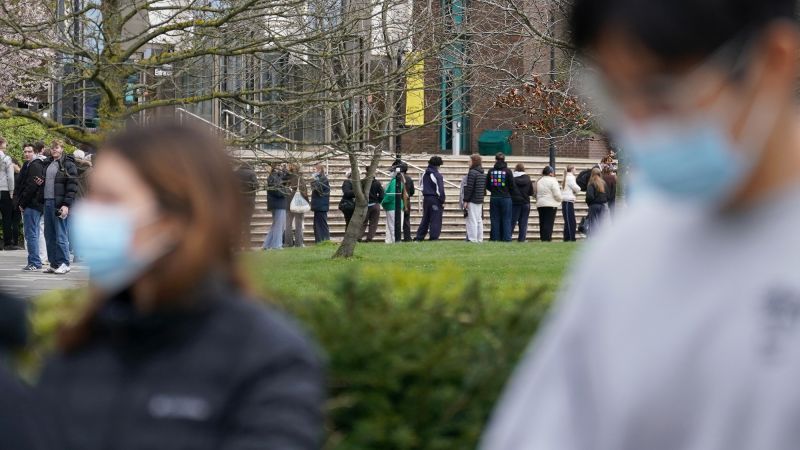
Kent meningitis outbreak: Two dead, 11 others infected in outbreak linked to English university
Two young people have died amid an outbreak of invasive meningococcal disease in southern England, with 11 other cases also confirmed.
The outbreak is linked to student populations in the city of Canterbury, Kent, according to a statement from the UK Health Security Agency (UKHSA) sent to CNN on Monday.
One of the victims was a high school student at Queen Elizabeth’s Grammar School in Faversham. “We are all absolutely devastated,” Headteacher Amelia McIlroy said in a statement sent to CNN on Monday.
In a statement published online Sunday, the University of Kent confirmed that one of its students had died during the outbreak, adding that it was “deeply saddened.”
CNN has contacted the University of Kent for further comment.
UKHSA said it was working with the university to advise staff and students, as well as identifying close contacts of those affected and administering antibiotics as part of efforts to limit the spread of the disease.
Invasive meningococcal disease is caused by meningococcal bacteria. It leads to meningitis, an inflammation of the membranes around the brain and spinal cord, as well as a form of blood poisoning known as septicemia (also spelled septicaemia).
The disease can result in serious illness and even death if not diagnosed and treated quickly.
“Meningococcal disease can progress rapidly, so it’s essential that students and staff are alert to the signs and symptoms of meningococcal meningitis and septicaemia, which can include a fever, headache, rapid breathing, drowsiness, shivering, vomiting and cold hands and feet,” Trish Mannes, UKHSA Regional Deputy Director for the South East, said in the statement.
“Septicaemia can also cause a characteristic rash that does not fade when pressed against a glass,” she added.
“Students are particularly at risk of missing the early warning signs of meningitis because they can be easily confused with other illnesses such as a bad cold, flu or even a hangover,” said Mannes.
Students are at particular risk of meningitis because they mix with so many other people, some of whom carry meningococcal bacteria without knowing it.
“University students and young adults are among the groups at increased risk because meningitis bacteria can spread more easily in settings where people live, study and socialise closely together,” said Dr Tom Nutt, chief executive of the Meningitis Now charity, in a statement published Sunday.
Although young people in the UK are offered a meningitis vaccination that protects against certain strains of the disease, since 2015 only infants have been vaccinated against MenB, which is one of the most common causes of meningitis among teenagers and young adults, said Nutt.
“We believe all teenagers and young adults should be protected by this vaccine,” he added in the statement. It has not yet been confirmed which strain of the disease is responsible for the Kent outbreak.
Paul Hunter, professor in medicine at the University of East Anglia, England, said that while some countries offer a MenB booster vaccine to adolescents, the results of cost-benefit studies mean that UK officials decided not to do so.
Hunter added that it is extremely important to seek medical help if a meningitis infection is suspected.
“Early treatment is vital, but diagnosis in the early hours of the illness can be very difficult,” he said in a statement sent to CNN by the Science Media Centre.
“Early symptoms can be very mild but then deterioration can be extremely rapid leading to death within a few hours,” Hunter added.
First Appeared on
Source link






