


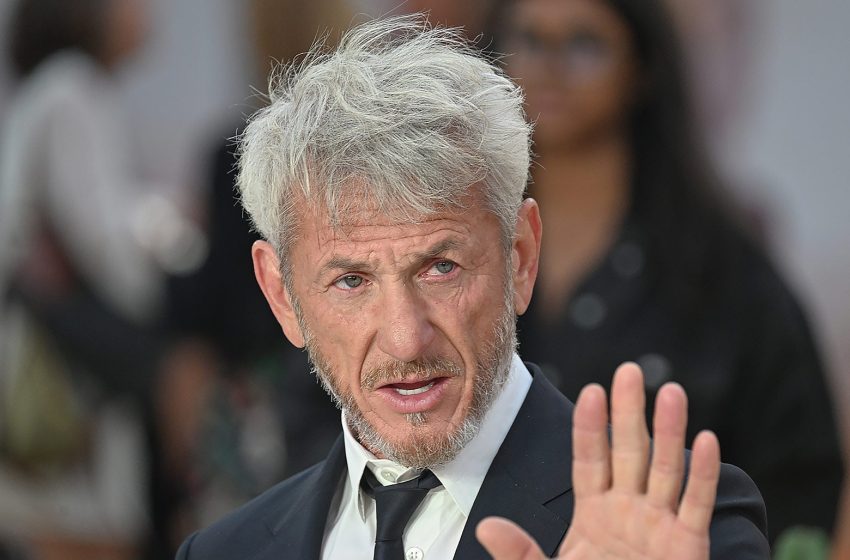
2026 Oscar winner Sean Penn skipped the show. It wasn’t the statement he thinks.
When Kieran Culkin, last year’s winner for Best Supporting Actor, arrived onstage at the Dolby Theatre in Los Angeles at Sunday’s Academy Awards to pass on the crown, he did so by praising the five men up for the award. “Gentlemen, you gave us performances we will always remember,” Culkin said. “Now it is my genuine pleasure to give one of you a moment I hope you will never forget.” The announcement that followed was indeed unforgettable, but mostly for those watching rather than the nominees in attendance. Sean Penn took home the Oscar for his role as the sadistic white supremacist Col. Steven Lockjaw in the rollicking One Battle After Another, but the actor was a no-show. “Sean Penn couldn’t be here this evening—or didn’t want to,” Culkin ad-libbed to audible guffaws from the crowd, “so I’ll be accepting the award on his behalf.”
When Culkin made the announcement, the other nominees could be seen clapping politely within their Brady Bunch picture squares, save for one: Sinners’ Delroy Lindo—the veteran actor who, along with Frankenstein’s Jacob Elordi and Sentimental Value’s Stellan Skarsgård, was up for his first-ever Oscar—sat still, his hand over his mouth. Watching at home, I didn’t sense that Lindo felt snubbed for his work, but instead stung that the academy had opted to reward someone for whom none of this seemed to matter anymore. “I don’t get very excited about what we’ll call the Academy Awards,” Penn had said in 2024, criticizing the Oscars for “extraordinary cowardice” in limiting different cultural expressions.
It’s not unheard of for nominees to miss the actual Oscars ceremony, although it is usually because of scheduling conflicts. But even though Penn was the clear front-runner, the writing was on the wall ahead of Sunday night that he wasn’t going to make the trip, something he’d also done the first three times he was nominated. Apart from January’s Golden Globes (at which he was photographed smoking cigarettes at his table, despite the fact that it’s illegal in California to smoke indoors), Penn has been mostly MIA this awards season, winning both a BAFTA and an Actor Award (formerly known as a Screen Actors Guild Award) in absentia. “Sean Penn, Please Don’t Skip the Oscars,” read an ultimately fruitless entreaty published by Variety last week, calling for him to attend if only for “the cause of good TV” and so “audiences don’t lose out on his brand of chaos.”
According to the New York Times, Penn had decided to sit out the show because of his plans to instead visit Ukraine, a country that has been central to the actor’s recent activism, most notably in the 2023 documentary Superpower, which he filmed about Russia’s invasion there. (Indeed, later on Monday, President Volodymyr Zelensky posted a picture of him meeting with Penn apparently in Kyiv, calling the actor “a true friend of Ukraine.”) In 2022 he gave Zelensky one of his Oscars apparently as a “symbol of faith” that the Ukrainian leader would prevail in war and one day return it to Penn in Malibu. But Penn also said that he was so disgusted that academy producers didn’t want Zelensky speaking at the show in 2022 that he didn’t care if Ukraine melted down his Oscars “to bullets they can shoot at the Russians.”
Still, if Penn was hoping to make some grand gesture through his absence on Sunday night, it actually had the opposite effect: It felt petty and small. On a night when Culkin had been open on the red carpet about how emotional he was at the chance to hand on the award, and on an evening when three other actors in the category were experiencing Oscars excitement for the very first time, Penn came across not as someone sitting nobly above the Hollywood fray; he came across as someone who didn’t care whether his absence would make his fellow actors feel silly for caring at all—a jerk, if you will. In other words, he came across as Sean Penn.
There is no doubt that Penn is one of the finest actors to ever live. Sunday’s award was his third Oscar, making him a member of an elite club of three-time winners that includes only him, Meryl Streep, Frances McDormand, Ingrid Bergman, Jack Nicholson, Walter Brennan, and Daniel Day-Lewis. (Only Katharine Hepburn has more, with four.) But for decades, the actor has been as famous for his pugnacity and self-importance as for his talent. In addition to his repeated arrests and convictions for hitting people (mostly, but not entirely, photographers), Penn is notorious for his activism, self-seriousness, and humorlessness—the latter quality was memorably on display when he chided Oscars host Chris Rock onstage some 20 years ago for a mostly harmless joke he told about Jude Law. Penn can be difficult—a quality women rarely get to exhibit, especially if they want to be celebrated professionally, much less in Hollywood. “I do know how hard I make it to appreciate me often,” Penn said with a flash of self-awareness when he won for Milk in 2009. With this reputation, perhaps Penn’s absence for much of awards season is precisely why he won on Sunday: Without any lecturing acceptance speeches or reminders of his lawless behavior, voters could instead think solely of his remarkable, scene-stealing work in the movie, rather than his remarkable, scene-stealing ego.
And indeed, if you sift through the Oscar-campaigning tea leaves, there were a few signs that Penn did perhaps want another little gold man. In addition to showing up—albeit grumpily and with cigarettes—to the Golden Globes, he took part in an interview for Variety’s “Actors on Actors” series (a traditional campaign stop) and was lauded in a curiously timed New York magazine report, published just before Oscars voting began, about efforts he made in 2013 to secure the freedom of an American man from a Bolivian prison. Still, if Penn was secretly angling for a win, he had little to lose from showing up to the capstone night to receive the prize, save for the nasty headlines right-wing outlets would inevitably print about his speech. But to that, I can only think of Pete Buttigieg’s words about the right branding leftists as “a bunch of crazy socialists” no matter what, so you may as well go out onstage and say what you want to say.
Indeed, Penn has previously used his two Oscar wins to seize the moment to speak his heart in ways that eloquently combined politics with deep respect for other actors. When he won for Mystic River in 2004, during the Iraq war, he told the crowd, “If there’s one thing that actors know—other than that there weren’t any WMDs—it’s that there is no such thing as ‘best’ in acting.” For Milk, he praised his collaborators on the biopic of LGBTQ+ rights campaigner Harvey Milk while issuing a heartfelt plea for equality only months after California passed Proposition 8.
What an enormous missed opportunity, then, to not use the Oscars spotlight to remind audiences of the righteous fury—not just the indiscriminate kind—that motivates Penn. This was an evening, after all, that gave the award for Best Documentary to a film that was expressly about resistance to Vladimir Putin’s invasion of Ukraine. It was an evening when everyone from Javier Bardem to host Conan O’Brien felt the need to get political. Hell, Penn won for playing a bombastic, hypocritical, egotistical racist who is unwittingly used as a pawn by a grander right-wing cabal. What better chance to take the stage and deliver a dig at you-know-who?
For my money, the most appropriate thing Penn could’ve done to be both respectful to his fellow nominees and true to his own ideals would have been to pull a version of the famous Marlon Brando–Sacheen Littlefeather stunt: Turn up to the show, graciously take the stage with a quick thank-you, then turn the microphone over to whichever victim of the world’s many current injustices Penn wanted us all to hear from. Then he could’ve gone out for a smoke.
First Appeared on
Source link






