


ADHD Inattention Tied to Sleep-Like Brain Waves
Attention-deficit/hyperactivity disorder (ADHD) might be driven by a brain that is literally falling asleep in small patches while the person remains awake.
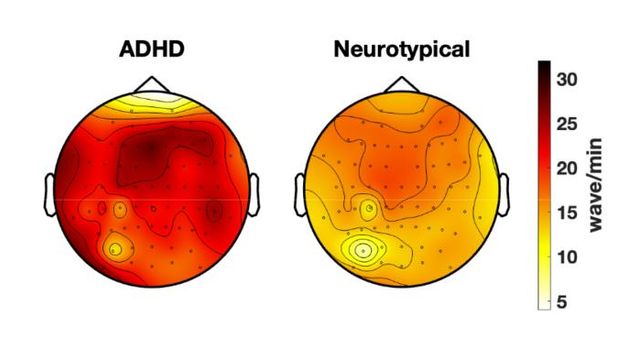
Scientists at Monash University found that adults with ADHD show more sleep-like brain waves during tasks than neurotypical adults. This increased “local sleep” activity explains why those with ADHD experience more frequent focus lapses.
The biological cause of ADHD inattention
ADHD and chronic inattention tend to go hand-in-hand; however, the physiological reason for this behavior isn’t fully understood. Most current theories focus on general arousal levels or executive function, but these fail to explain why performance lapses occur so suddenly and erratically. An individual might be focused one moment and completely absent the next.
Recent research suggests a concept known as local sleep, which proposes that the brain does not shut down all at once, but instead, specific parts of the brain show sleep-like slow brain waves while a person is still awake. This happens most often during boring or difficult tasks. These slow waves are in the delta and theta range and are typically seen during deep sleep. While these waves also occur in neurotypical brains, they are far less frequent.
There are many known links between ADHD and sleep disturbances. Many adults with the condition have poor sleep quality or delayed circadian rhythms.
However, the new study aimed to change focus from the night to the day by looking at sleep-like activity during active performance. The team wanted to see if these waves occur more often in adults with ADHD, and whether this activity could explain the link between a diagnosis and behavioral mistakes.
Comparing brain waves in ADHD and neurotypical groups
The team studied 63 adults, which included 32 people with ADHD and 31 neurotypical controls. To get accurate baseline data, the ADHD group stopped their medication before the tests.
Participants performed the sustained attention to response task, which is a repetitive test designed to trigger boredom and lapses. Researchers used a 64-channel electroencephalogram (EEG) to track brain activity. They also used “thought-probing,” which involved asking the participants if they were focused, mind-wandering, or mind-blanking.
Adults with ADHD had a higher density of slow brain waves than the control group, the EEG data showed. This activity was most common in the fronto-central area of the brain, an area that is known for managing executive functions.
The waves also appeared right before a person missed a button press or showed inconsistent reaction times.
“The ADHD group exhibited significantly higher slow wave activity, which correlated with increased objective and subjective attentional lapses,” said the authors.
“Sleep-like brain activity is a normal phenomenon that happens during demanding tasks. Think of going for a long run and getting tired after a while, which makes you pause to take a break. Everyone experiences these brief moments of sleep-like activity,” explained lead author Dr. Elaine Pinggal, a neuroscientist at Monash University.
“In people with ADHD, however, this activity occurs more frequently, and our research suggests this increased sleep-like activity may be a key brain mechanism that helps explain why these individuals have more difficulty maintaining consistent attention and performance during tasks,” Pinggal added.
While neurotypical adults often reported mind-wandering, the ADHD group experienced more mind-blanking, where thoughts simply stop during a slow-wave event.
Statistical modeling found that these slow waves are the specific mechanism that explains why people with ADHD perform differently from the control group. ADHD leads to more local sleep, which then leads to errors.
The ADHD group also reported higher overall sleepiness, matching the increased density of these sleep-like waves.
Improving ADHD symptoms through better sleep depth
The findings move the focus of ADHD research from behavior to physiology. If local sleep causes the problem, it can help direct attention to new treatments. Improving sleep depth at night could stop these waves from appearing the next day.
One potential method is auditory stimulation during sleep; this involves playing specific sounds to boost slow waves at night. The hope is that better sleep quality reduces intrusive brain waves during wakefulness.
The results also point to the potential of EEG biomarkers, which could help doctors assess ADHD with more objective data rather than relying only on subjective reports.
“Wake slow waves represent a neurophysiological mechanism underlying attentional difficulties in ADHD,” said the authors.
However, it is important to note that the study was cross-sectional, meaning it shows a link but does not prove causality. The task was also a lab test, and it is unknown if these waves would act the same way in a busy office or in a classroom.
Future research could look to see if stimulant medication stops these slow waves, and whether non-drug techniques could also offer relief—leading to new ways of managing ADHD symptoms.
Reference: Pinggal E, Jackson J, Kusztor A, et al. Sleep-like slow waves during wakefulness mediate attention and vigilance difficulties in adult attention deficit/hyperactivity disorder. JNeurosci. 2026. doi: 10.1523/JNEUROSCI.1694-25.2025
This article is a rework of a press release issued by the Society for Neuroscience. Material has been edited for length and content.
First Appeared on
Source link






