


‘They told me 2 to 3 years’
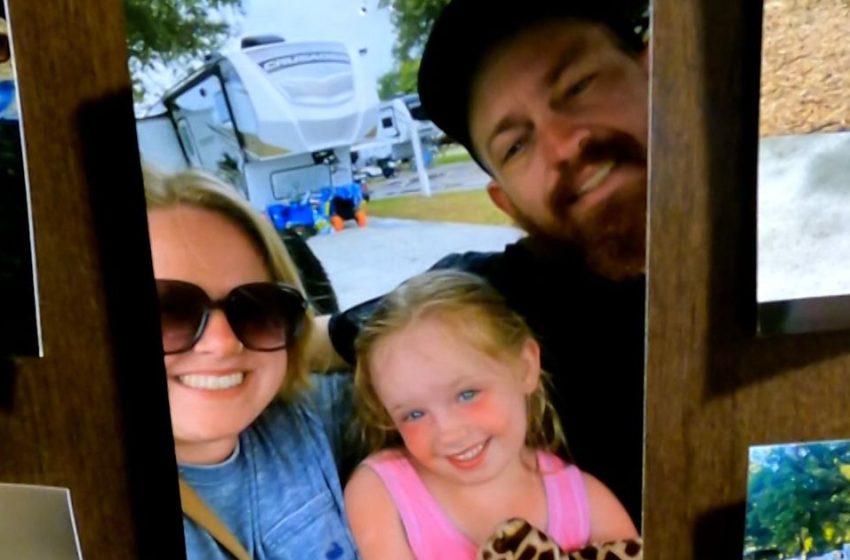
Every two weeks, a camper parked in a small lot one mile from the Duke Cancer Center becomes home base for Spencer and CarleyAnn Laird.
“We are from Swansea, South Carolina, about four hours away,” said Spencer Laird, 30.
For two years, the Fury camper with its bold black and blue design towed behind the Lairds’ truck, helped the family explore new sights.
That freedom was a welcome change for the Lairds, after Spencer was first diagnosed with colon cancer when he was just 26.
Doctors in South Carolina at the time diagnosed him with stage I colon cancer. He underwent surgery when he was 27 and said he was told it was unlikely the cancer would return.
“Everything was good for two years,” Spencer Laird recalled.
CarleyAnn Laird added, “They said, ‘You’re good. Go live life.’ So that’s what we did.”
Spencer Laird told WRAL he “didn’t really have symptoms,” when he went in for a routine checkup. CarleyAnn pushed doctors to perform a scan anyway, which revealed an unexpected result.
“That’s when they found 13 tumors,” Spencer Laird said. “The whole world just kind of stops. I thought for sure this was it. They told me two to three years at best, with chemo and radiation.”
Spencer Laird said his largest three tumors were the size of golf balls.
“One was pushing on my heart, one of the big ones was pushing on my windpipe, and they were on both sides in both lungs. They were everywhere,” he said.
The couple said they didn’t want Spencer to undergo chemo or radiation. That’s when CarleyAnn Laird said she started looking for a second opinion.
“I was very terrified to be a widow. I have been with him since I was 15,” CarleyAnn Laird said while sitting beside Spencer Laird in their camper.
She said the couple’s main focus has always been on their daughter, now 6.
“You’re slowly watching him, and that was my biggest fear. I didn’t want her to experience that,” said CarleyAnn Laird.
That’s when the family packed up and headed north for the first of many trips to Duke.
The family said support from their church and community back home has helped them make the frequent trips to Durham while continuing to care for their daughter.
“When CarleyAnn got me up here to Duke, it was just for a second opinion,” Spencer Laird said. “They looked at the scans and everything and there was nothing good to say about it.”
That’s when the family was told Spencer Laird was a candidate for a new clinical trial just starting out of the Duke Cancer Center and funded in part by Gateway for Cancer Research.
Duke Health Oncologist Dr. Nicholas DeVito is among the team of researchers leading the groundbreaking efforts to find new therapies for stage IV colon cancers which have spread to other organs but not the liver.
This trial is investigating the use of Botensilimab and Balstilimab, immunotherapy drugs that have shown promising results in treating late-line colorectal cancers.
DeVito explained the most common form of colorectal cancer, called microsatellite stable colorectal cancer, currently has no approved immunotherapies, leaving chemotherapy as the primary treatment option when the disease spreads.
Chemotherapy can be effective for many cancers, but it can be difficult for some patients because of how much it impacts the body and daily life.
“While chemotherapy has high response rates, it doesn’t work forever and it doesn’t even work for a very long period of time,” DeVito explained. “Immunotherapy can work for a very long period of time and even cure some people of stage IV cancer.”
Chemotherapy attacks rapidly dividing cells, which includes cancer cells but can also target healthy cells. Immunotherapy works by boosting the body’s immune system so it can fight cancer.
DeVito said the researchers designed the trial with a simple goal: to put themselves in their patients’ shoes. Researchers hit their goal of enrolling 15 patients in two years, in just 14 months.
“This is a very patient-oriented trial,” DeVito stated. “If I was a patient who wanted to continue working and spending time with my family, I would want a therapy that’s ideally going to control my cancer for the longest possible period of time with the fewest side effects, and I’d want that treatment to be given first.”
The Lairds shared the same mindset. Spencer became just the second patient enrolled in the trial.
“I really feel like God led us here in so many different ways,” Spencer Laird said. “We came for a second opinion. Then when they started talking about it we were like, ‘I guess this is why we’re here.’”
A year after beginning treatment, the Lairds say the difference is even better than they could’ve imagined.
Nearly all 13 tumors are now gone.
“They’re looking at two-three spots now,” Spencer Laird said. “Now, the biggest one is 0.6 centimeters, which is nothing.”
DeVito noted that it is possible the remaining areas they are focused on may no longer be cancerous.
“They might just be scar tissue,” DeVito said. “One important part about Spencer, and we’ll learn more about this in time, is that his CEA – which is an imperfect but useful blood marker of colon cancer that we use once someone has been diagnosed to monitor their treatment– has plummeted. That along with the scans and how he feels, all support this idea that he has a long and enduring response to immunotherapy, which is a first.”
For Spencer Laird, it has meant more time with his daughter and the chance to envision a future that once seemed in jeopardy.
“That means the world to me to be able to be there for her,” Spencer Laird said.
CarleyAnn Laird added, “I think it’s very important to have a father as a little girl. You kind of set the tone for everything. He teaches her everything.”
The couple said they encouraged other families in similar situations to seek second opinions, and to always advocate for the best care.
For now, the Lairds expect to make trips to Duke for the rest of the year, but hope to one day spend less time in their home-away-from-home.
DeVito will present interim data from the clinical trial at the American Association for Cancer Research national conference in April.
DeVito said the next steps would be to expand the clinical trial and involve more biomarker-driven investigations to better understand which patients may benefit from immunotherapy the most.
“The real beauty of this study is that we’re only treating patients with immunotherapy. Therefore, you get an idea of how the cancer changes in response to only that immunotherapy. You’re not throwing the kitchen sink at someone – chemo, immunotherapy, targeted therapy – and then you say, ‘I don’t know what did what,’” said DeVito.
DeVito shared the thinking that led to this study may be viewed as ‘against the grain’ but advocated more studies need to push the envelope, especially as more young patients receive diagnoses.
“I think that there’s a real potential to move this forward, conceptually in colon cancer, but in other cancer types,” DeVito said.
He continued, “We should be pushing the limits and saying what we’re doing for patients is not good enough, and trying these novel agents earlier on in therapy, and getting a real understanding of how they work in a cancer that hasn’t been exposed to other treatments.”
The Lairds say they know the future isn’t guaranteed, but the results of that approach have already changed their lives.
“I can’t say I’m cancer-free, but I feel like I am,” Spencer Laird said.
First Appeared on
Source link






