


Earth’s first mass extinction may have been far worse than believed
Fossils of the first sea creatures, long assumed to have vanished before a major mass extinction about 550 million years ago called the Kotlin Crisis, have now been found and are providing new details about that time period.
This discovery transforms what once looked like a routine species decline in Earth’s early history into what may be the first catastrophic extinction in animal history.
Life dating back 551 million years
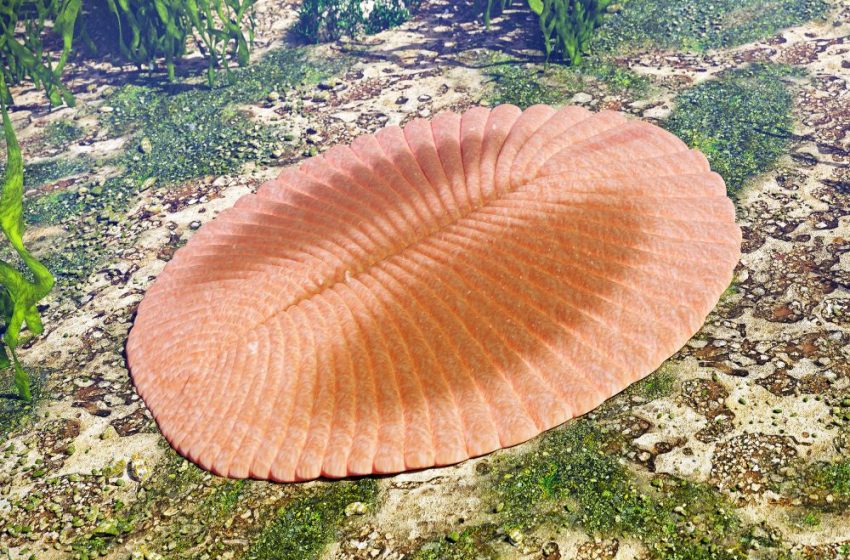
On a fossil-rich rock surface at Inner Meadow in eastern Canada, dozens of leaf-shaped sea organisms remain preserved in fine detail.
At that site, Dr. Duncan McIlroy of Memorial University of Newfoundland identified classic Avalon-type fossils in rocks dated to about 551 million years ago.
Until now, those organisms were known only from much older layers, yet here they appear in rocks laid down just before the extinction.
By extending their last appearances to the brink of extinction, the site forces a reassessment of how abruptly those early ecosystems collapsed.
Three familiar assemblages
For decades, scientists believed early complex life unfolded in three distinct waves.
The oldest communities thrived in deep water and were dominated by tall, leaf-shaped organisms anchored to the seafloor.
Later, more varied life filled shallow seas, including some of the earliest clear relatives of modern animals.
After that extinction around 550 million years ago, only a thinner and less varied set of organisms remained, marking the final chapter before the Cambrian explosion.
Different life overlapped
Dating shows the Inner Meadow fossils are about 13 million years younger than other nearby sites, placing them alongside communities previously thought to have come later.
Instead of two steps in time, the older-looking and younger-looking groups lived at once in different settings.
Deep-water seafloors favored frond-dominated communities, while shallow seas supported more mobile forms and clearer animal ancestors.
By showing both side by side, the new site weakens the idea that one assemblage simply replaced another.
The Kotlin Crisis mass extinction
A sharp decline in fossil diversity around 550 million years ago is known as the Kotlin Crisis. Because Inner Meadow preserves older kinds of life at that same moment in time, many species now appear to end their history there.
“The severity of the Kotlin Crisis extinction event is much more profound,” said McIlroy.
That change pushes estimated losses to about 80% of known macroorganisms, large fossils you can see without microscopes, in a single pulse.
Earlier in the Ediacaran period, the normal trickle of extinctions seemed unusually low in the fossil record.
Instead of steady turnover, many lineages showed long stretches with little visible change until the Kotlin Crisis.
“The rate of background extinction in earliest biotas is almost zero,” said McIlroy.
That sharp shift from near-zero losses to widespread disappearance suggests early animal relatives faced their first major extinction without a long warning period.
Oxygen loss was a possible cause
Chemical clues in rock layers from that interval have pointed to falling oxygen in ancient seas.
Lower oxygen levels would have squeezed animals into smaller livable zones, since oxygen-poor water limits breathing and feeding.
Changing seafloors may also have mattered, since early burrowers broke bacterial films and reshaped habitats for immobile forms.
Those ideas fit the wider extinction pattern, yet Inner Meadow alone cannot prove which stress pushed communities past their limit.
Why the fossils were well-preserved
Inner Meadow qualifies as a Lagerstätte, a fossil site with unusually detailed preservation, because many bodies left crisp outlines in the rock.
Volcanic ash settled through seawater and sealed the seafloor, cutting off decay long enough for sediments to harden.
Little sign of reworked ash suggests the burial stayed gentle, so fronds kept their positions instead of flipping.
Because soft tissue normally vanishes fast, each well-preserved surface captures a short interval, not a long history.
Zircon dating confirms mass extinction
A narrow ash bed acted as a time marker, because it formed almost instantly compared with slow sediment buildup.
Inside that ash, tiny zircons, tough crystals that trap uranium when they grow, held a measurable signal.
Using U-Pb dating, a method that reads uranium turning into lead, researchers pinned the ash to a specific age.
Even with uncertainty under one million years, that date places Inner Meadow very close to the extinction boundary.
Work at Inner Meadow has moved slowly, since crews have peeled back soil and plants without damaging the fossil floor.
On privately owned land, the team dug by hand under provincial permits, keeping the exact location out of public view. Some loose pieces were added to the provincial museum collection, ensuring a permanent record beyond the field site.
Protection comes with a cost, because fewer people can visit or recheck the site while excavation continues.
Lessons from the Kotlin Crisis
The fossils at Inner Meadow upend what once appeared to be a tidy progression of early life.
Instead of neatly replacing one another, these communities overlapped in time, linking the flourishing Avalon biota directly to the brink of extinction.
The discovery collapses the gap between stability and catastrophe – showing that the crisis struck not after a slow fade, but at the height of diversity. Now the question shifts from whether a major extinction occurred to why.
Future excavations and more precise dating could reveal whether sweeping environmental change, ecological disruption, or a combination of forces triggered the collapse.
What is clear is this: Earth’s earliest complex life did not quietly evolve into the Cambrian world – it first endured a profound and devastating loss.
The study is published in the journal Geology.
—–
Like what you read? Subscribe to our newsletter for engaging articles, exclusive content, and the latest updates.
Check us out on EarthSnap, a free app brought to you by Eric Ralls and Earth.com.
—–
First Appeared on
Source link






