


Did the U.S. underestimate Iran’s drone threat? : NPR
AFP via Getty Images and U.S. Air Force/Collage by Emily Bogle/NPR
Wladimir van Wilgenburg stands in a residential neighborhood in Erbil, in the Kurdistan region of Iraq, and points out incoming drones high in the sky.
“The U.S. defense systems, as you can see, are taking down the drones,” he says in a video recorded during the first days of the U.S.-Israeli war in Iran and sent to NPR.
First one, then another, is obliterated in a puff of smoke, sending explosions reverberating through the apartment block several seconds later.
Van Wilgenburg, a journalist based in Erbil, says drones — sent by Iran to attack U.S. facilities in the region — have become a daily occurrence over the city in recent weeks. So, too, have the interceptions.
“Most of these drones … don’t reach their destination,” he says.
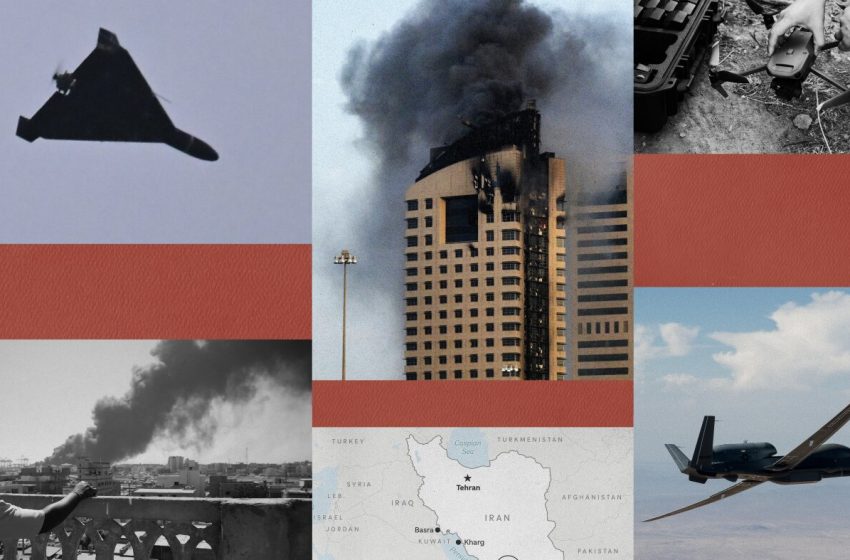
With Operation Epic Fury well into its third week, there are two increasingly urgent questions: how long U.S. defense systems can continue to hold off such attacks — not just in Iraq, but throughout the Middle East — and whether the U.S. underestimated the threat of Iran’s drones in the first place.
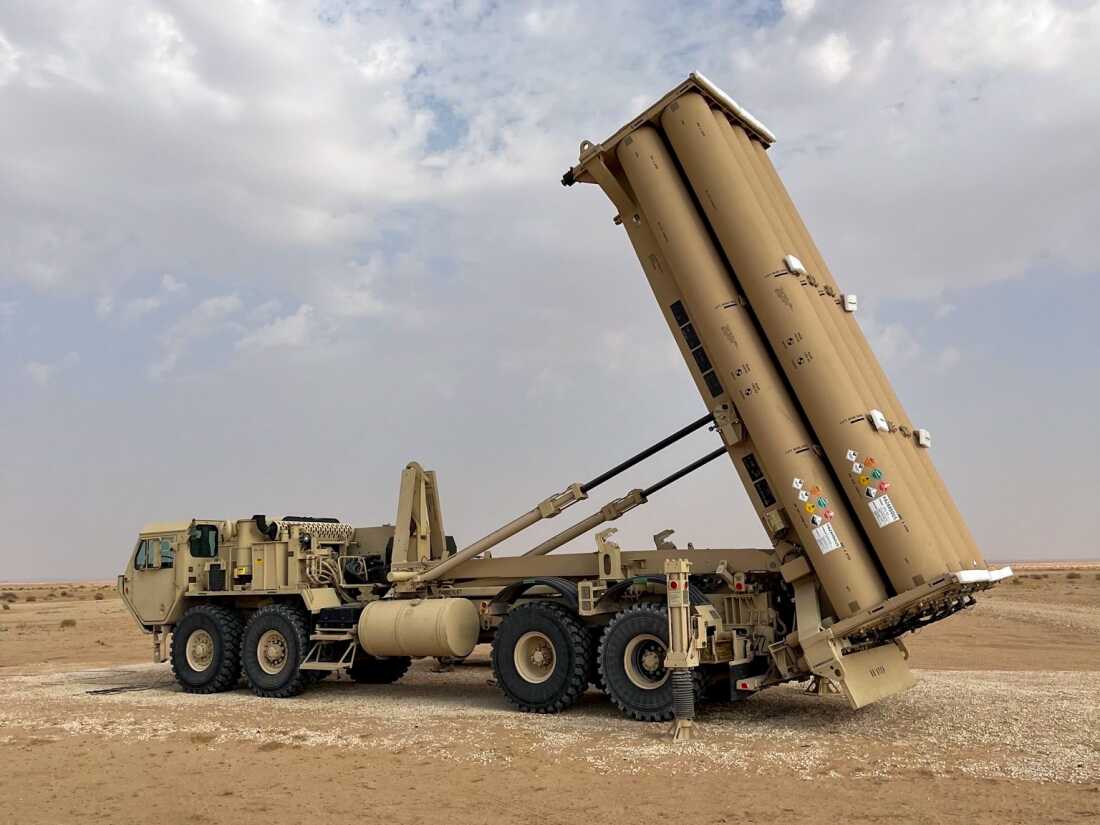
A Terminal High Altitude Area Defense (THAAD) launcher emplaced and prepared to launch interceptors to counter ballistic missile threats at an undisclosed location in CENTCOM area of responsibility in November 2023.
U.S. Army
hide caption
toggle caption
U.S. Army
Over the Gulf region right now, relatively cheap Iranian drones are being taken out by costly and difficult-to-manufacture U.S. interceptor missiles. A typical Shahed-136 costs Tehran roughly $20,000 to $50,000, while interceptors, such as the Patriot and Terminal High Altitude Area Defense (THAAD), cost millions. That disparity has allowed Iran to drive up the cost of the conflict for the U.S., according to Kelly Grieco, a senior fellow at the Stimson Center, a think tank aimed at enhancing international peace and security.
And after just a few weeks of fighting, there are already indications that the U.S. may run out of interceptors before Iran depletes its drone supply. Early in the war, U.S. officials who were not authorized to speak publicly told NPR that they are concerned about a lack of missile interceptors, and may have to draw from stockpiles outside the region. U.S. Central Command, which oversees U.S. military operations in the Middle East, did not immediately respond to NPR for comment.
The drone attacks have been relentless. In the opening days of the conflict, six U.S. servicemembers were killed when an Iranian drone hit a U.S. operations center in Kuwait. Multiple petroleum facilities have come under drone attack in the UAE. Two Iranian drones smashed into the U.S. embassy in Riyadh, starting a fire. And just this week, the U.S. embassy in Iraq was also hit by a drone.
No military technology has reshaped warfare as dramatically in recent years as drones have. They vary widely in both cost and capability. On the upper end, there’s the U.S.-made RQ-4 Global Hawk, a high-altitude surveillance drone used to gather intelligence and track targets over vast areas with a price tag of roughly $130 million. There’s also the Shahed — an expendable unmanned aerial vehicle (UAV) used to target U.S. military bases in the Gulf and linked to attacks on shipping in the Persian Gulf. The design has proven so successful that even the U.S. has copied it, creating a Shahed-like drone, known as the Low-Cost Uncrewed Combat Attack System, or LUCAS, which has already seen action in Iran.
At the other end of the spectrum are cheap quadcopters — such as consumer models that can be purchased online — refitted and repurposed by Ukraine for its war with Russia.
Some of the earliest uses of drones came during the U.S. war in Afghanistan. Now, they’ve come to dominate today’s battlefields in Ukraine, Gaza and the Persian Gulf. These systems have not only served military powers such as the U.S.; they have also put airpower within reach of smaller and less technologically advanced countries and even non-state actors. The technology has enabled them to compete with adversaries fielding large and sophisticated air forces.
Grieco recalls speaking with a U.S. Army officer who had been in Iraq during the recapture of Mosul in 2016. “It was the first time that the Islamic State used quadcopters and were dropping grenades,” she says. The officer told her, “‘You know, in my whole career, all my deployments, I had to look in front of me. I had to look behind me and I had to look on the sides for the enemy. I never before had to look up above me and worry about the enemy.'”
Drones have been used extensively by Israel in Gaza — so much so that Palestinians often refer to zanana, or the constant buzzing sound they make as they fly overhead during everyday life. The Israeli military uses them largely for surveillance, but has increasingly been using them for combat operations as well. Many eyewitnesses have told NPR that in the peak of the fighting back in 2024, Israel was commonly using so-called sniper drones to shoot Palestinians, including children. The Israeli military did not respond to NPR’s repeated requests to verify its use of such technology.
Attack drones have also become a fixture of Sudan’s ongoing civil war, where Iranian-made drones have been supplied to government forces for use against rebels, according to the Council on Foreign Relations’ Global Conflict Tracker.
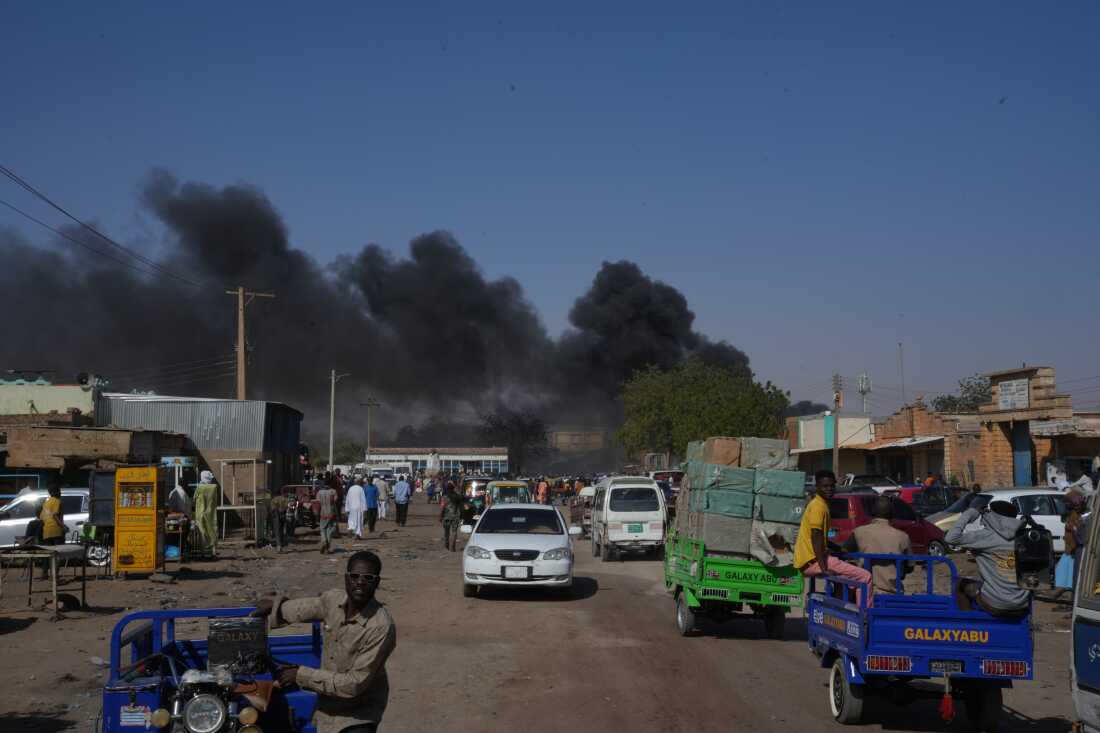
The aftermath of a drone strike in El Obeid, North Kordofan State, Sudan, Feb. 28. The increasing use of drones and explosive weapons in Sudan’s populated areas has reshaped the war over the past year, driving up civilian casualties and damaging essential infrastructure and services.
Faiz Abubakr
hide caption
toggle caption
Faiz Abubakr
War in Ukraine breaks new ground for drone warfare
No conflict, however, has done more to reshape the battlefield around drone technology than Russia’s full-scale invasion of Ukraine. Massively outgunned at the start of the war, Kyiv’s forces used off-the-shelf first-person view (FPV) drones, which use cameras to home in on targets and drop simple munitions on Russian tanks and armored vehicles — with stunning success.

“The Ukrainians were a bit ahead in terms of how they were using drones offensively,” says Dara Massicot, a senior fellow at the Carnegie Endowment for International Peace in the Russia and Eurasia program. Russia “scrambled,” she says, and reached out to Iran to purchase Shaheds. Russia later purchased Iran’s intellectual property from them, he says, and “then just took it in their own direction,” producing its own version of the weapon known as the Geran.
In Ukraine, the moped-like buzz of propeller-driven Shaheds and Gerans has become ubiquitous. Russian forces have launched more than 57,000 of them at Ukrainian cities throughout the four-year war, according to Ukrainian President Volodymyr Zelenskyy. In response, Ukraine has fired thousands back at Russia.
The Ukrainians have pioneered a variety of methods of shooting down Shaheds and their Russian-built variants. They’ve shot them down with machine guns in mobile units on trucks, jammed them electronically and — most recently —intercepted them with other, inexpensive drones. Ukraine claims it has achieved about a 90% kill rate, and has offered to assist the U.S. with countering the Shaheds.

But in an interview Friday on Fox News, President Trump rebuffed an offer from Ukraine to assist U.S. forces in countering Shahed drones with Kyiv’s homegrown, low-cost “Sting” interceptors. “We don’t need their help in drone defense,” Trump said. “We know more about drones than anybody. We have the best drones in the world, actually.”
Shaheds are still getting through missiles defenses
Since U.S. and Israeli strikes on Iran began last month, sophisticated U.S. missile-defense systems across the region have been pressed into service against Tehran’s drone attacks — and they haven’t been able to stop them all. In major Gulf cities, “we’re seeing a kind of ‘bunkerization’ take hold as civilians increasingly have to shelter from this onslaught of drone attacks,” says James Patton Rogers, executive director of Cornell University’s Brooks Tech Policy Institute and a drone-warfare expert.
Strikes on the United Arab Emirates, which has borne the brunt of Iranian attacks in recent weeks, highlight just how extensively Tehran is relying on its drones. In a March 16 post on X, the UAE’s Ministry of Defense that “Since the onset of the blatant Iranian aggression, UAE air defences have engaged 304 ballistic missiles, 15 cruise missiles and 1,627 UAVs.”

A worker assesses the damage after a building was hit by a reported drone strike in Dubai on March 12.
AFP via Getty Images
hide caption
toggle caption
AFP via Getty Images
For now, at least, the Pentagon has cited a drop in the rate of fire since the conflict began as an indicator that the U.S. is eliminating the threat of Shahed drones, mainly by destroying their launchers and factories on the ground. Defense Secretary Pete Hegseth said Friday that the drone attacks by Iran are down 95% since the start of the war.
But Grieco from the Stimson Center says that doesn’t mean the threat has gone away. “One possible explanation is that we have reduced their capacity and the number of drones that they have to shoot,” she says. “There are other explanations for why that number may have dropped, which could be about tactical recalibration.”
In the skies over the Gulf region right now, there are two air wars going on simultaneously, Grieco says — one high and one low. In the high-altitude fight, U.S. and Israeli jets are winning, as they suppress Iran’s air defenses, destroy its buildings and kill its leadership. In the low-altitude air war, Iran is dominating with its Shaheds, which are threatening bases, infrastructure, and the Strait of Hormuz, she says.
Even so, the drones — especially the Shaheds — have proven difficult, but not impossible to intercept. “They’re not necessarily that hard to kill once you see them,” says Thomas Karako, director of the Missile Defense Project at the Center for Strategic and International Studies. But “they’re hard to see,” he says, adding: “They may cross the horizon relatively late and be flying rather low.”
Iran’s drone threat shouldn’t have come as a surprise, experts say
Multiple experts point out that the U.S. had ample evidence ahead of the war in Iran that drones like Shaheds would be a significant threat, particularly given recent history in Ukraine.
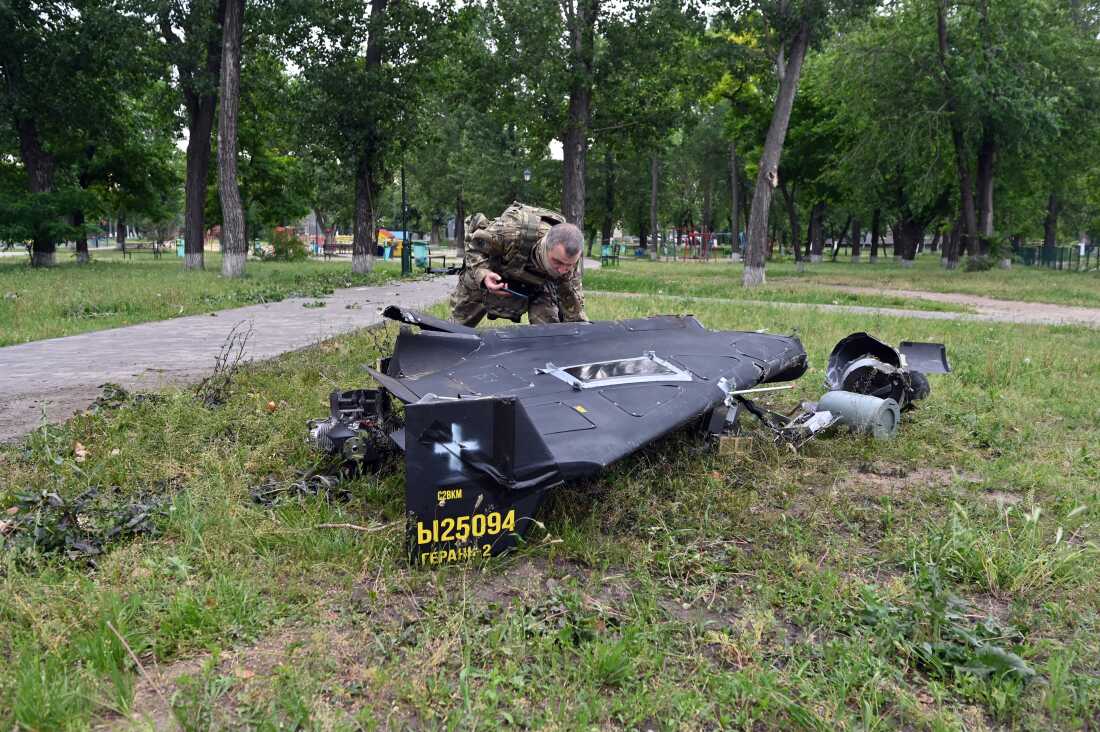
A Ukrainian explosives expert examines parts of a Shahed-136 military drone that fell down following an attack in Kharkiv on June 4, 2025.
Sergey Bobok/AFP via Getty Images
hide caption
toggle caption
Sergey Bobok/AFP via Getty Images
And the effectiveness of inexpensive drones has received considerable attention from U.S. military planners in recent years, with numerous conferences, workshops and working groups focusing on the issue, Massicot says. “For some reason that didn’t translate into executing low-cost layered defenses at some of these facilities,” she says, referring to U.S. bases in the Gulf region. “Now we’re doing it in real time … scrambling to get it done when it could have been done before.”
As a result, the U.S. and its allies in the Gulf have thus far fallen short in fielding a truly multi-layered defense. Such a system combines interceptor missiles and even missile-equipped jet fighters with point-defense systems that could be as simple as a .50 caliber machine gun on the ground to protect specific sites, Massicot says. It’s the last part, “something on the ground to intercept leakers” that the U.S. seems to have missed, she adds.
Massicot says it is increasingly likely that drones will take over some of the combat functions performed today by humans. “What they can do is free up human labor for things that really need … a human eye,” she says.

Rogers notes that “there’s lots of discussions about a drone revolution that’s taking place” with a key lesson being the experience in Ukraine. “The trouble is, there’s a problem with that lesson,” he says. Instead of achieving victory for either Ukraine or Russia, the result has been a “brutal attritional stalemate.”
Although the Shahed is catching headlines today, ultimately “it’s not any particular drone that is transformative,” Karako says.
The proliferation of drones on the battlefield, though, represents “a new chapter of air power,” and “a new chapter of air defense.”
First Appeared on
Source link






