


Scientists Found 120,000-Year-Old Footprints Where Humans Were Never Thought To Have Walked
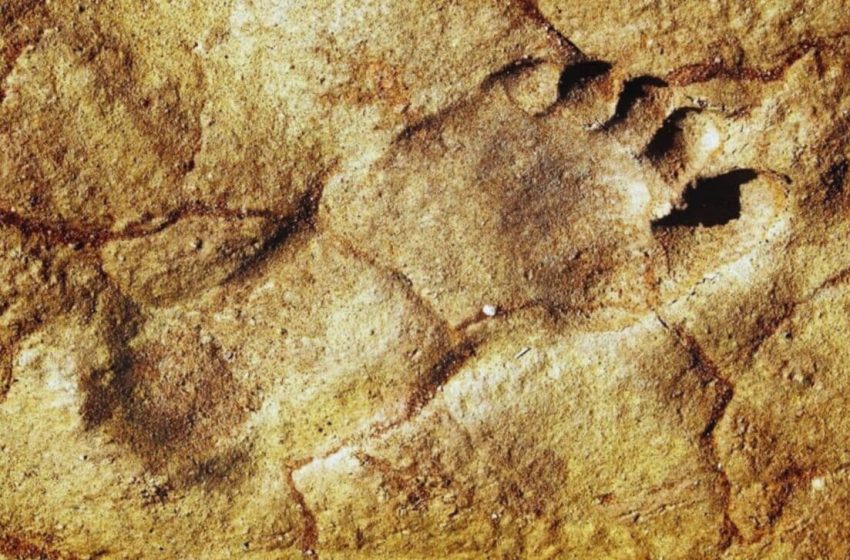
Researchers have discovered 120,000-year-old human footprints in the Nefud Desert of Saudi Arabia. Preserved in an ancient lake bed, the tracks were left by a small group of Homo sapiens. These traces reveal surprising details about their movements across the Arabian Peninsula.
The footprints were found in an area that, long ago, was much wetter and more hospitable than the arid desert it is today. This find challenges previous assumptions that early humans avoided such a harsh environment and shows that they were capable of living and migrating through the desert thousands of years ago.
A Snapshot of Prehistoric Life
These footprints were likely left by humans who stopped to drink and forage by an ancient lake. According to a study, published in Science Advances, this discovery shows that Homo sapiens were present in northern Saudi Arabia 120,000 years ago, much earlier than previously thought. As Mathew Stewart, one of the study’s lead authors from the Max Planck Institute for Chemical Ecology, explained in a press release:
“We immediately realized the potential of these findings.” He added, ” “Footprints are a unique form of fossil evidence in that they provide snapshots in time, typically representing a few hours or days, a resolution we tend not get from other records.”
While there is still much to learn about these humans, their footprints give us a better idea of the paths they might have taken as they ventured out of Africa.
What Was Earth Really Like?
What makes this discovery even more remarkable is the environment in which the footprints were found. The area was once a lake, very different from the dry desert landscape of today. According to researchers, the presence of animal tracks suggests that the region was much greener and more fertile in the past.
“The presence of large animals such as elephants and hippos, together with open grasslands and large water resources, may have made northern Arabia a particularly attractive place to humans moving between Africa and Eurasia,” explained Michael Petraglia, an archaeologist at the Max Planck Institute for Science and Human History.
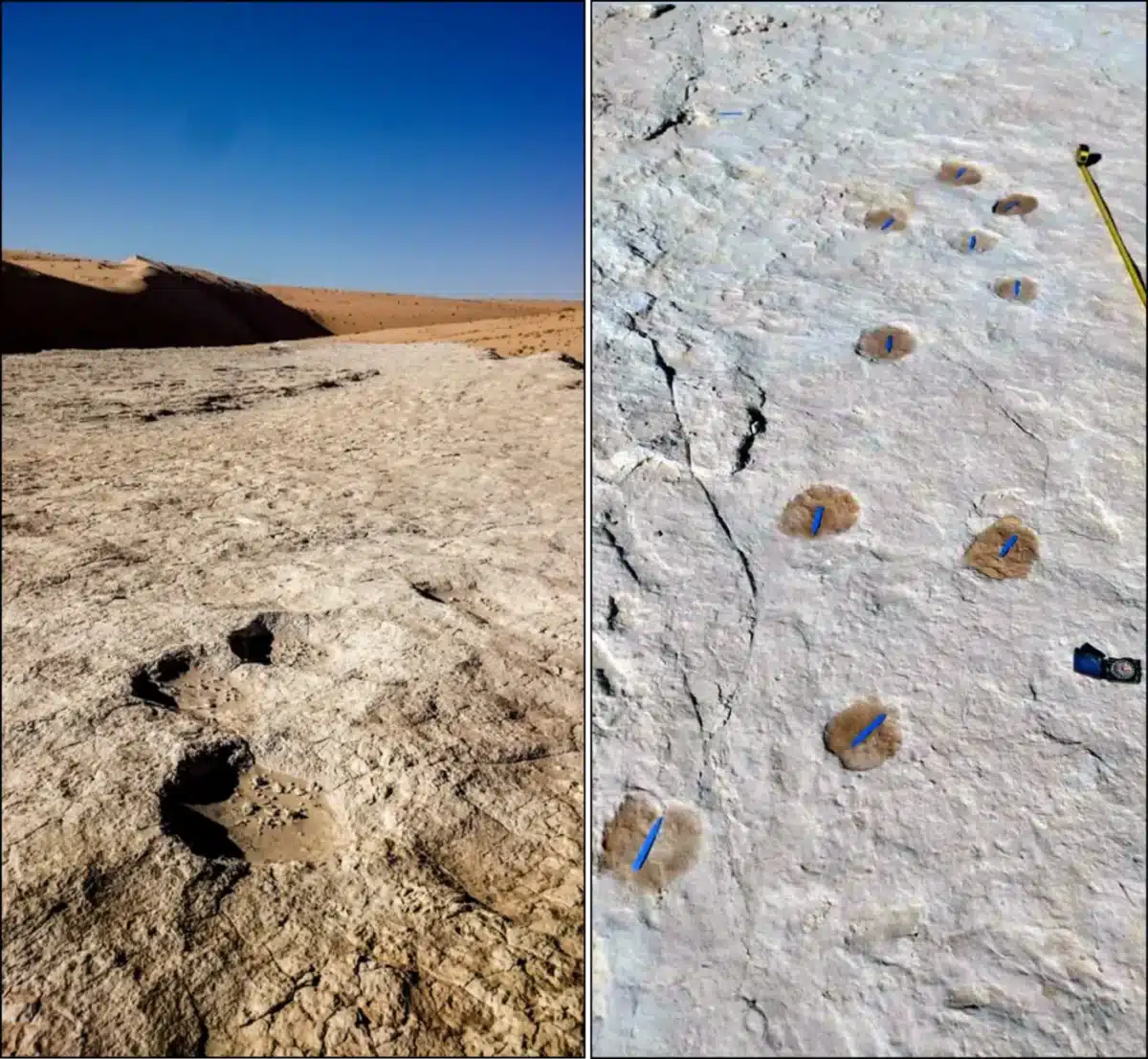
The stark contrast with today’s desert landscape shows just how much the climate has changed over time. In the past, the area provided essential resources for both humans and animals.
The Great Human Journey Across Arabia
These footprints also shift our understanding of early human migration patterns. According to experts, this find shows that the Arabian Peninsula played a much more significant role in the spread of Homo sapiens than previously thought. The animal and human tracks found together indicate that the region offered favorable conditions for human settlement and movement.
“It is only after the last interglacial with the return of cooler conditions that we have definitive evidence for Neanderthals moving into the region,” sais Stewart. “The footprints, therefore, most likely represent humans, or Homo sapiens.”
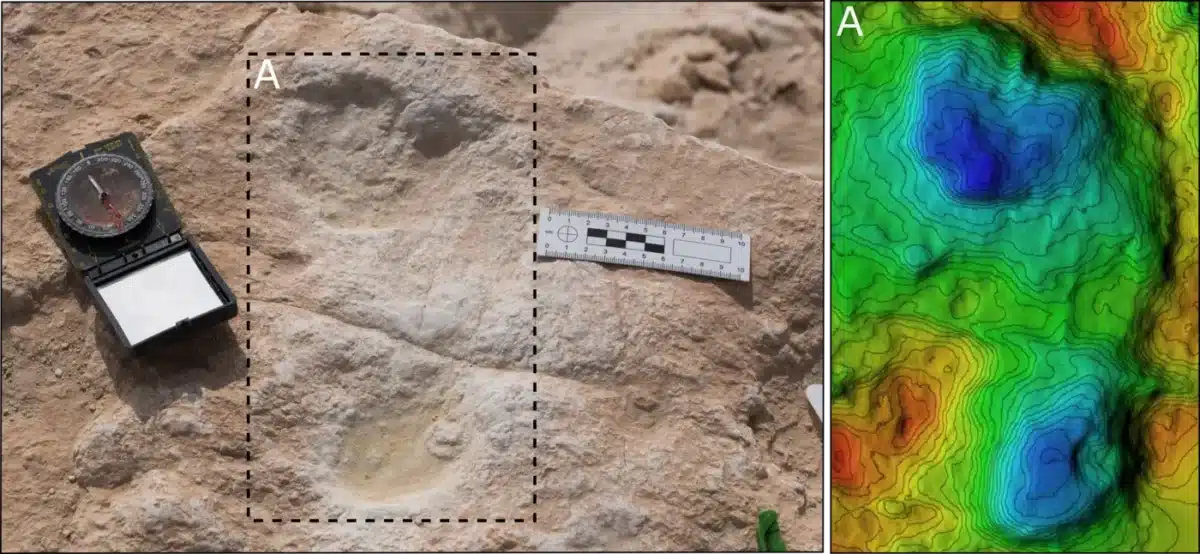
The discovery challenges the notion that humans avoided the Arabian Peninsula due to its harsh climate, showing instead that they were able to thrive in diverse landscapes as they moved across continents.
First Appeared on
Source link






