


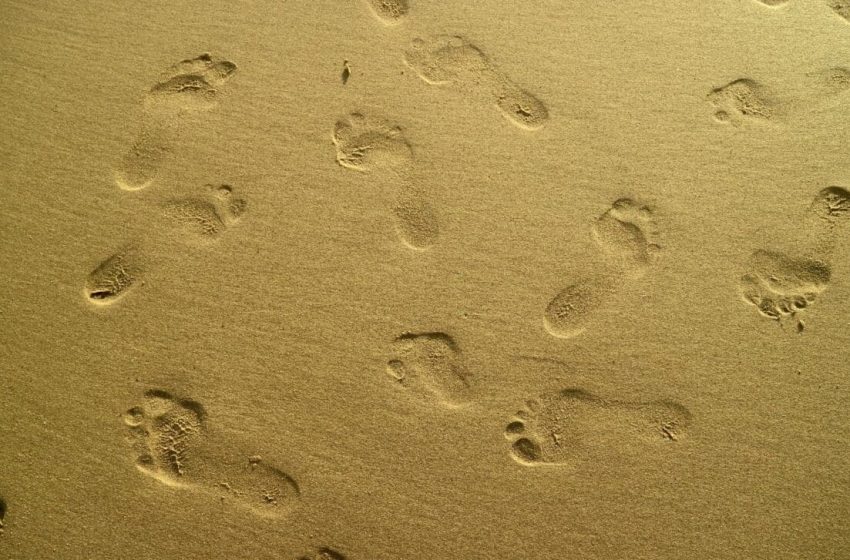
Scientists Discovered 29 Human Footprints Strangely Arranged on a Remote Island in Canada
A set of 13,000-year-old footprints discovered on Calvert Island is offering rare, direct evidence of human activity along North America’s Pacific coast. Preserved in shoreline sediment, the tracks point to a small group moving together at the water’s edge.
Such discoveries are uncommon. According to Duncan McLaren, lead author of the study published in PLOS One, fossilized footprints are rarely found in archaeological contexts, though coastal erosion can occasionally reveal them.
At the time these footprints were made, sea levels were lower than today, exposing stretches of coastline that are now submerged. This environmental context makes the site particularly valuable for understanding early human presence in the region.
The find also contributes to broader discussions about how the first humans reached the Americas, especially the role of coastal routes during the last ice age.
Twenty-Nine Footprints and Three Individuals
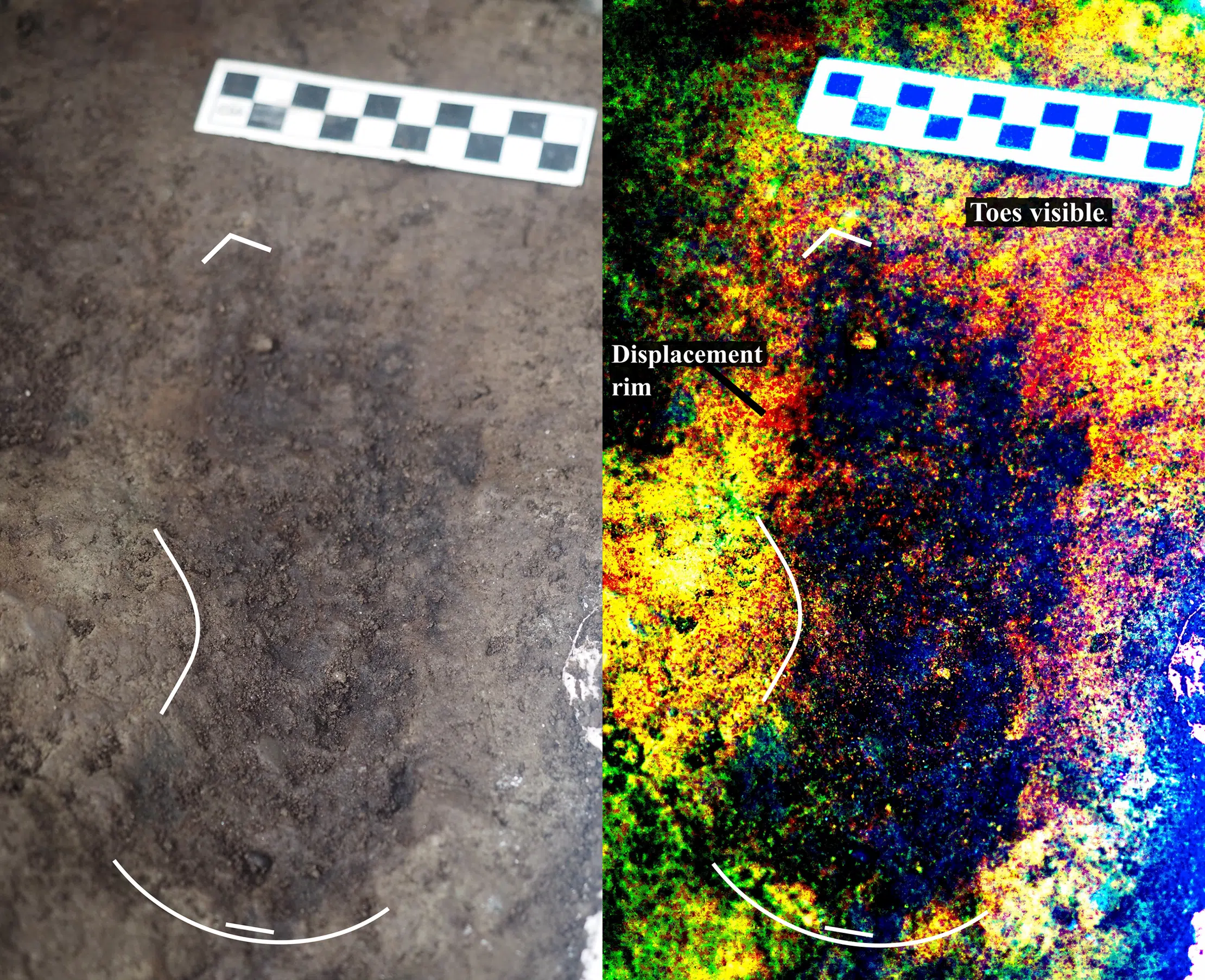
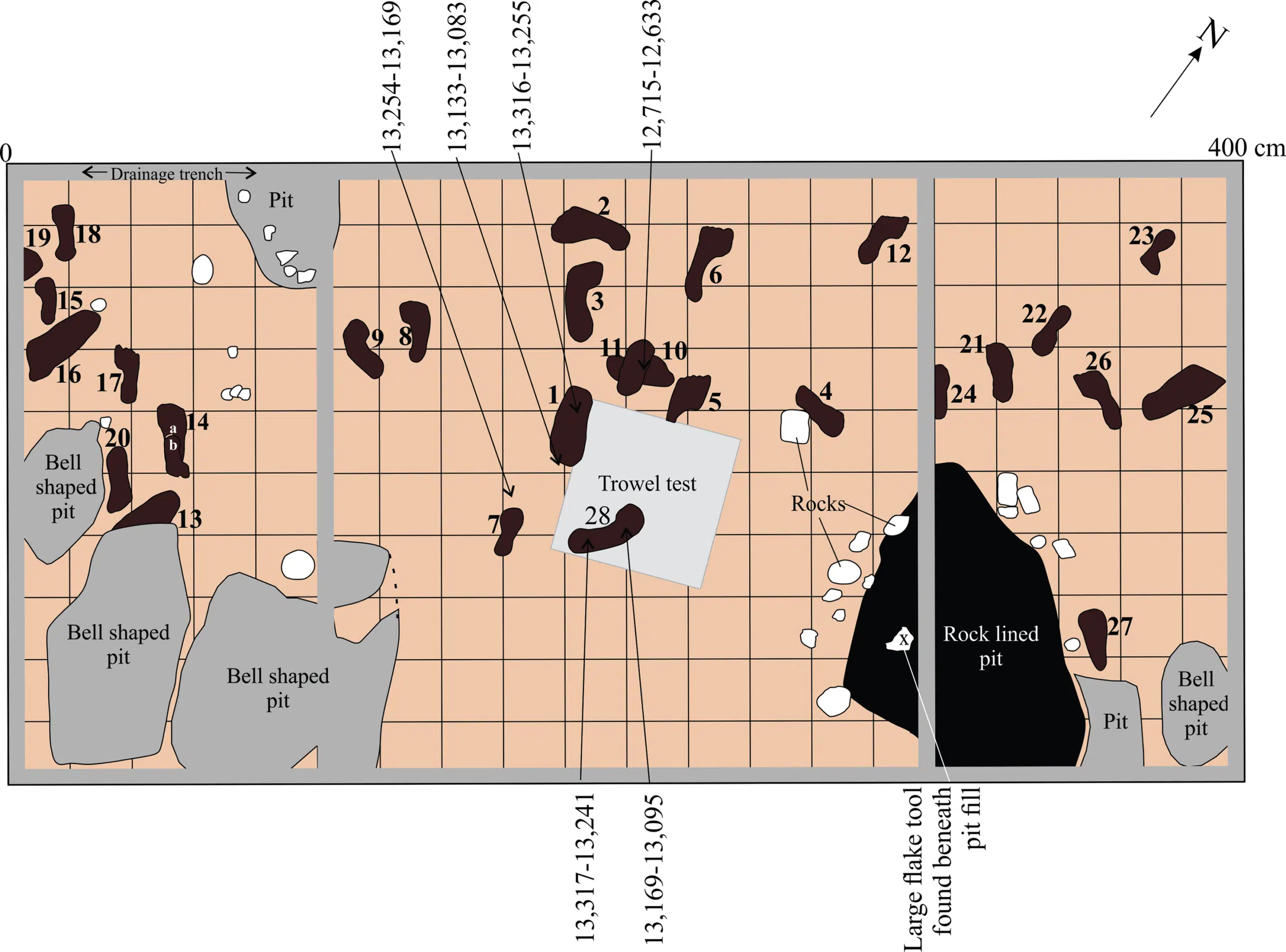
Researchers uncovered 29 distinct footprints, with clear impressions of toes, arches, and heels. According to the study, the sizes correspond to three individuals, roughly equivalent to a woman’s size 8-9, a junior’s size 8, and a smaller adult size.
Some heel marks appear dragged, suggesting slipping on wet, soft mud. These details confirm the individuals were walking barefoot along the shoreline. According to Duncan McLaren, the variation in sizes suggested that:
“Primarily the three different sizes of footprints found conjures up the image of a nuclear family or small group of people using the area.”
A Shoreline Pause Rather Than A Simple Track
The spatial arrangement of the footprints provides clues about behavior. Instead of forming a linear path, the tracks appear clustered, with several prints positioned side by side and facing inland.
This pattern indicates that the group was likely standing or gathering at that spot. As explained by McLaren:
“Most of the footprints face inland … and they may represent a place where people were disembarking from watercraft before moving to a drier area.”
Environmental data supports this interpretation. During the last ice age, sea levels in the area were estimated to be 6 to 9 feet lower, exposing broader coastal zones.
Did Early Humans Take The Coastal Route?
The discovery adds to ongoing debates about how humans first arrived in the Americas. While migration via a land bridge from Asia remains a central theory, findings like this support the idea that early populations also traveled along the Pacific coastline.
As shown in the study, the footprints reveal that early humans relied on watercraft to navigate and settle coastal areas, further validating this migration pathway.
Neil Thomas Roach of Harvard University, who was not involved in the study, noted that while human presence in the region at that time is not surprising, the footprints reveal an “intensive usage of this coastline environment” not previously documented in such detail.
“I think this study raises more questions than it answers, which is a good thing. Only with further study and excavation of these shoreline surfaces will we fully understand how many track makers were present, what they were doing on these landscapes, and how important shoreline environments were to their survival,” he concluded.
First Appeared on
Source link






