


Vaccines’ indirect benefits overlooked in battle over ‘medical freedom’
With a backlash against vaccines following the Covid-19 pandemic — and the rise of health secretary Robert F. Kennedy Jr. — there has been an intense focus among some in the United States on the importance of individual autonomy and “medical freedom” when it comes to choosing which immunizations to get and when.
The implications for public health, however, affect us all.
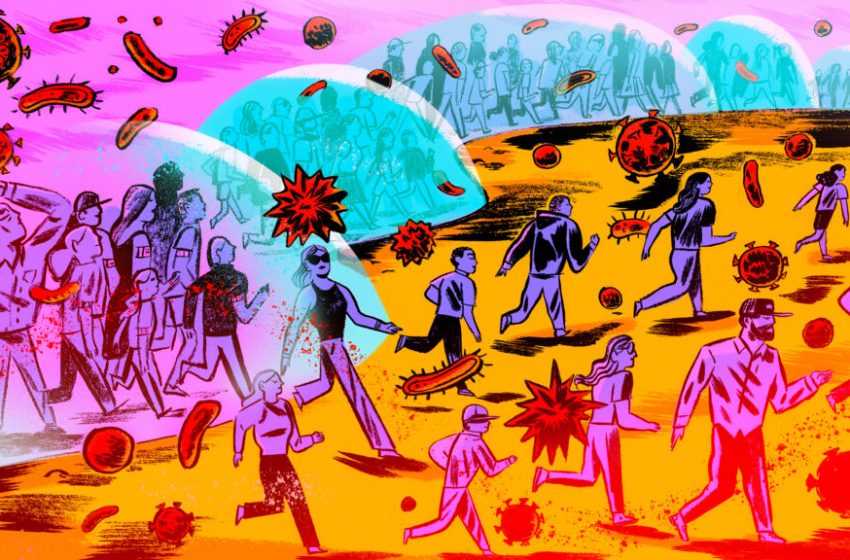
Many vaccines confer knock-on, or indirect, health benefits when they have been put into widespread use, experts note, both for the people who are vaccinated and for society at large. Take the vaccine against human papillomavirus, or HPV. Use of the shots has driven down rates of a variety of types of cancers not only in women but also in men, even in countries where only girls are targeted for vaccination.
But not everyone has recognized, or seems to value, such indirect benefits. Instead, vaccine critics, many of whom came into adulthood having been spared diseases that were largely stamped out by immunization campaigns, have turned their focus to safety risks, which scientists acknowledge but say have been dramatically exaggerated.
Lost in the focus on “me” rather than “we” has been discussion of vaccines’ wider benefits.
Some vaccines are “unique because they both protect the person who receives the vaccine and protect the community in which people receive vaccines,” said Bruce Gellin, who served as director of the Department of Health and Human Services’ National Vaccine Program Office during the administrations of George W. Bush and Barack Obama.
Not all vaccines work in this way. Rabies and tetanus vaccines are effective at staving off two truly gruesome diseases, but they only protect the vaccinated individuals. A number of vaccines, though, have given us benefits beyond protecting an individual child — or adult — against a specific pathogen.
Here are some of the vaccine gains we have perhaps taken for granted, and potentially stand to lose, if vaccination rates fall too low.
Rubella: Vaccinating kids protects future kids
Rubella, once known as German measles, was an unpleasant illness for kids who contracted it before a vaccine was introduced in 1969. But most recovered without any lingering effects.
The real danger from rubella stems from infections during pregnancy, especially during the first trimester. Many such pregnancies end in miscarriage or still birth, or babies born deaf, blind, or with developmental delays. In the last major U.S. rubella outbreak in 1964-1965, an estimated 20,000 children were born with congenital rubella syndrome.
Since the advent of the rubella vaccine, these outcomes have become rare. In the period between 2005 and 2018, there were 15 children born with congenital rubella in the United States.
“We’ve pretty much eliminated congenital rubella — a horrible, horrible disease with a lifetime of disability,” said Arthur Reingold, a professor of infectious disease epidemiology at the University of California at Berkeley’s School of Public Health.
Though rubella isn’t thought to circulate in the U.S. at this point, it still transmits in other parts of the world, so the risk of imported cases remains.
Earlier this month, the Centers for Disease Control and Prevention reported that a woman who lives in Florida but was born in South Africa contracted rubella while traveling there last summer. (The country did not vaccinate against rubella when she was a child.) Her baby was born with microcephaly (an abnormally small head), low birth weight, cataracts, and a congenital heart defect.
Measles and rubella vaccines are given in the same shot. The rising number of measles outbreaks in the U.S. is evidence of a growing pool of people who are susceptible to rubella as well. Measles is the more infectious of the viruses, so herd immunity is lost more quickly when MMR vaccine rates decline. But sooner or later, if vaccination rates continue to fall, rubella may return.
“Measles was always going to be the first to come back,” said Andrew Pavia, a professor of pediatric infectious diseases at the University of Utah. “For others, we’re not that far out.”
Pneumococcal disease: Protecting babies drove down illness rates in seniors
At the turn of the century, a new vaccine to protect little kids from pneumococcal disease was introduced in the United States. Marketed as Prevnar, it protected infants from seven serotypes of pneumococcal bacteria, which cause ear infections and sinusitis in some children, but can also trigger more serious illnesses like pneumonia, bloodstream infections, and meningitis. Introduction of the vaccine led to a nearly 80% decline in cases of invasive pneumococcal disease in kids.
Within a couple of years, it became apparent kids were not the only ones benefiting from the vaccine. Rates of pneumococcal disease declined across all age groups, and notably among older adults, for whom the risk of these infections is significant.
Pneumococci are bugs that transmit both from people experiencing active infections and carriers — healthy people who have the bacteria in their upper airways. A pneumococcal vaccine for seniors had been in use since 1983, but it did not prevent that latter circumstance.
The pediatric vaccine did, said Jake Scott, a clinical associate professor of infectious diseases at Stanford University, which led to a dramatic decline in the disease in seniors. “The children around them stopped carrying it,” Scott said.
“If there are fewer bacteria in people’s throats, there are fewer bacteria circulating in the air when people breathe,” Gellin added.
There was a further decline in infections in older adults when a new version of Prevnar was introduced in 2010, one that targeted 13 serotypes of the bacteria.
Later the Food and Drug Administration extended the license of the vaccine and the CDC recommended its use in older adults.
Chickenpox: Helping kids sidestep a nasty illness helps them avoid a worse one later
Anyone who grew up before the chickenpox vaccine went into broad use likely had chickenpox, and probably bears a few scars from the encounter. The varicella virus triggers a characteristic itchy rash; scratching off the pustules it forms leaves telltale pockmark scars.
Chickenpox infections rarely trigger severe disease. But the virus that causes it, varicella zoster, has an insidious trick. It remains latent in the bodies of people who have had chickenpox and can reactivate later in life, causing shingles, a painful rash-like illness. Shingles generally occurs in older adults, especially those who have health conditions or take medications that suppress their immune systems.
Children who have had chickenpox are at risk of having shingles later in life, which is why shingles vaccines were developed. Kids who were vaccinated against chickenpox can develop shingles later too, because the vaccine is made with a live but weakened virus. But such cases are rare and typically involve symptoms that are milder than those experienced by people who had the disease.
So in vaccinating their children against chickenpox, parents are improving the chances that the adults their kids grow up to be will never have to experience the pain of shingles.
… And sidestepping shingles may protect an adult’s future self from dementia
There is growing evidence older adults who are vaccinated against shingles may be at a lower risk of developing dementia. “That is a real signal that doesn’t seem to be wanting to go away,” said Jeanne Marrazzo, chief executive officer of the Infectious Diseases Society of America. “That to me at a population level is really quite profound.”
HPV: Vaccinating girls protects unvaccinated boys from some forms of cancer
The HPV vaccine is a medical wonder. As noted above, it is preventing cancers in both women and men. Human papillomaviruses, which are transmitted through sexual contact, cause a number of urogenital cancers — cervical cancer, anal cancer, penile cancer — and oropharyngeal cancers.
HPV vaccines were originally licensed for girls only. But it soon became apparent that boys were benefiting from them too.
“I think HPV is one of the most elegant herd immunity stories that we have, because the indirect protection showed up so clearly and so quickly, in a population that wasn’t even targeted by the original program,” Scott said.
Within five years of the rollout in Australia — a campaign that only targeted girls — researchers there were reporting significant declines in genital warts (caused by human papillomaviruses) in heterosexual men. A study from the U.S. found that oral infections with HPV strains covered by the vaccine dropped 38% between 2009-2010 and 2015-2016 in unvaccinated men, during a time when rates of HPV oral infections with strains not included in the vaccine went unchanged.
Many countries now vaccinate both girls and boys against HPV.
Measles: Driving down spread shields highly vulnerable people
Camille Kotton views the growing number of measles outbreaks in the United States with alarm. Kotton, a Massachusetts General Hospital physician who specializes in minimizing the infectious diseases risks faced by people who have had organ transplants or are otherwise immunocompromised, knows her patients, and people like them all over the country, are at increasing risk from the highly infectious virus.
Measles is a highly unpleasant infection in kids. It sends a significant portion of infected kids to hospital and can kill. The CDC estimates that before the measles vaccine went into broad use, there were about 3 million to 4 million infections each year in the U.S., and between 400-500 deaths. Last year two children and an adult — all unvaccinated — died from measles in the U.S.
But measles is even more dangerous for people whose immune systems are depressed — for instance, because they take medication to ensure their bodies don’t reject an organ transplant.
“In older immunocompromised adults, it could be a very wild, volatile, high-risk situation,” Kotton said.
Until recent years, immunocompromised people have been safeguarded by high measles vaccination rates. During the aughts, confirmed cases nationally were low — in the dozens most years. No more. There have been more confirmed measles cases in the first 10 weeks of this year —1,362 — than in the first 14 years of this century.
Kotton said her patients, if exposed to measles and not immune to the virus, should receive measles immunoglobulin, a costly serum that takes six to eight hours to infuse. The country doesn’t have the supplies or the systems in place to do this for all who need protection if measles transmission continues to amplify, she said.
“We’re going to be able to maybe give post-exposure prophylaxis to some bunch of people, but it would not be on the scale that might be needed,” Kotton said.
Meningococcal B: Protecting against a deadly disease may also fend off an STI
About a decade ago researchers in multiple parts of the world started to see something unanticipated in the flagging field of gonorrhea control. Observational studies showed that teens and young adults who had been vaccinated against meningococcal B had lower rates of a sexually transmitted infection, gonorrhea, than people of the same ages who hadn’t been vaccinated.
Meningococcal B bacteria trigger rare but dangerous outbreaks, often among teens and young adults. People who contract the bacterial infection can go from being healthy to dead within hours; survivors can lose limbs or suffer permanent brain damage.
The bacteria that causes meningococcal B infection is Neisseria meningitidis, which is related to Neisseria gonorrhoeae, the cause of gonorrhea. Over the last decade, multiple studies have suggested the vaccine to protect against the former seems to offer some modest protection against the latter. Not 100% protection, but within the range of about 30% to 40%.
The U.K.’s Joint Committee on Vaccination and Immunisation has actually recommended offering the meningococcal B vaccine to people who are at high risk of contracting gonorrhea, based on the evidence to date.
Excitement about this possibility was tempered last month when a randomized controlled trial in Australia failed to see a beneficial effect in a study of 587 men who have sex with men. But Marrazzo hasn’t given up hope, suggesting ongoing studies in a wider group of people might show different results.
“There are a couple of big randomized control trials coming out this year that hopefully will give us more definitive answers in additional populations,” she said.
Multiple vaccines: Averting illnesses in kids protects productivity
When it comes to vaccination, the primary goal of public health is to prevent illness where it is preventable, for both individuals and communities. But among the added benefits of vaccines is the reality that when kids are sick, parents often have to miss work.
Vaccines for several diseases have dramatically reduced the number of pediatric hospitalizations that take place every year. Vaccines that protect against Haemophilus influenzae type B or Hib, rotavirus, and chickenpox, among others, have eased pressure on pediatric hospitals around the country and on families as well, Pavia said.
“Back when the chickenpox vaccine was made routine for kids, one of the major arguments was, it’s true that chickenpox rarely killed the child or resulted in hospitalization, but parents lost an immense amount of productive work time,” Reingold said. “That was a substantial component of the economic analysis for why we should routinely give the chickenpox vaccine, was preventing the lost work time of the parent.”
Proponents of vaccines marvel at the broader gains these tools have generated, effects that weren’t always anticipated when the vaccines were first developed. But parents who don’t trust vaccines are unlikely to be persuaded by the argument about the societal benefits vaccination delivers. Their concern is their child or themselves.
Reingold takes the argument back to the individual kid, using the example of measles.
“If we have enough cases, kids will die,” he said. “And I don’t want any kids to die if we have a safe and effective way to prevent it.”
Correction: An earlier version of this story incorrectly referred to meningococcal B as a virus. It also incorrectly stated that older Americans did not receive any type of vaccination against pneumococcal disease before Prevnar came on the market. It has been updated.
First Appeared on
Source link






