


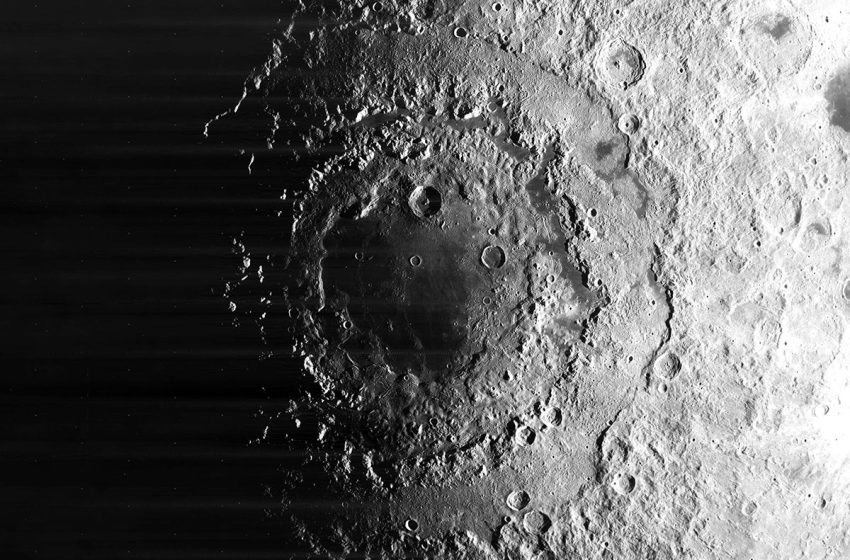
Artemis II astronauts will be the first humans to get a full view this strange bullseye on the far side of the Moon
While NASA’s Artemis II mission won’t be the first crewed spacecraft to pass round the far side of the Moon (that achievement goes to Apollo 8 in 1968), there is one aspect of the mission that will be a historic first…
All the Apollo crews rounded or orbited the Moon at a low altitude, and all saw the same, familiar, Earth-facing side of the Moon, from close-up.
But as they round the Moon the crew of Artemis II will be at a much higher altitude, so they will enjoy ‘wide angle’ views of the Moon.
They’ll also be rounding the Moon as the far side – the side of the Moon we can’t see from Earth – is bathed in sunlight, so they’ll have front row views of fascinating features no Apollo astronauts ever saw clearly.
This means the crew of Artemis II will be the first human beings to look down into the dark heart of one of the most dramatic, most beautiful features on the Moon…
The famous, mysterious and elusive Eastern Sea – Mare Orientale.
Mare Orientale and why we never see it
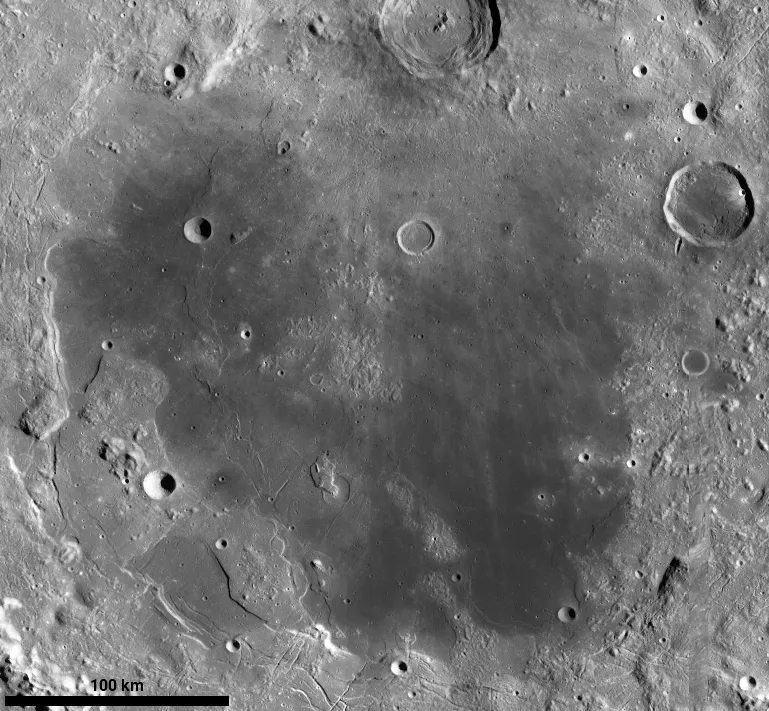
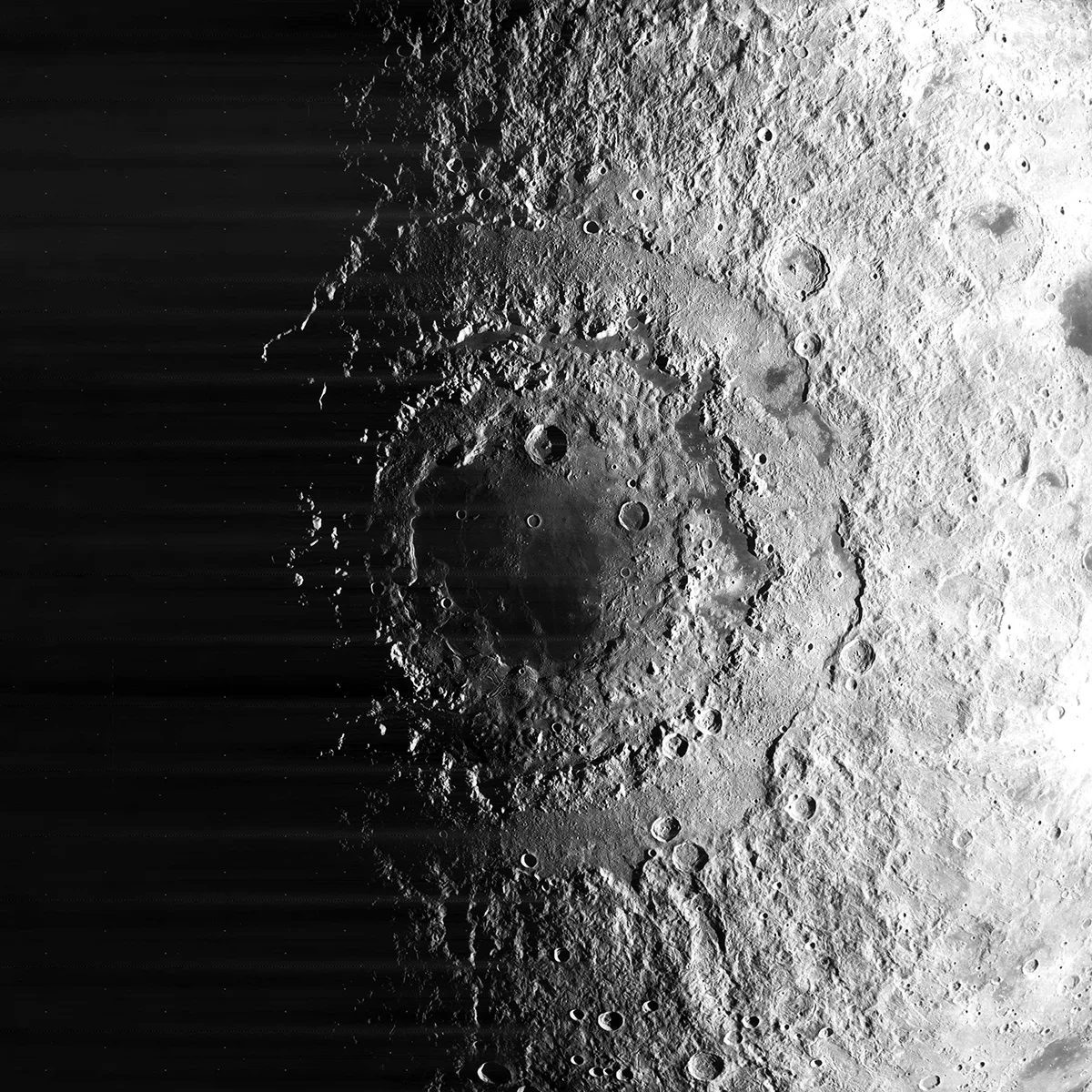
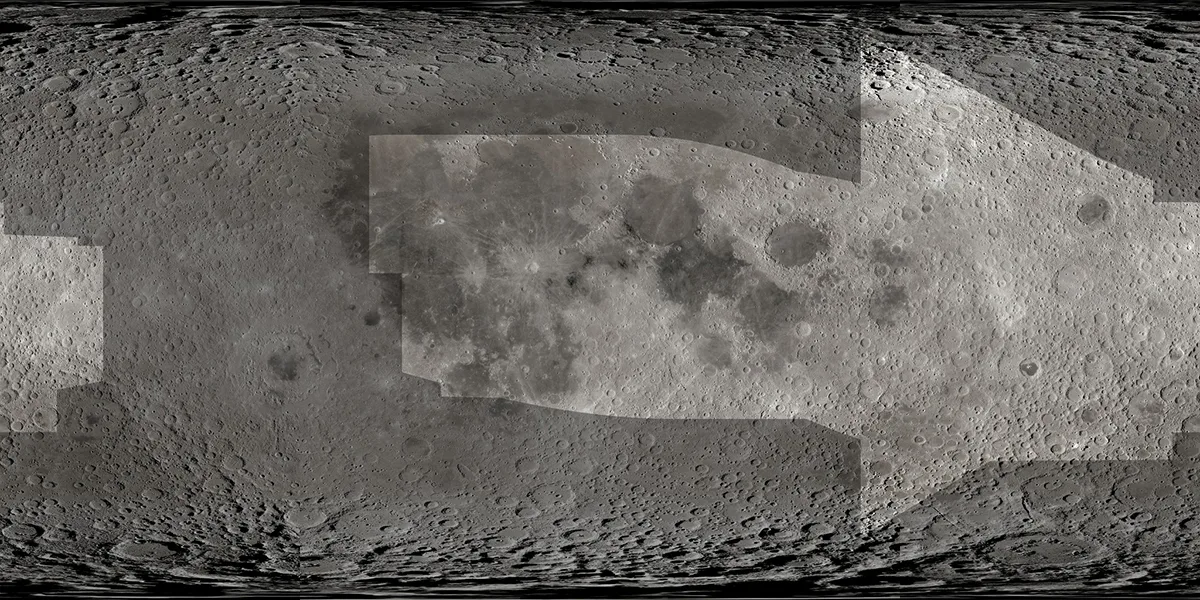
Mare Orientale is truly enormous. An impact basin more than 900km wide, it is one of the largest features on the Moon.
With its three rings of mountains surrounding a dark centre, it looks like a huge bullseye target.
Frustratingly, Mare Orientale is usually hidden from the telescopes of lunar observers because it lies just around the limb of the Moon, out of their sight.
If it was on ‘our’ side of the Moon, Orientale would dominate its face, and instead of seeing a ‘Man In The Moon’ we’d look up and see ‘The Eye Of The Moon’ staring back at us coldly from a quarter of a million miles away – an eye that would look disturbingly bloodshot during a total lunar eclipse…
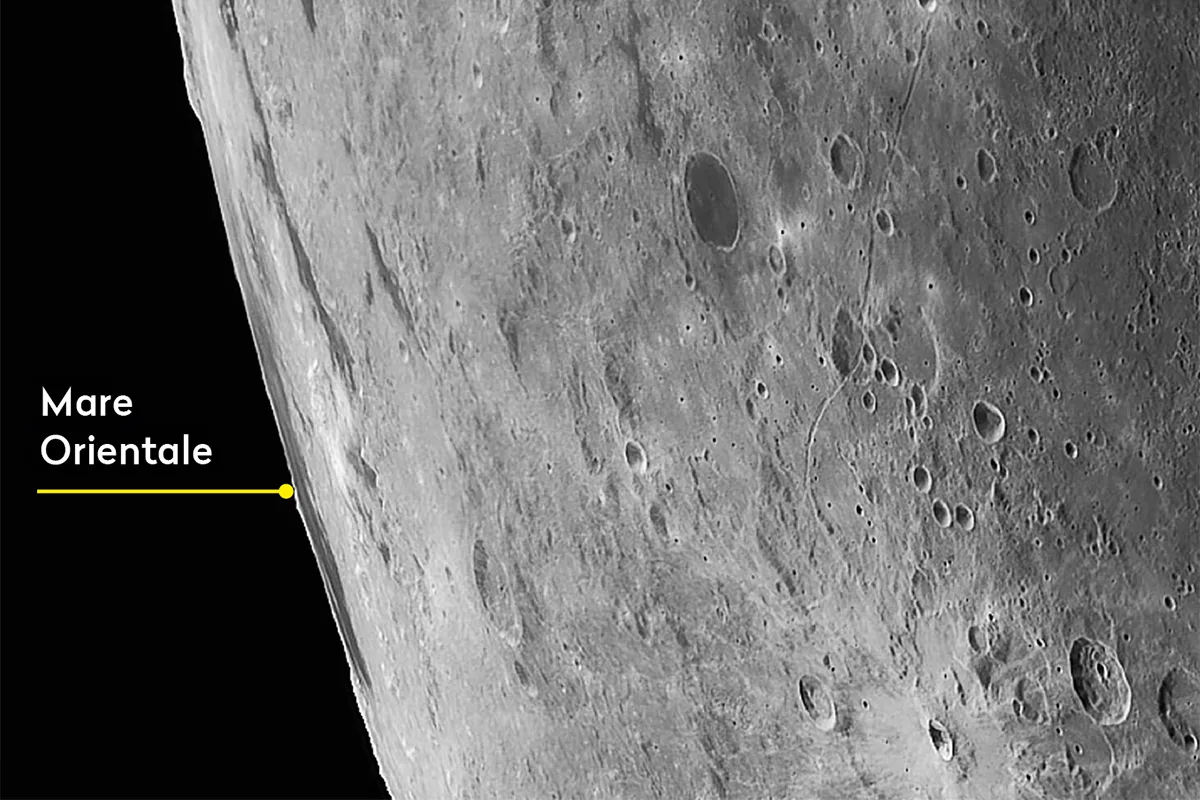
But occasionally the wobbling of the Moon on its axis – which astronomers call ‘libration’ – swings Mare Orientale briefly into view, and then lunar observers rush to see it.
It only looks like a short, dark smear on the limb, but it’s still thrilling to see – before it swings shyly out of view again.
However, the crew of Artemis II won’t be at the mercy of libration to see Mare Orientale. As they fly over it, they will be the first human beings in history to see it in all its glory.
But… spoiler alert… they won’t actually be the first people to ever see it from a spacecraft…
We’ll come back to that. For now, let’s take a closer look at Mare Orientale itself.
Frustratingly out-of-view
Early observers of the Moon noted Mare Orientale as a vague, dark feature on the Moon’s eastern limb, almost like a stain.
It was first fully described in 1906 by the German astronomer Julius Franz, who named it the “Eastern Sea”, based on the then-standard lunar mapping protocols.
Decades later, in the mid-20th century, British astronomers Hugh Percy Wilkins and the famous writer and broadcaster Patrick Moore studied Mare Orientale further, and made detailed sketches of it showing hints of features and structure within it.
Mare Orientale underwent something of an identity crisis in 1961.
When the International Astronomical Union switched to the astronomical convention for east-west, the Eastern Sea was suddenly on the western edge of the Moon, but thankfully the IAU didn’t try to change its name to fit in with its new cartographic location.
It wasn’t until the Space Age began and the first probes reached the Moon, that we got our first detailed looks at Mare Orientale, began to understand its nature and origins and appreciate its true scale.
In 1967 Lunar Orbiter 4 sent back the first really clear views and revealed Orientale’s full bullseye structure, which had only been hinted at by Earth-based observations.
One of the best, but least well known images of Mare Orientale was taken by the Russian Zond 8 satellite in 1970.
The beautiful black and white image, showing a gibbous Earth shining in the inky black sky above the impact basin, is considered by some to be the Russian version of the famous Apollo 8 “Earthrise” image.
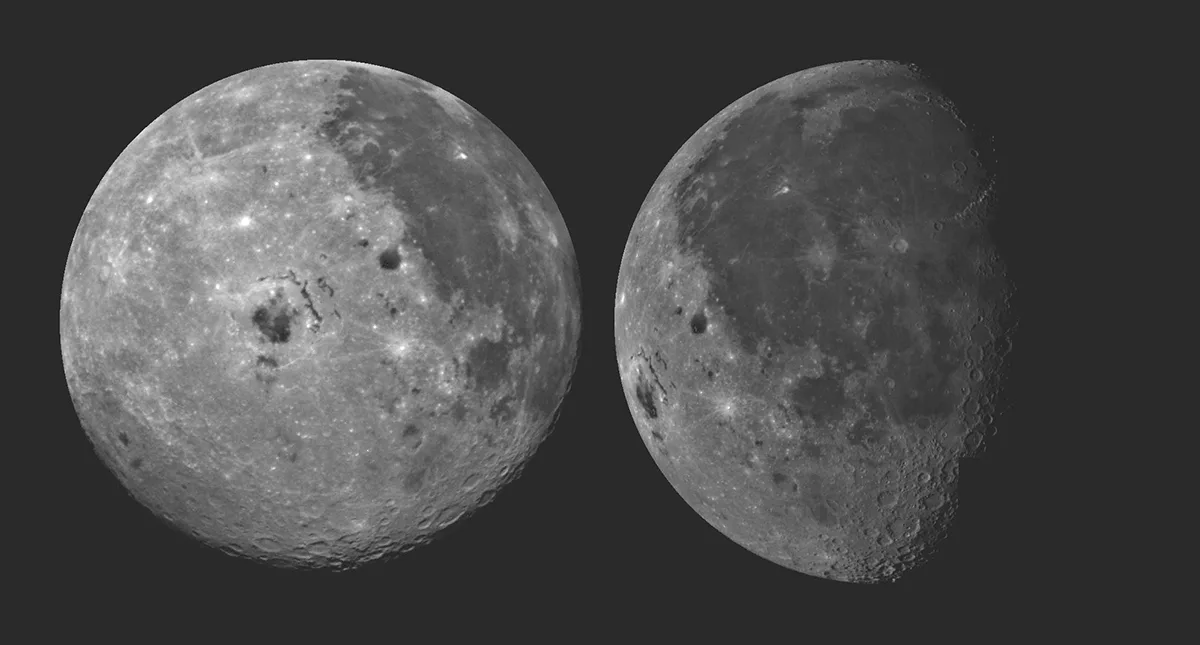
Since then Orientale has been seen by many different satellites and probes, from many different countries.
NASA’s LRO has taken many beautiful pictures of it, and the Galileo probe took its portrait as it swung by the Earth and Moon before heading to Jupiter.
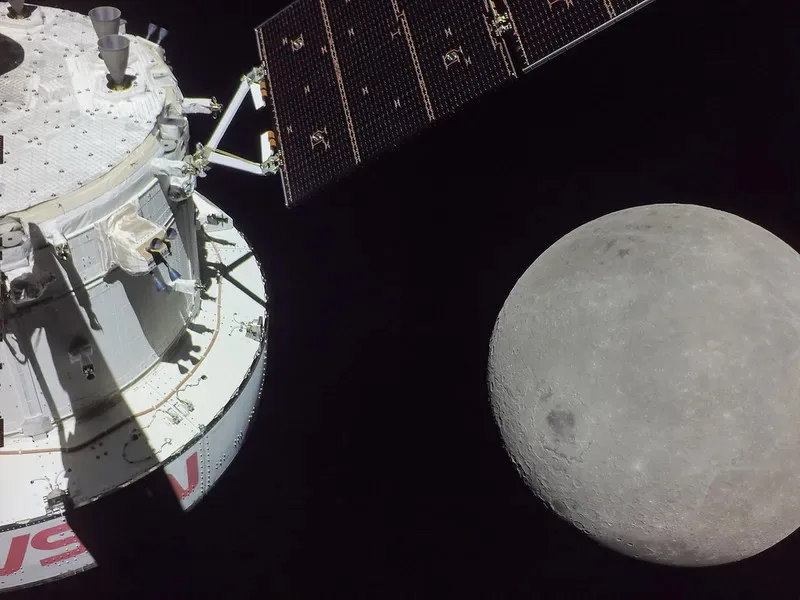
Automated cameras onboard the uncrewed Artemis I spacecraft also took images of Mare Orientale during its maiden flight 3 years ago.
What formed Mare Orientale?
After decades of study, we now know that Mare Orientale was formed around 3.7 billion years ago, when an asteroid-sized object, estimated to be around 50–80 km (31–50 mi) in diameter, smashed into the Moon at approximately 15 km/s (9.3 mi/s).
Remember, the asteroid that wiped out the dinosaurs was only 10 miles in diameter, so the impact that blasted Mare Orientale out of the Moon, involving an object the size of a small moon, was truly enormous.
That impact excavated a vast basin out of the Moon’s surface and caused ripples to spread out violently across the lunar crust, a tsunami of lava and shattered rock which eventually settled and solidified into three rings of mountains around the central wound.
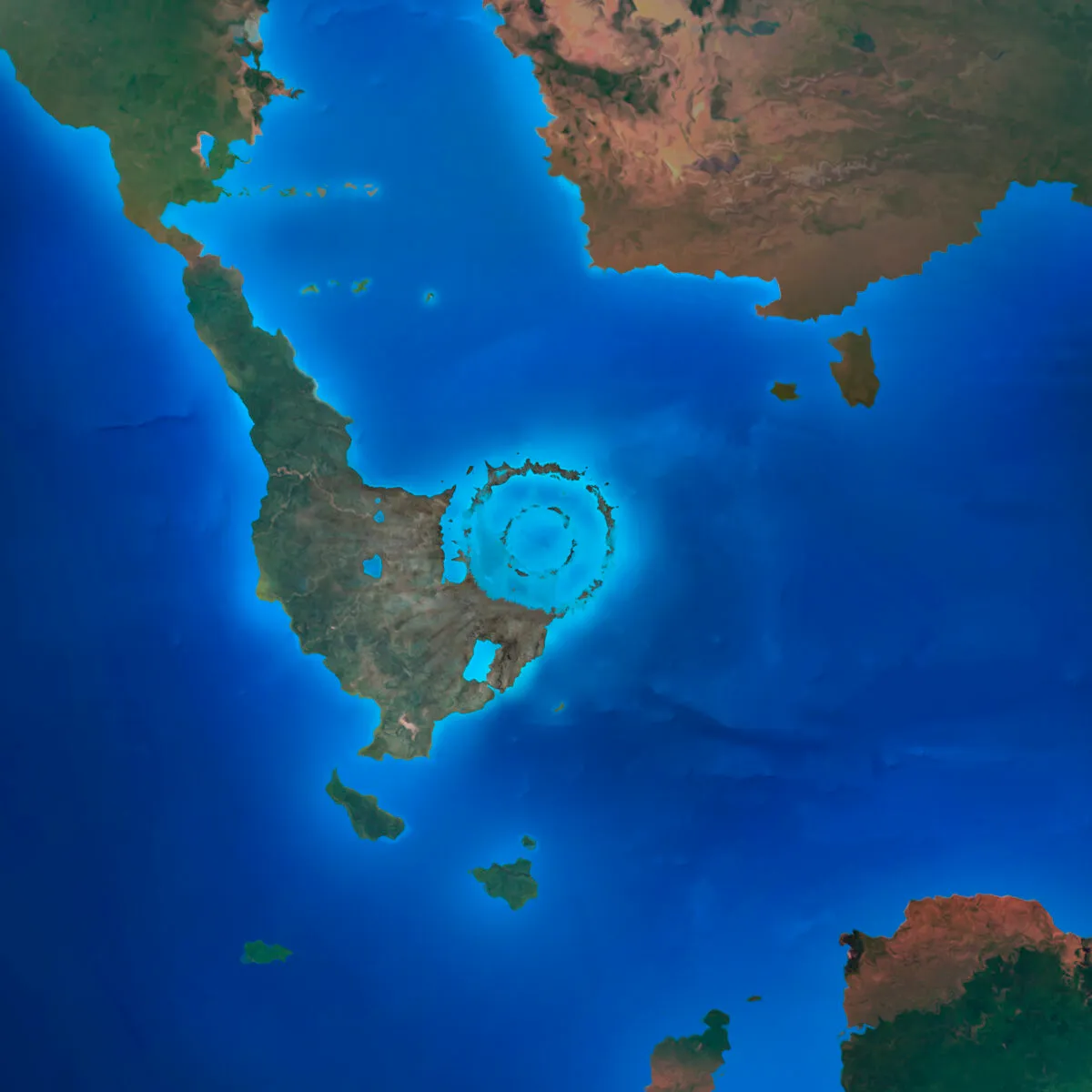
Today, Orientale is recognised as a classic example of a multi-ring impact basin, like those found on Mars and other bodies in the solar system.
At its centre is a depression about 320 km (200 mi) wide which was filled by dark basalts after the impact, creating a smaller version of one of the large ‘seas’ we see on the side of the Moon facing Earth, like the Sea of Tranquility. This is the ‘mare’ of Mare Orientale.
Surrounding this dark, central sea are three systems of concentric mountain ranges that rise up from the surface.
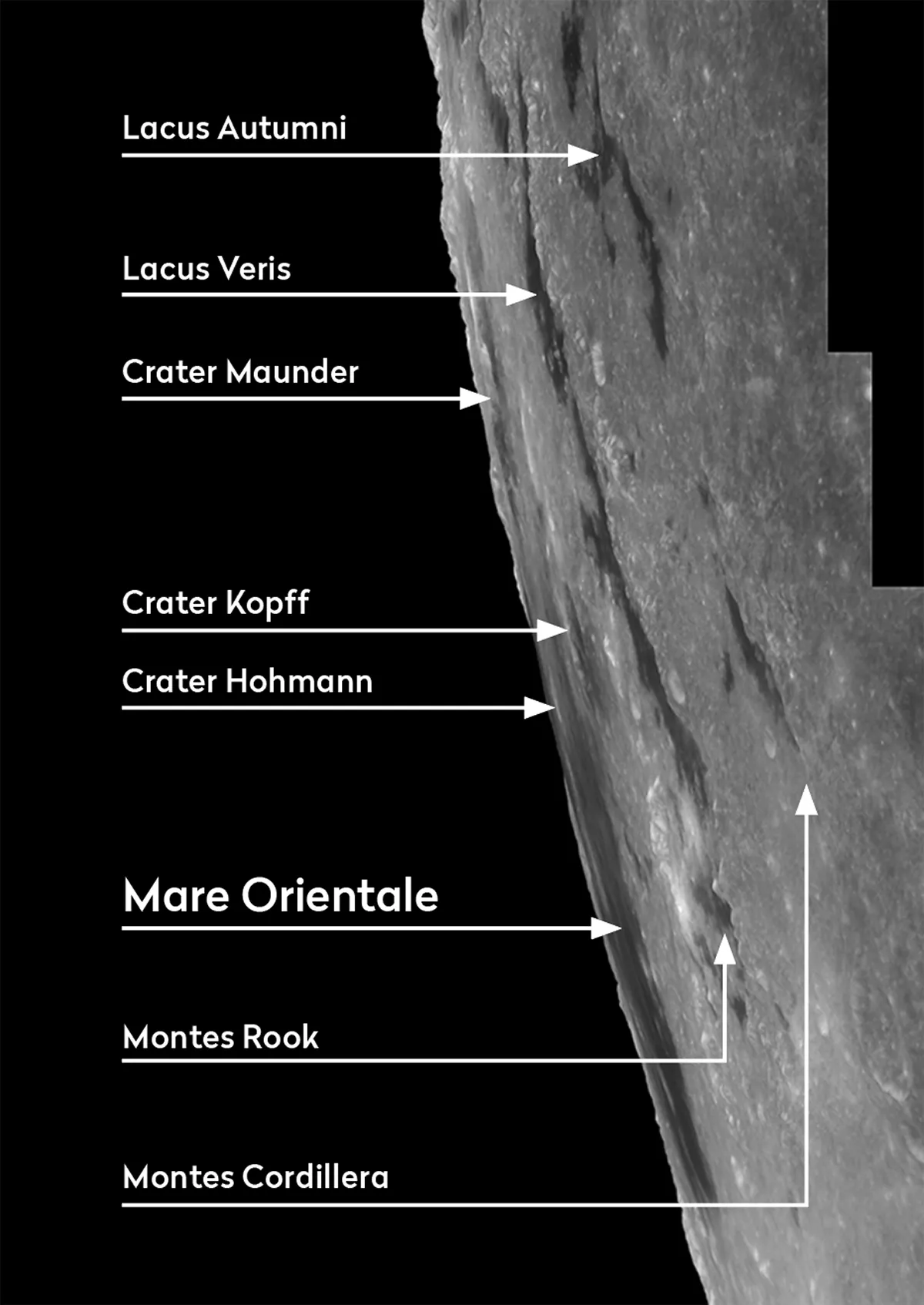
The innermost ring which encircles the central mare is Inner Montes Rook.
Surrounding that is Outer Montes Rook and the outermost mountain ring, forming the basin’s outer rim, is known as Montes Cordillera.
These rings create the impact basin’s famous bullseye appearance.
Apollo 17 views
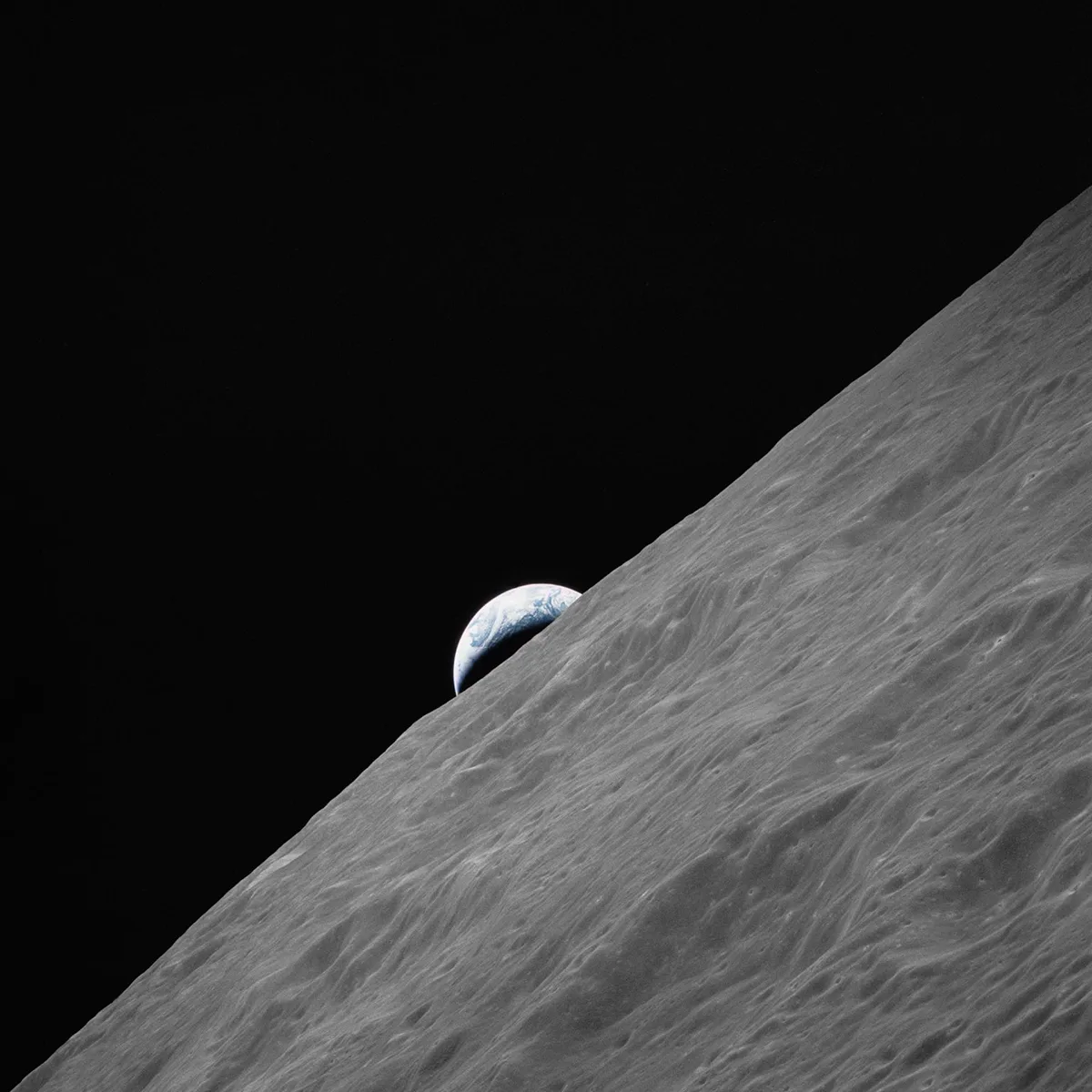
While the crew of Artemis II will be the first humans to fly over Mare Orientale and see it in its entirety, they won’t be the first astronauts to photograph it through the window of a spacecraft.
In 1972, as his Apollo 17 crewmates Gene Cernan and Harrison Schmitt bounced around on the surface of the Moon after landing in their lunar module Challenger, Command Module Pilot Ronald Evans, who stayed in orbit, didn’t just put his feet up and wait for their return, he had his own work to do.
As his spacecraft, named America, orbited the Moon, he carried out visual observations and photography of the lunar surface, including the vicinity of Mare Orientale.
As he flew over the sprawling impact basin when it was unilluminated by the Sun, Evans cleverly used Earthshine – light reflected from Earth – to photograph portions of it.
His grainy black and white image of Orientale might not be as detailed and crisp as those taken by robotic probes and satellites, but there’s a familiar beauty to it, having been taken by a real human being pressing a camera up to a window, like a tourist photographing Everest or the Grand Canyon from their airplane.
Artemis II views of Mare Orientale
The crew of Artemis II have trained together for their historic mission for almost three years, and part of that training has involved learning how to use their many cameras to take images of the Moon that won’t just be pretty or dramatic, but will actually be useful to scientists.
Their images of Mare Orientale will provide new insights into its structure and history.
Unlike Evans, the crew of Artemis II will be flying over Orientale when it is in full sunlight, so they won’t have to rely on the faint lavender-hued glow of Earthshine to light up their images.
In fact, there might be a little too much light: the Sun will be almost directly over Orientale during their lunar fly-around, so there’ll be no stark shadows cast by its mountain ranges or the rims of the craters in and around it.
The impact basin will just look like a small, dark sea with three bright rings around it.
But that won’t matter. They’ll crowd at their windows to grab the opportunity to be the first human beings to see this amazing feature, created in such violence, so long ago, in all its glory.
First Appeared on
Source link






