


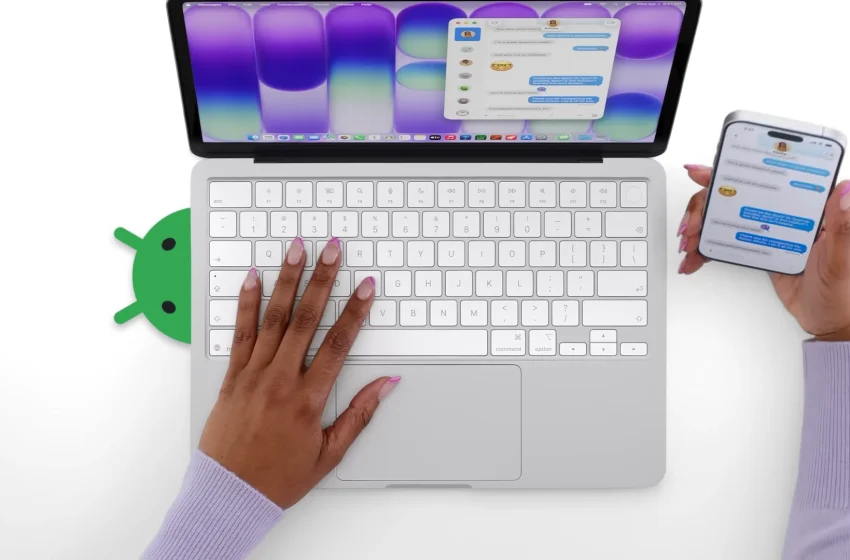
The MacBook Neo proves Apple is leaving a door wide open for Google’s ‘Aluminium OS’
Support our independent tech coverage. Chrome Unboxed is written by real people, for real people—not search algorithms. Join Chrome Unboxed Plus for just $2 a month to get an ad-free experience, access to our private Discord, and more. Learn more about membership here.
START FREE TRIAL (MONTHLY)START FREE TRIAL (ANNUAL)
Apple recently did something that, on paper, seems to make no sense. They launched the MacBook Neo; a $599 laptop powered by the A18 Pro chip that, in a previous life, powered the iPhone 16 series. Yep, it’s the same silicon that powers the phone in your hand, yet here it is, driving a full-blown desktop operating system (macOS) on a 13-inch laptop.
The Neo proves, once and for all, that the hardware limitations Apple once cited for keeping macOS off the iPad were never real. The power is there. The efficiency is there. But Apple still refuses to merge the two. They have drawn a line in the sand, and in doing so, they’ve left a door wide open for Google to walk right through.
Apple’s mobile vs. desktop wall
For years, Apple fans have begged for a “Pro” iPad that could switch into macOS when docked to a keyboard. Apple’s response has consistently been a firm no. They want you to buy a $1,000 iPad and a $1,000 MacBook. To Apple, merging them would compromise both. But it looks like Google is taking the exact opposite approach with Aluminium OS.
Instead of keeping mobile and desktop separate, Project Aluminium will be built on the premise that your tablet and your laptop should be the same thing at their core. By “re-baselining” ChromeOS onto the Android kernel, Google isn’t just making a desktop that runs Android apps; they are making a desktop that is Android at the core.
Featured Videos
Why ‘Aluminium’ is the real threat
The MacBook Neo is a fantastic piece of hardware, but it is still a “traditional” computer. It exists in a silo. Meanwhile, ‘Aluminium’ devices—like the 13-inch ‘Sapphire’ tablet we’ve been tracking—are designed to be shape-shifters.
Because ‘Aluminium’ is Android at its heart, the transition from “tablet mode” to “desktop mode” isn’t a workaround; it’s a native feature. Google is on the cusp of building an ecosystem where users will get:
- True Continuity: Your apps don’t just “sync”; they are the exact same instances running on the same foundation as your phone.
- No Compromise: You get the touch-first simplicity of Android when you want a tablet, but a desktop environment (with a real Chrome browser) when you need to get to work.
- The “One Device” Reality: While Apple forces you to choose between a MacBook Neo and an iPad Air, Google is offering a new OS that can power devices that legitimately replace both.
The Door is Open
By stubbornly sticking to their philosophy of separation, Apple has definitely created a point of friction. Users want the versatility of a tablet with the power of a desktop. The MacBook Neo shows Apple can do it, but their business model won’t let them.
Google doesn’t have that baggage. They aren’t trying to protect a high-margin Mac business from a high-margin iPad business. They are trying to win the consumer’s primary screen.
If ‘Aluminium’ OS can deliver a desktop experience that feels as premium as macOS – while keeping the soul and app library of Android and the web-based chops of ChromeOS – Google won’t just be competing with the MacBook Neo. They’ll be offering the one thing Apple refuses to give its customers: true unity.
Apple built the Neo to protect their territory and there’s no doubt it will hurt Chromebook sales if nothing changes. But Google is also building ‘Aluminium’ to redefine what consumers can expect from their laptops; and hopefully this fall, we finally get to see which philosophy wins.
SUBSCRIBE TO UPSTREAM
Get Chrome Unboxed delivered straight to your inbox
Upstream is our flagship, curated newsletter with the top stories, most click-worthy deals, giveaways, and trending articles from Chrome Unboxed sent directly to your inbox a few times a week. Join 31,000+ subscribers.
First Appeared on
Source link






