


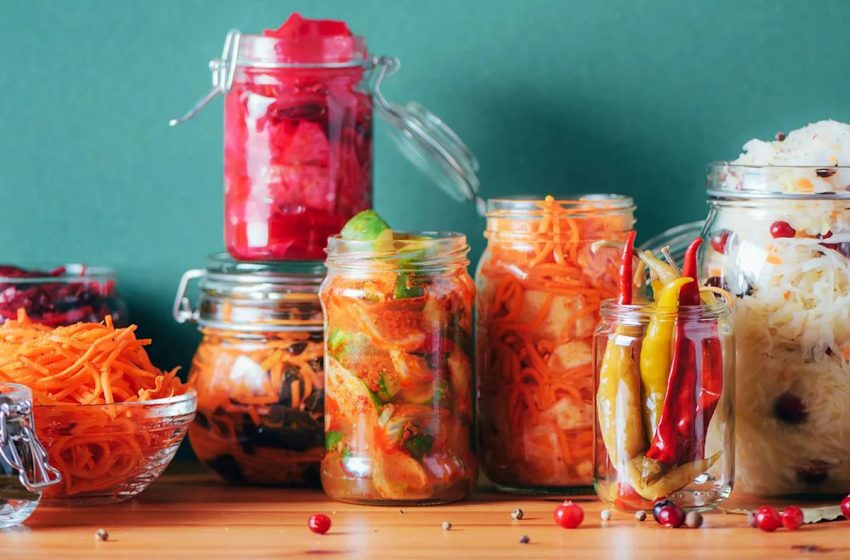
This Popular Food Was Found to Remove Microplastics from the Human Body in a New Study
NEED TO KNOW
-
Scientists are sharing recent findings on how certain foods can help remove microplastics from the body, in a new study published by Bioresource Technology
-
Microplastics are broken down bits of consumer products that are small enough to enter cells and bloodstreams
-
Researchers say the effective removal of nanoplastics is crucial to protect human health
Scientists believe a popular food might help remove microplastics from the human body, per a new study.
Kimchi not only tastes good, but has a major health benefit: ridding the body of nanoplastics, according to a study published in a May 2026 issue of Bioresource Technology, as Phys.org notes.
Nanoplastics are a type of microplastic derived from the debris of consumer goods, and are small enough to infiltrate cells, tissues, and the blood-brain barrier.
They are “primarily from environmental contamination where foods are grown or raised,” per the United States Food and Drug Administration (FDA).
Kimchi consists of fermented vegetables, most commonly napa cabbage or Korean radish.
According to the study, which is backed by Science Direct, when isolated, the lactic acid bacterium found in the traditional Korean side dish helps bind nanoplastics inside the intestine, allowing them to remain together when exiting through the bowel.
Testing conducted on mice showed that “both male and female mice administered strain [kimchi-derived lactic acid bacterium, Leuconostoc mesenteroides] CBA3656 showed more than a twofold increase in nanoplastics detected in feces.”
“This result suggests that the probiotic may contribute to the excretion of nanoplastics by binding to them in the intestine,” per Phys.org.
In the Science Direct entry, researchers called the effective removal of nanoplastics crucial to protect human health.
Never miss a story — sign up for PEOPLE’s free daily newsletter to stay up-to-date on the best of what PEOPLE has to offer, from celebrity news to compelling human interest stories.
However, kimchi wasn’t the only beloved food to show signs of removing micro- and nanoplastics.
A recent article by Food & Wine, crediting researchers from Tarleton State University, stated that adding okra to your diet could have the same benefits.
The team found that when okra and fenugreek were added to contaminated water, they formed a barrier that clumped the microplastics together, making them separate from the liquid and sink.
Read the original article on People
First Appeared on
Source link






