


The Iran War Is Handing China A Playbook on How to Beat the U.S. Military
Summary and Key Points: Drawing on his expertise as an international relations professor based in South Korea, Dr. Robert Kelly issues a stark warning about the ongoing U.S. conflict in Iran.
-While the Pentagon focuses its attention on the Middle East, Beijing is quietly taking notes on America’s glaring vulnerabilities.
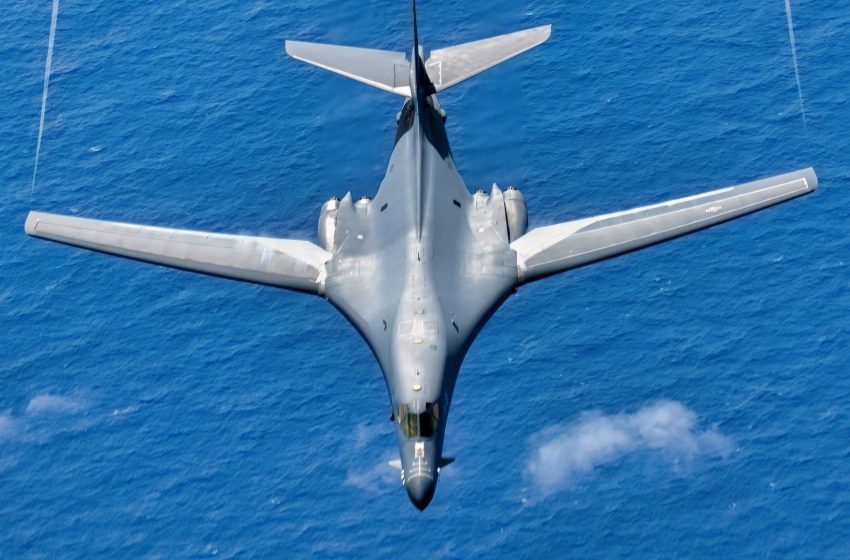
A U.S. Air Force B-2 Spirit stealth bomber arrives after a Bomber Task Force mission at Royal Australian Air Force Base Amberley, Australia, Sept. 5, 2024. U.S. Indo-Pacific Command routinely and visibly demonstrates commitment to its allies and partners through the employment of military forces, demonstrating strategic predictability, while becoming more operationally unpredictable to adversaries. (U.S. Air National Guard photo by Staff Sgt. Whitney Erhart)
-Kelly argues that the U.S. military’s dangerous reliance on a small number of overpriced, “exquisite” superweapons is leading to massive inventory shortages and strategic overstretch.
-If a conflict erupts in the Indo-Pacific, China could easily overwhelm these expensive American defenses using a relentless swarm of cheap, mass-produced drones and missiles.
The China Threat: What Beijing is Learning from the U.S. War in Iran
The U.S. war against Iran has sparked a substantial debate about other U.S. commitments. By far the most important discussion is what lessons China will draw from this war. U.S. allies in East Asia are spread across a wide maritime frontier—from Japan to Australia. They are less well organized than the United States’ European allies.
And their major opponent, China, is significantly more powerful than Europe’s big challenger, Russia. In short, what China learns from the war is more important than what Russia takes from it.
At first, there was some discussion that China might be taken aback by the precision of U.S. airstrikes on Iran’s leadership. Fear of the same action being directed against China might encourage restraint from Chinese President Xi Jinping and his cronies.
But those strikes relied on spectacular Israeli intelligence within Iran, which would not likely be replicated in a war against China.
Beyond that, the lessons increasingly appear negative for the United States.
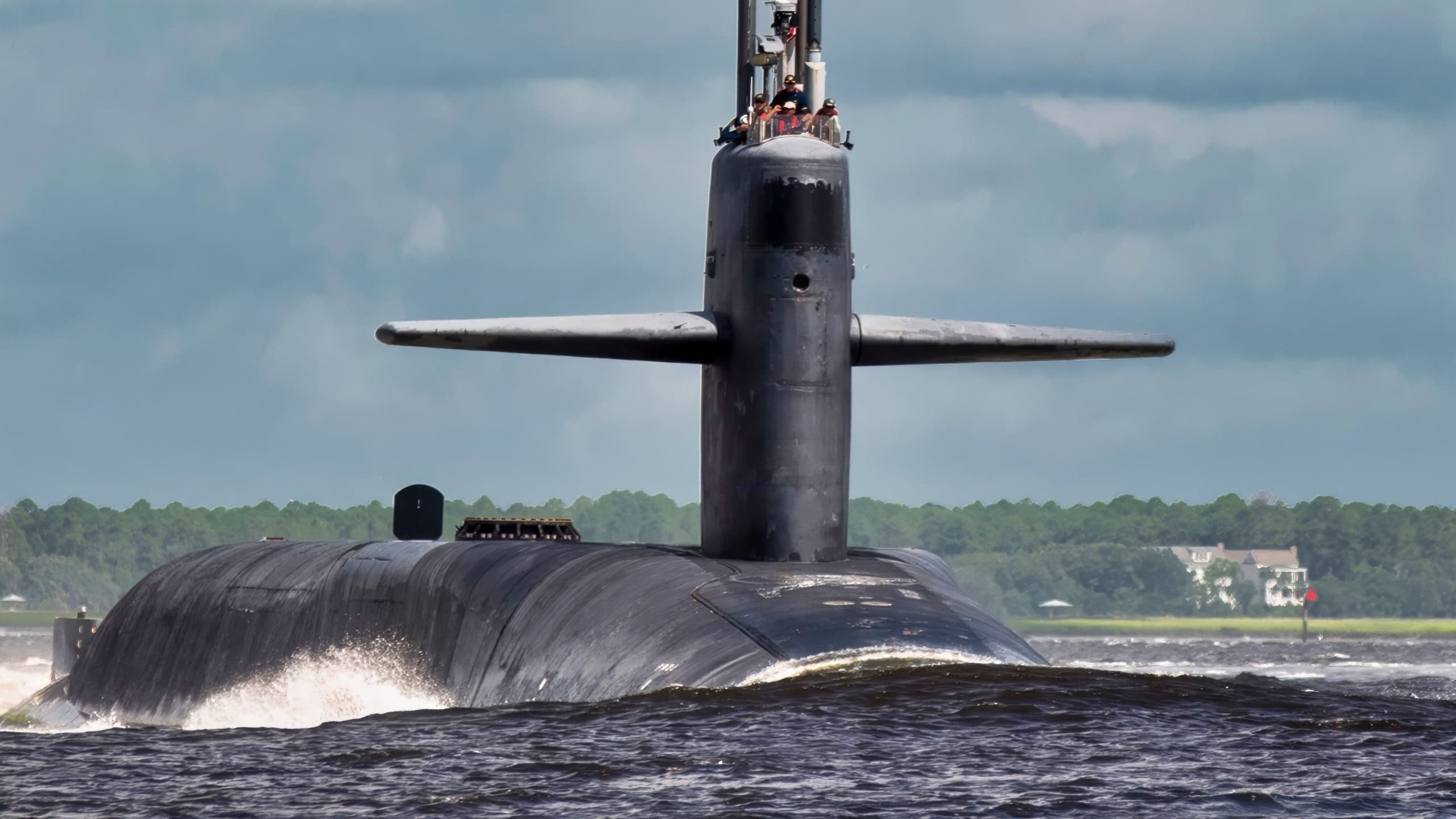
The Ohio-class guided-missile submarine USS Florida (SSGN 728) departs Naval Submarine Base Kings Bay. Florida will perform routine operations while at sea. (U.S. Navy photo by Mass Communication Specialist 1st Class James Kimber/Released)
Inventories
Within two weeks of the conflict’s start, concerns arose about U.S. missile and missile-interceptor inventories. These are crucial stockpiles. We now unequivocally live in a missile age, as the war in Ukraine has already demonstrated. Both Russia and Ukraine have turned to heavy use of cheap, ubiquitous airpower, including drones and low-cost missiles. This is revolutionizing warfare, and the Iran War is moving in the same direction.
There is very little direct kinetic interaction between the United States and Iran. Instead, the two sides are using airpower for distance strikes. While the United States is exploiting air dominance for traditional bombing runs by aircraft, during a conflict in East Asia, the United States would likely not have air supremacy against China.
Conflict in that contested airspace would require missiles and unmanned aerial vehicles, and it seems likely that China just learned that its inventories of cheap, mass-produced aerial platforms are much greater than America’s.
Air Defense
Connected to the inventory issue is the U.S. overuse of expensive air defense assets against cheap Iranian airpower. It is now well-established that the United States likes “exquisite” systems—expensive, highly capable platforms that are hard to mass-produce.
This has led to a cost mismatch between U.S. interceptors and the cheap Iranian platforms against which they defend. U.S. interceptors are very expensive, and, unsurprisingly, the United States does not have a lot of them because of their price. A Patriot-3 interceptor, for example, costs almost $4 million. Modern drones typically cost less than $100,000.
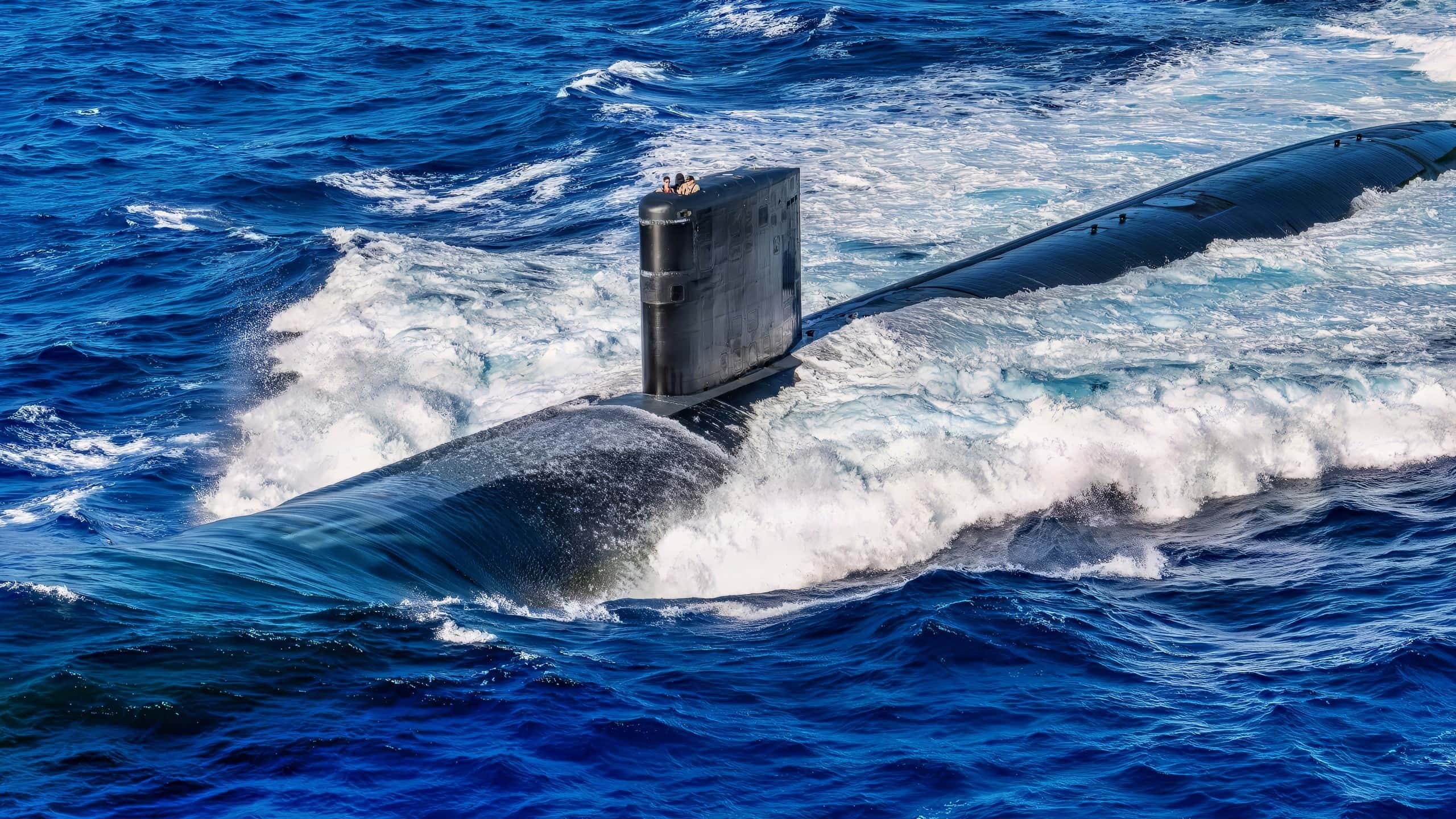
PACIFIC OCEAN (Dec. 17, 2025) – Los Angeles-class fast-attack submarine USS Annapolis (SSN 760) steams forward off the coast of Guam during a photo exercise, Dec. 17, 2025. Assigned to Commander, Submarine Squadron 15 at Polaris Point, Naval Base Guam, Annapolis is one of five fast-attack submarines forward-deployed in the Pacific. Renowned for their unparalleled speed, endurance, stealth, and mobility, fast-attack submarines serve as the backbone of the Navy’s submarine force, ensuring readiness and agility in safeguarding maritime interests around the world. (U.S. Navy photo by Lt. James Caliva)
This mismatch astonished Ukrainians brought in to help the Gulf states defend against Iranian strikes. The cost mismatch is unsustainable over time. In a contingency against China, it would be disastrous. The obvious strategy against such expensive systems is to simply flood the battlespace with cheap airpower.
Much of that would be destroyed, but some would get through. Targets could be swarmed. Indeed, it appears China is researching exactly how to do that, even if Iran is unable to mobilize a high density of cheap airpower outside of the Strait of Hormuz.
Overstretch
Another side effect of exquisiteness is overstretch: too few platforms doing too many jobs. U.S. ships and planes may outclass Chinese ones, but if there are not enough of them, then China can triumph by sheer mass.
The Iran War is acutely illustrating the problem of the U.S. military’s small size. U.S. ground and air defense units have been pulled into the Gulf from U.S. positions all over the world. U.S. missile and interceptor inventories are low. The U.S. carrier force is clearly overstretched.
There is widespread consensus that the U.S. Navy is too small and doing too much. And these problems have arisen during conflicts with middling powers, such as Venezuela and Iran.
A conflict with China, by contrast, would be a major peer-to-peer clash, something the United States has not fought since World War II. It would pull into the theater almost all major U.S. assets from around the world. This would strip other U.S. commitments of military capability.
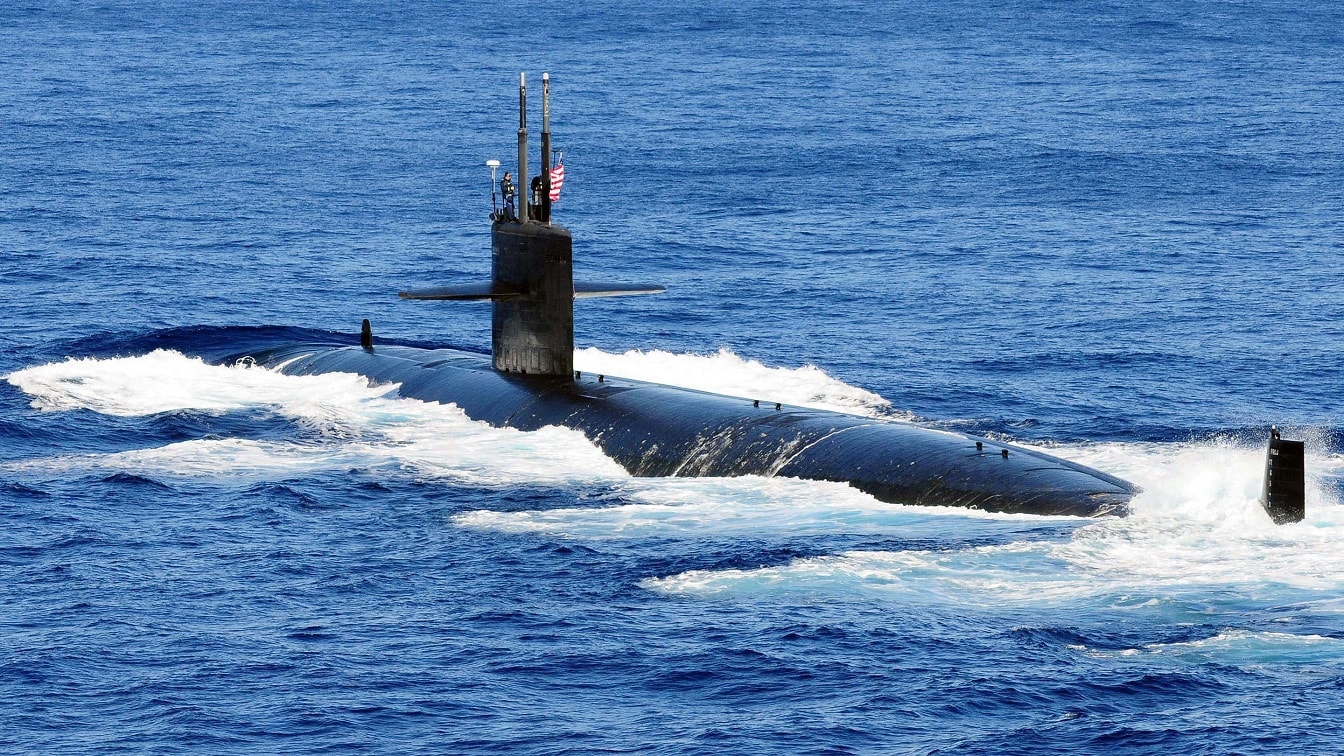
PACIFIC OCEAN (Dec. 10, 2010) The Los Angeles-class attack submarine USS Houston (SSN 713) takes part in a photo exercise at the conclusion of exercise Keen Sword 2011. The exercise enhances the Japan-U.S. alliance which remains a key strategic relationship in the Northeast Asia Pacific region. Keen Sword caps the 50th anniversary of the Japan – U.S. alliance as an “alliance of equals.” (U.S. Navy photo by Mass Communication Specialist 3rd Class Casey H. Kyhl/Released)
Worse, China could destroy some of the exquisite U.S. assets. Each carrier sunk or an F-22 shot down would be difficult and costly to replace. China’s losses would likely be greater than America’s. But if it deployed a mass of cheap air and sea drones, China could afford an unbalanced exchange rate with the Americans and still win.
Conclusion
The United States is powerful, but that power is narrow. It relies on a small force of overpriced superweapons, which makes losses hard to replace and makes it hard to sustain exchange rates with cheap enemy munitions and platforms over time. Iran is teaching China that mid-quality mass against narrow U.S. quality is a viable strategy.
Author: Dr. Robert Kelly, Pusan National University
Dr. Robert E. Kelly is a professor of international relations in the Department of Political Science and Diplomacy at Pusan National University in South Korea. His research interests focus on Security in Northeast Asia, U.S. foreign policy, and international financial institutions. He has written for outlets including Foreign Affairs, the European Journal of International Relations, and the Economist, and he has spoken on television news services such as the BBC and CCTV. His personal website/blog is here; his Twitter page is here.
First Appeared on
Source link






