


In an Underwater Cave, Divers Just Found the Largest Collection of Monkey Fossils No One Fully Understood Until Now
A set of fossils found in underwater caves in the Dominican Republic is giving scientists a clearer picture of Antillothrix bernensis, an extinct monkey that lived around 10,000 years ago. The remains help piece together how it lived and possibly how it died.
The discovery comes from Hispaniola, where primate fossils are extremely rare. According to research published in the Journal of Human Evolution, the site contains the largest collection of monkey fossils ever found on the island.
A Rare Concentration Of Fossils In One Cave
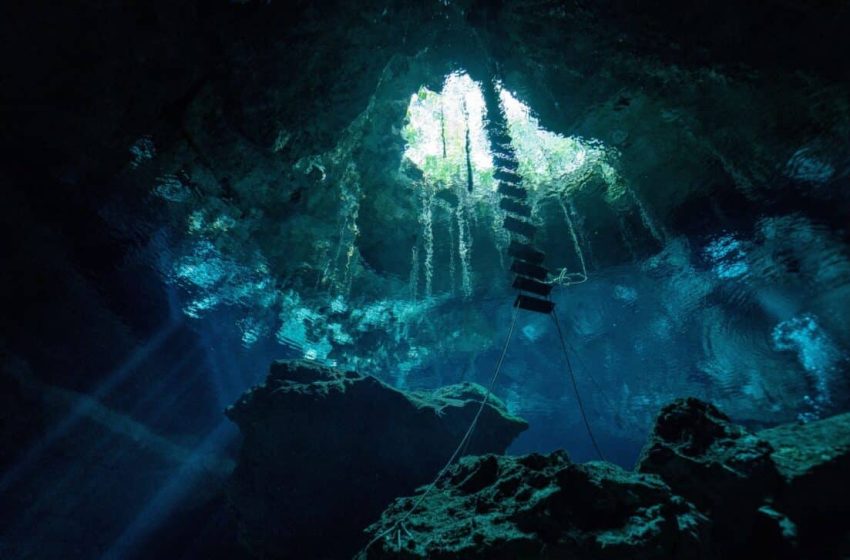
The fossils were uncovered in Cueva Macho, a flooded cave system. Researchers found seven skulls, five jawbones, and many other skeletal fragments in the same location. According to the Journal of Human Evolution, such a large sample is almost unheard of for Caribbean primates.
Only one other extinct species, Homunculus patagonicus, has a comparable fossil record. Siobhán Cooke from Johns Hopkins University pointed out that having so many well-preserved skulls makes it possible to study differences between individuals, something that usually is not possible with isolated finds.
“These fossils help us to better understand the anatomy of Antillothrix, which can help us identify ecological factors that might have predisposed it to extinction,” she said. “These data can ultimately guide policy for preserving the remaining mammalian diversity on the Caribbean islands and elsewhere.”
What The Bones Say About How They Lived
Using 3D models, scientists reconstructed the skulls to better understand the species. One clear takeaway is that males and females were about the same size, weighing up to five pounds. As explained Cooke, that likely means there was little competition between males. These monkeys may have lived in small family groups, with parents and their young staying together.
“The number and quality of the Antillothrix crania outlined in this paper allow us to describe the skull completely and understand the variation between individuals.” She added, “This can tell us about the diet and social systems of these animals.”
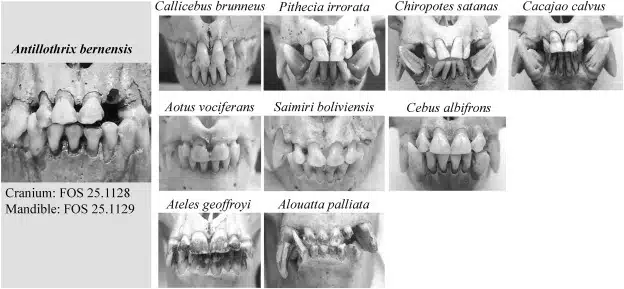
The teeth tell another part of the story. Their rounded shape and small canines suggest a diet mainly made of fruit. Based on this, the researchers said that this places Antillothrix bernensis among fruit-eating primates.
Signs Point To A Predator, Not An Accident
It is still unclear how several monkeys ended up deep inside a cave. Falling in by accident seems unlikely for animals that lived in trees. The bones offer a clue. Some skulls are missing parts of the jaw, with damage that matches how owls feed. Cooke explained that:
“When owls feed, they will sometimes preferentially consume the masseter, a major muscle attached to the jaw, and these injuries are consistent with that.”
She also said that owls often eat the soft tissue around the jaw and leave behind specific marks. This has led researchers to think that a now-extinct giant owl may have hunted these monkeys and brought them back to the cave. Similar evidence has been found in other caves on the island.
“Learning more about these animals provides a window into the past and helps us better appreciate the current and past biological diversity of the Dominican Republic and Haiti,” she concluded.
First Appeared on
Source link






