


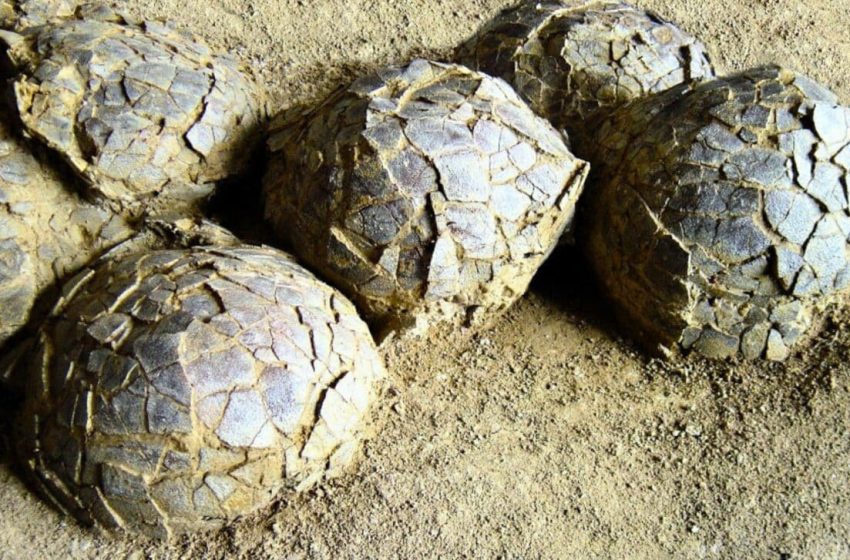
Buried for 70 Million Years, Paleontologists Discover Hundreds of Dinosaur Eggs From Multiple Species in One Ancient Ground
For months, the team from the Musée-Parc des Dinosaures worked in the clay marls around Mèze, a quiet stretch of land between Béziers and Montpellier. The excavation began in October, intended as a routine campaign on a site known to paleontologists for nearly thirty years. But the weather refused to cooperate, turning the ground to slick mud and forcing the researchers to stop repeatedly.
The marnes argileuses, the distinctive gray clays of the region, became impossible to work when wet. Each rainfall meant waiting days for the sediment to dry before anyone could safely remove another layer. The field season stretched toward its end in March with the team still uncertain about what the ground would eventually reveal.
When the ground finally hardened enough to resume digging, the researchers began exposing a horizontal band of rock that had not been seen in decades. The sediment in this layer was denser than the surrounding stone, packed with fragments that caught the light differently. Alain Cabot, director-conservator of the museum, watched the exposure grow week by week.
The excavation had begun with the usual work of clearing overburden and mapping the geological context. But as the team dug deeper into this particular patch of floodplain, the density of fossil material increased beyond anything previously documented at the site. The layer continued beyond the limits of the current trench, disappearing into the hillside where further excavation would have to wait for drier ground.
A Layer of Eggs Preserved for 70 Million Years
What the team uncovered was a fossilized horizon containing over a hundred dinosaur eggs. Cabot described the discovery in a report by GEO France, noting that the excavation had only recently wrapped up. “We are still in the middle of it,” he said. “At this stage, there are already more than a hundred visible dinosaur eggs, and above all, the layer continues.”
The Mèze site, reported by La Gazette de Montpellier, dates to between 70 and 72 million years ago, placing it at the very end of the Cretaceous period. That places these eggs in the final chapter of non-avian dinosaurs, just before the extinction event that wiped them out. During that time, the region was a vast tropical plain crisscrossed by rivers and dotted with wetlands.
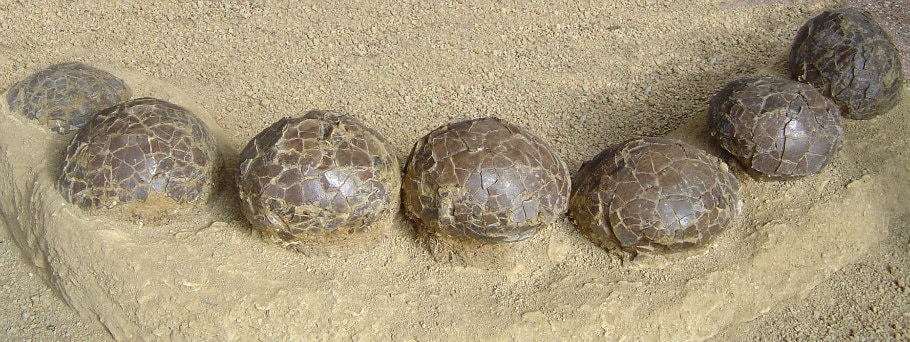
The preservation of the eggs follows a pattern seen in modern reptiles. Females likely dug shallow holes, laid their eggs in clusters, and covered them with vegetation, sand, or mud. The subtropical climate of the late Cretaceous would have accelerated decomposition of the plant material, producing heat that helped incubate the nests.
Repeated floods swept across the plain, burying the nesting sites quickly after the eggs were laid. That rapid burial, Cabot explained, is what allowed the fragile shells to fossilize rather than shatter or erode away. The clay marls that made the excavation difficult for the field team are the same material that sealed the nests for tens of millions of years.
Multiple Species Returned to the Same Ground
Not all the eggs at Mèze are the same. The most common type is perfectly round, and based on comparisons with finds elsewhere, the team attributes these to titanosaurs. These long-necked, herbivorous sauropods were among the largest land animals of their time.
Titanosaur remains have been found elsewhere in southern France, making the identification strong. Cabot noted that definitive proof would require finding an embryo inside one of the eggs. That level of preservation is rare, but the site has produced exceptional specimens in the past.
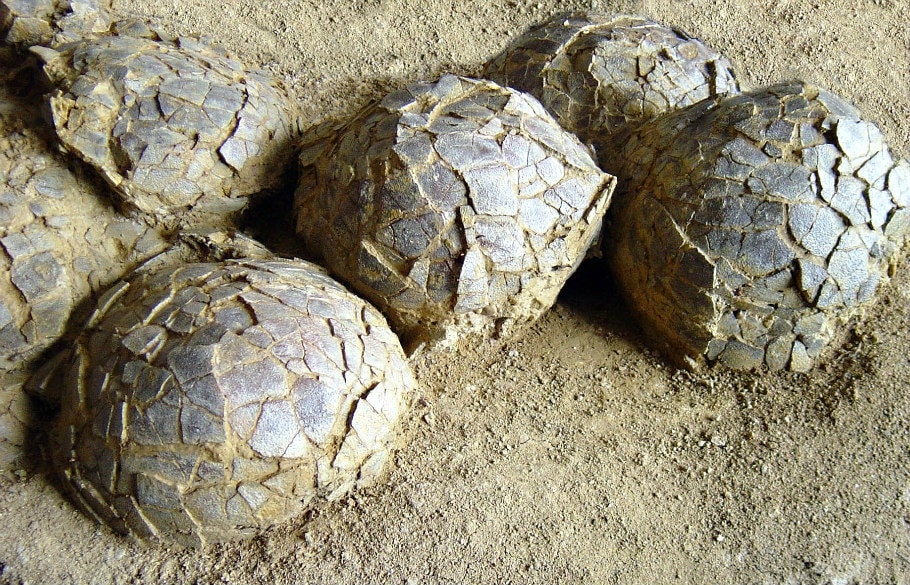
The excavation has also yielded smaller, differently structured eggs. These may belong to other dinosaur groups, possibly ankylosaurs, the armored herbivores, or small theropods, the bipedal dinosaurs that included carnivorous species. The presence of multiple egg types at the same site suggests that different dinosaur species repeatedly returned to this area to lay their eggs.
Scientists studying the site believe the floodplain offered a combination of soil conditions, vegetation, and relative safety from predators that made it attractive for nesting. Eggshells preserve well and can be identified by their microstructure and shape. That allows researchers to track changes in dinosaur populations over time using the fossilized nests.
A Museum Built to Stop the Pillaging
The history of the Mèze site explains why the museum exists at all. Cabot first discovered the fossil beds in 1996, and word of the find quickly spread beyond scientific circles. Private collectors began picking through the exposed rock, removing eggs and other fossils before researchers could document them.
Cabot’s response was to build a museum directly on top of the site. The Musée-Parc des Dinosaures now stands as both a research facility and a public exhibition space. Visitors can watch excavations in progress, with details of ongoing work available on the museum’s excavations page.
“What we find in Mèze must stay in Mèze,” Cabot told GEO. “My idea is that visitors can see the excavations, understand the scientific work, and have access to the discoveries. There are enough invisible collections in storage. Here, I want this heritage to be shared.”
The museum has already produced significant finds in previous campaigns. In 1998, the team uncovered what was then identified as the smallest dinosaur egg in the world, laid by a carnivorous species. That egg, called Prismatoolithus caboti, measures 7 centimeters long. More recent work has suggested it may belong to a small dromaeosaurid rather than the Troodon originally proposed.
In 1999, researchers from the museum and the University of Montpellier II identified a new species of ankylosaur from the same deposits. The three-meter-long herbivore was preserved in the grey marls of an ancient lakebed, surrounded by remains of turtles, crocodiles, and fish. The skeleton included skin with shield-like plates and large spines along the back.
First Appeared on
Source link






