


Evidence of insider trading on Iran war grows
Twenty-two years ago a famous American became the poster child for insider trading when she was found to have taken a tip from her broker about a falling stock price and saved herself about $45,000 in losses. Martha Stewart, the extremely wealthy entrepreneur and “domestic lifestyle influencer,” spent five months in jail for lying about what she’d done. She paid restitution and fines, and came back just fine afterward. But the punishment struck many people as excessive. It was clear prosecutors sought to make an example of her and send a message that no one is above the law when it comes to insider trading.
Somebody didn’t get the memo. Monday saw what appears to be one of the biggest insider trades ever registered, and there’s nobody minding the store willing to find out who it was. In fact, it may be that the store itself was in on it.
Over the weekend, and seemingly out of the blue, President Trump took to Truth Social to threaten Iran with what, if executed, would amount to war crimes for targeting civilian infrastructure. He wrote, “If Iran doesn’t FULLY OPEN, WITHOUT THREAT, the Strait of Hormuz, within 48 HOURS from this exact point in time, the United States of America will hit and obliterate their various POWER PLANTS, STARTING WITH THE BIGGEST ONE FIRST!” This sounded like a serious escalation, but at the same time, Trump has been so all over the place in conducting the war that it’s no longer reasonable to assume he means anything he says.
Iran responded as one would expect. The regime sent out its own statements threatening to “irreversibly destroy” energy plants throughout the Middle East in response. Treasury Secretary Scott Bessent — who has become an unlikely spokesman for the administration on military strategy, perhaps in an attempt to soothe the chaotic markets — explained on Sunday’s “Meet the Press” that “sometimes you have to escalate to de-escalate,” as if that made any sense at all. Suffice to say that everyone awaited Monday with anxiety and trepidation, wondering if the administration was about to take the U.S.-Israeli war in Iran to the next level.
Trump blinked at 7:05 that morning, declaring he was giving Iran a five-day reprieve due to “good and productive talks” to end the war. The Islamic Republic denied that any such talks were happening, and since everyone involved in this endeavor are inveterate liars, there’s no way of really knowing the truth about any of it.
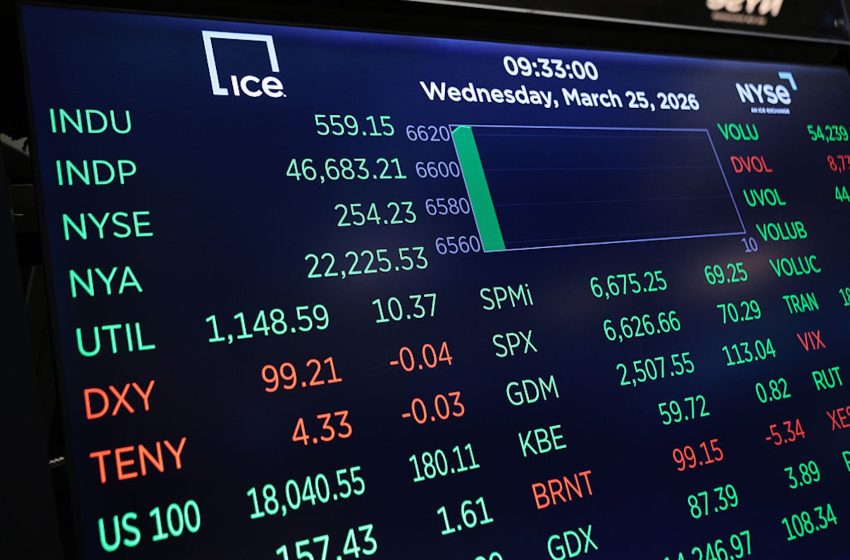
But someone seems to have known that Trump was going to back down exactly when he did. CNBC reported later that day that at 6:49 a.m., the S&P 500 e-Mini futures trading on the Chicago Mercantile Exchange — the world’s largest derivatives marketplace for futures and options, — saw a “sharp and isolated jump in volume.” It also happened on the Barito Renewables Energy (BREN) and West Texas Intermediate May futures oil markets, where contracts valued at $580 million were sold. Bloomberg News analyzed trading on those markets during the same period of time over the previous five days; the average trading level was around 700 contracts. In a one-minute period on Monday — between 6:49 and 6:50 — about 6,200 contracts were traded.
The only explanation that makes any sense is that someone knew that within 15 minutes Donald Trump was going to announce he was backing off his threats against Iran — and that the markets would surge on the news.
The market was very quiet at the time. There was no news, no public chit-chat, nothing that would give rise to such a big move, but there it was. The only explanation that makes any sense is that someone knew that within 15 minutes Donald Trump was going to announce he was backing off his threats against Iran — and that the markets would surge on the news. (A White House spokesman called the implication “baseless.”)
As Axios noted on Wednesday, “Mysterious trading patterns [have followed] Trump into war.” Each time he announces a consequential decision, the report found, an “epidemic of suspicious trading” occurs just before the news would affect the markets.
People appear to have been profiteering on the prediction-market website Polymarket as well, beginning with Trump’s military operation in Venezuela. According to the BBC, one trader made $436,000 on a $32,000 bet on the timing of the capture of Venezuelan President Nicolás Maduro. CNN reported that another trader has made nearly $1 million since 2024 from “dozens of well-timed bets that correctly predicted U.S. and Israeli military actions against Iran,” profits almost certainly derived from insider information. According to the report, “the bettor won a staggering 93% of their five-figure wagers about Iran, even though the events they predicted were unannounced military operations.”
This threat is acute enough that observers are warning that the ability to anonymously make such large bets on current events could motivate the people involved to alter outcomes for their own financial benefit. This is bad when it comes to sports, but it’s downright terrifying when it comes to wars.
Want more sharp takes on politics? Sign up for our free newsletter, Standing Room Only, written by Amanda Marcotte, now also a weekly show on YouTube or wherever you get your podcasts.
Sen. Chris Murphy, D-Conn., labeled the alleged profiteering an example of “mind-blowing corruption” and has proposed legislation to prohibit these markets from allowing bets on government action. “They are rife with insider trading,” he said, “and they offer incredibly perverse incentives, especially inside government, for government actors to push official decision making towards their financial interests.”
It would be nice to believe that our political leaders would never do such a thing, which would amount to making money off the lives of our troops. But considering the history of an administration led by a man convicted of 34 felony counts of business fraud, that would be unforgivably naive. According to a comprehensive New Yorker investigation, the Trump family has made $4 billion since the president returned to office in January 2025, and it’s important to note that Donald Trump Jr. is an investor in and adviser to Polymarket, and a paid strategic adviser to Kalshi, its rival firm.
But members of Congress are no better. Many of them have been raking in profits like it’s their religion ever since Donald Trump came back into office. After Trump and Israeli Prime Minister Benjamin Netanyahu launched the war against Iran on Feb. 28, Rep. Dave Taylor, R-Ohio, sold stock among two oil companies.
Polymarket and Kalshi announced on Monday they were issuing new guidance to guard against such behaviors going forward, but no one knows exactly how they will be able to control it. There are various bills pending in Congress to rein in some of the excesses, but it’s hard to imagine Trump would ever sign them.
As for the blatant market manipulation that’s taking place, such as those incredibly lucrative, serendipitously-timed Monday morning trades, I wouldn’t expect too much. After just six months on the job, Margaret Ryan, the U.S. Securities and Exchange Commission’s top enforcement official, resigned last week. She reportedly clashed with Trump’s hand-picked SEC chair Paul Atkins and other GOP political appointees over her decision to pursue cases with ties to Trump.
Maybe they can find another high-profile woman like Martha Stewart to send a different message. This one will say, “For my friends, everything; for my enemies, the law.”
Read more
from Heather Digby Parton
First Appeared on
Source link






