


Scientists Say Half the World Could Be Nearsighted by 2050, and It’s Not Just Screens. This Indoor Habit May Be Why
Nearsightedness, or myopia, is spreading rapidly across the world. Projections suggest that by 2050, nearly 50 percent of the global population could be affected, with rates already nearing 90 percent among young adults in parts of East Asia.
The condition itself is simple: people with myopia see clearly up close but struggle to see distant objects. While genetics play a role, the sharp rise over just a few decades points strongly toward environmental causes, particularly the shift toward indoor living.
Screens Are Part of the Problem, But Not the Whole Story
Parents often blame smartphones for worsening eyesight, and research supports that concern to a degree. A 2025 review found that myopia risk rises significantly between one and four hours of daily screen exposure, then continues to increase more gradually, as reported by ZME Science.
Yet the latest study published in Cell Reports suggests that screen time alone doesn’t explain the trend. Researchers at SUNY College of Optometry found that the visual strain linked to myopia is amplified when close-up tasks are done in dim lighting.
“When people focus on close objects indoors, such as phones, tablets, or books, the pupil can also constrict, not because of brightness, but to sharpen the image,” said lead author Urusha Maharjan. In darker environments, this leads to reduced retinal illumination, placing extra stress on the eye.
What Really Happens Inside Your Eyes
To investigate, scientists tracked 34 participants using wearable eye-tracking glasses. The group included 13 people with normal vision and 21 with myopia. Participants were asked to focus on blurred light and dark targets through a specialized lens.
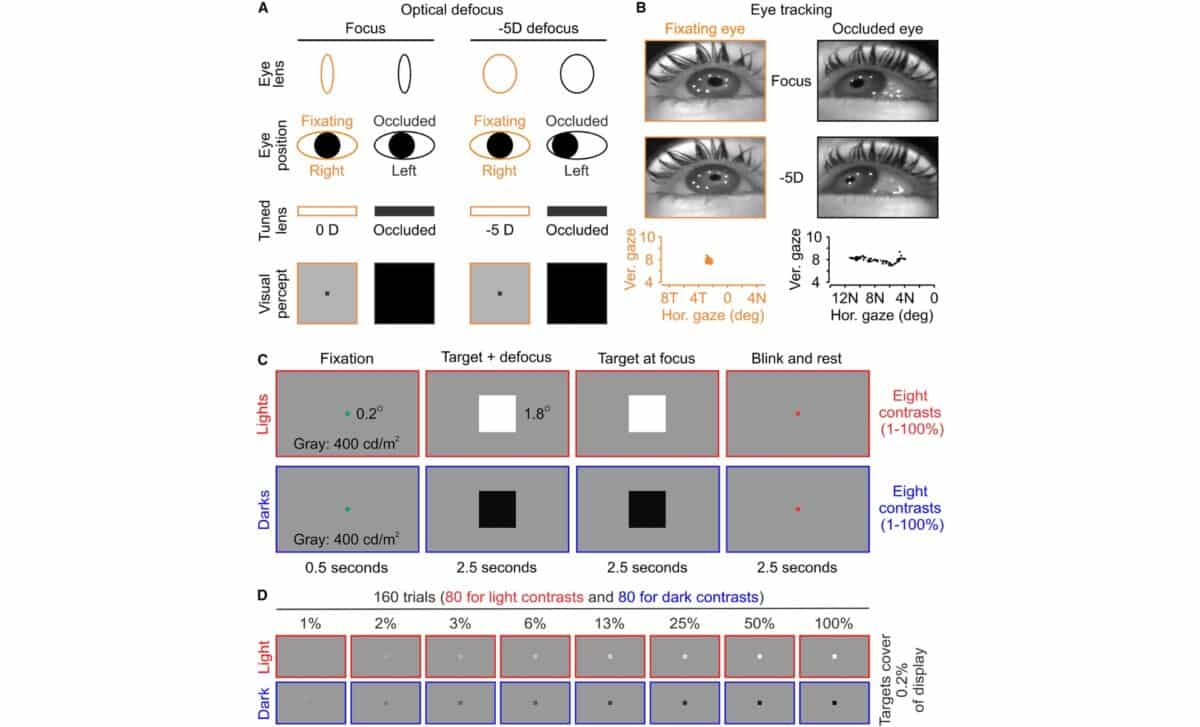
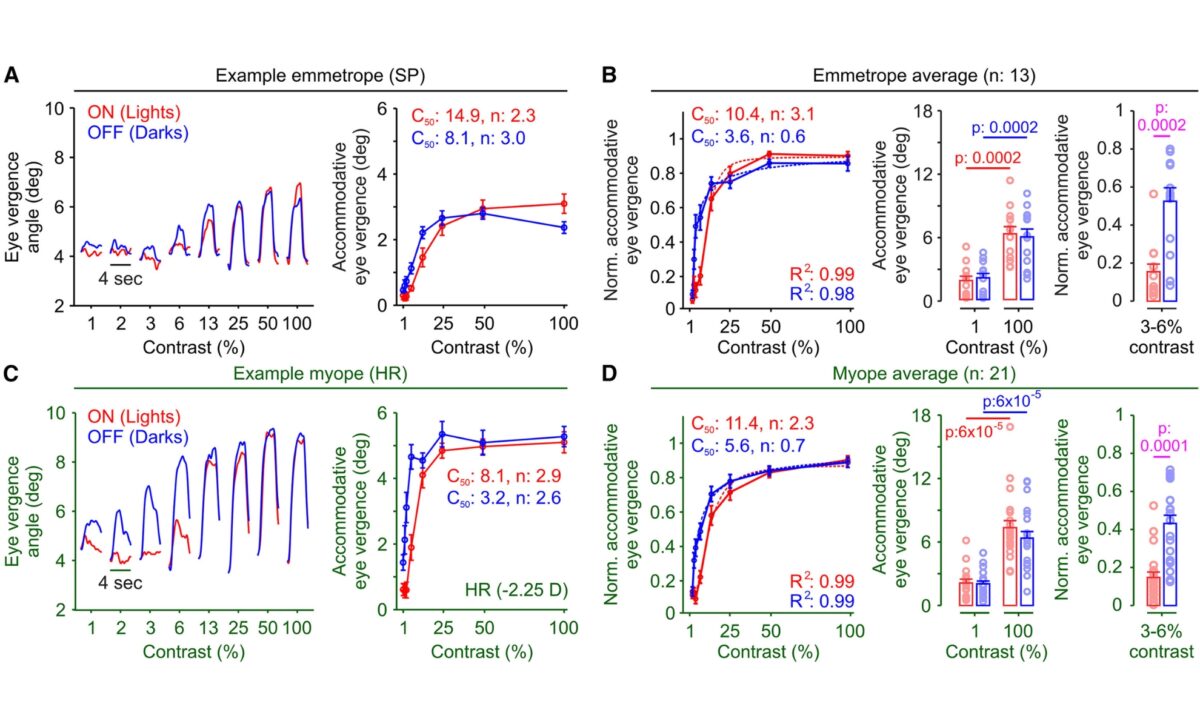
As they tried to sharpen their vision, their eyes turned inward and their pupils constricted, more intensely in those who were already nearsighted. Dark targets caused even stronger pupil responses than light ones, revealing how sensitive certain visual pathways are during close focus.
The study, also uncovered a shift in how myopic eyes respond to blinking. In normal vision, a U-shaped relationship allows the eye to alternate between focus and light sensitivity. In myopic eyes, that curve flattens, meaning the eye stays in a prolonged state of constriction instead of resetting. This disruption may contribute to the elongation of the eyeball, the physical change behind blurred distance vision.
A Global Trend Fueled by Indoor Life
The scale of the issue is already visible. In the United States, myopia prevalence increased from 25 percent among people aged 12 to 54 in the early 1970s to 42 percent in the early 2000s, based on national data. Much of that rise occurred before the explosion of digital devices, reinforcing the role of broader lifestyle factors.
Spending time outdoors appears to counterbalance some of these effects. Bright natural light allows the retina to function without constant strain from near-focus tasks. Still, outdoor activity has dropped significantly, particularly among children. A 2023 study in the Journal of Pediatrics, linked reduced playtime and independence with rising levels of anxiety and depression among young people.
Researchers caution that treatments like atropine eye drops or multifocal lenses may have limited impact if daily habits remain unchanged. As senior author Jose-Manuel Alonso put it, the findings don’t offer a final answer but introduce a new way to understand how lighting, focus, and eye biology interact.
First Appeared on
Source link






