


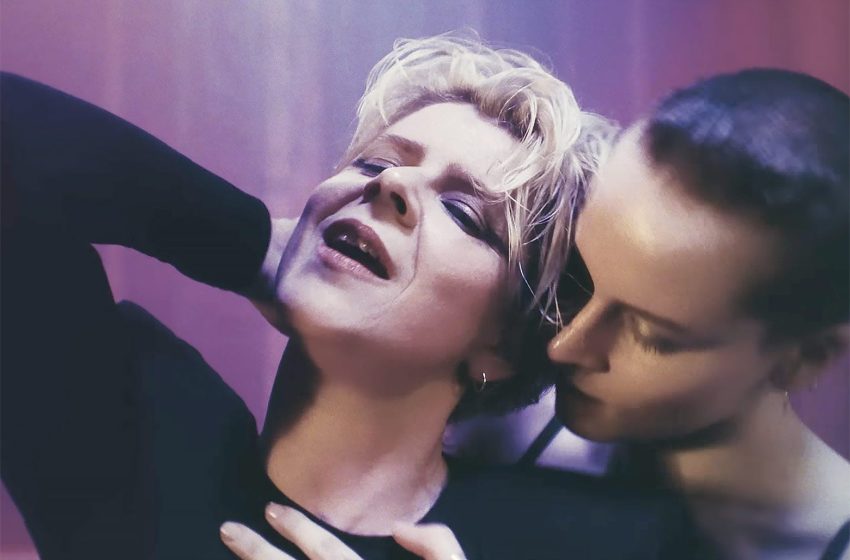
On Robyn’s new album, the queen of sad bangers finds a new way to be “Mother.”
Thirty years into a career that’s rewritten the pop rule book more than once, Sweden’s Robin Miriam Carlsson, mononymically known as Robyn, has earned the privilege of getting self-referential. She pioneered the whole “left-of-center female pop” field so many artists camp out in now, from Charli XCX to Lorde to Billie Eilish, and did it in the very center-of-pop era of the mid-2000s to early 2010s. As a dance floor deity, she’s seen most of her tracks get remixed by other DJs and producers almost as soon as they drop, and one controversial cover of her signature song has even racked up billions of streams, making it an even bigger hit than the original. So why shouldn’t she get to reinvent a few herself, to follow in her own footsteps, so to speak, especially when it makes a bigger point?
On her first album in eight years, Sexistential, Robyn and her longtime co-producer Klas Åhlund remake “Blow My Mind,” from her third album Don’t Stop the Music, released in 2002 (though not in the U.S. at the time). Originally, the song was about the mind-blowing hotness of a paramour whom she begged, “Hey, babe, ravish me, love me till it hurts / Don’t you dare to leave, button down my skirt … And you’re the reason that I sing.” But in the 2026 version, Robyn instead urges, “Baby, ravish me, tear into my flesh / Button down my shirt, go on, make a mess … Ain’t you the cutest little thing?” By the time she reaches “Let me just crush your scrumptious little face,” listeners will catch on that she’s not talking to a grown-up lover anymore. It’s now about Robyn’s baby son, and the Dionysian riot going on now is breastfeeding.
By the time he comes of age, little Tyko will probably feel about that song the way you do when your mom shows your naked baby pictures to your date. (At least he’s better off than Rufus Wainwright, who must live with his songwriter dad Loudon III having commemorated his infancy with a song called “Rufus Is a Tit Man,” which didn’t get any less awkward when Rufus turned out to be gay.) For the rest of us, any squeamish feelings engendered by the next-gen “Blow My Mind” are wholly intentional on Robyn’s part. On Sexistential, at its best, she explores how the romantic and erotic material of her youthful anthems might shift shape coming from a 46-year-old single mother, with a body still eager to make moves in both the boudoir and the club, but with accumulated aches muscular and emotional in, as Leonard Cohen once croaked, “the places where I used to play.” Through it all, she pledges to “stay horny,” as she stated in the album’s run-up, because where there’s desire, no matter what for, there’s life.
It’s debatable how fully the gambit comes off. You may find yourself asking if you ever want to hear anyone sing the words your unbearably cute scrumptious little face in your dance-pop bangers, no matter how authentically it gets at the sensuality of motherhood in middle age. (“It’s very punk,” Robyn has said.) Or else you could credit that she is doing it all, as always, with a sparkly wink and savor the delicious cringiness, or even ask how you got programmed to find songs about messy mothering more embarrassing than, say, songs about coked-up bathroom hookups. In this, Sexistential is an album less for new converts than for the crowd who called Robyn “Mother” long before Tyko came along in April 2022.
For those long-term fans, the enticement is that the dominant sound here is a gently updated throwback to 2010’s Body Talk, Robyn’s most beloved period, the days of “Dancing on My Own” and “Call Your Girlfriend.” Songs like lead tracks “Really Real” and “Dopamine” have the rubbery bass pulse, the staccato synth arpeggios scattering like summer rain, and Robyn’s voice dancing between them, one foot in yearning sincerity and the other in coolly cyborgian “Fembot” mode. Sexistential may be her first album in eight years, but it’s her first album that sounds like this in 16 years, because her 2018 album Honey was a mellower, meditative immersion in reconciliation with grief and loss. Now she’s returned to the style that taught a generation of (mostly) white women, gay men, and music nerds to dance-cry in the club, to make them dare to dream they can feel those feels again.
Robyn and Åhlund—plus other past studio partners, including Max Martin (who co-writes two songs here) and Joseph Mount of Metronomy—aren’t summoning this nostalgia just for nostalgia’s sake. It’s partly the sugar that helps the more bitter themes go down, but it’s also a thematic element in itself. Reintroducing Robyn in this familiar context highlights the change alongside the continuity. You can’t step in the same river twice, our Heraclitus of the dance hall affirms, but the water’s still fine—it’s just gotten deeper and thicker, with the tears (and other bodily fluids) shed not just in one-night disco melodrama but over yearslong cycles. Instead of departing from her legacy to claim new ground, as she did on Honey, she uses familiarity strategically to lure listeners to where and who she is now.
Robyn has always had that taste for challenge, her refusals being as essential to her identity over the years as her straight white bangs. She was the teen in the 1990s who walked away from major-label stardom, leaving a gap so big they had to invent Britney Spears to replace her. The way that ultimately worked out proved how wise Robyn was to split, but it took years for her to reestablish herself via her own independent label and a sidestep into club music. She’s still yet to have a mainstream American chart hit again, even as “Dancing on My Own” has accumulated more than half a billion streams, gradually gone platinum, and been repeatedly named the greatest song of the 2010s.
But in her new incarnation, too, she avoided clichés, like the floating, disembodied tone often heard atop club dance beats, instead deploying a Nordic forthrightness, both playful and poignant, that made it clear she was relating stories about a human woman’s experiences. She didn’t channel transcendent spirits from the exosphere and had little gospel-soul in her style, no divinities in her affinities. She was as individual as Björk, but with her platform boots more firmly on solid, albeit glittery, ground.
The glamour came from these everyday tales being delivered via futurist sonic tech, but the peaks and pits of emotion that a Robyn song navigated were all person-to-person. Or just as often person-to-person-to-person, as when she caught him “dancing with what’s-her-name” who was wearing the scarf she’d given him (years before Taylor Swift left any neckwear at Maggie Gyllenhaal’s place), or when she had to walk him through the steps of his own breakup so they could be together. The saving grace was that she found every step of it funny, moving, usually exciting, and even when dreary at least damnably real, with assurance that listeners would too.
If that circuit of mutual recognition is intact, then her core audience should hear Sexistential as an album not just about how Robyn is doing with aging, but about the rest of us getting older too. High points such as “Dopamine” and “Really Real” grapple with the very 2026 issue of distinguishing truth from simulations—not, as might have been the case in the past, out of romantic insecurity, but out of real philosophical skepticism about passion as social performance or how brain chemistry might undo personal agency.
Meanwhile, erotic energies swell up in other unexpected places in songs like “Talk to Me” (about how talking dirty and good conversation can both get you off), “Sexistential,” and, again, “Really Real,” which transitions from the singer planning a breakup while “tied up under your duvet” to a phone call from her mother that she’s more than content to accept. These songs juxtapose sexual want with other needs, bonds, and affections, and the thrills of the body with the indignities of being a sentient meat bag moving through the world.
That freak flag flies most freely in the title track, a kind of manifesto that should be much further up in the track list (it’s the third-to-last song). “Sexistential” finds Robyn revisiting her cartoonishly nasal, Beastie Girl rap style from old favorites like “Konichiwa Bitches,” but this time to rap about undergoing IVF, dating while pregnant, having a “boner” for Adam Driver (whom her doctor confuses with Adam Sandler), and being a living spaceship with “ovaries on hyperdrive.” In the chorus, she sings, “I like to go out / Wear something nice / And push,” and it’s ambiguous if she’s going clubbing or into labor.
It’s also at this point, however, that I feel how much this album could come across less like randy activism and more like romantasy or an unrealistic lean-in manual for aging “boss bitches.” Is it really doing more than encouraging middle-aged listeners to pretend that they too are still clubbing and hooking up while also raising kids, tending to elderly parents, and taking care of their own medical business? Sure, maybe a few really are, if they’re on Raya, the dating app for the rich and famous, the way Robyn raps she is. I’m torn—as another sometime-rapping white disco-punk queen once sang, dreaming is free, but Robyn’s probably comes with some pretty major hidden expenses.
With an album nine songs and barely more than half an hour long, I shouldn’t really have time to cultivate such doubts. But unfortunately, outside of the songs I’ve already mentioned—the opener plus the four singles that have already come out—the remaining tracks get stuck in holding patterns, stray from the album themes to more banal ideas, or are overstuffed productions. They’re far from bad—well, “It Don’t Mean a Thing” lives next door to bad—but in a return to Robyn Classic, one involuntarily starts expecting that sky-high quality. Honestly, it’s remarkable that a few get there, especially the title track and “Dopamine.” But unlike Honey, which granted itself breathing room through its change of style, this album doesn’t feel as much like a lasting end-to-end statement. I’m still glad to have it. And though I know better than to fucking tell Robyn what to do, I hope it’s not too much to ask that next time she reduce the pressure by bringing her unbearably cute scrumptious little face back to us a bit faster.
First Appeared on
Source link






