


Gulf princes are caught in a trap
2 View gallery
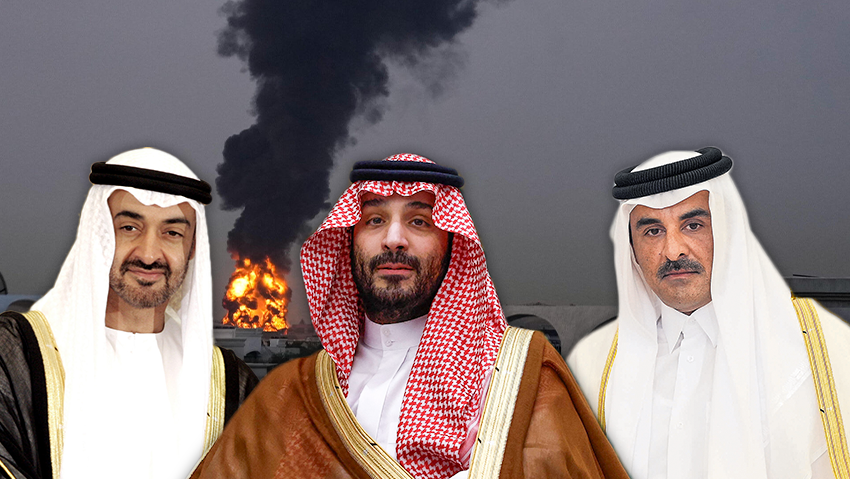
UAE President Mohammed bin Zayed, Saudi Crown Prince Mohammed bin Salman and Emir of Qatar Tamim bin Hamad Al Thani
(Photos: Alex Brandon/AP, Evelyn Hockstein/POOL/AFP)
The Washington Post reported Thursday, citing an Arab and a European official, that both Saudi Arabia and the United Arab Emirates have signaled that if Tehran does not agree to significant limits on its missile, drone and nuclear programs, they would support an escalation of the military campaign to force concessions at the negotiating table. “They are not asking Trump to escalate the war immediately, but to create the conditions that will ensure that on the other side of the Gulf there will be a fair partner when the war ends,” the European official said. “I have never heard ‘let’s finish the job,’ but that is the spirit.”
Seeking a ‘more modest’ Iran
According to the report, some in the Gulf initially believed the war could lead to the fall of the ayatollah regime. But that hope faded as analysts and officials observed the limited impact of Israeli and U.S. strikes on the regime’s stability. Now, Gulf states are settling for the hope that the war will end with a “change” for the better in Iran’s conduct. “They want a more modest Iran,” a European official said.
He added that this position is nearly uniform across the Gulf: Qatar, Kuwait and Bahrain support the stance of the UAE and Saudi Arabia, though they have not joined active efforts to influence the Trump administration. Oman is the exception, opposing the war and continuing to back Tehran regionally. “They are like Tehran’s defense attorney,” the official said.
2 View gallery
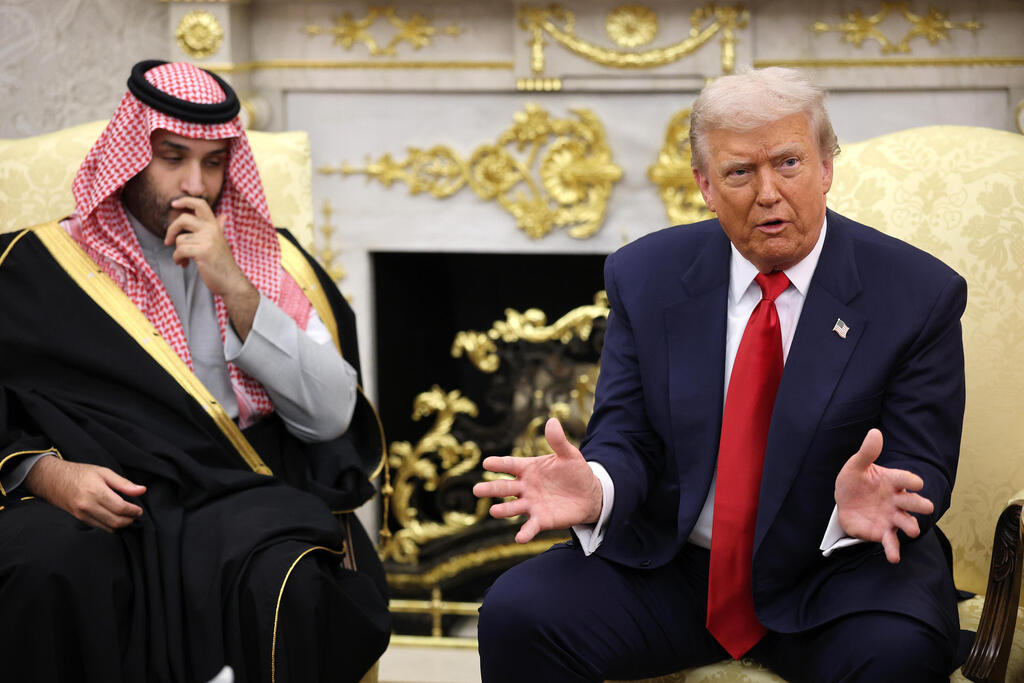
Trump and Bin Salman: ‘Riyadh is considering joining the war’
(Photo: Win McNamee/Getty Images)
Prisoners of geography
In recent weeks, Gulf states have repeatedly warned they may go beyond defensive measures and strike Iran in response to ongoing missile and drone attacks. So far, however, they have refrained from doing so. Mohammed Baharoon, director of the Dubai Public Policy Research Center, likened the Iranian threat to gangrene: “You invest all efforts to treat it and avoid amputation, but if it spreads, you must amputate.”
The concern is of a disproportionate Iranian response, heightened by the perception that even a regional power (Israel) and a global power (the U.S.) have struggled to subdue Iran — just as Israel has not decisively defeated Hezbollah or Hamas. “Gulf states are praying we can bring about regime change in Iran, but they believe we won’t — and that Iranian revenge will be served, and they will pay the price,” an Israeli official familiar with the matter told Ynet.
“The situation for Gulf states is very difficult. They are deeply worried about the outcome of the war. Once the Americans leave and we stop, Iran will launch a barrage of 300 missiles at the Emirates. Revenge is best served cold. They understand that. These are the rules of the Middle East. That’s why they don’t dare enter the circle,” he said. He added that after the war, Gulf states will likely seek arrangements with Iran: “From their perspective, your neighbor is your neighbor, even if he harms you.”
What about normalization?
First Appeared on
Source link






