


New tools seek to boost early detection
In recent weeks, scientists at Worcester Polytechnic Institute have deployed AI to analyze subtle structural changes in brain scans of people at risk for developing the disease. The researchers say the approach can predict Alzheimer’s with nearly 93 percent accuracy.
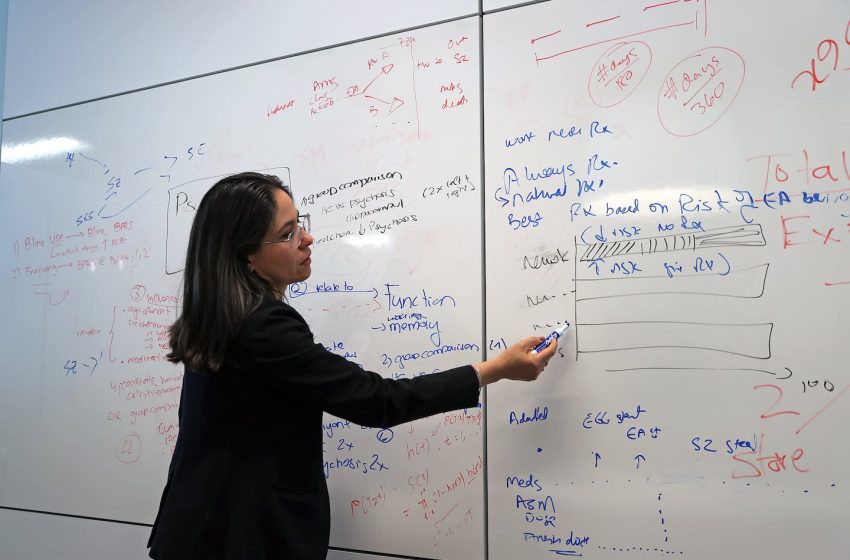
Meanwhile, Moura and a team of MGB researchers are harnessing AI to quickly sift through electronic medical records of routine patient visits to doctors for comments that might be red flags for cognitive impairment.
“Our research shows that these early signals are already present in the electronic health record, hidden inside clinical notes, but they are easy to miss in busy practices and impossible to manually track at scale,” said Moura. She coauthored a study of 3,300 clinical notes from 200 anonymized patients in the health care system.
Both experiments stem in part from the limitations of two drugs that have been approved since 2023 for the earliest stages of Alzheimer’s. The most common form of dementia, Alzheimer’s afflicts an estimated 7 million Americans.
Leqembi, which is made by Cambridge-based Biogen and its Japanese business partner Eisai, and Kisunla, made by Eli Lilly, have been shown to modestly slow the progression of the disease. Both medicines carry risks of serious brain bleeds and swelling, and doctors debate how meaningful the slowdown is.
Still, treatment must start when patients have mild cognitive impairment or mild dementia, the two earliest symptomatic phases of the disease. But patients are often diagnosed later because the symptoms were mistaken for normal aging.
About one-third of people with mild cognitive impairment due to Alzheimer’s develop dementia within five years, according to the Alzheimer’s Association.
An early diagnosis might also enable patients to participate in clinical trials of new experimental drugs, manage symptoms longer, and plan for future financial, legal, and care decisions.
Sean Terwilliger, a retired IT specialist from Holyoke who was diagnosed with Alzheimer’s disease in 2024, said that if he had received an earlier diagnosis, it “would have saved me loads of grief.”
“I’m probably the perfect candidate for being able to use predictive AI to find something,” said Terwilliger, 62, who writes a blog about living with Alzheimer’s called alzblog.net and advocates on behalf of the Alzheimer’s Association of Massachusetts and New Hampshire.
Terwilliger said doctors initially thought he had difficulty processing information and remembering things because he suffered a ministroke in 2018. It took him more than five years to get a clinician to administer a neurocognitive test. During the exam, he said, he was unable to remember any of five common words read to him a few minutes earlier. That led to an appointment with a neurologist who administered blood tests, an MRI, and a PET scan, which resulted in the Alzheimer’s diagnosis.
Terwilliger recently completed 18 months of intravenous infusions of Leqembi every other week at Baystate Medical Center in Springfield and says he feels sharper than he did before he started. Leqembi, like the rival drug Kisunla, clears a sticky toxic protein called amyloid that can form plaques in the brains of people with Alzheimer’s.
Terwilliger said he probably would have taken the drug sooner if he had gotten the diagnosis earlier. He also would have begun his daily regimen of brain exercises sooner, including New York Times puzzles such as Wordle, Strands, and Connections.
Researchers at WPI found that one way to detect early-stage Alzheimer’s is to use AI to scour MRI scans for loss of brain volume. Scientists have long known that the disease causes brain shrinkage, as neurons are injured and stop working properly. But it can be hard for clinicians to detect changes in brain volume when inspecting scans.
“Machine learning can see differences and changes in the brain that the human eye can’t,” said Benjamin Nephew, an assistant research professor in the biology and biotechnology department, who led the study.
A team of investigators used machine learning to analyze 815 scans for volume measurements in 95 brain regions. They then deployed an algorithm to make predictions based upon differences in the measurements between healthy individuals and those with mild cognitive impairment or early Alzheimer’s-related dementia.

Using the two tools, the WPI researchers found that volume loss in three regions of the brain — the hippocampus, amygdala, and entorhinal cortex — were the top predictors of Alzheimer’s, according to their study published in February in the journal Neuroscience.
The hippocampus is a small seahorse-shaped structure deep in the brain that is responsible for memory and learning, according to WPI. The amygdala, which is made up of two almond-shaped structures, controls emotions. The entorhinal cortex is a hub for memory, navigation, and perception.
The researchers studied brain scans of men and women between the ages of 69 and 84. Among the findings: younger males and females in the study who were at risk for developing Alzheimer’s first lost volume in the right hippocampus, which might make that area an early bellwether for the disease.
Scientists at MGB used a very different approach to home in on the risk of developing Alzheimer’s. Their AI tool scoured clinical notes from routine appointments to the doctor — physicians ranging from primary care doctors to ophthalmologists to dermatologists — for hints of abnormal cognitive decline.
The hints were as pedestrian as a missed medical appointment. A comment from a spouse about the patient’s forgetfulness. A remark that the patient has difficulty keeping track of their prescription medicines or following discharge instructions after surgery. Often, the notes were written by staffers other than the doctor, including physician assistants and nurse practitioners, and then co-signed by the doctor.
“Some patients have 100 or 200 notes,” Moura, of MGB, said. She added, “Clinical notes contain whispers of cognitive decline that busy clinicians can’t systematically surface. This [AI] system listens at scale.”
During the study, the tool accurately detected early signs of possible cognitive problems 88 percent of the time, according to Moura.
“We built a team of AI ‘agents’ that read these notes like a clinical team would, cross-checking and refining their reasoning until they agree on which patients may need further evaluation,” she said. The study was recently published in the journal npj Digital Medicine.
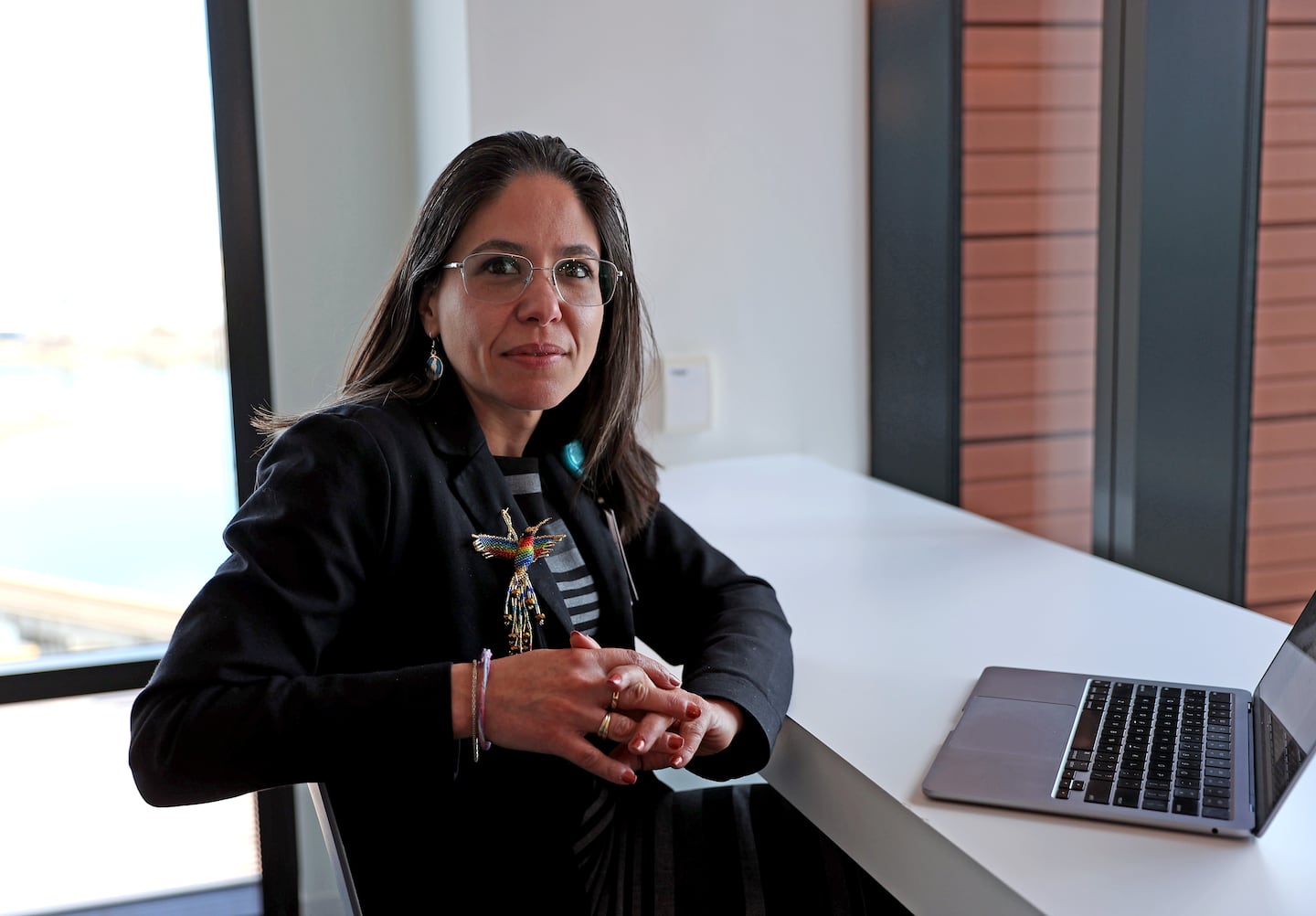
MGB could roll out a pilot program that uses the AI tool in three to four months and is seeking funding from philanthropies, Moura said.
Dr. Daniel Z. Press, chief of cognitive neurology at Beth Israel Deaconess Medical Center, who wasn’t involved in either study, said he would welcome the use of AI to hasten diagnoses of early-stage Alzheimer’s.
“Now that we have disease-modifying therapies that can at least partially slow the progression of the disease, we want to slow it down as early as possible,” he said.
Nonetheless, he said scientists have to make sure AI tools don’t generate false positives. In the case of electronic medical records, for example, there could be multiple causes of mild cognitive impairment besides Alzheimer’s, he said, including depression, sleep disorders, and drug use.
“It’s all just a question of . . . how well the tool works in terms of sensitivity and specificity,” he said.
Jonathan Saltzman can be reached at [email protected].
First Appeared on
Source link






