


Hays County wells struggle after years of drought
In Radiance, a small community in northwestern Hays County, self-sufficiency and community have been tenets of the neighborhood since its founding. It’s a place where neighbors take care of their land and one another.
“Back in the day, the idea was basically neighbors all working together to have a small community within the Hill Country,” Arturo Rivera said.
Rivera has lived in Radiance with his wife Ryan Sage for 10 years. The neighborhood gave them the opportunity to have a barn on their property where they could work on old cars. They call themselves new-age hippies, hunting and gardening while prioritizing the environment.
The neighborhood’s founding principles led Radiance to dig its own community well in the ’80s. Contaminated surface water led to a second well in 2003. But in 2025, the second well went dry, forcing residents to use the original well with an order to boil all their water for more than six months.
Across Hays County, wells are running drier, forcing them to be dug deeper and pushing residents to confront the increasing severity of depreciating aquifer levels. The Hays Trinity Groundwater Conservation District said aquifer and river conditions have not been this poor in the more than 20-year history of the district — including the 2011 drought.
This isn’t confined to a few wells
Jared Thompson is the owner of The Well Doctor, a well servicing company. He’s watched the impacts of dwindling aquifer levels play out across the region.
He said he is especially wary of the well levels in Wimberley and Dripping Springs.
“The water level used to come all the way back up to about 500 feet when we had heavy rains. But now we’re seeing it staying very low at around 660 to 690,” Thompson said. “That’s very concerning.”
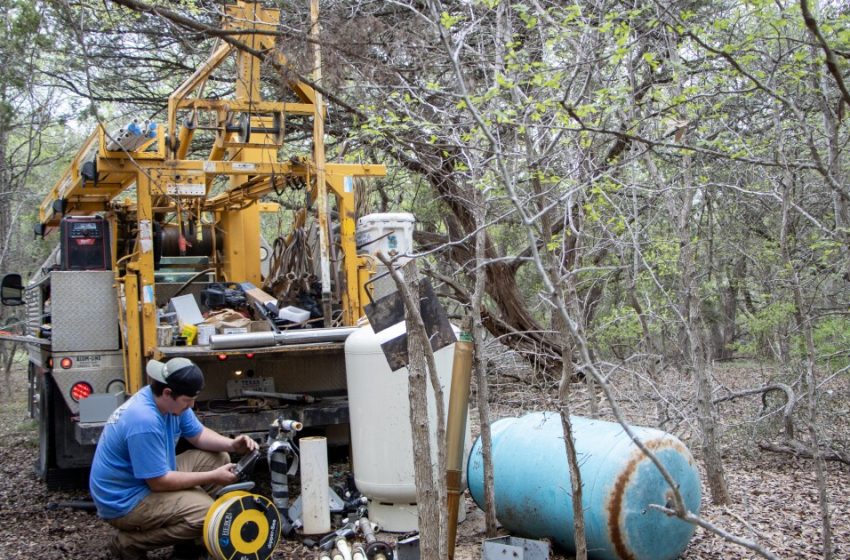
Wells work by digging holes deep enough to reach groundwater stored in aquifers. Long lines of PVC casing keep the hole stable while the pump near the bottom takes in water and sends it up to the tank that sits at ground level. The tank then helps pressurize the water before it enters homes.
Thompson has serviced wells for 18 years. He said the only time he saw worse conditions was during the 2008 drought.
“ We were having to lower pumps pretty much every day for months and months,” Thompson said.
Today, some of those wells need to be dug even deeper.
As of March, 100% of the district’s monitored wells fell below historic levels. It would require 34 inches of rain in the next six months to pull the region out of drought, a scenario the conservation district estimates has a less than 1% chance of happening.
Laura Thomas, the general manager for the Hays Trinity Groundwater Conservation District, said this isn’t confined to a few wells.
“Pumps are being lowered and wells replaced with deeper wells throughout western Hays County, and the Hill Country, not only the northern part of Hays County,” Thomas said.
In order for an aquifer to stay in use for a long time, it relies on the ability to recharge or to replenish with water that percolates from the ground above it. However, some aquifers are confined, meaning water doesn’t reach it. Once the water in a confined aquifer is used up, it’s gone forever.
New wells in northern Hays County are being dug into the confined Lower Trinity Aquifer — an aquifer with no ability to recharge.
The drier the well, the dirtier the water
Beyond questions of access, lowering water levels also brings increased risk from hard minerals and bacteria.
Recent tests of Hays County water show no major upticks in hardness or bacteria in Hays County water, according to Texas A&M University’s Well Owner Network. However, Joel Pigg, a program specialist for the network, said persistent drought is a situation where his group expects to see an uptick in the concentrations of E. coli, coliform bacteria and hard minerals.
Even if water is safe to drink, drier wells are more prone to mechanical issues as minerals build up and calcify on the pump, sometimes necessitating premature replacements.
Well maintenance and drilling is expensive work. Lowering a pump can cost $1,500 and replacing a pump entirely is usually around $7,500.
Radiance had to take out a $40,000 loan to pay for the new well, a cost being split among the small community.
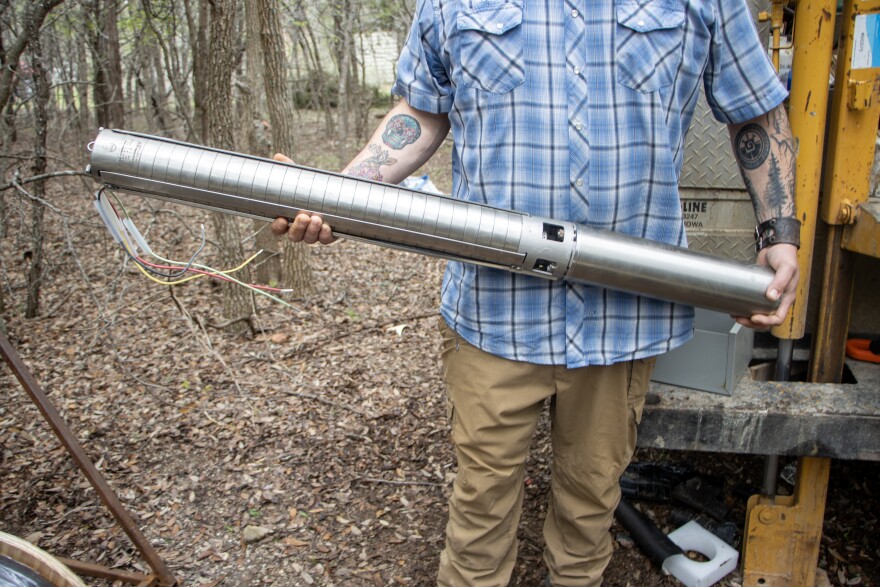
The cost of drilling a deeper well can cost upwards of $75,000. A price that Thompson said can become untenable for homeowners.
“ They typically have to refinance their house,” Thompson said. “You can’t even sell your house if you don’t have a reliable source of water.”
First Appeared on
Source link






