


Stunning NASA Images Reveal Saturn’s Hidden Layers in Unprecedented Detail
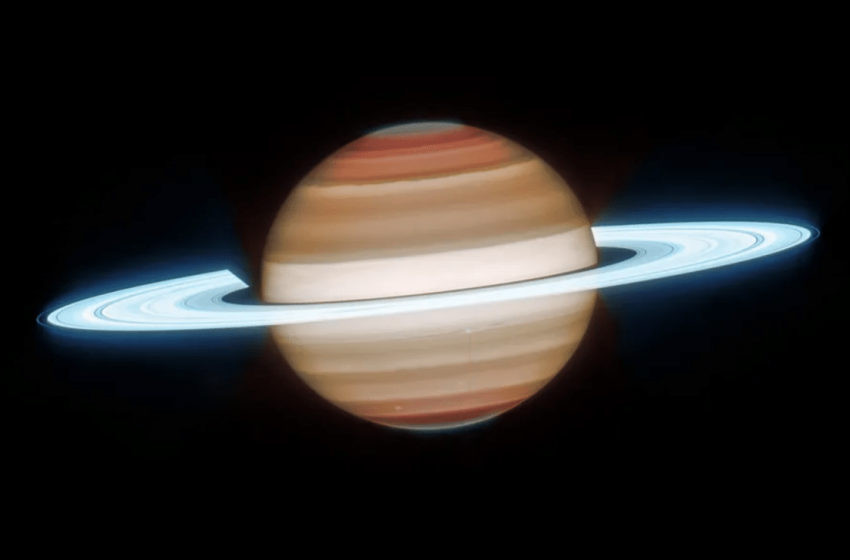
NASA has unlocked a new dimension in the exploration of Saturn with breathtaking images that offer a comprehensive, multi-layered view of the planet’s atmosphere and rings. By teaming up the power of both the Hubble Space Telescope and the James Webb Space Telescope (JWST), scientists have revealed the most detailed portrait of the ringed planet ever captured. These groundbreaking observations, highlighting infrared, visible, and ultraviolet wavelengths, offer a far richer understanding of Saturn than ever before, providing an invaluable tool for researchers studying the planet’s dynamic system. According to NASA, this unprecedented collaboration offers new insights into how Saturn’s atmosphere works as a connected three-dimensional system, helping scientists uncover the mysteries of this iconic gas giant.
Unveiling Saturn: A Telescope Team-Up Like Never Before
Saturn, the second-largest planet in our solar system, has always intrigued astronomers, thanks to its stunning ring system and thick, mysterious atmosphere. While previous missions have captured glimpses of this gas giant, none have offered such an expansive and nuanced view of its layers. The new study, based on observations from NASA’s Hubble and JWST, provides a comprehensive look at Saturn in a way no telescope has before. By combining data from both observatories, scientists have created a single, multi-wavelength image that shows Saturn from a variety of perspectives, offering an unprecedented glimpse into the planet’s atmosphere and its intricate ring system.
Hubble’s contribution to the study involved capturing Saturn in visible light, revealing the planet’s cloud bands and atmospheric patterns. JWST, on the other hand, took its view through infrared wavelengths, offering new details that cannot be seen in visible light, such as the temperature distribution in Saturn’s lower atmosphere and structures hidden beneath the cloud layers. This unique combination has helped scientists visualize Saturn as a dynamic and multi-layered world.
“Each telescope tells a different part of Saturn’s story, and the observations together help researchers understand how Saturn’s atmosphere works as a connected three-dimensional system,” NASA officials stated in their announcement.
The data collected not only enhances our understanding of the planet’s atmosphere but also contributes to a broader study of planetary atmospheres and their seasonal changes.
Image credit: NASA, ESA, CSA, STScI, Amy Simon (NASA-GSFC), Michael Wong (UC Berkeley); Image Processing: Joseph DePasquale (STScI))
How Hubble and Webb Brought Saturn to Life
NASA’s Hubble Space Telescope has long been a tool for observing Saturn in visible light. Its crisp images capture the stunning cloud bands and the iconic rings of the planet with sharp clarity. However, these views are limited, primarily showing the outermost layers of the atmosphere. JWST, with its superior infrared capabilities, brings a new dimension to the study by peering deeper into Saturn’s atmosphere. Through this collaboration, the telescopes offer complementary data that, when combined, provide a comprehensive and multi-layered understanding of the planet.
While Hubble’s visible-light images, taken in August 2024, display the bright ring system and the soft bands of Saturn’s atmosphere, the infrared observations from JWST taken in late 2024 reveal additional layers of detail. JWST’s infrared view shows deep atmospheric structures, such as the meandering jet streams in Saturn’s northern mid-latitudes, as well as possible auroral activity and storms scattered across the southern hemisphere. This combination of visible and infrared data allows scientists to “slice” through Saturn’s atmosphere, offering a unique and multi-dimensional perspective that has never before been achieved.
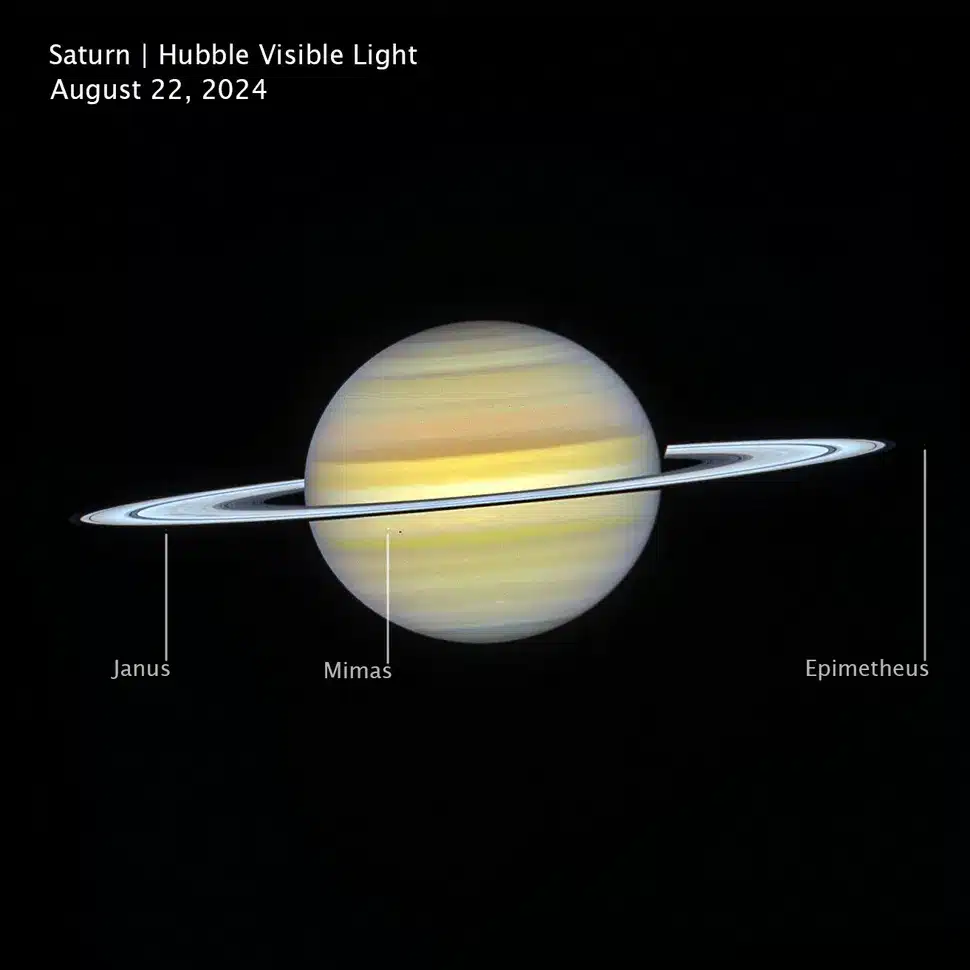
Image credit: NASA, ESA, STScI, Amy Simon (NASA-GSFC), Michael Wong (UC Berkeley); Image Processing: Joseph DePasquale (STScI)
“Together, scientists can effectively ‘slice’ through Saturn’s atmosphere at multiple altitudes, like peeling back the layers of an onion,” NASA officials added.
This powerful metaphor underscores the depth of insight provided by these new images, which go beyond the surface to reveal the planet’s hidden complexities.
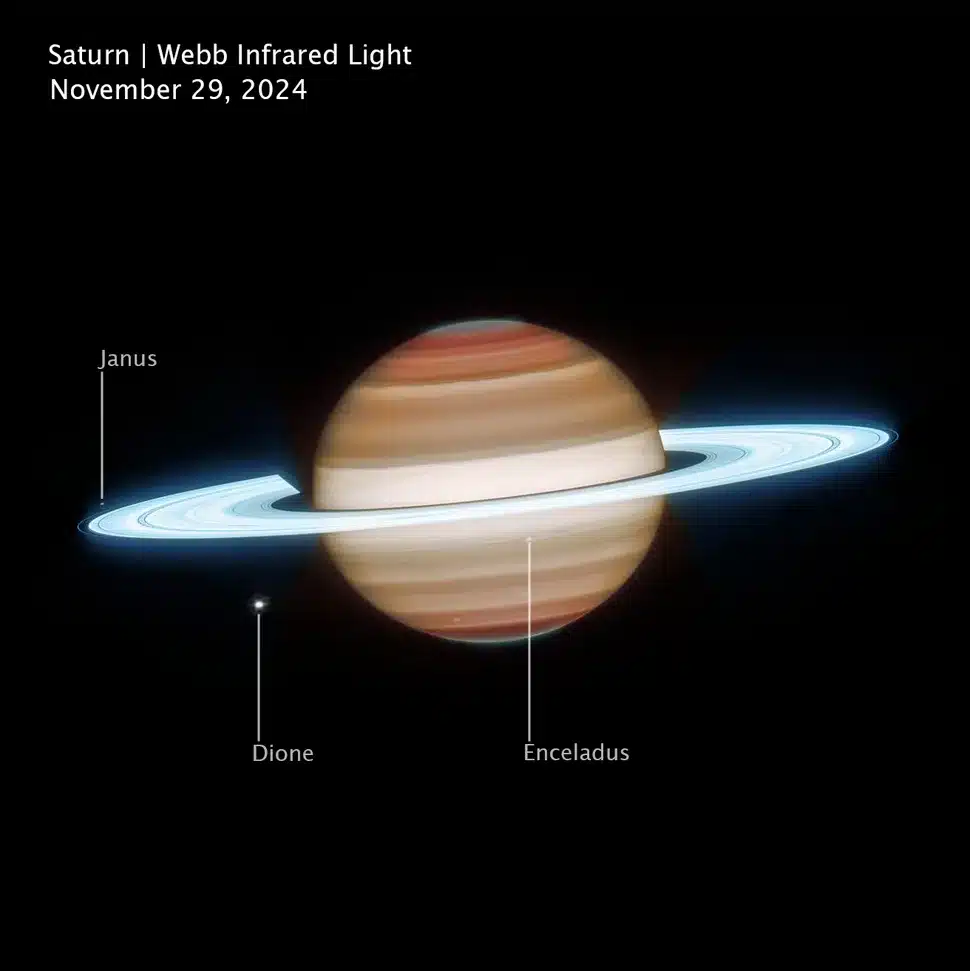
Image credit: NASA, ESA, CSA, STScI; Image Processing: Joseph DePasquale (STScI)
The Rings and the Changing Seasons
Saturn’s iconic rings, primarily made of water ice, are one of the most defining features of the planet. The new images offer a deeper look at the ring system, revealing its intricate structures in both visible and infrared wavelengths. Hubble’s view shows the rings gleaming brightly in reflected sunlight, while JWST’s infrared data provides a clearer view against the dark backdrop of space, showing off previously unseen details.
In addition to the rings, the seasonal cycles of Saturn are of particular interest to scientists. With a year on Saturn lasting about 29 Earth years, the planet’s seasons change gradually over long periods. These changes affect the planet’s atmosphere and rings, and understanding them is key to studying Saturn’s evolving climate. Hubble’s long-term Outer Planet Atmospheres Legacy (OPAL) program has tracked Saturn’s atmospheric changes for over a decade, creating a valuable dataset that JWST’s more recent infrared observations can now enhance.
As Saturn approaches its 2025 equinox, scientists are using the new data to better understand the planet’s seasonal shifts and atmospheric patterns. This long-term study, combined with the recent insights from JWST, will allow researchers to refine their models of Saturn’s climate, offering a more complete view of how the planet evolves over time.
First Appeared on
Source link






