



Stock P/Es Discounting Higher-For-Longer Oil Prices & Interest Rates
The fog of war is getting thicker because of the likelihood of US boots on the ground (the “bog of war”). The US Department of War has deployed 15,000 troops to the war zone, raising the risks of a longer war and more American casualties, which will cause an uproar in the US.
On Tuesday, March 3, we wrote: “We’ve been expecting a pullback due to excessive bullish sentiment, but now we expect a 10% correction from the high. It’s hard to imagine that the IRGC won’t use drones and speed boats to maintain their effective blockade of the Strait. If they are successful in doing so, the correction could be closer to 15%.” On March 8, we raised the odds of a recession and a bear market in stocks from 20% to 35%. We also warned that we can’t rule out a bear market “until ships can sail freely through the Strait.”
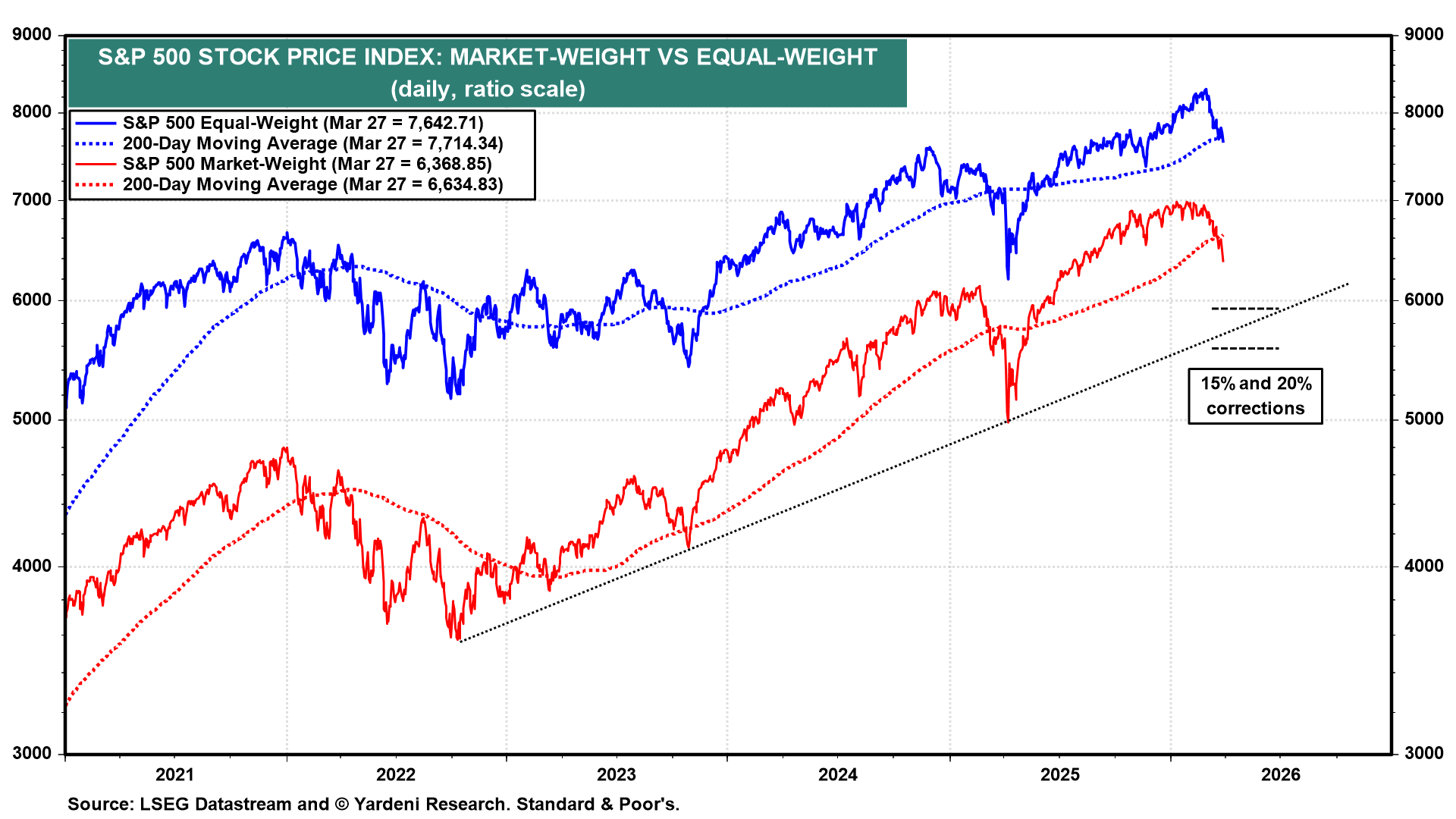
The S&P 500 is down 8.7% from its record high on January 27 (chart). It fell below its 200-day moving average last week. A 15% correction would take the index down to 5930.81. The S&P 500 equal-weighted index slipped just below its 200-dma on Friday. (The dotted lines on the chart mark the 15% and 20% correction thresholds for the market-cap weighted index.)
On Thursday, President Donald Trump postponed his threat to “obliterate” Iran’s power plants and energy infrastructure until Monday, April 6, at 8:00 pm EST. It was the second extension of his Obliteration Day ultimatum. While Israel is playing Whac-A-Mullah, the US is trying to find someone in Iran’s regime with whom to negotiate a peace plan. The risk is that even if Trump’s people are in discussions with Iranian officials, they might not have the power to make a deal that won’t be violated by renegade groups within the IRGC, which is nothing more than professional terrorists who have taken over Iran.
No wonder investors went into fetal positions last week. The good news is that sentiment is getting very bearish, which is bullish from a contrarian perspective. However, the fog of war will have to lift for the stock market to move higher.
First Appeared on
Source link






