


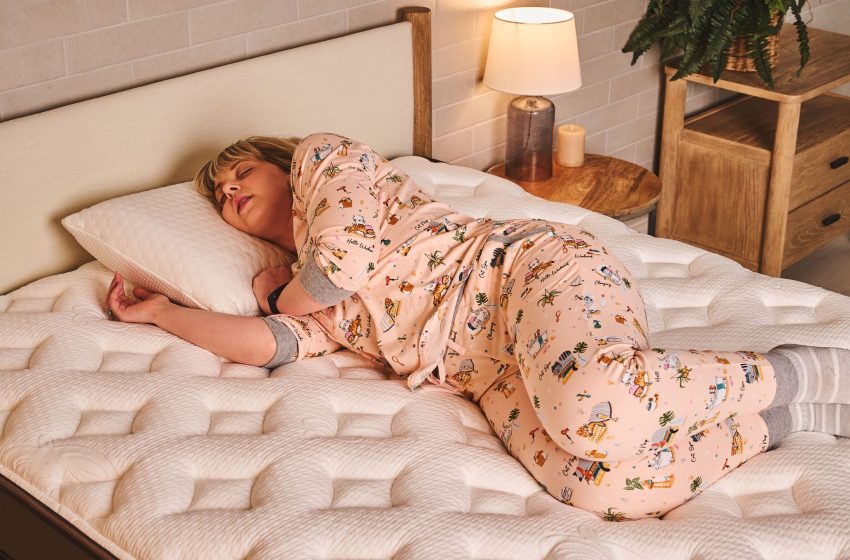
Science says the ‘7:1’ sleep rule could add 4 years to your life — these are the products I swear by to stick to it
A combination of the clocks going forward, illness and a series of late nights meant my sleep schedule was wildly out of whack. Thankfully, as someone who writes about sleep for a living, I already had everything I needed to get it back on track.
Now, with the help of some of the products below, I’m sticking to the 7:1 sleep rule, which entails getting seven hours of sleep and sticking to a regular bedtime (within a 1-hour window) at least five nights per week —and it could help me live longer.
Much of the 7:1 sleep rule comes down to cultivating good habits; it’s not enough to buy the best mattress and wear the most expensive sleep tracking tech. That said, there are several products I already used and trusted to help reset my sleep…
What is the 7:1 sleep rule?
First, a quick recap on what the 7:1 sleep rule is. It’s a term that describes the practice of achieving at least seven hours of sleep a night and falling asleep within the same one-hour window (half an hour on each side), at least five nights per week.
It was coined by researchers from Vitality and The London School of Economics and Political Science (LSE), thanks to their groundbreaking new study that highlights the importance of sticking to these specific sleep hygiene habits.
Their research shows that following the 7:1 sleep rule can potentially add as much as four years to your life expectancy.
How I stick to a regular sleep schedule (and the products that help)
1: Avoid late-night stimulation
Going to bed within a one hour window is one of the pillars of the 7:1 sleep rule, so I avoid stimulants that will make it harder to fall asleep. Case in point; caffeine and alcohol.
Caffeine has a half-life of five to six hours, but it can be as long as 12 hours. If you like to have a cup of coffee or tea after dinner, it could be affecting your ability to fall asleep (unless you go for decaf, of course).
And, although alcohol may make you feel drowsy, it’s actually bad for your sleep. It interferes with REM sleep, worsens existing sleep disorders, and leaves you dealing with a dreaded hangover the next day. This is what I rely on instead…
2. Reduce screen time
I’m a doomscroller, and it’s been such a hard habit for me to break. Not only does being glued to a screen impact melotonin production (the hormone that helps you feel sleepy), consuming news on my phone can leave me feeling tired and wired.
However, I’m making an effort to ditch the screens and do something more productive before bed, like journaling. By ditching my phone as my alarm, I’m also less inclined to take it to bed with me.
3. Have a calming nighttime routine
If you’re serious about sticking to a regular bedtime, you need to set yourself up for success — and that starts with a relaxing nighttime routine. Sticking to roughly the same sequence of tasks or activities in the lead up to bed helps prepares mind and body for sleep.
It could be a warm bath, reading in bed, or even folding laundry. It just needs to be something that you find relaxing and something you can do regularly to help cement your association with sleep.
4. I track my progress
Using one of the best sleep trackers to monitor when you’re falling asleep and how long you’re sleeping for is a great way to track your progress with sticking to the 7:1 sleep rule.
However, tracking your sleep with a wearable isn’t for everyone. I have orthosomnia, which is a fixation on achieving a ‘perfect’ sleep score when using a sleep tracker. Instead, I opt for an analog alternative.
Other essentials to help you net those 7+ hours of sleep
First Appeared on
Source link






