


NASA Rover Finds Glowing, Ruby-Like Crystals on Mars for the First Time
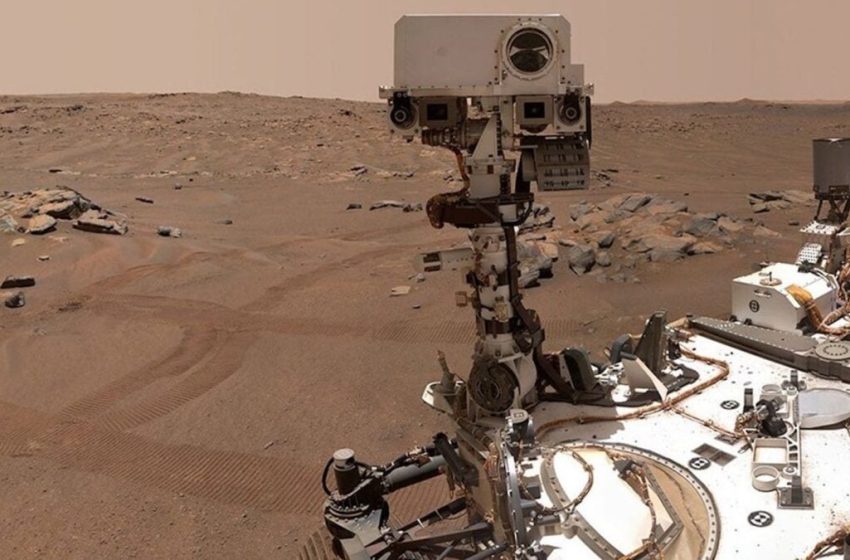
Over the past five years, a six-wheeled robot has been exploring the Martian terrain and capturing unusual features like a leopard-spotted rock, a tangle of strings, and textured rock formations that look like popcorn. Now, NASA’s Perseverance rover has found tiny gemstones that resemble rubies.
An international group of researchers spotted evidence of precious stones hidden inside Martian pebbles. The gem grains are made of corundum, a crystalline material that’s known as ruby or sapphire. The findings were presented at the Lunar and Planetary Science Conference in Texas earlier this month and suggest that Mars could be hiding other precious minerals across its desert-like terrain.
Precious stones
Perseverance recently explored the rim of Jezero Crater, a 28-mile-wide (45-kilometer) impact crater on Mars that may once have been filled with a deep lake. Near the crater’s stony rim, the rover found tiny, pale-colored pebbles that looked out of place, meaning they may have been transported there by impacts or geological activity.
Using the rover’s SuperCam, scientists blasted the rocks with lasers to reveal their chemical composition. Perseverance’s analysis of the rocks revealed something unexpected: three samples showed signatures of the mineral corundum.
The laser excited the minerals, causing them to emit optical radiation (i.e., light) if they contained luminescent elements. Sure enough, the laser produced luminescent light, indicating the presence of chromium-bearing corundum.
Sapphires and rubies are both gem varieties of corundum, sharing the same chemical composition and structure, but each differs in trace elements that give them their unique colors. Chromium makes rubies red, while iron and titanium give sapphires their colors. The pebbles found on Mars had trace elements of chromium, making them more similar to rubies, according to the recent findings.
Ruby red
On Earth, rubies form deep within the planet’s crust due to intense heat and pressure. So how did they end up on Mars?
The Red Planet has had some tectonic activity in the past, but not enough for the gems to have formed. Instead, the researchers believe meteorite impacts on Mars may have been the culprit behind the rubies, according to New Scientist.
The researchers also aren’t sure whether Perseverance has indeed found Martian rubies or another type of corundum. The gems found on Mars are so small, around 0.008 inches (0.2 millimeters) each, that it’s difficult for the team to determine their exact chemical composition.
Whether or not they are rubies, the tiny fluorescent gems are still interesting enough to qualify for the list of strange findings on the Red Planet.
Correction: An earlier version of this article said Perseverance has four wheels. It has six.
First Appeared on
Source link






