


Iran’s attacks drone on as the U.S. is at risk of losing the war
The United States and Israel have repeatedly boasted about airstrikes in their current war with Iran. In Week 1, they claimed the destruction of 75 per cent of Iran’s missile launchers. By Week 2, they had reduced Iranian missile fire by 90 per cent and said the war was “already won in many ways.”
And yet, Iran keeps damaging refineries and blocking tankers from crossing the Strait of Hormuz.
The country has certainly suffered many tactical losses. But its missiles and drones have been strategically successful.
Iran so far has launched at least 5,400 such projectiles. Surprisingly, less than a tenth of them have targeted Israel, its traditional rival.
Missiles over Israel
Israel faced about 450 Iranian missile attacks during the war’s first four weeks. The rate of fire fell rapidly after the first weekend but has never halted.
Some missiles carry several hundred kilograms of explosives, enough to destroy an entire building. The rest instead dispense dozens of cluster bombs over wide areas. Those are less powerful but still lethal.
Israel’s long-range Arrow interceptors engage the missiles first. Its mid-range David’s Sling and short-range Iron Dome interceptors provide backup. (The country’s Iron Beam lasers are not being used.) Together, they’ve reportedly intercepted 92 per cent of incoming missiles.
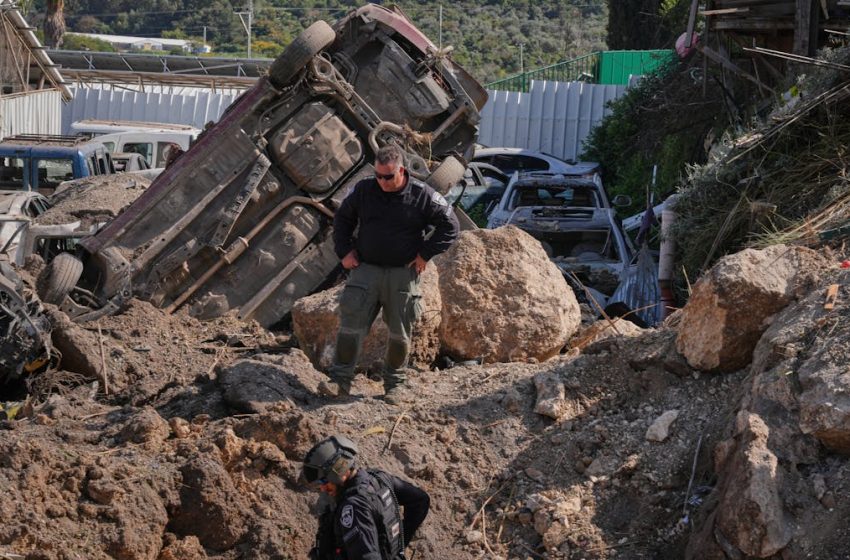
But interceptors sometimes miss. And their supply is limited. Consequently, at least nine large warheads and 150 cluster bombs have hit populated areas.
These numbers imply that almost all Iranian missiles are accurate enough to need interception. By contrast, during Israel’s earlier conflicts with Gaza in 2008, 2011 and 2014, less than a third of incoming rockets were so accurate.
Meanwhile, more than 90 per cent of Iran’s missiles and drones have targeted Arab countries in the Persian Gulf.
Published news reports, CC BY
Drones across the Persian Gulf
Saudi Arabia, Jordan, Iraq, Kuwait, Bahrain, Qatar, Oman and the United Arab Emirates (UAE) collectively reported around 4,900 Iranian attacks during the first four weeks. Only one fifth were missiles: the rest were drones.
These countries have stated they are neutral in the war. However, they do have defence agreements with the U.S., and some host American military facilities.
These countries defend themselves using weapons like the U.S.-made Patriot and Israeli-made SPYDER interceptors. Drone experts from Ukraine now advise the defenders too.
For example, the UAE reported attacks by 1,835 drones, 378 ballistic missiles and 15 cruise missiles. As of March 10, it claimed to have intercepted 94 per cent of the drones and 99 per cent of the missiles.
The deadliness of these attacks has varied.
(AP Photo/Altaf Qadri, File)
Continuing lethality
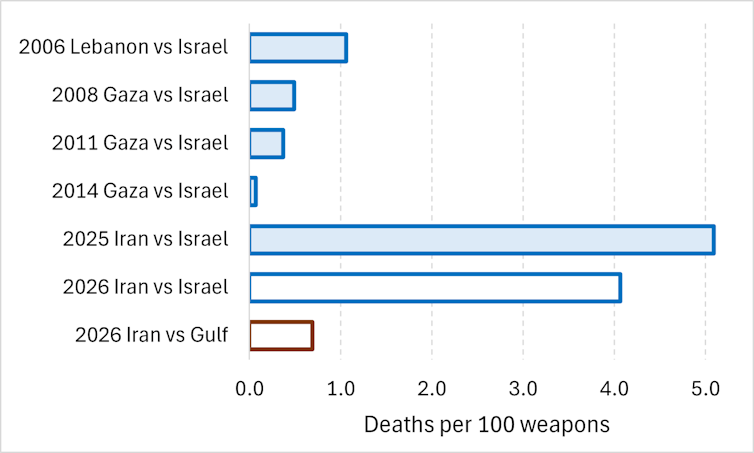
In Israel, Iranian missiles have killed 20 people, implying roughly 4.1 deaths per hundred missiles arriving.
That’s less than the 5.1 the country saw during its 2025 war with Iran. But it’s four to 40 times higher than the rates it suffered from rockets in earlier Gaza and Lebanon conflicts.
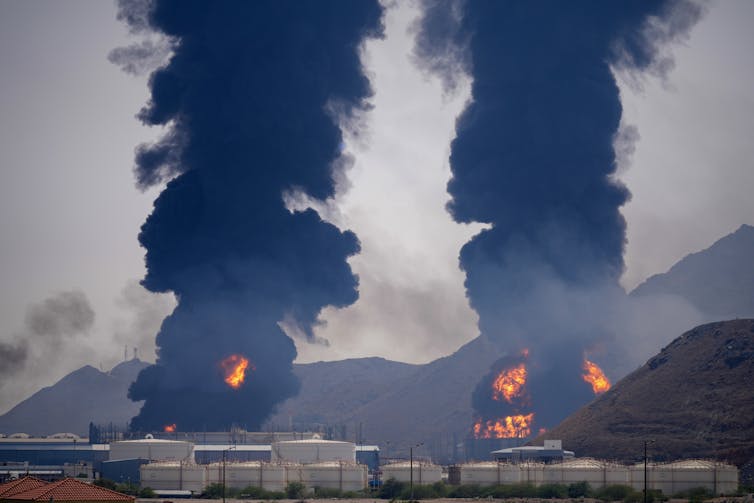
In the Persian Gulf, Iranian projectiles have killed at least 15 civilians, 13 U.S. soldiers and seven merchant sailors.
There were about 0.6 deaths per hundred Iranian attacks in Kuwait, Bahrain and the UAE combined. That’s much lower than Israel’s rate, presumably because those countries were attacked by drones and short-range missiles carrying smaller warheads.
Interestingly, although the quantity of Iranian attacks fell after the first week, their lethality did not. Death rates per projectile in Arab countries showed little change week-to-week. In Israel, the rates were highest in Week 3.
In fact, Iranian missiles keep hitting precise targets, like U.S. military aircraft parked beside runways.
This implies Iran’s government has recovered from its initial surprise. It’s likely benefiting from Russian intelligence and Chinese technology too.
(Published news reports)
Tactical U.S. vs strategic Iran
So, U.S. and Israeli warplanes have bombed thousands of targets, killed thousands of civilians, and slowed Iran’s missile fire. But they haven’t stopped it.
That’s not surprising. Airstrikes alone didn’t stop rocket fire during Israel’s previous conflicts in Gaza and Lebanon. Ground invasions were needed for that.
U.S. President Donald Trump can post jingoistic mashup videos and “bullshit” about having “militarily won” the war in Iran. But he hasn’t achieved strategic outcomes like “unconditional surrender” from Iran or regime change there.
By contrast, Iran’s missiles have been strategically effective. They’ve damaged Persian Gulf refineries and halted tanker traffic. They’ve forced Trump to relax sanctions on Russian and Iranian oil, and on Belarusian fertilizer. And they’ve shown Arab monarchies that U.S. defence agreements have limited value.

(AP Photo/Markus Schreiber)
Trump recently, and inadvertently, admitted this weakness. While discussing Iran’s closure of the Strait of Hormuz, he said “it would be great if we could do something, but they have to open it.”
This strategic failure despite tactical success is reminiscent of the Vietnam War. U.S. units had overwhelming firepower as they killed enemy soldiers. But body counts by themselves indicated little about strategic progress.
Some historians rank that war as the second worst U.S. foreign policy decision ever. The 2003 invasion of Iraq was ranked the worst.
Trump talks about being the greatest U.S. president in history. So, perhaps his Iran war will make him the new leader on that policy failure list.
First Appeared on
Source link






