


Rescuer Assumes They Saved A Sick ‘Opossum’ — Then The Truth Surprises Them
Meet Possum: a sweet rescue animal who isn’t actually an opossum at all.
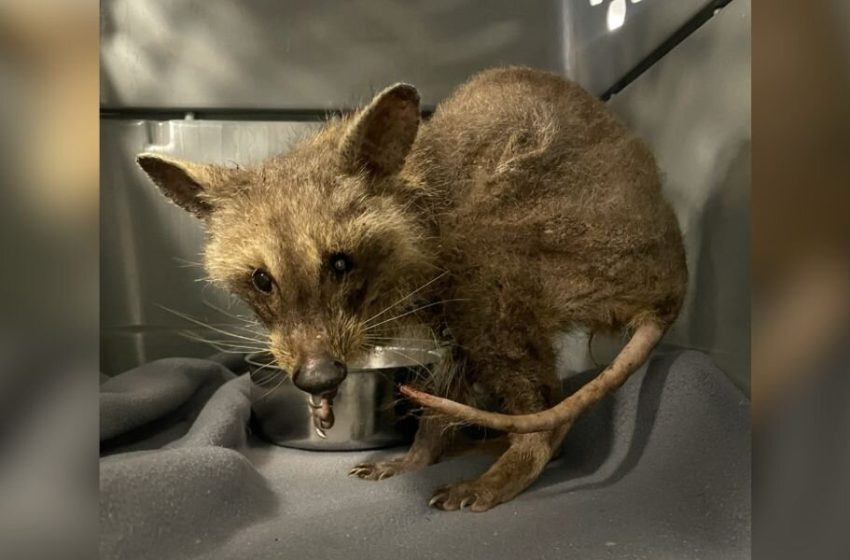
Recently, a Good Samaritan in Pennsylvania found Possum struggling to survive. The poor wild girl was emaciated, dehydrated and suffering from severe hair loss. Given the animal’s long, hairless tail and pointed face, the Good Samaritan assumed that Possum was, well, a very sick opossum. They scooped her up and brought her to rescuers at the Schuylkill Center for Environmental Education right away.
Upon arrival, rescuers quickly realized there was a misunderstanding. This animal wasn’t an opossum — she was a raccoon.
Given that raccoons are a rabies vector species in Pennsylvania and require specialized care, rescuers at the Schuylkill Center transferred Possum to experts at Aark Wildlife Rehabilitation and Education Center.
Safe at Aark, Possum began fluid therapy and eventually received treatment for her mange and skin infections. Weeks went by, and Possum’s appetite improved. Her energy levels increased, and her skin began to heal. With renewed energy, Possum began looking and acting like a raccoon again.
“As she’s gained strength, we’ve started to see her natural raccoon behaviors come through,” Aark clinic director Amanda Leyden told The Dodo. “She’s more alert, curious about her surroundings, and much more engaged during feeding and care.”
Rescuers at Aark enjoyed watching Possum come out of her shell and learning more about her personality.
“Unlike many raccoons, she keeps her enclosure remarkably tidy and rarely makes a mess,” Leyden said. “We like to call patients like her ‘polite.’”
According to Leyden, Possum still has a way to go before she makes a full recovery. However, rescuers are hopeful that she will eventually be ready to return to her home in the wild. Until then, she’s safe with experts who have her best interests at heart.
“Cases like Possum’s are emotionally challenging, especially in the beginning when the outcome is uncertain,” Leysen said. “Seeing her improve reminds our team why we do this work. Watching an animal come back from the brink and regain strength is something that never gets old.”
First Appeared on
Source link






