


Why we know worryingly little about this devastating health condition that affects mostly women
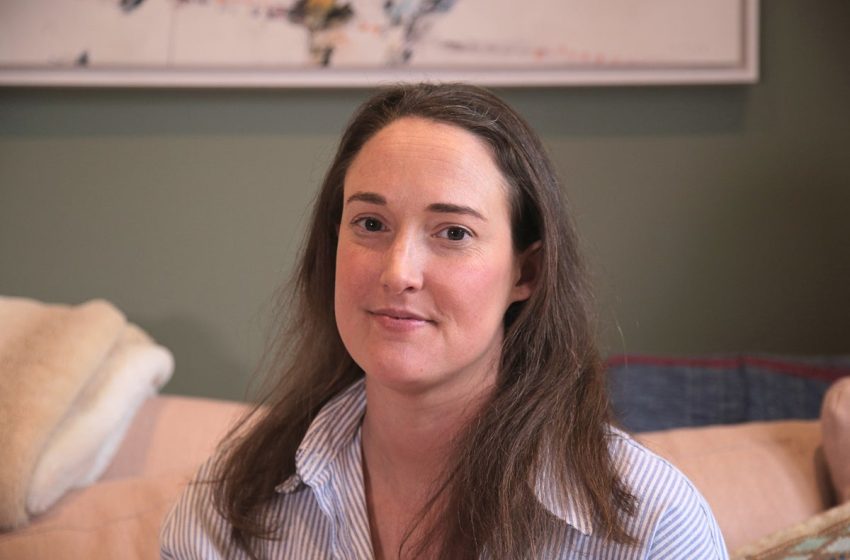
Kate Middleton had just finished her A-levels and was due to leave for a six-month gap year trip to Ghana when she went to her GP about a pain in her knees. Her GP, alert to the fact that there might be a wider significance to a seemingly innocuous symptom, referred her for a blood test that seemed so routine that Middleton – to the eternal regret of her parents – went alone to get the results.
As she sat there being told that she had lupus – a chronic and lifelong autoimmune disease where the immune system mistakenly attacks healthy tissue and organs, causing inflammation and damage to the joints, skin, kidneys, heart, and lungs – her exciting travel plans evaporated. She went home after being handed a leaflet that would answer any questions she had about the condition. A condition which was so little understood at the time that when her mother researched it, she read that her daughter would not be able to have children and would die within 10 years.
Devastated by the diagnosis and forced interruption to her gap year plans and her future, and with no mental health support on offer, Middleton more or less took to her bedroom.
“The psychological impact of the diagnosis was huge,” says Middleton. “I had a plan to go to Ghana but a week before I was due to leave, it was cancelled. I was very depressed and had the sense of ‘I don’t know who I am any more’. The person I wanted to be completely changed.”
Steroids helped to manage her symptoms but they brought with them complications and sent Middleton down the rabbit hole of side effects and further diagnoses that often go hand in hand with an autoimmune disease.
“I now have a secondary immunodeficiency disease which means that my immune system is so battered that it will never recover, so I need to take lots of antibiotics. I’ve got osteoporosis and multiple other autoimmune diseases including rheumatoid arthritis and myositis as well as pernicious anaemia and pericarditis.”
Middleton’s family were instrumental in supporting her. She credits her “incredible” mother, who researched the best clinicians and care on offer and helped her daughter to access it. “Guys Hospital is the centre of the world for lupus – but it’s a postcode lottery,” she says.
When doctors told Middleton that she was too unwell to go to university, her older sister intervened. “I wasn’t really leaving my room at that stage and my sister thought, I can’t let her stay at home like this. She was at Durham University and went to see the head of college and said I needed to go there too so she could look after me. I had an interview and I got a place to study history.”
Despite her life, in many ways, being defined by her illness, Middleton, who lives in east London with her partner and – after defying that initial internet diagnosis – two children, acknowledges that in many ways she has been fortunate.
“I was very lucky that my GP referred me to a rheumatologist at the Whittington Hospital and so I was diagnosed very quickly,” she says. “I was lucky that my doctors listened to me and took my symptoms seriously and I’ve had wonderful care over the years from doctors who have always gone above and beyond for me.
“The doctors I’ve met along the way have kept me alive, given me children, and respected my way of tackling lupus head-on – for example they never had an opinion on me playing rugby throughout university despite breaking multiple bones from osteoporosis. I owe a lot to the doctors that have been with me since I was 17.”
However, she is also aware that her experience is not necessarily representative. “Others are not so lucky,” she says. “The average time for a diagnosis is seven years.”
“Lots of the characteristics of autoimmune diseases in the early days can be put down to ‘women’s issues: things like headaches, confusion, weight loss, rash, tiredness, head aches. And women are being dismissed a lot because GPs know chronically little about this.”
Middleton believes that part of the reason that autoimmune conditions – which afflict around 7 million people in the UK – are so little understood is that they disproportionately affect women: research indicates that women account for approximately 70-80 per cent of all people diagnosed with autoimmune diseases and are considered to be two- to four-times more likely to develop an autoimmune disease than men.
For many people the route to diagnosis can be lengthy, complex and uncertain and, once diagnosed, learning to live with and manage the condition takes a toll.
Having spent years navigating the medical and emotional challenges of chronic illness, Middleton has struggled not to feel negatively towards her failing body. “I used to call it The Lupus and see it as something separate to me that I could despise but it led me to incredible destruction. I developed my own coping mechanisms including alcohol because when I get unwell it makes me very depressed, and I have had quite serious eating disorders.
“I now see a therapist who helps me a lot but how much I hate my body is not something I think I will ever be able to correct”.
Although her mental health continued to decline in the wake of her diagnosis and illness, it took her a long time to connect that to her physical health. “I didn’t link the fact that I was getting worse both physically and mentally; as a 17-year-old it was very disconnected.”
She says that the reason it took her so long to understand the link between her physical and mental states was partly because none of the many medical practitioners she went to see about the lupus even enquired about her mental health. It was that stark lack of inquiry that inspired her to set up The Wren Project, a charity offering free mental health support to individuals with autoimmune diseases. Specifically, it offers non-judgmental empathetic listening support over six to 12 sessions via video call with the same volunteer; a model similar to that at The Listening Place, which provides free support for people to talk about suicidal feelings, where Middleton used to volunteer. The aim is to offer what Middleton calls “deep listening”, to reduce feelings of grief, loneliness and helplessness.
My approach to risk is very different to others. Covid was just another infection because I have lived that close to being seriously seriously ill for 20 years
Kate Middleton, founder of The Wren Pro
“There is no fixing or advice – just listening. Not many people just listen – they want to offer a solution but there is no solution,” says Middleton. “We let people feel how they really feel, no gloss or shine without trying to make it better. Because when we feel listened to we feel like normal people again – we feel less broken and less damaged. Because feeling listened to is powerful and life changing.”
Many of the people referred for help, often by a specific autoimmune charity, have endured a long wait for a diagnosis and experienced the impact of living with unexplained and worsening symptoms before receiving a diagnosis. Often, they are desperate.
“The loneliness and isolation that people feel is unbelievable,” says Middleton, who started the charity in 2020 with money crowdfunded from family and friends. “I originally set it up for people newly diagnosed but 30 per cent of our applications are from people who are 60 and over and have lived lives that are chronically isolated because they couldn’t talk to anyone about how desperate they were feeling about their autoimmune disease. Sixty two per cent of people who come to us say that they have had end-of-life thoughts. But no-one asks about your mental health.”
A characteristic of most autoimmune diseases is that they need life-long management and Middleton’s day to day life still hinges on her health. When she is unwell she might have three hospital appointments a week. “My entire adult life I have lived inside a body that attacks me. I always feel unwell – every morning I wake up wondering if I am feeling this bad because I have a virus, or if the lupus is on the rise – or if it is something else,” she says.
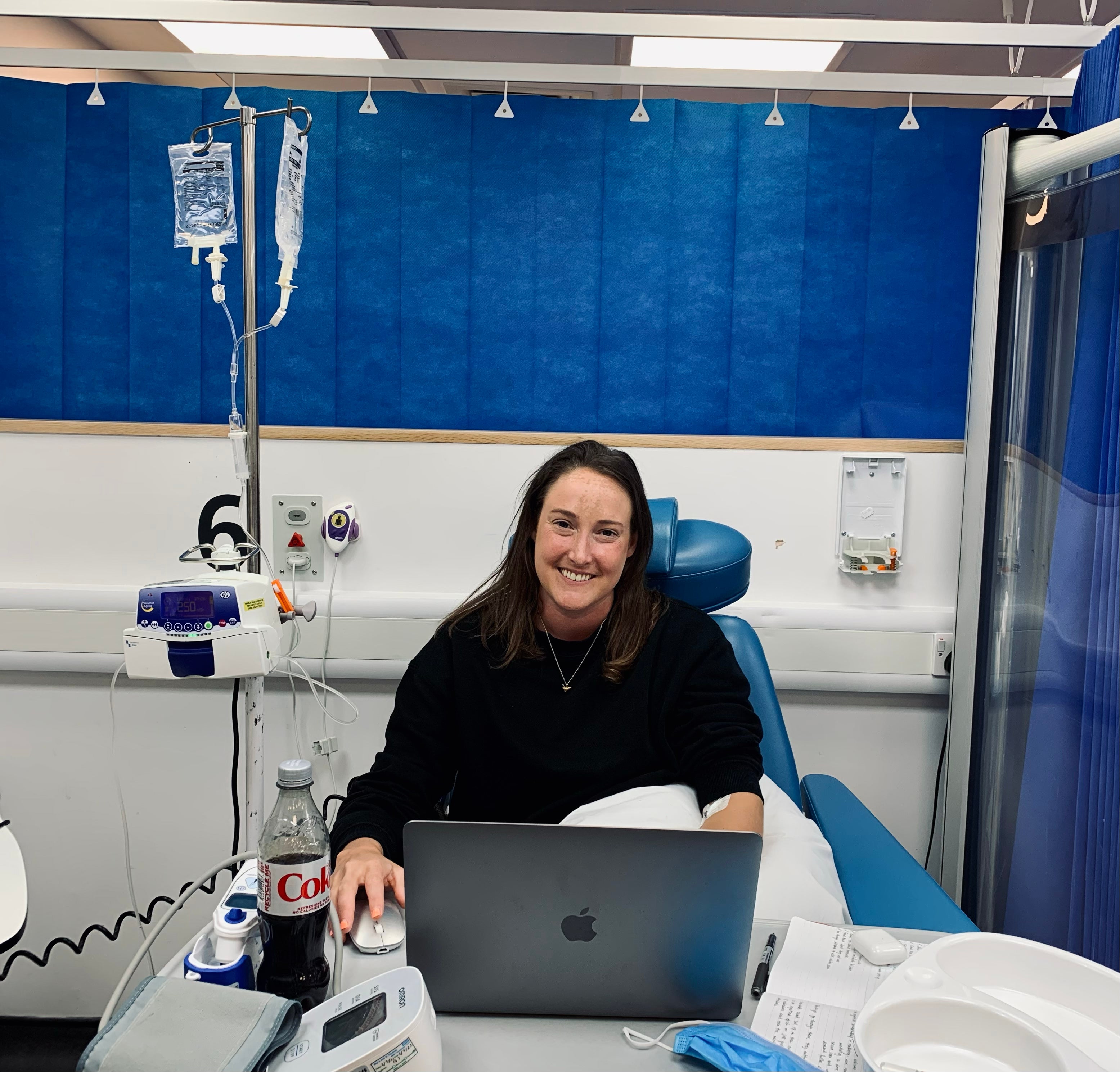
She is also often left weighing up the pros and cons of treatment over the disease itself. She regularly gets pneumonia and has had PCP – a type of pneumonia called “the silent killer” that is usually a symptom of HIV – several times. “The treatment is a horrible type of antibiotic that gives you mouth ulcers that are so bad you can’t speak or eat or, instead, it is a nebuliser which causes migraines.” She now refuses treatment because the experience is so horrible.
“The risk is that I will get PCP again; the last time I had it is the closest that things have gone really wrong,” says Middleton with the world weary air of someone who has had cause to contemplate and accept the line between life and death for the past 20 years. “My approach to risk is very different to others. Covid was just another infection because I have lived that close to being seriously seriously ill for 20 years.”
There is some evidence that autoimmune diseases have a hereditary component but Middleton says that, again, much more research is needed. “I have got four brothers and sisters and two of them have autoimmune conditions as well as my father and uncle. I repeatedly asked my consultant if I would pass it on to my kids and they said no – but it is possible to say no looking at my family – why is more research not being done on it?”
“Both my children were born very prematurely. I didn’t have much guidance, which is part of the bigger problem,” says Middleton whose partner, a strategist for a renewable energy company, does not have an autoimmune condition.
But the lack of research means that Middleton, whose children are aged two and 10 months, says she just has to wait and see if they have inherited her condition.
“Every day my daughter has a rash I am terrified. It is too early to say because most autoimmune conditions don’t come until you are about 20. It would be the most devastating moment of my life to realise I have passed it on. But this is why we need more research and understanding”.
In the meantime, volunteers from The Wren Project will be there to listen.
If you are experiencing feelings of distress, or are struggling to cope, you can speak to the Samaritans, in confidence, on 116 123 (UK and ROI), email [email protected], or visit the Samaritans website to find details of your nearest branch
If you are based in the USA, and you or someone you know needs mental health assistance right now, call or text 988, or visit 988lifeline.org to access online chat from the 988 Suicide and Crisis Lifeline. This is a free, confidential crisis hotline that is available to everyone 24 hours a day, seven days a week. If you are in another country, you can go to www.befrienders.org to find a helpline near you
First Appeared on
Source link






