


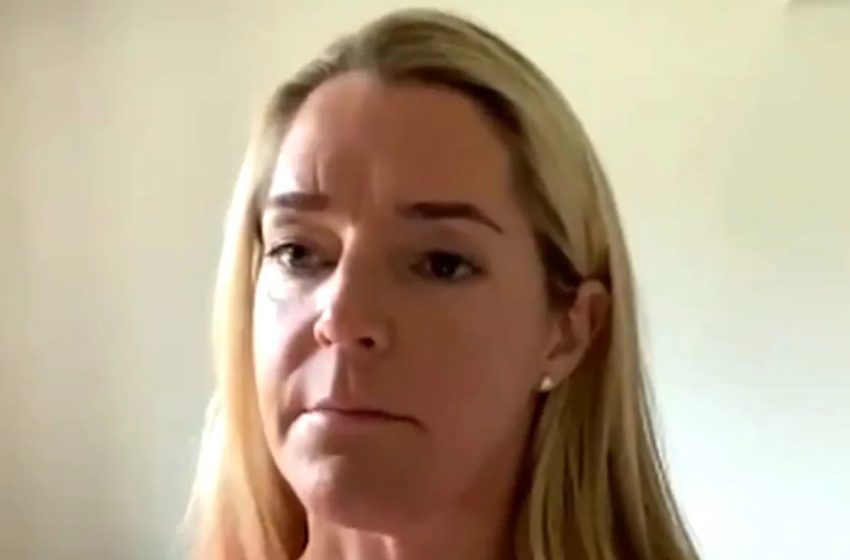
Woman, 41, Admits She Feels ‘Like a Ticking Time Bomb’ After Learning She’s a Carrier for Fatal Huntington’s Disease
NEED TO KNOW
-
A woman who carries a gene mutation for Huntington’s disease said she feels like a “ticking time bomb”
-
The rare illness affects an individual’s ability to move and think, as well as their mental health
-
“I cried more than I thought possible. I just couldn’t stop,” Sarah Power recalled of the moment she learned of her diagnosis
A woman admitted she feels like a “ticking time bomb” after she learned she carries a gene mutation for Huntington’s disease.
Sarah Power went to a doctor’s visit years ago with her mom, when she tested positive for the rare illness.
Huntington’s disease, according to the Mayo Clinic, causes nerve cells in the brain to decay, affecting an individual’s ability to move and think, as well as their mental health.
Symptoms typically appear when a person is in their 30s or 40s. Power was 23 at the time she got her diagnosis.
“I fell to pieces,” Power, now 41, recalled to Metro. “I am pre-symptomatic, but it feels like I’m a ticking time bomb. It’s made me live my life differently, though, knowing that I will get ill at some point.”
Added Power: “I don’t take anything for granted, and feel grateful for what I have today. I just try to live my life as much as I can, and I’m glad I’m still here.”
Huntington’s disease is found on Power’s dad’s side of the family. Both her father and her grandmother had it.
“I vividly remember sitting in our living room when I was five, being told by someone from the Huntington’s Disease Association that my grandma had this disease,” Power said. “They were explaining it was hereditary, which didn’t mean a huge amount to me at the time, but I did feel this darkness in the room.”
“My grandma had been a smoker, and I remember naively thinking I would never smoke so that I wouldn’t get Huntington’s,” she added.
When Power’s grandfather died, his cause of death was listed as Huntington’s. Her father — whom Power described as a “proud man” who denied he had Huntington’s — died from the same disease at age 63 in 2017.
It wasn’t until Power was 18 that she was told she would have to attend an appointment for genetic counseling tied to Huntington’s disease.
“They knew my dad had it, and they were just telling me without telling me,” she explained to Metro.
“I cried more than I thought possible. I just couldn’t stop,” Power added about when she got her official diagnosis years later. “The world was still turning, but it was as though it stood still for a while. It was so hard, having to tell many of my friends over the phone. I couldn’t talk, I was shattered. I felt numb.”
After Power got her diagnosis, her friends tried to get her mind off the news by taking her backpacking.
“It was the best thing I could have done. We saved up as much money as possible, and then just went to Brazil, Bora Bora, New Zealand and Thailand — making as many memories as possible,” she said.
In September 2025, Power got a surprising email from the Huntington’s Disease Association about a new treatment.
Cath Stanley, the Chief Executive for the organization, told Metro that “early results” of the new treatment “suggest it could slow the condition’s progression by up to 75%.”
However, she also explained that in its current form, the treatment requires a lengthy operation “lasting more than 12 hours.”
Never miss a story — sign up for PEOPLE’s free daily newsletter to stay up-to-date on the best of what PEOPLE has to offer, from celebrity news to compelling human interest stories.
Power still feels hopeful now about the future, even though she has the disease. “I’ve never let myself think about what it would be like to see my grandchildren, or whether I would need a pension,” she told Metro. “It’s the breakthrough we’ve all been hoping and praying for.”
“Now, I might be able to grow into an old lady and enjoy all the things my mom has,” Power added.
The PEOPLE Puzzler crossword is here! How quickly can you solve it? Play now!
Power also told GB News that the potential treatment option for Huntington’s disease “is the most exciting thought.”
“I keep pinching myself,” she added.
Read the original article on People
First Appeared on
Source link






