We must explain to you how all seds this mistakens idea off denouncing pleasures and praising pain was born and I will give you a completed accounts off the system and expound
Slate’s Washington, 1707 L St. NW, Washington, D.C., 20036.
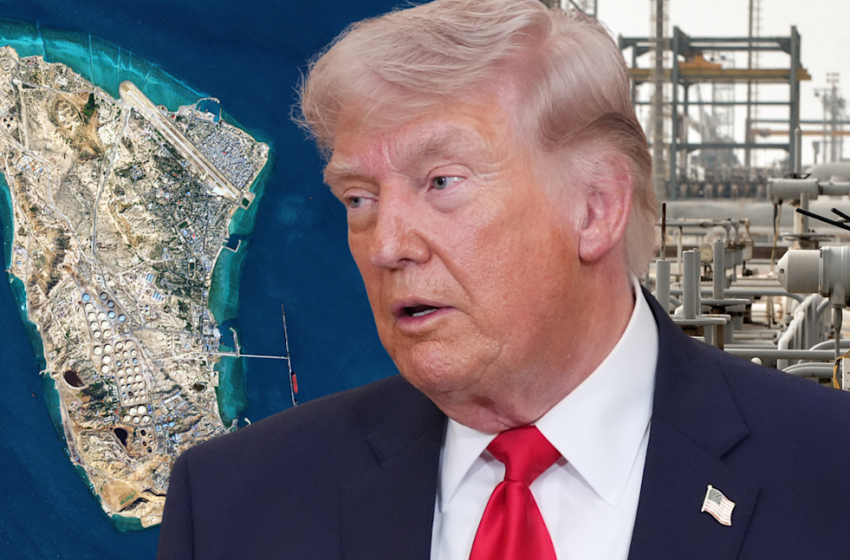
The focus on Kharg Island (left) is nothing new. (Source: Getty/Yahoo Finance)
As the war in the Middle East appears set to continue into its fifth week, the administration of U.S President Donald Trump is seeking a solution by which the Iranian government could be forced to fully reopen the Strait of Hormuz to normal volumes of civilian shipping.
According to figures from the World Trade Organization (WTO) ‘Strait of Hormuz Trade Tracker’, the volume of oil, fertiliser, LNG and other goods moving through the Strait has completely collapsed.
While there are a handful of vessels moving through the Strait each day, which are not tracked under the WTO’s methodology, most are tankers that are part of Iran’s so-called “Shadow Fleet”, which have long carried sanctioned Iranian oil or other Iranian cargo vessels.
RELATED
(Source: World Trade Organization)
Amidst this challenging environment, the possibility of an Asian energy crisis and a global economic crisis is rising by the day.
According to data from logistics intelligence firm Kpler, in the last 12 months of data to March, 94 per cent of Iranian oil exports flowed through Kharg Island.
This has led many to conclude that by taking Kharg Island the flow of oil out of Iran can be stopped and leverage over Tehran can be gained by securing the heart of its current oil export network.
“I’d be harsh on Iran. They’ve been beating us psychologically, making us look a bunch of fools. One bullet shot at one of our men or ships and I’d do a number on Kharg Island. I’d go in and take it.”
This view has been echoed more recently by Michael Rubin, a senior Pentagon adviser on Iran and Iraq in the administration of George W. Bush administration.
“If they can’t sell their own oil, they can’t make payroll”.
“No matter how much we bomb, there’s not going to be regime change until we fracture the Revolutionary Guard, and if this can be a fairly nonviolent way of doing it, all the better,” Rubin said, who is now currently a scholar at the American Enterprise Institute.
But as one might imagine, things are not as simple as take Kharg Island and have the leverage to end the war. It also has immediate geopolitical and economic consequences.
According to data from S&P Global, China is currently the recipient of practically all of Iran’s oil exports.
While its rivals in east Asia such as South Korea and Japan have seen their imports of Persian Gulf oil plummet in recent days as they wait for tankers to arrive bearing stock that was piped around the Strait of Hormuz, the supply of Iranian oil to China has remained as regular as clockwork.
According to reports from the Wall Street Journal, China is receiving up to 2.1 million barrels per day from Iran, which represents a little under 40 per cent of total Chinese imports through the Strait of Hormuz pre-war.
(Source: ANZ Research)
If the United States was to seize Kharg Island, Tehran is naturally going to cut off the flow of oil to this key export terminal.
This would, at least in the short term, rob China of the vital lifeline Iranian oil is providing Beijing amidst the ongoing crisis, at least until contingency plans could be deployed by Tehran.
While Kharg Island is definitively the jewel in the crown of Iranian oil export infrastructure, there are alternatives that would offer Tehran the ability to continue to export oil, albeit at significantly reduced volumes.
According to prominent energy analyst Anas Alhajj:
“Even if the entire island were turned into molten lava from volcanic-level destruction, the actual hit to Iran’s oil export capacity would be limited. Anyone claiming that bombing or seizing Kharg would cripple the regime’s ability to keep oil flowing clearly doesn’t understand Iran’s oil infrastructure.”
Over recent decades, Tehran has continued to expand the network of oil pipelines that crisscross between its oil fields and its coastline, leaving several significant oil terminals by which Iranian exports could continue.
(Source: S&P Global Energy)
Perhaps the most notable alternative to Kharg Island is the oil terminal at Jask on the Gulf of Oman.
Jask provides Tehran with a unique asset, an oil export terminal outside of the Persian Gulf and Strait of Hormuz bottleneck, as well as a viable port capable of having Very Large Crude Carriers (VLCCs) dock.
The intended daily export capacity for Jask is 1 million barrels per day, but at its current stage of development, estimates put the figure at 300,000 to 500,000 barrels per day.
Across the generally lower capacity terminals of Lavan, Sirri and Bahregan, there is another 400,000 to 700,000 barrels per day in export capacity.
Where exactly the true capacity of these terminals lies is unclear, Iran has long been subject to various sanctions and circumstances haven’t demanded these various terminals be put into more significant use.
While taking Kharg Island would offer the Trump administration a bargaining chip at the negotiating table and significantly curtail exports of Iranian oil, it wouldn’t stop the flow of exports and it would come at a major risk to American lives and military equipment.
The reality is that if Washington wanted to stop the flow of Iranian oil and, by extension, billions of dollars a month in cash to Tehran, they could do it tomorrow by seizing the Iranian tanker fleet in open water.
This strategy has been pursued in recent months against tankers shipping sanctioned Venezuelan and Russian oil.
But any attempt to curtail Iranian oil exports comes at a cost, both geopolitically and economically.
It could, in the short term, take up to 2 million barrels of oil per day off the table, which is roughly similar to the peak impact on global supply driven by the war in Ukraine, at a time when supply from the Middle East is already down over 10 million barrels per day.
This would put further upward pressure on oil prices and add further challenges for Beijing as up to 18 per cent of its oil supplies were impacted.