


Wall Street is enabling Donald Trump’s catastrophic war in Iran
Every Monday is Groundhog Day since President Donald Trump launched the ill-planned boondoggle in Iran.
On Sunday night, before stock and commodities futures markets open, Trump or other unnamed White House officials speak to gullible reporters, telling them that the war is nearly over, or Iran is negotiating a ceasefire deal. When those reporters transmit those assertions to the public, stock futures rise and oil prices fall.
Yet by Monday morning, when the opening bell rings, whatever nonsense Trump and his aides told reporters completely falls apart. Iran says it isn’t negotiating and will not be ending its blockade of the Strait of Hormuz—the closure of which is spiking oil and gas prices and leading to fears of shortages that could quite literally crash the global economy. Or the United States or Israeli military strikes energy or other civilian targets in Iran, leading to further escalation in this horrific war of choice.
“Same old market manipulation,” Don Johnson, chief economist at the financial market research company MacroEdge, wrote in a post on X of Trump’s latest Sunday night TACO attempt, in which his administration leaked a potential ceasefire deal to Axios. “Kicks the TACO to right before futures open, will post something between 5-8am and kick it further, cycle continues.”
The Sunday night lies have kept the stock market from bottoming out, and oil prices from reaching the $150 to $200 per barrel that experts have warned about. But worse than that, it’s enabled Trump to keep doing what he’s doing, buying him time to blow stuff up and commit war crimes which he disturbingly appears to relish.
All the while an energy crisis that will rival the 1970s is brewing. And each day that goes by without a resolution to this conflict will make whatever nightmare we’re all about to face worse.
Indeed, experts say at this rate, oil and gas shortages are now unavoidable.
With the Strait of Hormuz still virtually closed, the last of the oil deliveries to Africa, Asia, and Europe are beginning. Those shortages will drive up the price of oil, leading to demand destruction—an economic term that means consumers or businesses start to cut back on their spending due to high costs or shortages. And that kicks off a domino effect that could lead to a painful recession.
Worse still is that it’s not just fuel shortages that will cripple the global economy.
Fertilizer, plastics, and helium gas—used in semiconductor chips—are also being choked off due to the closure of the Strait of Hormuz. That means that more inflation is on the way, as rising input costs for farmers and other manufacturers will trickle down to consumers in the form of higher prices.
“Now, because of the war in Iran, we additionally face the potential for significant ongoing oil and commodity price shocks, along with the reshaping of global supply chains, which may lead to stickier inflation and ultimately higher interest rates than markets currently expect,” JP Morgan Chase CEO Jamie Dimon said Monday.
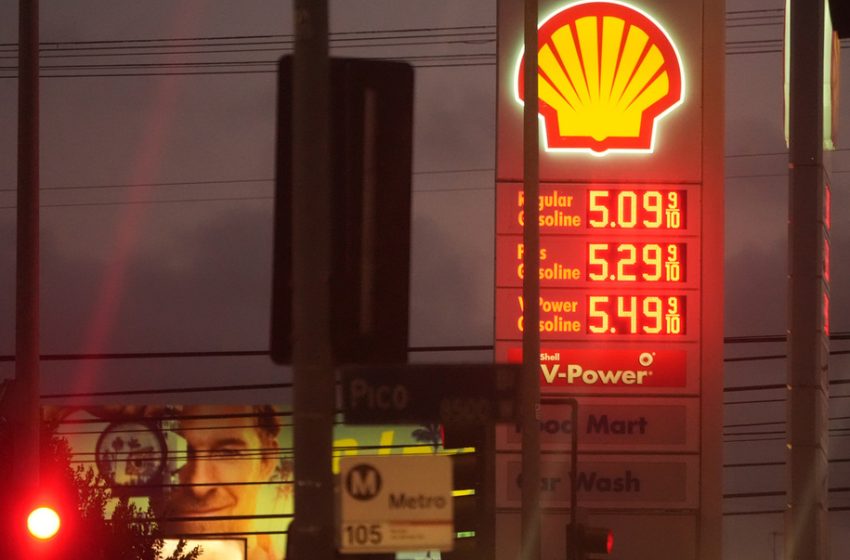
In fact, Americans are already seeing negative impacts from the war, with companies like Amazon, UPS, FedEx, and even the United States Postal Service adding fuel surcharges.
Airlines are raising ticket prices and baggage fees to try to offset the skyrocketing price of jet fuel. Airlines are also cutting flights due to jet fuel shortages.
“Travel has gotten a lot more expensive in Asia, with many airlines adding fuel surcharges or downright canceling flights,” June Goh, an oil market analyst, wrote in a post on X. “Europe is facing imminent jet fuel supply shortages. Brace yourselves.”
Even if the war ends today and the Strait of Hormuz reopens—which doesn’t seem likely—it will take months for the disruptions Trump caused by starting this war to resolve, if they ever do.
“This is headed toward sustained, compounding cost pressure across every industry that touches fuel, which is effectively every industry,” Herman Nieuwoudt, president of IFS Energy & Resources, told CNBC. “It’s the consequence of the largest energy supply disruption in modern history layered on top of six years of structural volatility,” he said. “These disruptions cascade through manufacturing, packaging, agriculture, transportation, and retail in ways that take months to fully materialize.”
What a mess.
First Appeared on
Source link






