


Why are the Masters’ concession prices always so low at Augusta National?
The Athletic has live coverage of the 2026 Masters Tournament.
AUGUSTA, Ga. — On an idyllic Saturday afternoon last spring, Buffalo Bills quarterback Josh Allen strolled down the first fairway at Augusta National, one eye on the Masters participants in front of him and the other on his egg salad sandwich.
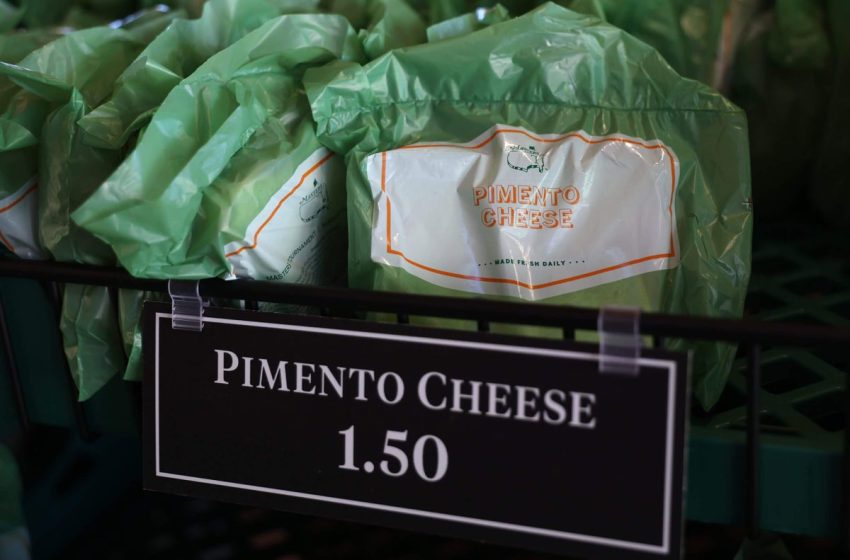
It was an only at the Masters moment. And that sandwich Allen was happily chomping away at cost $1.50, the same as it does this year, and two years ago, and two years before that.
The pimento cheese and egg salad sandwiches are the cheapest menu items, but the most expensive sandwiches cost $3. A cup of soda is $2, the new Masters candy bar (early reviews suggest the club went heavy on the caramel) is $2.25, and a Crow’s Nest beer (which tastes suspiciously like Blue Moon) is $6. You could walk into one of the open-air concessions stands, pick up one of each item on sale, and spend a grand total of $78.75. That’s less than three beers, chicken tenders and fries, and a hot dog at the most recent Super Bowl.
So how can Augusta National Golf Club afford to sell a chicken sandwich for less than a gallon of gas? Because it remains the only large-scale event venue in America that doesn’t need the money.
To explain, we must start at the beginning, when an investment banker, Clifford Roberts, and an amateur golfer, Bobby Jones, founded Augusta National in 1932. Early times were tough — the Great Depression was going on — and the club very nearly didn’t make it. The Masters Tournament was a critical component of its survival, a draw that would bring many of the greatest golfers of the time to Augusta and build interest in the club, adding to its membership.
Roberts, as author David Owen lays out in the book “The Making of the Masters” and its accompanying podcast, believed from the start that the profits generated by the tournament should go toward the next year’s event, not to the club or any individual members.
In the decades since, as the Masters grew from a fledgling golf competition to one of the four majors to one of the most anticipated annual sporting events in the world, that has remained the case.
Augusta National Golf Club remains wholly private and secretive. It does not feel the need to explain itself or disclose a list of its members. They are men and women who do not lack for means and are not seeking to monetize their memberships.
A sandwich and a beer costs less than $10 at the Masters. (Andrew Redington / Getty Images)
To be sure, Augusta National Golf Club does quite well for itself, starting with its longtime broadcast rights deal with CBS. Early rounds now also air on ESPN and Amazon Prime. Bank of America, AT&T, IBM and Mercedes-Benz are all “champion partners,” with Delta Air Lines, Rolex and UPS serving as “tournament partners.” Merchandise sales, by at least one estimate, pull in $1 million per hour during Masters week. The profits from souvenir gnome sales alone are probably enough to pay out the winner of a smaller PGA event, such as the 3M Open, for the next decade.
But Augusta National chooses to maximize vibes over profits.
The tournament could likely get more for its TV rights on the open market, but instead, it has stuck with CBS for the last 70 years. The aforementioned sponsors do not receive the on-course ad placement that dominates every other professional golf tournament, a key reason why the Masters looks and feels different from the other three majors. And it would be bad optics for an organization that embodies the 1 percent to open its doors for one week each year and then look to dig into its fans’ — ahem, patrons’ — pockets.
Instead, the earnings from this year’s Masters will be rolled over into the budget for next year’s tournament. This year, the club opened a sparkling new building specifically for players and their families. The cost of pimento cheese won’t go up to pay for it.
First Appeared on
Source link






